Best email marketing software for interior designers in 2027 is not the tool with the longest feature list. It is the tool that makes a portfolio look beautiful in an inbox, keeps past clients warm between projects, and turns a casual reader into a consultation booking.
Designers face a specific problem. Their work photographs well, but a single Instagram post disappears in a day, while an email list stays with them for years.
The eight tools below were judged on visual templates, image handling, automation, segmentation, pricing, and how well they fit a small design studio rather than a large retailer. Flodesk leads for visual polish, Mailchimp leads for all-round flexibility, and MailerLite leads for value, but the best choice depends on how you sell design services.
Key takeaways
- Flodesk is the best overall choice for interior designers because its templates are genuinely design-led and its pricing is flat.
- Mailchimp is the strongest all-rounder, with the widest template library, solid automation, and a free plan for small lists.
- MailerLite offers the best value for studios on a tight budget, with clean templates and generous free limits.
- ActiveCampaign is the best pick for studios that want serious automation, lead scoring, and a structured sales pipeline.
- Do not choose on price alone: check image quality, mobile rendering, and how easily you can export your list before you commit.
At a glance: the shortlist
| Product | Best for | Starting price | Standout limit |
|---|---|---|---|
| Flodesk | Visual, design-led emails | From about $38 per month | Flat price, no subscriber tiers |
| Mailchimp | All-round flexibility | Free plan; paid from about $13 per month | Costs rise as your list grows |
| MailerLite | Budget-friendly studios | Free plan; paid from about $10 per month | Advanced automation on higher plans |
| Kit | Designers who also sell courses | Free plan; paid from about $29 per month | Templates are simpler than Flodesk |
| Constant Contact | Beginners and local studios | From about $12 per month | Automation is more basic |
| ActiveCampaign | Automation and sales pipelines | From about $15 per month | Steeper learning curve |
| Brevo | Pay-as-you-grow sending | Free plan; paid from about $8 per month | Design templates are plainer |
| Squarespace Email Campaigns | Studios already on Squarespace | From about $7 per month | Only makes sense with a Squarespace site |
Flodesk — Best overall
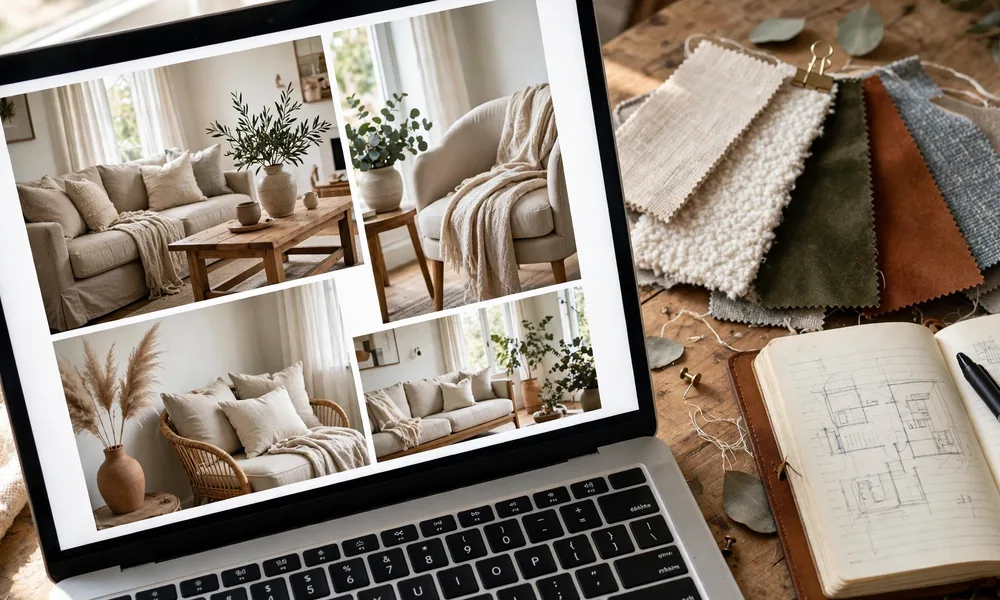
Flodesk was built for people who care how an email looks, which makes it a natural fit for interior designers. Its templates use large images, generous white space, and elegant type, so a project reveal or a before-and-after story looks like a page from a design magazine rather than a crowded sales flyer.
The pricing model is also unusual and helpful for studios. Flodesk charges a flat monthly rate rather than charging more as your list grows, so a designer who builds a large audience over several years does not face a sudden price jump.
Pros: Beautiful, design-led templates; flat monthly pricing; simple editor; strong image handling. Cons: Fewer advanced automation options than ActiveCampaign; no free plan beyond a trial; limited reporting depth.
Mailchimp — Best all-rounder
Mailchimp remains the most flexible choice for interior designers who want one tool that does everything reasonably well. It offers a large template library, a drag-and-drop editor, landing pages, signup forms, and automation for welcome emails, project follow-ups, and seasonal promotions.
For a studio, the practical advantage is integration. Mailchimp connects with most website builders, booking tools, and customer relationship tools, so a consultation enquiry can flow into an email sequence without manual copying.
Pros: Wide template choice; strong integrations; useful free plan; clear analytics. Cons: Price rises with list size; some templates need customising to look truly design-led; support can be slow on lower plans.
MailerLite — Best for budget
MailerLite is the best value option for interior designers who want clean, professional emails without a large monthly bill. Its editor is straightforward, its templates are tidy and uncluttered, and its free plan covers a useful number of subscribers and monthly sends.
Where MailerLite earns its place is in its balance of simplicity and power. It supports segmentation, so residential clients and commercial clients can receive different content, and it offers automation for welcome sequences and re-engagement emails.
Pros: Low cost; generous free plan; clean editor; good segmentation. Cons: Templates are less distinctive than Flodesk; advanced automation needs a higher plan; fewer integrations than Mailchimp.
Kit — Best for designers who teach
Kit, formerly ConvertKit, suits interior designers who do more than client work, such as selling an online course, a styling guide, or a paid workshop. It is built around creators who sell digital products, so it handles paid newsletters, product sales, and landing pages in one place.
The strength of Kit is in its automation and tagging. A reader who downloads a colour guide can be tagged and sent a different sequence from a reader who enquired about a full home redesign.
Pros: Strong tagging and automation; built-in digital product sales; good for courses and guides. Cons: Plainer visual templates; paid plans start higher than MailerLite; less suited to purely image-led campaigns.
Constant Contact — Best for beginners
Constant Contact is the easiest tool on this list for a designer who has never sent a marketing email before. Its setup is guided, its templates are simple, and its support team is reachable by phone and chat, which is reassuring for a small studio without a marketing person.
The tool is less powerful than ActiveCampaign or Mailchimp for automation, but that is not a weakness for every studio. If the goal is a reliable monthly newsletter, a seasonal promotion, and a welcome email for new subscribers, Constant Contact covers it without a learning curve.
Pros: Very easy to learn; helpful human support; useful event tools. Cons: Basic automation; price rises with list size; templates are less distinctive than Flodesk.
ActiveCampaign — Best for automation
ActiveCampaign is the right choice for an interior design studio that treats email as part of a sales process rather than a simple newsletter. It combines email marketing with customer relationship management, so a consultation enquiry can move through stages, from first contact to site visit to signed proposal, with automated follow-ups at each step.
This power comes with complexity. ActiveCampaign takes longer to set up than Flodesk or Constant Contact, and its interface has more settings to learn.
Pros: Powerful automation and CRM features; detailed segmentation; lead scoring. Cons: Steeper learning curve; higher cost for small studios; setup takes time.
Brevo — Best for pay-as-you-grow
Brevo, formerly Sendinblue, charges mainly by how many emails you send rather than how many subscribers you hold, which suits designers with a large list who only email occasionally. A studio might send a project showcase once a month and a seasonal offer a few times a year, and Brevo keeps that affordable.
The design side is more functional than beautiful. Brevo templates are clean but plain, and a designer will need to spend time customising them to match a studio brand.
Pros: Pricing based on sends, not list size; generous free plan; includes SMS and transactional email. Cons: Plainer templates; less design-led than Flodesk; reporting is adequate rather than excellent.
Squarespace Email Campaigns — Best for Squarespace studios
Squarespace Email Campaigns is the obvious choice for an interior designer whose website already runs on Squarespace, which many design studios use because of its strong visual templates. Because the email tool is built into the same platform, it can pull images, project galleries, and blog posts directly from the site, and the email design automatically matches the website branding.
The tool itself is simpler than Mailchimp or ActiveCampaign, with fewer automation options and fewer integrations. That is acceptable if the studio wants a consistent look and a single login rather than the most powerful email tool available.
Pros: Matches Squarespace website branding automatically; pulls images and posts from the site; simple to use. Cons: Limited automation; only sensible for Squarespace users; fewer integrations.
How to choose
Start with how you actually sell design work. If most clients come from referrals and a portfolio, choose the tool that makes your work look best, which usually means Flodesk or Mailchimp.
Next, test the things that matter most to a visual business. Send a test email to yourself and open it on a phone, since that is where most readers will see it.
Finally, check the practical details before you pay. Confirm the price at your current list size and at double that size, since growth should not punish you. Confirm that you can export your full subscriber list at any time, that unsubscribes are handled automatically, and that the tool offers a trial long enough to send a real campaign. For a broader look at improving email results, the guide to AI tools for email newsletters shows how subject lines and layouts can be tested more quickly.
Checklist: before you pay
- Send a test campaign to your own phone and check image quality, layout, and loading speed.
- Confirm the price at your current list size and at twice that size, and check the renewal price.
- Check that you can export your full subscriber list, including tags, at any time.
- Test the signup form on your website and confirm new subscribers receive a welcome email.
- Check the cancellation terms and whether you keep access to your data after cancelling.
- Confirm support hours and whether help is available by chat, email, or phone.
Frequently asked questions
What is the best email marketing software for interior designers?
Flodesk is the best overall choice for most interior designers because its templates are design-led, its pricing is flat, and its emails show project photography well. Mailchimp is the best all-rounder, and MailerLite is the best budget option.
Do interior designers need email marketing?
Yes, because design projects have long decision cycles. A reader may follow a studio for months before booking a consultation, and email keeps the studio visible during that time without depending on a social media algorithm.
How often should an interior designer send emails?
Once or twice a month is a good rhythm for most studios. That is frequent enough to stay remembered, but not so frequent that readers unsubscribe.
Can I use email to get more design clients?
Yes, if the emails show real work and make the next step clear. Include a simple call to action, such as booking a consultation or downloading a guide, and follow up with readers who click.
For sharper subject lines that get those emails opened, see the guide to AI tools for email subject lines, which covers testing different lines before a campaign goes out.
What should an interior design newsletter include?
Include one strong project story with large photos, one practical tip, and one clear next step. Avoid filling the email with every recent project. A focused email with a single story performs better than a long catalogue of work.
Is a free email plan enough for a small design studio?
For a new studio with a small list, yes. MailerLite, Mailchimp, and Brevo all offer free plans that cover a basic newsletter and a welcome email. Once the list grows or you need automation, a paid plan becomes worth the cost.
Designers who also work with architects and builders may find the guide to AI tools for architecture firms useful for understanding how neighbouring trades handle client communication.
The bottom line
For most interior designers, Flodesk is the best starting point because it makes visual work look its best and its flat pricing stays predictable as the list grows. Mailchimp is the safer choice if you want the widest integrations and a free plan to start with, while MailerLite is the best option when budget is the main constraint.
Whichever tool you choose, the habit matters more than the software. Send consistently, show real projects with honest stories, and make it easy for a reader to book a consultation.