The best starting point is the machine that fits your budget and daily routine, not the one with the longest feature list. Espresso takes practice, so your choice should match how much time you want to spend learning. Some machines keep the process simple, while others give you more control over each shot.
These ten picks suit different routines, not one universal winner. You can choose hands-on brewing, a machine with built-in grinding, or a setup that makes milk drinks easier. A temperature controller called a PID adjusts heating to keep water near a set temperature. That feature can help, but it cannot replace careful coffee preparation.
Think about the drinks you make most and how many you prepare in a row. A single espresso has different demands from several lattes before work. Your counter space, budget and willingness to practice matter just as much as the machine’s feature list.
Key Takeaways
- Choose for your daily drinks and the time you want to spend brewing.
- Plan for a grinder if your machine does not include one.
- Automatic milk frothing saves effort but offers less practice with manual steaming.
- More controls can help you experiment, but they take time to learn.
- Include accessories and maintenance in your budget.
Choose for the drinks you make most often and the amount of hands-on time you want to spend.
Which Best Espresso Machine for Home Fits Your Budget?
For a straightforward low-cost start, compare the Bambino Plus and Apex V2; for a grinder built into the setup, consider the Barista Express. Start with your routine, then compare price, control and included parts. The 2026 under-$1,000 recommendations include the MiiCoffee Apex V2 and Breville Bambino Plus. The Lelit Victoria is also listed below $1,000 for the machine alone.
Compare the full setup, not just the machine’s sticker price. The table gives you a quick shortlist, rather than a final ranking. Prices and configurations can shape value, but your drink habits should shape the choice.
| Model | Configuration | Notable control | Good fit |
|---|---|---|---|
| MiiCoffee Apex V2 | Semi-automatic, separate grinder | Adjustable PID and pre-infusion | Hands-on brew experiments |
| Breville Bambino Plus | Semi-automatic, separate grinder | PID and automatic milk frothing | Quick daily milk drinks |
| Lelit Victoria | PID single boiler, separate grinder | Temperature and pre-infusion settings | Compact traditional setup |
| Breville Barista Express | All-in-one machine with burr grinder | 16 grind settings and PID water control | One-appliance workflow |
| Lelit Elizabeth V3 | Dual boiler, separate grinder | Programmable pre-infusion and boiler PIDs | Frequent brew-and-steam use |
One-touch and guided-screen machines belong to a different convenience category from semi-automatic picks. They can reduce the work between choosing a drink and serving it. Semi-automatic machines ask you to handle more steps, which can suit you if you want to learn the process.
Before you settle on any models, rank these three purchase priorities:
- Your preferred drink type, such as straight espresso or milk drinks.
- A hands-on routine or an assisted workflow with fewer manual steps.
- A standalone grinder or grinding built into the machine.
A low machine price can still lead to a larger total if you need a grinder and useful accessories. A built-in grinder can save counter space, while a separate setup gives you more choice in each part. Set a complete equipment budget before narrowing the shortlist to a machine alone.
Which Beginner Machine Keeps Morning Espresso Simple?
The Bambino Plus is the most approachable pick here for a beginner who wants to get to brewing quickly and make milk drinks with less effort. Its PID temperature control, pre-infusion and 9-bar brewing support repeatable espresso shots. Speed is its main draw, with a few hands-on steps still in your routine.
The machine can be ready to brew in about three seconds. It can begin steaming about three to four seconds after start-up. Those times help on busy mornings, but they do not remove the need to prepare coffee with care.

Pre-infusion wets the coffee before full extraction, giving you a useful step toward consistent shots. PID control helps keep brew water near your chosen temperature. Neither feature can fix a grind that is too coarse or a puck that is uneven.
The automatic steam wand can froth milk for you, which makes milk drinks easier to prepare. Manual steaming takes more practice, but it gives you direct control over the milk’s texture. Choose automatic frothing for convenience, or practice with a manual wand if latte art matters to you.
The Bambino Plus needs a separate grinder for fresh-bean espresso. Pre-ground coffee can work with suitable baskets, but fresh grinding gives you more room to adjust extraction. A grinder also takes up counter space and adds to the equipment budget.
Quick heat-up does not mean every shot will taste the same without preparation. Dose, grind and tamp still affect how water flows through the coffee. Keep your routine steady while you learn what changes each shot.
Expect to spend practice time on dose, grind and tamp even when the machine automates part of the routine.
Which Budget Machine Gives Hands-On Control?
The Apex V2 is the stronger fit if your priority is adjustable brewing rather than the simplest possible routine. Its adjustable PID and pre-infusion let you test changes to extraction. That control rewards patience, since every change can affect the taste and flow of a shot.
The Apex V2 pairs a dedicated stainless-steel brew boiler with a separate steaming thermoblock. That layout supports brewing and steaming without waiting for one boiler to change temperature between tasks. It takes around seven to ten minutes to heat up.
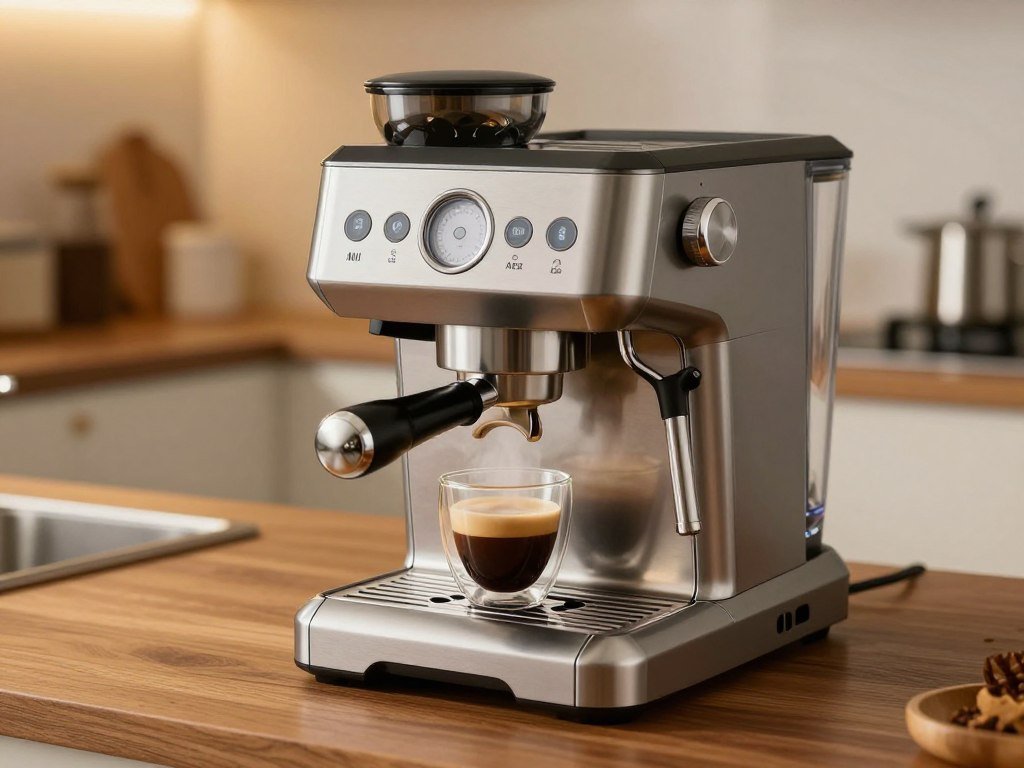
The machine has a 58 mm portafilter, a familiar size for many espresso tools. Its adjustable pre-infusion lets you change how the coffee puck gets wet before full brewing pressure. Testing one change at a time helps you learn what it does.
An externally adjustable OPV, or over-pressure valve, lets you set brew pressure to 9 bars or lower settings around 6-7 bars. That gives you another way to explore extraction. A lower setting does not automatically make a shot better.
The Apex V2 can suit a value-focused buyer who wants more input than a basic starter machine offers. Its settings can help you learn how brew temperature and pressure affect coffee. You still need a capable grinder and consistent puck preparation to get useful results.
Adjustability is valuable when you enjoy testing small changes and recording what happens. It can feel like extra work if you want the same drink with minimal effort each morning. The machine’s longer warm-up also calls for planning before your first shot.
adjustable PID temperature control is one of the Apex V2’s main tools for experimentation. Change one setting at a time so you can tell which adjustment actually improved the shot.
Which Breville Machine Includes a Grinder?
The Barista Express is the clearest all-in-one choice in this list because it integrates a conical burr grinder with the brewing system. It offers 16 grind settings and is designed for an 18 g dose of freshly ground coffee. One appliance handles both jobs, which can simplify your counter setup.
The included grinder gives you 16 steps for adjusting grind size. Fine adjustments matter because small grind changes can alter how quickly water passes through the coffee. A wider setting range helps you respond when a shot runs too fast or too slowly.
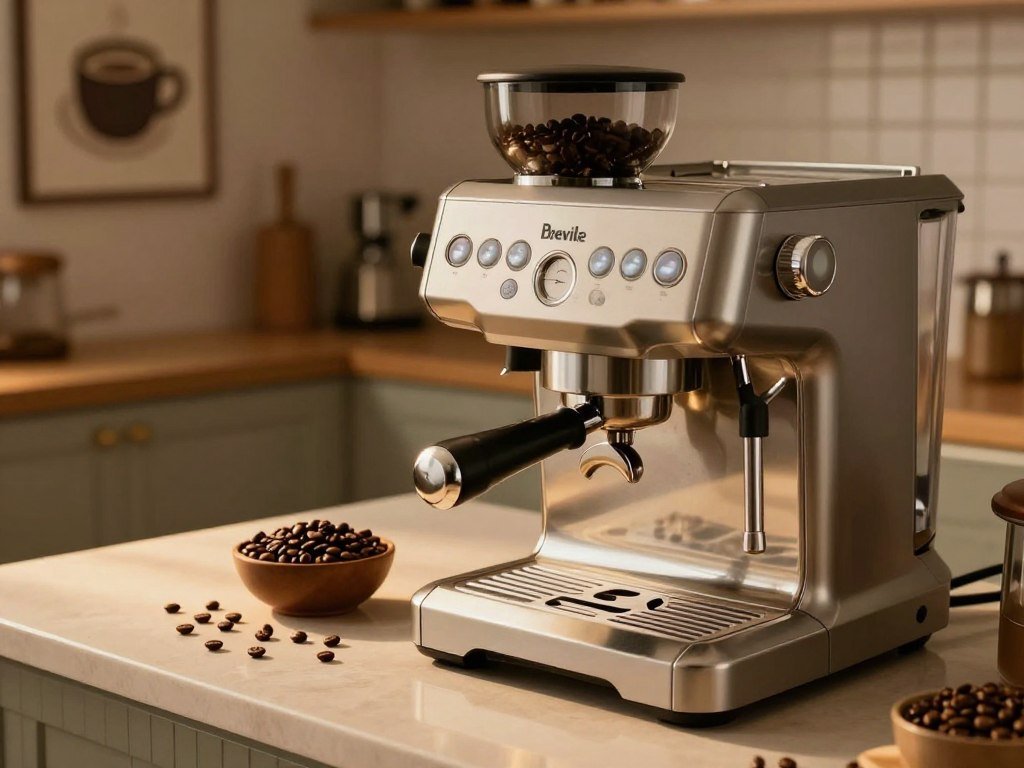
The machine includes a 54 mm stainless-steel portafilter and single- and dual-wall filter baskets. A dual-wall, or pressurized, basket builds pressure for more forgiving use of pre-ground coffee. A single-wall basket gives you a more direct way to judge how your grind and puck preparation affect extraction.
Its extraction starts with low-pressure pre-infusion, then moves to 9-bar extraction. PID-controlled water reaches 200°F. These details support a repeatable routine, though your grind and dose still shape the shot.
The 18 g dose gives you a clear starting amount for preparing coffee. You can adjust the grind as you learn how the machine responds, then keep other steps steady. An integrated grinder keeps the workflow together, but it also ties the two appliances into one unit.
Check the counter space before you buy. The Barista Express measures 15.9 x 13.1 x 12.4 inches in width, depth and height. Leave room to use the grinder and reach the water tank, rather than measuring only the machine’s footprint.
Measure the available counter space against its stated width, depth and height before choosing an all-in-one.
Which Compact PID Machine Fits a Sub-$1,000 Budget?
The Victoria suits a buyer who wants PID temperature control in a compact single-boiler format without moving into the higher price tiers. In 2026, it is listed below $1,000 for the machine itself. That is not a complete setup price, since the grinder and useful accessories may cost extra.
The Victoria’s Control Center lets you adjust temperature and pre-infusion. Those settings give you more say over brewing than a basic machine, without adding a built-in grinder. Its format can suit a smaller kitchen or a buyer who prefers separate equipment.
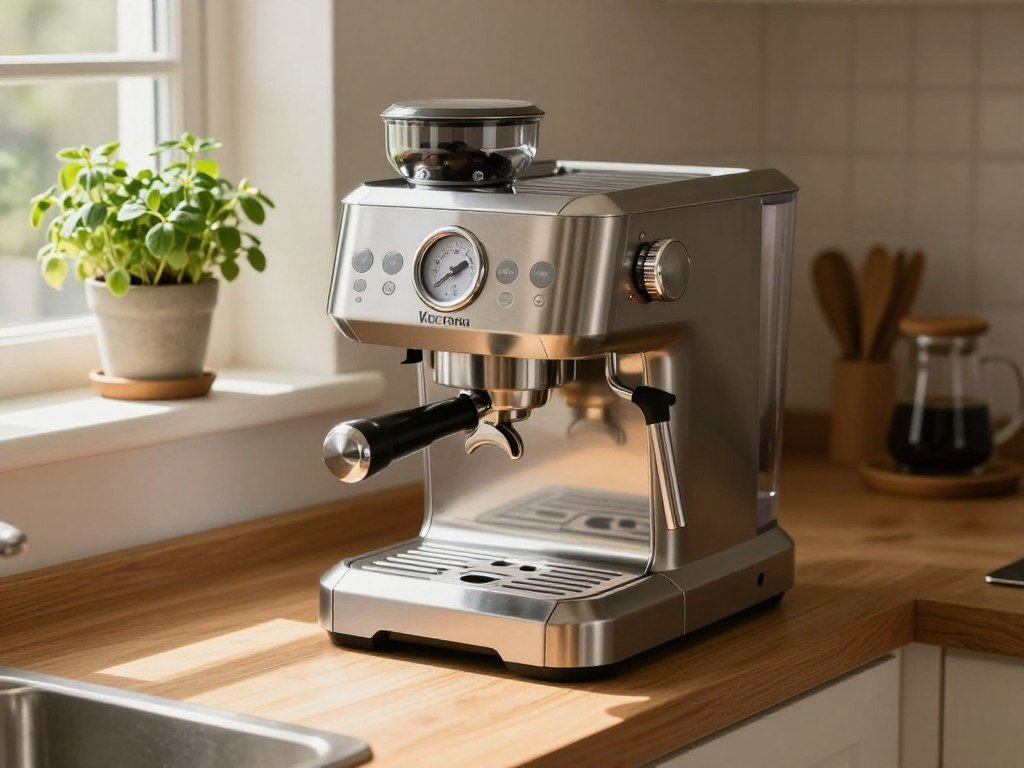
A single-boiler layout means you work with one boiler for brew water and steam water. That can be a sensible choice if you mainly make straight espresso or prepare milk drinks at a slower pace. It does not provide the same brew-and-steam setup as a dual boiler.
The Victoria and a grinder are separate parts of the coffee setup. A standalone grinder lets you choose and replace that part on its own. It also means you must count its cost and find room for it.
The machine-only price keeps the Victoria within its listed budget, but your final spending depends on what else you need. A tamper or other basic tools may also be part of your first setup. Check what comes with the machine before assuming it is ready to brew.
Its controls suit someone who wants temperature adjustment without a long list of advanced features. You can start with simple settings and make small changes as you gain experience. Keep the grinder and any necessary accessories in the same budget calculation.
Which Professional Espresso Machine for Home Suits Frequent Milk Drinks?
For frequent milk drinks, the Elizabeth V3 is the most direct dual-boiler choice among these picks. It is a strong professional-style home option under $2,000 for someone who wants separate brew and steam boilers. Its controls add room to fine-tune a regular routine.
The Elizabeth V3 starts at $1,799 in 2026. It has two independent boilers, with PID control for both. You can brew espresso and steam milk without asking one boiler to switch between those jobs.
Elizabeth V3 starting price places it in the under-$2,000 range. The display lets you adjust boiler temperatures, while programmable pre-infusion adds a choice before full extraction. A shot timer helps you track the length of each brew.
These features suit an enthusiast who wants control without manual pressure profiling. You can set a repeatable process and use the timer to watch each shot. The display also keeps key adjustments within reach during daily use.
Separate boilers can be useful when you make several milk drinks in a row. You can steam while another shot is brewing, rather than pausing for the same boiler to change tasks. If you rarely make milk drinks, you may not need that workflow.
The Elizabeth V3 can make more sense when espresso and steamed milk are both regular parts of your day. Think about how often you will change settings, not only how many are available. Choose its added controls only if you expect to use them in your regular routine.
Which Prosumer Dual Boiler Gives You a 58 mm E61 Group?
The Gallatin is the better match for a home prosumer setup built around an E61 group and standard 58 mm accessories. It pairs dual boilers with independent PID control. Its format is the main distinction for someone comparing it with another dual-boiler machine.
The Turin Gallatin Dual Boiler starts at $1,799 in 2026. It has an E61 group head and a 58 mm portafilter. That combination gives you a defined group and tool size to plan around.
Independent PID control lets you set temperatures for the two boilers separately. The group head and portafilter format may matter more than a long list of settings if you already own compatible tools. Check each accessory’s size before assuming it will fit.
The Elizabeth V3 and Gallatin both use dual boilers and start at the same 2026 price. The Gallatin’s stated appeal is its E61 group and 58 mm portafilter format. The Elizabeth includes a display, programmable pre-infusion and a shot timer.
That difference helps you compare the machines without claiming one makes better coffee. Think about which controls and accessories fit the way you brew. An E61 group is a concrete feature, not a promise of a better shot on its own.
A 58 mm portafilter also shapes which baskets and tools you can use. Check the accessories you already own against the 58 mm portafilter before committing to a new setup.
Which Heat-Exchanger Machine Balances Espresso and Milk Drinks?
The Mara X V2 is the heat-exchanger pick for someone who wants an E61 group and more temperature control than a bare-bones setup. Its brew mode and dual PID help manage a heat-exchanger workflow. Those features support control, but they do not remove the need to learn the machine.
The Mara X V2 starts at $1,699 in 2026. It has an E61 group head, a stainless-steel boiler and a vibration pump. Its 2.5 L water reservoir is a key detail for counter planning and everyday use.
Brew mode gives you a way to set the machine for espresso brewing within its heat-exchanger design. Dual PID adds temperature control. You still need to pay attention to how the machine behaves as you move between brewing and steaming.
The 2.5 L reservoir can affect where you place the machine and how often you refill it. Measure the space around the unit, including the room needed to remove or reach its tank. A vibration pump is another practical specification to consider during daily use.
The Mara X V2 can suit a home barista who likes the E61 format and wants help managing temperature. It offers a different route from machines with separate brew and steam boilers. Neither layout is automatically the right choice for every routine.
Learn how brew mode fits your pace before relying on it for several milk drinks. Choose a heat exchanger for its workflow, not simply because its boiler sounds more advanced.
Which Premium Heat Exchanger Offers E61 Styling?
The Appartamento TCA suits buyers who want an E61 heat exchanger with added temperature-control assistance. A thermocouple helps with temperature control, but it does not mean temperature management requires no learning. Expect a hands-on routine as you get used to the machine.
The Rocket Appartamento TCA is priced at $2,250 in 2026. It has an E61 group head, a heat-exchanger boiler and a vibration pump. Its 1.8 L reservoir is smaller than the Mara X V2’s 2.5 L tank.
The thermocouple assists temperature control, giving you a tool for managing brewing conditions. It does not make every shot automatic or remove the need to learn the machine’s response. A steady routine can help you understand how temperature settings affect your espresso.
The Appartamento TCA’s reservoir size matters if you make several drinks or do not want frequent refills. Think about where you will place the machine and how you will reach its tank. A tight counter can make everyday refilling less convenient.
Its E61 group and heat-exchanger layout appeal to buyers who want that style of machine. The added temperature aid may suit someone willing to work with the controls. It is a less direct fit if you want a mostly automatic routine.
Make room for both the machine and a practical refill routine before choosing a premium countertop model.
Which Low-Cost Machine Suits Occasional Espresso?
The Stilosa is a simple starter for an occasional espresso drinker who is comfortable with fewer built-in controls. It is a basic single-boiler espresso machine for learning a few core steps. Regional versions differ, so check the setup sold in your market.
US models use a Panarello-style steam wand, while European and Asian versions use a single-hole wand. The US wand can help with basic milk frothing, but it is less suited to latte-art technique than a manual wand.
European and Asian versions include a non-pressurized basket. US owners can use a 51 mm portafilter and a compatible basket. Those differences affect the tools and workflow you can expect, so check your region’s model details.
The Stilosa can suit basic espresso practice if you want a simple way to learn. Its fewer controls leave less to adjust, which can make the first steps easier to follow. The tradeoff is limited room to fine-tune the brew.
Take care after brewing because pressure remains in the group. Wait before removing the portafilter after a shot. Opening it too soon can release hot water and coffee grounds.
The machine can work for occasional drinks, but its steam wand may not fit every milk-drink goal. If you want to practice latte art, a manual wand offers more direct control. Confirm the basket and wand configuration for the version sold in your region before buying.
Which Premium Machine Gives You the Most Pressure Control?
The Bianca V3 is the enthusiast pick for a buyer who wants several ways to adjust brew pressure during extraction. It has three pressure-modification systems: two programmed modes and one manual control. More options bring more work, since you need to learn what each change does.
The Bianca V3 is priced at $3,000. Its pressure profiling lets you shape how pressure changes through a shot. That can give an experienced home barista more ways to influence extraction.
The two programmed modes offer set ways to modify pressure. Manual adjustment gives you a more direct role during brewing. These are different routes to changing pressure, not a guarantee that one method will suit every coffee.
Pressure profiling can help you explore how a shot develops from start to finish. It also adds choices that can make results harder to compare if you change several things at once. Keep a clear note of your settings when you test a new approach.
The Bianca V3 is a poor match if you want a simple push-button routine. Its controls make more sense when you enjoy repeated tests and careful changes. A machine with fewer pressure settings may be easier to use every day.
The price reflects an enthusiast feature set, but it cannot decide what tastes best to you. Your preferred beans and brewing habits still guide the result. Buy this level of control only if experimenting with pressure is part of the hobby you want.
Should You Choose a Built-In Grinder or a Separate One?
For espresso, grinder quality and adjustment range matter as much as the machine’s feature list. A built-in grinder can save space and simplify your routine, while a standalone grinder gives you a separate part to choose. Your setup has tradeoffs either way.
A grinder that cannot make fine, steady adjustments can make dialing in difficult. You may struggle to change extraction speed in small steps. That makes it harder to tell whether the coffee, the grind or another part of your routine caused a poor shot.
| Setup | Examples | What it combines | Tradeoff |
|---|---|---|---|
| Built-in electric grinder | Breville Barista Express | Electric grinder and espresso machine | Repair can affect the whole unit |
| Standalone electric grinder | Baratza Sette 30; Eureka Mignon Specialita | Separate grinder and espresso machine | Needs its own counter or storage space |
| Manual espresso machine with a grinder | Flair with a separate grinder | Manual brewing and separate grinding | More manual steps for each shot |
The Barista Express has a conical burr grinder with 16 settings. A standalone grinder, such as the Baratza Sette 30 or Eureka Mignon Specialita, lets you choose the grinding appliance separately. A Flair is a manual espresso setup that can pair with a separate grinder.
Combining two appliances can make repair less costly to manage as a whole. If an integrated grinder or brewing system needs repair, the issue can affect the entire unit. A separate grinder also lets you replace or upgrade one part without changing the other.
Check these four details before choosing a grinder:
- Fine-enough adjustment for espresso brewing.
- Small grind-size steps for careful changes.
- Convenient switching between different beans.
- Counter or storage space for the grinder.
Reserve money for a capable grinder before spending the whole equipment budget on the machine.
Which Boiler Design Fits Your Drink Routine?
If you mostly make straight espresso, a single boiler can be enough; frequent back-to-back milk drinks favor a dual boiler or heat exchanger. Choose for your busiest routine, not the rare day when you make a large group of drinks. Your usual pace matters more than a feature list.
A single boiler needs time to heat between brewing and steaming. A dual boiler has separate boilers for those tasks, which supports a smoother brew-and-steam workflow. The difference matters most when you prepare several milk drinks in a row.
When a single or dual boiler makes sense
The Gaggia Classic Pro and Rancilio Silvia are examples of single-boiler home machines. They can suit a routine built around straight espresso or a few drinks made at an easy pace. You wait for the boiler to heat between brewing and steaming.
The Breville Dual Boiler has two dedicated boilers. Separate brew and steam boilers make it easier to move between those jobs without waiting for one boiler to switch tasks. That can help when several drinks need to reach the counter quickly.
A dual boiler does not make every part of brewing automatic. You still prepare the coffee, start the shot and steam milk. Its main benefit is a more direct workflow when you move between brewing and steaming.
How a heat exchanger changes the workflow
A heat exchanger supports brewing and steaming in one workflow. It can suit someone who wants to make espresso and milk drinks without the single-boiler pause. You still need to pay attention to temperature management as you use the machine.
Match the design to your likely use:
- Occasional straight espresso: a single boiler.
- Frequent back-to-back milk drinks: a dual boiler.
- Traditional heat-exchanger operation: a heat exchanger.
Pick the architecture around your busiest realistic drink-making session, not an occasional party.
Which Features Matter Most in Daily Use?
The most useful features are the ones that solve a routine problem you actually have, such as unstable temperature or slow milk-drink workflow. Useful control beats a long list when you brew the same drinks each day. Focus on the parts you will adjust or handle often.
Temperature, pressure and grind all affect espresso extraction. A feature helps when it gives you a clear way to manage one of those variables. It may add cost or steps if it solves a problem you do not have.
| Feature | What to check | Why it matters | Potential tradeoff |
|---|---|---|---|
| PID temperature control | Temperature adjustment and display | Helps keep brew water near a set temperature | More settings to manage |
| Pressure control | Pressure setting or manual control | Changes how water moves through coffee | Needs careful testing |
| Pre-infusion | Manual or programmable start | Wets coffee before full extraction | Adds another brew setting |
| Steam wand | Automatic or manual frothing | Shapes milk texture for drinks | Manual steaming takes practice |
| Water reservoir | Tank size and access | Affects refills and placement | A larger tank can take more room |
Breville’s home espresso range includes the Barista Express, Barista Pro and Bambino Plus. Lelit, Turin, Rocket and CASABREWS are also brands represented in this guide. CASABREWS is an American espresso-machine brand established in 2020.
Judge each model by fit, service access and the features you will use, not its brand name alone. A touchscreen or super-automatic workflow is a separate convenience choice from a semi-automatic machine. Decide whether you want guided choices or direct control over each step.
Run through this short daily-use checklist before choosing:
- Can you reach the water reservoir without moving the machine?
- Does the drip tray leave room for your usual cups?
- Will the machine and cups fit your counter space?
- Can you manage the daily cleaning tasks?
Check the parts you will handle every morning, especially the reservoir, drip tray and steam wand.
How Much Should You Spend, and What Does a Higher Price Buy?
A capable home espresso setup can be assembled at several budget levels, but the grinder and machine should be budgeted together. Machine price is only one part of your total cost. Accessories and service needs can also affect what you spend.
Higher prices can buy more control or a different machine design, but they do not guarantee better-tasting coffee for every user. Start by comparing the machine’s price and configuration, then consider the rest of the setup. A machine-only budget does not include every tool you may need.
Compare real starting prices
| Machine | 2026 price | Configuration |
|---|---|---|
| Lelit Mara X V2 | $1,699 | Heat exchanger |
| Lelit Elizabeth V3 | $1,799 | Dual boiler |
| Turin Gallatin Dual Boiler | $1,799 | Dual boiler |
| Rocket Appartamento TCA | $2,250 | Heat exchanger |
These prices show why you should separate machine cost from complete-setup spending. A grinder, accessories and service needs affect the total. Some machines include more parts, while others leave you to buy tools separately.
Decide what added cost changes for you
Higher cost can buy separate boilers, more temperature or pressure adjustment, and different materials. Those changes may help if they match your routine. They do not promise better coffee for every person or every bean.
You can use regular coffee in an espresso machine if the grounds suit espresso extraction. Filter- or moka-ground coffee may be too coarse for the job. Lavazza calibrates its ground coffee blends for their intended brewing method, such as espresso, moka or filter.
Check these three points when setting your budget:
- Full setup cost, not the machine alone.
- Repair access and the availability of parts.
- Features you expect to use in daily brewing.
A grinder and routine maintenance can change the value of a machine more than an extra control you rarely touch. Leave enough money for the setup to work as a whole. Choose the least expensive setup that meets your real drink and workflow needs, then leave room for maintenance.
Conclusion
The best fit is the machine that supports your everyday coffee routine without asking you to pay for controls you will not use. Your main priority may be easy brewing, built-in grinding, a steady pace for milk drinks or more hands-on control.
Start with a simple note about what you make in a normal week. Write down your usual drinks and the number of milk drinks you make in a row. That will help you rule out machines that do not fit your real routine.
Then shortlist two machines with the features you will use most. Before buying, compare your two finalists with the grinder, counter space and maintenance you can realistically manage.
FAQ
What is a good brand of espresso machine?
Breville, Lelit, Turin and Rocket are good brands represented among these picks. The right choice depends on the specific model, since each brand offers machines with different workflows and controls. Check whether you can get service and replacement parts for the model you choose. A familiar brand name alone cannot tell you whether the machine fits your routine or budget.
Can you use regular coffee in an espresso machine?
Yes, you can use coffee ground suitably for espresso in an espresso machine. Filter- or moka-ground coffee may be too coarse, so water can pass through it too quickly. Coffee blends are often calibrated for a stated brewing method. For example, Lavazza calibrates blends for espresso, moka or filter brewing, so check the intended method on the package.
What is the best espresso coffee machine for home use?
The Bambino Plus is a good choice for an accessible start, while the Apex V2 suits a buyer who wants adjustable controls. Frequent milk drinks favor a dual boiler, such as the Lelit Elizabeth V3 or Turin Gallatin. Choose based on the steps you want to handle each day. A machine that fits your routine is more useful than one with settings you will rarely touch.
How much should a good espresso machine cost?
Espresso machines can cost about $100 to several thousand dollars. Price changes with automation, boiler design and the number of controls. A lower-cost machine may cover basic brewing, while advanced models can support more control or faster milk-drink workflows. Remember that a grinder may be a separate expense, along with accessories and service needs.
What is the best value-for-money home espresso machine?
The Bambino Plus offers value if you want an easy start, while the MiiCoffee Apex V2 suits hands-on brewing. The better value depends on how you want to make coffee and which controls you will use. Both need a separate grinder for fresh-bean espresso. Include that cost in your comparison, since it affects the price of a complete setup.
Does a more expensive espresso machine really make a difference?
Yes, a higher price can add simultaneous brewing and steaming, temperature or pressure adjustment, and different build materials. Those features can make a real difference if they match your daily routine. They do not guarantee better coffee for every user. Fresh coffee, a suitable grind and steady preparation still matter, even with a costly machine.
What is the best home espresso machine in 2026?
The Bambino Plus suits accessible use, and the Apex V2 fits adjustable brewing. For dual boilers, compare the Lelit Elizabeth V3 and Turin Gallatin. The Lelit Bianca V3 suits experienced users who want advanced pressure profiling. There is no single best pick for every routine, so match the machine to your drink habits and preferred level of control.