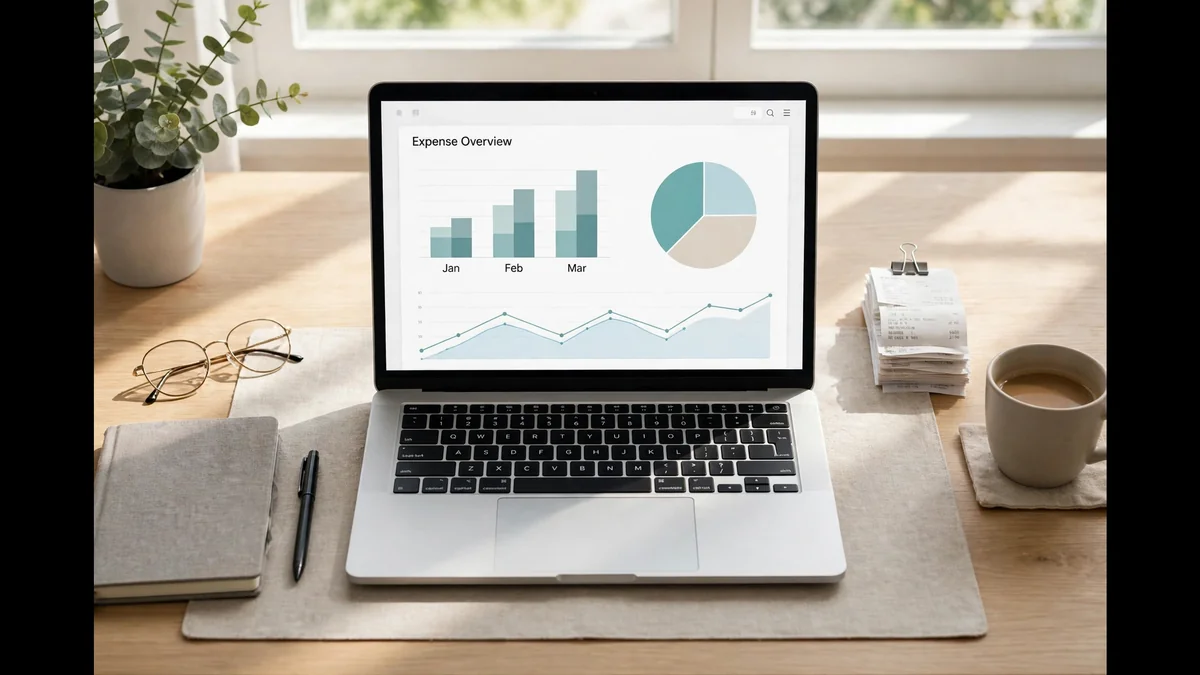
Best expense tracking software for freelancers in 2027 solves a problem every independent worker knows well: receipts pile up in bags, inboxes and camera rolls, and by tax time the true cost of running the business is a guess. The right tool captures each expense the moment it happens, sorts it into the right category, and keeps a clean record an accountant can actually use.
Freelancers need something different from a finance team. One person does the work, the invoicing and the bookkeeping, often from a phone between jobs. The best expense tracking software for freelancers in 2027 is therefore fast on mobile, cheap enough to justify on irregular income, and strong on the two features that matter most to solo workers: receipt scanning and mileage tracking.
We compared the leading options on price, mobile receipt capture, mileage tracking, tax reporting and accounting integrations. The shortlist covers free tools, budget picks and one full accounting platform. Prices are approximate starting prices; check current pricing before you buy, as plans change.
Key takeaways
- Expensify is the best overall pick for freelancers who want fast receipt scanning and clean reports.
- Wave is the best free option, with no monthly fee and solid receipt capture for solo workers.
- Everlance is the best choice for freelancers who drive a lot, with automatic mileage tracking.
- Hurdlr is the best budget pick for tracking deductible expenses and quarterly taxes in one place.
- Do not pay for team features such as approval workflows unless you manage staff.
At a glance: the shortlist
| Product | Best for | Starting price | Standout limit |
|---|---|---|---|
| Expensify | Best overall | From $5 per user, per month | Receipt scanning caps on cheaper plans |
| FreshBooks | Expenses plus invoicing | From $19 per month | Client limit on the entry plan |
| Wave | Best free option | Free | No mileage tracking built in |
| Zoho Expense | Best value for growing freelancers | From $5 per user, per month | Free plan limited to three users |
| Hurdlr | Tax deductions and quarterly estimates | Free; Pro from $8 per month | Basic reports on the free plan |
| Everlance | Mileage tracking | Free; Premium from $8 per month | Expense features are lighter than rivals |
| Shoeboxed | Paper receipt digitising | From $18 per month | No free plan |
| Xero | Full accounting plus expenses | From $15 per month | More setup than a simple tracker |
Expensify — Best overall
Expensify is the most polished expense tracker a freelancer can buy, and the reason is speed. Its SmartScan feature reads a photographed receipt in seconds and files it under the right category with very little manual correction.

The app connects to banks and cards so transactions import and match to receipts automatically. Freelancers who also send invoices should compare the best invoicing software for solopreneurs, since invoicing and expenses are the two halves of freelance cash flow.
Pros: Fast, accurate receipt scanning; excellent mobile app; strong bank and card sync. Cons: Scanning limits on cheaper plans; some team features go unused by solo workers.
FreshBooks — Best for expenses plus invoicing
FreshBooks is an accounting platform first and an expense tracker second, which makes it a strong pick for freelancers who want one subscription instead of two. Expenses can be logged from the phone, receipts attached in a tap, and each cost assigned to a client or project so profitability per client is visible.
Invoicing is where FreshBooks earns its keep. Quotes, invoices, payment reminders and late fees all live in the same dashboard as expenses. The entry plan limits the number of billable clients, so busy freelancers should check the next tier before committing.
Pros: Expenses, invoicing and time tracking in one place; clear per-client profitability. Cons: Client cap on the cheapest plan; receipt scanning is good but not the fastest here.
Wave — Best free option
Wave is the best free expense tracker for freelancers, and it is free in a meaningful sense: no monthly subscription for accounting, invoicing and receipt scanning. Income and expenses are tracked in a simple dashboard, receipts can be scanned with the mobile app, and reports for tax time are included. For a freelancer just starting out, that price is hard to argue with.
The trade-off is scope. Wave has no built-in mileage tracking, and its reporting is simpler than paid rivals. For a solo freelancer, Wave covers the essentials without a subscription.
Pros: No monthly fee for the core tools; receipt scanning included; invoicing built in. Cons: No mileage tracking; simpler reports than paid tools.
Zoho Expense — Best value for growing freelancers
Zoho Expense gives freelancers a lot of capability for a small monthly fee, starting from around $5 per user per month. Receipts can be scanned, forwarded by email or auto-fetched from connected cards, and the app flags duplicate expenses automatically. That automation matters as volume grows.
The free plan covers up to three users, enough for a solo freelancer to try it properly before paying. Multi-currency support is included, a real advantage for freelancers with international clients,
Pros: Low starting price with a usable free plan; strong automation; multi-currency support. Cons: Interface feels busier than simpler rivals; setup takes longer than Wave.
Hurdlr — Best for tax deductions and quarterly estimates
Hurdlr is built around one freelance reality: nobody withholds your taxes for you. It tracks expenses and mileage automatically, then estimates quarterly tax payments in real time so there is no nasty surprise in April. Every expense is tagged as deductible or not, and the app shows a running estimate of what is owed, which turns tax season from a crisis into a routine.
The free plan covers expense and mileage tracking, while Pro adds automatic categorisation and more detailed reports. For tax-focused solo workers, it answers the question that matters most: how much of this money is actually mine.
Pros: Real-time tax estimates; automatic mileage and expense tracking; useful free plan. Cons: Reporting is narrower than full accounting tools; fewer third-party integrations.
Everlance — Best for mileage tracking
Everlance is the pick for freelancers who drive for work. Its automatic mileage tracker starts when a trip begins and stops when it ends, with no need to remember to open the app, and trips are classified as business or personal with a swipe. For delivery drivers, photographers and consultants whose car is a workplace, accurate mileage is often worth more than any other deduction.
Expense tracking is included, with receipt scanning and categorisation, but it is lighter than the dedicated expense tools on this list. The free plan covers basic mileage tracking, while Premium adds unlimited trips and more detailed reports.
Pros: Best-in-class automatic mileage tracking; simple trip classification; clean tax-ready logs. Cons: Expense features are lighter than rivals; Premium needed for unlimited automatic trips.
Shoeboxed — Best for paper receipt digitising
Shoeboxed takes a different approach: it digitises paper receipts for you. Freelancers can photograph receipts, email them in, or post the paper originals in a prepaid envelope, and Shoeboxed extracts the data into a searchable archive. For anyone with a drawer full of paper, or a business that still runs on printed receipts, that service removes the worst part of expense tracking entirely.
The archive is searchable by merchant, category or date, and reports export cleanly for an accountant. There is no free plan, and the monthly cost is higher than a simple scanning app.
Pros: Paper receipts digitised for you; searchable archive; clean accountant exports. Cons: No free plan; higher cost than app-only trackers; overkill for fully digital freelancers.
Xero — Best for full accounting plus expenses
Xero is a full accounting platform with expense tracking built in, and it suits freelancers who have outgrown a simple tracker. Expenses, bank reconciliation, invoicing and reporting all live in one system, and the receipt capture tool handles scanning and approval.
The cost is higher than a tracker-only app, and setup takes more time, but the payoff is a single source of truth for the whole business. The best accounting software for solopreneurs guide compares Xero against its closest rivals if full accounting is on the agenda.
Pros: Full accounting plus expenses in one place; excellent bank reconciliation; strong reporting. Cons: More setup than a simple tracker; higher monthly cost.
How to choose
Start with how you actually spend. If most expenses are card payments and digital receipts, any good scanning app will do. If you drive for work, mileage tracking moves to the top of the list and Everlance or Hurdlr deserve a closer look. If your receipts are mostly paper, Shoeboxed is the only option here that takes the paper away entirely.
Next, check the tax angle. A tool that tags deductions and estimates quarterly tax, like Hurdlr, can be worth more than a prettier app that leaves tax work to a spreadsheet. Then look at the accounting connection: pick the expense tool that integrates with the platform you already use. Freelancers who hand books to a professional should also read the best accounting software for bookkeepers to see which platforms bookkeepers prefer.
Finally, test the mobile app before paying. Expense tracking lives or dies on the phone, in the moment, so a slow or clumsy app means expenses go unrecorded. Use the free trial for two weeks of real spending and confirm the reports export in a format your accountant accepts.
Checklist: before you pay
- Confirm the free trial length and what happens to your data if you cancel.
- Check the renewal price, not just the introductory offer.
- Test receipt scanning on your own receipts, including faded and crumpled ones.
- Verify mileage tracking works automatically on your phone and your routes.
- Confirm the tool exports reports your accountant can open without reformatting.
- Check how easy it is to export all your data if you switch tools later.
Frequently asked questions
What is the best expense tracking software for freelancers?
Expensify is the best overall pick for most freelancers because its receipt scanning is fast and its reports are accountant-ready. Wave is the best free alternative, and Everlance is the best choice for freelancers who drive a lot.
Is there a free expense tracker for freelancers?
Yes. Wave is free for core accounting, invoicing and receipt scanning. Hurdlr and Everlance also offer free plans covering basic expense and mileage tracking.
Can expense tracking software help with taxes?
Yes. Most tools here categorise expenses and flag deductions, and Hurdlr goes further by estimating quarterly tax payments in real time. Clean records also make filing faster and reduce the risk of missed deductions.
Do I need mileage tracking as a freelancer?
Only if you drive for work. Mileage is often one of the largest deductions for freelancers who travel to clients, and automatic tracking is far more reliable than reconstructing trips from memory at year end.
Should freelancers use a separate expense app or full accounting software?
A separate expense app is enough for most solo freelancers with simple finances. Full accounting software is worth it once invoicing, bank reconciliation and reporting need to live in one place.
What happens to my data if I cancel?
Most tools let you export expenses and reports as a spreadsheet or PDF before cancelling, but the exact options vary. Export a full copy before the subscription ends.
The bottom line
For most freelancers, Expensify is the best expense tracking software in 2027: fast receipt scanning, a strong mobile app and reports an accountant can use without rework. Wave is the pick if the budget is zero, Everlance wins for heavy drivers, and Hurdlr is the smartest choice for anyone who wants tax estimates handled automatically.
Pick one tool and use it for every expense for two weeks. The tool that survives those two weeks is the one still keeping clean records at tax time, and that is what actually saves money.