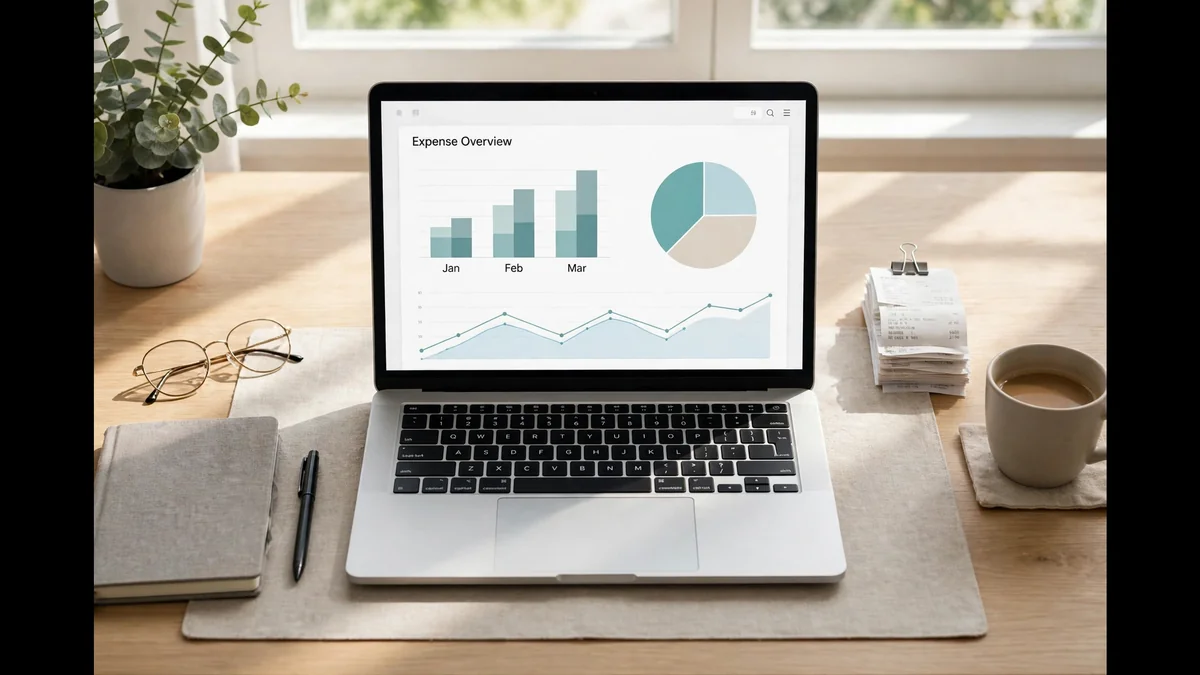
Best expense tracking software for restaurants in 2027 helps owners see exactly where every dollar goes, from fresh produce and meat deliveries to linen, gas, and late-night card tips. Restaurants run on thin margins, often between 3 and 9 percent, so a tool that only records totals at month end is not enough. The best options capture receipts the moment they arrive, sort spending by location and category, and show food cost as a share of sales while there is still time to act.
The strongest tools for restaurants handle the messy reality of the job: supplier invoices that arrive on paper, staff who buy ice or herbs mid-shift, delivery platform fees, and multiple locations sharing one kitchen. They connect to the point of sale and the bank, match card charges to receipts automatically, and push clean totals into the accounting system without retyping.
We compared eight tools on receipt capture, supplier invoice handling, multi-location support, accounting integrations, approval controls, and price. Expensify leads for most independent restaurants, Ramp is the strongest choice for growing groups, and QuickBooks Online is the best fit when the books already live there. The shortlist below covers single cafes through multi-site restaurant groups.
Key takeaways
- Expensify is the best overall pick for most restaurants, with fast receipt scanning and strong accounting sync.
- Ramp is the best choice for restaurant groups that want corporate cards, approvals, and savings insights in one place.
- QuickBooks Online is the best fit when the restaurant already keeps its books in QuickBooks.
- Expect to pay from about $5 to $12 per user per month for a capable plan, with several tools offering free starter tiers.
- Check current pricing before buying, since plans and per-user fees change often, and confirm the tool connects to your point of sale.
At a glance: the shortlist
| Product | Best for | Starting price | Standout limit |
|---|---|---|---|
| Expensify | Most restaurants | From about $5 per user, per month | Advanced approvals need a higher plan |
| Ramp | Restaurant groups | Free starter plan; paid plans from about $15 per user, per month | Best value at scale, not for a single tiny cafe |
| Brex | Fast-growing groups | Free starter plan; paid plans from about $12 per user, per month | Requires a Brex business account for cards |
| QuickBooks Online | QuickBooks users | From about $35 per month | Receipt capture is simpler than dedicated tools |
| Xero | Clean books, small teams | From about $15 per month | Expense claims need the add-on or a higher plan |
| Zoho Expense | Budget-conscious owners | Free plan; paid plans from about $5 per user, per month | Deepest features sit in the Zoho suite |
| Dext | Supplier invoice volume | From about $25 per month | Not a full expense system on its own |
| Fyle | Multi-location approvals | From about $8 per user, per month | Smaller integration library than rivals |
Expensify — Best overall
Expensify is the most complete expense tracking software for restaurants that want receipts handled with almost no manual work. Staff photograph a paper receipt and the app reads the supplier, total, date, and tax, then codes it to the right category.
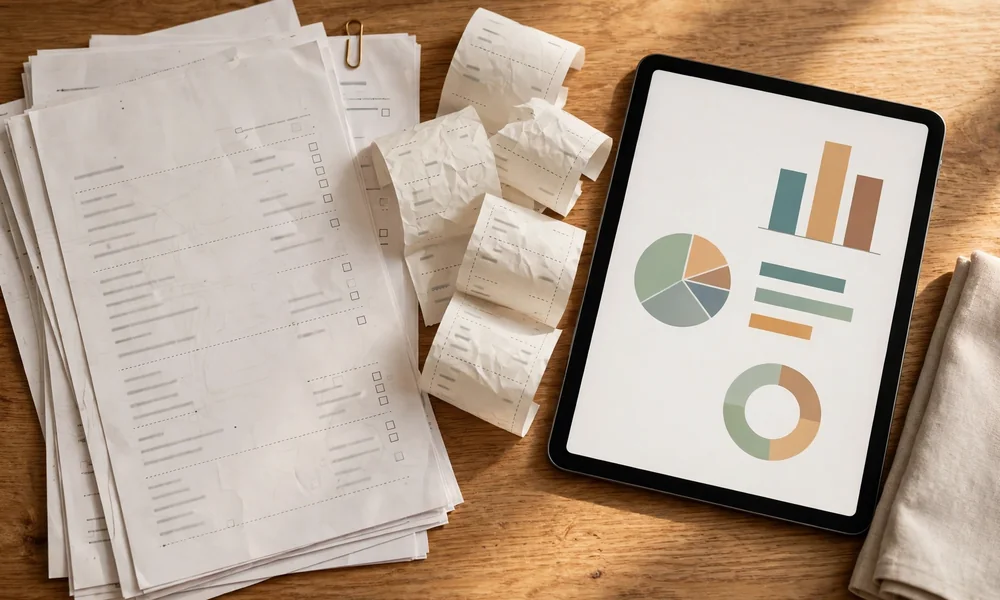
For a restaurant, the approval workflow is the part that earns its keep. A server who buys extra limes mid-shift submits the receipt from a phone, the manager approves it the same day, and the cost lands in the right location and category. Pairing expense tracking with invoicing software built for restaurants keeps both sides of the cash flow in order.
Pros: Excellent receipt scanning; fast approvals; strong accounting integrations; works well on phones.
Cons: Advanced approval rules and custom reporting need a higher plan; per-user pricing adds up across many staff.
Ramp — Best for restaurant groups
Ramp combines corporate cards, expense management, and bill payment, which suits restaurant groups running two or more locations. Each location gets its own cards with spending limits, and managers approve requests in the app instead of over text messages. Ramp flags duplicate invoices and unusual supplier charges, and its savings insights highlight where a group is overpaying for the same goods across sites.
Pros: Cards, expenses, and bill pay in one system; strong controls per location; useful savings alerts.
Cons: More setup than a simple receipt app; smaller single-site cafes may not use the full feature set.
Brex — Best for fast-growing groups
Brex pairs business cards with expense tracking and budgeting, aimed at companies that are opening new sites quickly. A restaurant group can issue cards per location, set budgets by category such as food, beverage, and maintenance, and see spending against budget in real time. Receipts are captured by photo or email forwarding, and the system matches them to card charges automatically.
Accounting sync covers QuickBooks, Xero, and NetSuite, and the reporting tools break spending down by location, department, and supplier.
Pros: Strong budgets and card controls; real-time spending visibility; good for multi-site groups.
Cons: Cards require a Brex account; onboarding takes longer than a standalone receipt app.
QuickBooks Online — Best if your books already live there
QuickBooks Online is the practical choice when the restaurant already runs its accounting in QuickBooks, because expenses flow straight into the ledger with no second sync to maintain. The receipt capture tool photographs receipts and suggests categories, and bank feeds import card transactions daily. Profit and loss by location, food cost tracking, and payroll links all sit in the same system the accountant already knows.
Pros: No separate sync to maintain; familiar to accountants; solid reporting by location.
Cons: Receipt capture is less advanced; approval controls are basic; costs rise with each plan tier.
Xero — Best for clean books and small teams
Xero is a strong option for restaurants that want tidy books and a simple expense workflow. Receipts can be photographed and attached to bills, bank feeds reconcile daily, and the dashboard shows cash flow, outstanding bills, and food cost trends at a glance. The interface is calm and easy to teach to a new manager, which matters in an industry with high staff turnover.
Pros: Clean, easy interface; reliable bank reconciliation; large integration marketplace.
Cons: Full expense claims need a higher plan; reporting is less deep than QuickBooks for large groups.
Zoho Expense — Best for budget-conscious owners
Zoho Expense is the best value pick for restaurants watching every dollar. The free plan covers basic receipt scanning and approvals for small teams, and paid plans start low. Receipts can be scanned, emailed in, or auto-fetched from suppliers, and the app supports per diem, mileage, and multi-currency for restaurants near borders or with overseas suppliers.
Approval workflows are flexible, with multi-level rules by amount and department, and the integration with Zoho Books is seamless for owners already in the Zoho suite. It also connects to QuickBooks and Xero.
Pros: Genuine free plan; low starting price; flexible approval rules; good automation.
Cons: Interface feels dense; best experience comes with other Zoho apps.
Dext — Best for supplier invoice volume
Dext is built for one painful restaurant job: turning a stack of supplier invoices and receipts into clean digital records. Staff photograph or email documents, Dext extracts the supplier, line items, totals, and tax, and the data flows into QuickBooks, Xero, or Sage. For restaurants receiving daily deliveries from several suppliers, that extraction accuracy saves hours of manual entry each week.
Used that way, it is the fastest route from a pile of paper invoices to a reconciled ledger, and its supplier rules learn how each vendor should be coded over time.
Pros: Excellent invoice and receipt extraction; learns supplier rules; strong accounting publishing.
Cons: No cards or approvals; an add-on cost on top of accounting software.
Fyle — Best for multi-location approvals
Fyle is designed around approvals, which makes it a good fit for restaurant groups where spending needs a manager sign-off before it hits the books. Employees submit expenses from email, Slack, or the mobile app, and managers approve with one tap. Location-based rules route each claim to the right approver, and duplicate detection catches the same receipt submitted twice.
Pros: Strong multi-location approval rules; easy submission from email and chat; good duplicate detection.
Cons: Smaller integration library; brand recognition is lower than the market leaders.
How to choose
Start with how the money actually moves. A single restaurant with one card and a weekly supplier run needs fast receipt capture and a clean accounting sync, which points to Expensify or Zoho Expense. A group with three or more sites needs cards with limits per location and approval chains, which points to Ramp or Brex. If the books already live in QuickBooks or Xero, staying inside that system is usually worth more than a slightly better scanner.
Check the integrations before the price. Look at how it handles tips, delivery platform fees, and supplier credits, since those three items cause most reconciliation headaches in restaurants. A good shortlist also considers restaurant management software alongside expense tools, because the two systems share the same daily data.
Run a two-week trial with real receipts from a normal week, including the messy ones. Measure how many receipts needed manual fixes, how long approvals took, and whether the accounting sync needed corrections. The tool that survives a real Friday night service without extra admin work is the one to keep.
Checklist: before you pay
- Test receipt scanning on real supplier invoices, not clean printouts, and count the manual fixes needed.
- Confirm the tool connects to your point of sale, bank, and accounting system before committing.
- Check the renewal price and the per-user cost at your actual headcount, not the headline starter price.
- Set approval limits by role so a single manager cannot approve large orders alone.
- Confirm you can export all expense data, including receipt images, if you switch tools later.
- Ask support how the tool handles tips, delivery platform fees, and supplier credits.
Frequently asked questions
What is the best expense tracking software for restaurants?
Expensify is the best overall pick for most restaurants because of its fast receipt scanning, simple approvals, and strong accounting sync. Ramp is better for multi-location groups that also want corporate cards, and QuickBooks Online is the best choice when the books already live in QuickBooks.
How much does expense tracking software for restaurants cost?
Expect from about $5 to $12 per user per month for a capable plan, with free starter tiers from Ramp, Brex, and Zoho Expense. Check current pricing before buying, since fees and plan limits change often.
Do restaurants need separate expense software if they use QuickBooks?
Not always. QuickBooks Online handles receipts, bank feeds, and reporting well enough for many single restaurants.
Can expense software track food cost percentage?
Yes, indirectly. The tool categorises food and beverage purchases by location and supplier, and the accounting system turns those totals into a food cost percentage against sales.
How do restaurants handle supplier invoices in these tools?
Supplier invoices are photographed, emailed in, or fetched automatically, then matched to the delivery and coded to the right category. Dext is the strongest at pure invoice extraction, while Expensify and Ramp handle the full flow from capture to approval to payment.
What should a small restaurant look for first?
Fast receipt capture, a mobile app staff will actually use, and a clean sync to the accounting system. A solid accounting software guide for small businesses helps compare the bookkeeping side before you decide.
The bottom line
For most restaurants, Expensify is the safest pick: it handles the daily flood of receipts, approvals, and card matching with the least friction. Restaurant groups that want cards, budgets, and bill pay in one place should choose Ramp, while owners already running QuickBooks should stay there and add a dedicated scanner only if receipt volume demands it.
Whichever tool you choose, the win comes from consistency. Scan every receipt the day it arrives, approve spending weekly, and review food cost by location every month.