
The Game Boy Advance packed an unusually varied library into a handheld you could take anywhere. If you want to revisit a favorite or try one for the first time, picking a game can feel like a bigger task than expected. These choices span original adventures, remakes, RPGs, action, and strategy, with lasting play appeal weighed alongside critic and community signals. The order offers a starting point, not a rule about what you must enjoy most.
Some games fit a spare moment, while others ask you to settle in for a long campaign or think through each move. This list aims to help you find the kind of play that fits your time and taste. A good first pick depends on whether you want a short burst of play, a long story, or a challenge built around planning.
Key Takeaways
- Pick by play style, not rank alone.
- Try WarioWare for quick, frantic rounds.
- Choose an RPG for a longer story and character growth.
- Look to Zelda or Metroid for exploration.
- Advance Wars and Fire Emblem reward careful planning.
- Critic scores and community rankings measure different things.
What made the GBA a distinctive handheld?
The GBA’s original design paired a 240 × 160-pixel screen with a simple two-battery power setup. Its reflective display shaped how games looked during portable play, while the later SP models changed the screen and form. The Game Boy Advance family had sold 81.51 million units by June 2010.
The original system launched in North America on June 11, 2001. Its reflective TFT LCD used ambient light, so dark scenes could be hard to see in dim rooms. Two AA batteries powered the unit, and its wide shape placed the controls on either side of the screen.
What the original system was like
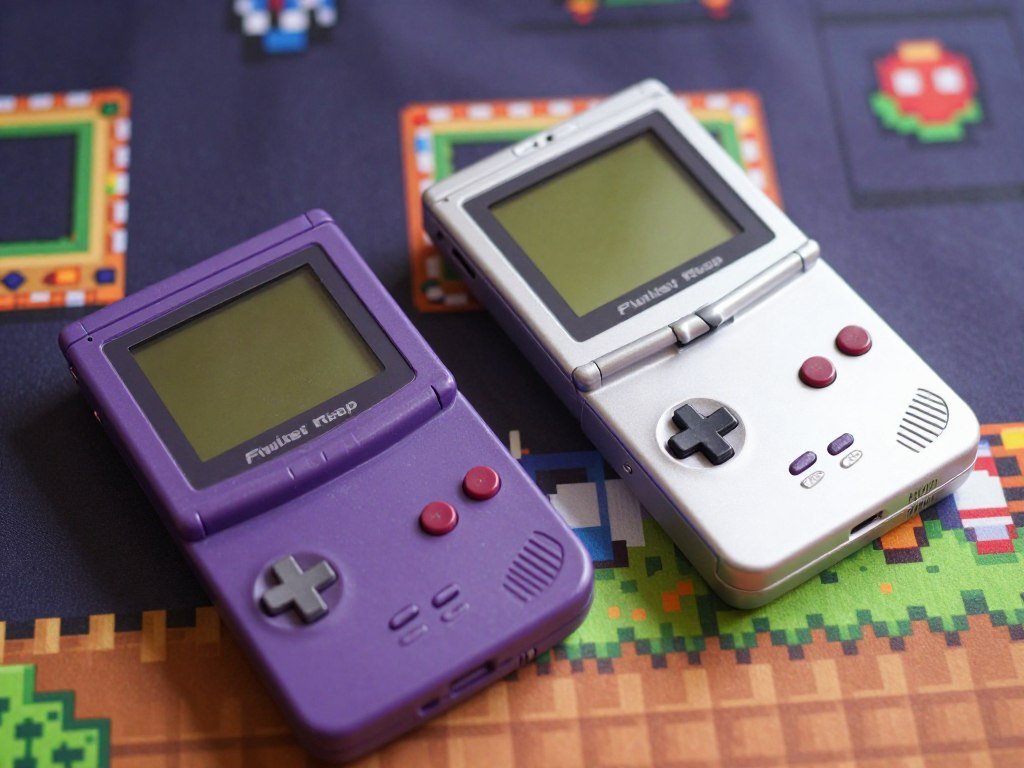
The original Game Boy Advance brought a color library to a portable format with a screen measuring 240 × 160 pixels. The system’s shape suited two-handed play, but the reflective screen looked clearer in bright surroundings. A hardware history of the GBA also covers its design and later models.
Metascore is Metacritic’s aggregate critic rating for a game. It gives one way to compare reviews, though a rating cannot tell you which style you will enjoy most.
How the GBA SP changed the screen and shape
The 2003 Game Boy Advance SP folded into a clamshell and added a frontlit screen. A 2005 revision replaced that screen with a backlit display. Frontlighting or backlighting changes visibility, especially when a game uses shadowy scenes.
| Model | Release timing | Screen or design |
|---|---|---|
| Original GBA | 2001 | Reflective TFT LCD, 240 × 160 pixels |
| 2003 GBA SP | 2003 | Clamshell body, frontlit screen |
| 2005 backlit SP | 2005 | Clamshell body, backlit screen |
GBA SP games use the same GBA cartridge library, so your system model does not limit this game list.
That shared library means the SP changes how you hold and view a game, not which GBA titles you can play. Check which screen revision you own before judging how readable a game’s darker scenes will be.
Which Best Gameboy Advance Games Make Good First Picks?
Harvest Moon, Super Monkey Ball Jr., and Kirby offer three gentle ways into different kinds of play. Choose by mood: daily routines, quick arcade challenges, or a colorful platform adventure. Harvest Moon is the least action-focused choice, so its slower pace will not suit everyone.
These best game boy advance games give new and returning players clear goals without requiring deep knowledge of a long series. Their very different rhythms also make it easy to tell what you want from a game.
- #30 Harvest Moon: Friends of Mineral Town. Grow crops, care for animals, and build a life in a small farming town. Its repeatable daily routine gives you room to settle into the world rather than rush through a plot. It was listed at No. 21 and released April 18, 2003. Pick it if the appeal lies in shaping a farm over many in-game days.
- #29 Super Monkey Ball Jr. This compact arcade-style challenge puts a monkey in a ball and asks you to reach the goal. Short stages make it a simple game to pick up, while precision gives you a reason to try again. It was listed at No. 25 and released November 20, 2002. The direct objective suits players who like clear tests of control.
- #28 Kirby: Nightmare in Dream Land. This colorful platforming remake lets Kirby inhale foes and copy their powers. Its familiar look and simple core moves make it easy to start, while changing powers keep each stage lively. Players who remember Kirby can enjoy a fresh run, and newcomers can learn the platforming basics without a complex move set.
The best game boy choices here depend on whether you want routine, precision, or a storybook world. The first two offer focused tasks, while Kirby makes each stage a small adventure. Pick Harvest Moon if the appeal is building a routine over time rather than clearing a stage in one sitting.
Which GBA games work best in short sessions?
WarioWare suits very brief bursts, while Wario Land 4 gives you a fuller platforming stage to explore. Short does not mean calm: WarioWare changes tasks at high speed. Choose between frantic microgames and a more deliberate run through nonlinear levels.
All three games make it easy to return after a break, though they reward different habits. WarioWare asks you to react; Wario Land 4 encourages you to look around and replay stages for missed rewards.
- #27 WarioWare: Twisted! The microgame collection turns quick motions into tiny tests, with a motion sensor built into the cartridge. Each challenge asks for a fast response, then moves on almost at once. Its brisk pace can make a spare minute feel exciting, though the rush may tire you if you want quiet play.
- #26 WarioWare, Inc.: Mega Microgame$! The original GBA collection stacks rapid microgames into brief rounds. Its Metascore is 89, a useful sign of strong critic response, not proof that its frantic rhythm suits every player. The small tasks are easy to understand, but the speed keeps raising the pressure.
- #25 Wario Land 4. This platformer gives you nonlinear levels, treasure to find, and reasons to return after finishing a stage. Its Metascore is 88, matching WarioWare: Twisted!, which also has an 88. A score can set a comparison point, but it cannot settle whether you prefer exploring a level or reacting to a rapid prompt.
WarioWare: Twisted! and Wario Land 4 each have a Metascore of 88, while Mega Microgame$! has an 89. Those close ratings do not erase their different designs. Choose Wario Land 4 when you want a stage to explore instead of a rapid sequence of changing tasks.
Which strategy games reward careful planning?
Advance Wars 2 offers the clearest military planning, Fire Emblem focuses on individual units, and Circle of the Moon is the action choice. Not every battle game is strategy. Castlevania: Circle of the Moon is an action-platform adventure, not a tactics game.
These three games suit different players who enjoy thinking ahead. Two make you plan attacks on a grid, while Castlevania asks for quick movement and exploration instead.
| Rank | Game | Main play style |
|---|---|---|
| #24 | Fire Emblem | Grid-based unit strategy |
| #23 | Castlevania: Circle of the Moon | Action-platform exploration |
| #22 | Advance Wars 2: Black Hole Rising | Turn-based military strategy |
Fire Emblem has a Metascore of 88. Its grid battles center on unit placement and character-led decisions, which makes each turn feel personal. The pace lets you weigh a move before committing.
Circle of the Moon has a Metascore of 91. Its action relies on movement, combat, and exploring connected areas, rather than directing units across a map. Choose it when you want active play instead of a turn-based plan.
Advance Wars 2: Black Hole Rising has a Metascore of 89. You command an army and think about terrain, unit roles, and the next turn. Its military focus makes every move part of a larger plan, rather than a single character’s fight.
The critic ratings offer context, but they do not describe the feel of each battle. Fire Emblem puts characters at the center; Advance Wars 2 asks you to think like a commander. If you want each move to change a larger battle plan, start with Advance Wars 2.
Which Pokémon games capture the GBA era?
Choose Ruby and Sapphire or Emerald for a Hoenn adventure, and FireRed or LeafGreen for a return to Kanto. The setting is the first choice, before version details. Ruby and Sapphire sold 16 million units, making them the GBA’s best-selling games.
Each pair offers a different place to explore, familiar characters, and the series’ turn-based battles. Emerald refines the Hoenn adventure, while the Kanto remakes revisit an older part of the Pokémon world.
- #21 Pokémon Emerald. Emerald offers an enhanced version of the Hoenn adventure from Ruby and Sapphire. Its Metacritic user score is 8.8, reflecting player ratings rather than critic reviews. Start here if you want Hoenn with a version that brings together elements from the earlier releases.
- #20 Pokémon FireRed and LeafGreen. These remakes take you back to Kanto, with familiar towns, routes, and Pokémon. They suit players who want to revisit classic locations, not begin a new Hoenn journey. The paired versions give longtime fans a return to a well-known part of the series.
- #19 Pokémon Ruby and Sapphire. These games introduce Hoenn, with new places and characters to meet. Their 16 million sales show how widely the pair caught on during the GBA era. Choose them for the starting point of the region’s story, or pick Emerald for its enhanced take.
The GBA’s Pokémon games share a familiar core, but the region changes the feel of the trip. Hoenn gives you a new setting, while Kanto brings back well-known locations. That distinction matters more than picking a version by rank.
Players looking for the best Game Boy Advance games for Pokémon can begin with the place they want to visit. Ruby and Sapphire establish the Hoenn choice, while Emerald revisits it in an enhanced form. Decide first whether you want the familiar Kanto setting or the Hoenn region before choosing between versions.
Which Best Gameboy Advance Games Are Must-Play RPGs?
Golden Sun is the best first pick for puzzle-led fantasy, while Final Fantasy Tactics Advance suits tactical battles. Magic matters outside combat in Golden Sun. Psynergy, Golden Sun’s elemental magic, helps solve environmental puzzles and fight enemies.
Golden Sun was developed by Camelot Software Planning and published by Nintendo. It came out in Japan on August 1, 2001, North America on November 12, 2001, and Europe on February 22, 2002.
- #18 Golden Sun. The four elements are Venus, Mars, Jupiter, and Mercury. The game has 28 Djinn, seven for each element; assigning them can change a character’s class, abilities, and statistics. Golden Sun sold more than one million units worldwide and led Japanese sales for four months. Its Metacritic user score is 8.9.
- #17 Final Fantasy Tactics Advance. This RPG replaces open exploration with grid-based battles and shifting rules. A rule can ban a particular item or command, which may restrict a move you prefer. That limit adds a tactical challenge, but it can frustrate players who want to rely on one favorite ability.
- #16 Golden Sun: The Lost Age. This connected follow-up continues the story and has a Metacritic user score of 8.9. Its place beside the first game makes the pair a strong choice for players who want more of Golden Sun’s world and cast.
Golden Sun also has a two-player versus mode, but it requires two copies and a Game Link Cable. That mode is for multiplayer, not a solo feature. The contrast with Final Fantasy Tactics Advance is clear: one centers on exploration and magic, the other on grid battles and rules.
Readers looking for the best Game Boy Advance RPGs can choose by story and combat style. Golden Sun brings puzzle-solving into its magic, while Final Fantasy Tactics Advance makes positioning central. The story-focused game recommendations may also help if narrative matters most. Choose Final Fantasy Tactics Advance if you prefer battles shaped by positioning and changing rules over puzzle-led exploration.
Which adventures make exploration memorable?
Zero Mission reshapes the original Metroid, Minish Cap builds a Zelda adventure around Link’s changing size, and Tales of Phantasia stands out for its release history. Each uses discovery differently. The GBA edition of Tales of Phantasia was the game’s first release outside Japan.
These games reward attention to places and paths, but their worlds work in distinct ways. One revisits a classic, one changes the scale of Hyrule, and one brings an older RPG to new players.
- #15 Metroid: Zero Mission. This reimagining of the original Metroid sends Samus through a hostile world of hidden routes and upgrades. It revises the classic adventure while keeping the focus on exploration and return trips to places you could not reach before.
- #14 The Legend of Zelda: The Minish Cap. Link can shrink to explore tiny spaces in Hyrule, turning ordinary objects into new paths and landmarks. The game was listed at No. 20 and released November 4, 2004. Its compact world gives each change in scale a clear purpose.
- #13 Tales of Phantasia. This RPG brings a story-led adventure to the handheld and marks the game’s first release outside Japan. The GBA edition is not a direct original release: players seeking the original version will not find that in this edition.
The Minish Cap makes exploration playful by changing how Link sees familiar places. Zero Mission puts more weight on finding a way through an alien map, while Tales of Phantasia centers its journey on RPG characters and story. The platform game recommendations offer more choices if jumping and exploration are your main draw.
Those differences make the games easy to match with a preferred kind of adventure. Minish Cap offers a self-contained Zelda story, while Zero Mission revisits Samus’s first journey with a new take. Choose Minish Cap for a self-contained Zelda adventure, and Zero Mission for Samus’s return to the original Metroid story.
Which GBA games have the strongest critic scores?
Aria of Sorrow and Yoshi’s Island each earn a 91 Metascore, though their play styles differ sharply. Equal scores do not mean equal games. A score cannot tell you whether you prefer platforming or action exploration.
Critic ratings help narrow a large list, but they do not replace your own taste. These three games offer monster abilities, egg-based platforming, and castle exploration.
| Game | Metascore | What the game emphasizes |
|---|---|---|
| Castlevania: Aria of Sorrow | 91 | Monster-soul ability system |
| Yoshi’s Island: Super Mario Advance 3 | 91 | Egg-based platforming |
| Castlevania: Harmony of Dissonance | 87 | Castle exploration |
#12 Castlevania: Aria of Sorrow lets you gain abilities from monsters, adding new ways to fight and move through its castle. Its 91 Metascore matches Yoshi’s Island, but the games ask for very different skills.
#11 Yoshi’s Island: Super Mario Advance 3 centers on platforming with eggs. Yoshi can aim and throw them at enemies or objects, so each stage asks you to use timing and judgment. Its colorful style makes the challenge feel inviting, even when a level demands careful play.
#10 Castlevania: Harmony of Dissonance has a Metascore of 87 and sends you through a large castle. Searching its rooms and paths gives exploration more weight than in a straight stage-based platformer. It suits players who like returning to places as new routes open.
The 91 tie shows how little one number says about the moment-to-moment experience. Yoshi offers a platform challenge, while Aria emphasizes action and ability growth. Use the score as a shortlist tool, then choose by the kind of challenge you actually enjoy.
Which classics balance action and strategy?
Final Fantasy VI offers a character-rich story, Super Mario World rewards platforming skill, and Metroid Fusion builds tension through guided exploration. Each gives you a different reason to continue. All three have a Metascore of 92.
Their shared critic rating does not make them interchangeable. One asks you to follow a large cast, another hides rewards in its stages, and the third sets a tighter pace.
- #9 Final Fantasy VI. This portable SNES adaptation tells an emotional story through a large ensemble of characters. Its many personalities and shifting events give the campaign a broad scope, while the turn-based battles let you plan around different abilities. It has a Metascore of 92.
- #8 Super Mario World: Super Mario Advance 2. Secret-filled stages give this platforming adventure plenty to discover beyond the route to the goal. The game has a Metascore of 92 and suits players who want to explore at their own pace. Hidden exits and rewards make repeat visits feel worthwhile.
- #7 Metroid Fusion. This sci-fi adventure uses tense encounters and a more linear pace to guide Samus through its story. It has a Metascore of 92 and a Metacritic user score of 8.8. Its gated opening gives you goals in sequence, rather than a wide area to roam freely.
The best gameboy advance games often balance a strong core idea with room to keep playing. These three show how story, secrets, and atmosphere can hold your attention in different ways. Readers who want a large cast and story can also explore these anime and story-led game picks.
If you want freedom to wander, Super Mario World gives you more room than Fusion’s guided opening. Fusion is stronger for a tightly paced, atmospheric adventure. If a tightly paced, atmospheric adventure sounds more appealing than open-ended exploration, Metroid Fusion is the clearest pick here.
Which games stand out for arcade-style play?
Mario Kart: Super Circuit is the pick for a fast multiplayer race, while Advance Wars rewards time spent over each move. Arcade-style fun can mean different things. Advance Wars is turn-based strategy, not a reflex-focused arcade game.
These three games offer energetic play through platforming, racing, or thoughtful turns. Each has a clear loop, whether you chase a better time, master a stage, or outmaneuver an opponent.
- #6 Super Mario Advance 4: Super Mario Bros. 3. This platforming adventure has a Metascore of 94. Its stages mix familiar jumps with power-ups and secrets, making it a strong pick for players who like quick levels with room to improve. The classic structure keeps the action moving.
- #5 Advance Wars. Its Metascore is 92. You command units across a grid and make turn-by-turn choices, so the excitement comes from reading the map rather than quick reflexes. Players who enjoy planning can take time to weigh each move.
- #4 Mario Kart: Super Circuit. The racing game has a Metascore of 93 and was listed at No. 19, released July 1, 2001. It supports four-player multiplayer with one game cartridge. Each player having a copy adds multiplayer modes beyond the single-cartridge option.
The one-cartridge mode makes Mario Kart a handy choice for a group, while extra modes open when each player has a copy. A four-player single-cartridge race is a specific feature, not a claim that every mode works that way. The distinction matters when you plan a multiplayer session.
Mario Kart gives you direct competition and quick races; Advance Wars gives each turn space to matter. Super Mario Bros. 3 brings the quick movement and stage goals of platforming. Choose Mario Kart when you want a head-to-head session that can bring four players together around one cartridge.
Which GBA classics deserve the top three spots?
Zelda takes first for pairing a classic solo adventure with Four Swords multiplayer, while Tony Hawk shares its highest Metascore. The order is an editorial choice, not a score difference. Zelda and Tony Hawk both have a Metascore of 95.
Mario & Luigi adds comic dialogue and timed battle commands to the top group. Each game suits a different kind of player, from skating fans to RPG players and Zelda explorers.
- #3 Tony Hawk’s Pro Skater 2. Trick-based skating lets you link moves, build a score, and keep trying to beat your best run. Its 95 Metascore ties the top-ranked Zelda release, making it a strong choice for players who want an arcade challenge rather than a long story.
- #2 Mario & Luigi: Superstar Saga. This RPG pairs comic dialogue with timed commands during battles. Pressing a button at the right moment can improve an attack or help you avoid damage, keeping fights active. Its Metascore is 90, and its lighter tone makes the story easy to enjoy.
- #1 The Legend of Zelda: A Link to the Past / Four Swords. The release includes a solo adventure and Four Swords multiplayer. Its Metascore of 95 is the highest on Metacritic’s all-time GBA chart, tied with Tony Hawk’s Pro Skater 2. The first-place spot reflects this ranking’s editorial choice, not a higher score.
Four Swords works best when you have other players and the required link setup. The solo Zelda adventure stands on its own, while multiplayer adds a different way to play with friends. A four-player session depends on having the people and link gear available.
For Nintendo-era comparisons beyond the handheld, the classic Nintendo 64 games include other adventures, RPGs, and multiplayer picks. Still, the GBA top spot suits players who want both a full solo game and a group option. Pick Tony Hawk’s Pro Skater 2 instead if you want a score-chasing arcade challenge rather than a long adventure.
How should you choose your first GBA game?
Start with Golden Sun for puzzle-led fantasy, Metroid Fusion for tense action, or Advance Wars for turn-based planning. Your favorite genre is a useful shortcut. Critic Metascores, Metacritic user scores, and GameFAQs points come from different rating methods.
A top-100 GBA games list can help you find options beyond one ranked order. Community points show which games readers favored in that poll, while critic and user scores measure other kinds of response.
For a story-driven RPG
Golden Sun suits players who want fantasy exploration with puzzles alongside combat. Mario & Luigi: Superstar Saga offers comic dialogue and timed battle commands. Final Fantasy VI fits players drawn to a large cast and a story with many turns.
If you want more options by style, the GBA game recommendations compare RPGs, Pokémon adventures, and quick-session picks. Golden Sun, Golden Sun: The Lost Age, and Castlevania: Aria of Sorrow each have a Metacritic user score of 8.9. These are player ratings, not critic Metascores.
For action and exploration
Metroid Fusion offers guided tension, with goals that shape your route through the story. Zero Mission reworks the original Metroid adventure, while The Minish Cap makes Zelda exploration playful through Link’s changing size.
Choose Fusion for a more directed sci-fi pace, Zero Mission for a revised classic, or Minish Cap for a self-contained Zelda world. A broader platformer list can help if you want more games built around jumping and discovery.
For strategy or a community favorite
Advance Wars and Fire Emblem are strong picks for tactical turns. GameFAQs readers put Metroid Fusion first, with Minish Cap and Zero Mission close behind.
| Community rank | Game | Points |
|---|---|---|
| 1 | Metroid Fusion | 167 |
| 2 | The Legend of Zelda: The Minish Cap | 131 |
| 3 | Metroid: Zero Mission | 125 |
GameFAQs awarded 10 points for first place, 9 for second, and 1 for tenth. Lists shorter than ten games gave 10 points to the highest-ranked game. Pokémon Ruby/Sapphire/Emerald placed fourth with 108 points, while FireRed/LeafGreen placed eighth with 69.
Community points help you discover favorites, but they do not replace critic ratings or your own taste.
Because the point system combines votes across lists, the top-100 view offers a wider discovery tool than one final verdict. For more current Nintendo choices by genre, see Switch 2 games by play style. If you are undecided, choose one game in the genre you already enjoy and give its opening hour a try.
Conclusion
The best place to begin is the game that matches the kind of play you want today. You do not need to start at No. 1 if another genre sounds more fun. A familiar style can make an older game easier to settle into.
Choose between an RPG, an adventure, and a quick-play game before picking a title. That small choice narrows the field without making a rating or rank decide for you. Pick one title, set aside a first session, and see whether its world or play style pulls you in.
FAQ
Can a Game Boy Advance SP play original GBA cartridges?
Yes, the Game Boy Advance SP plays Game Boy Advance cartridges. The SP changed the handheld’s shape and screen, not the game library. Its clamshell design folds shut, and its screen revisions added frontlighting or backlighting. You can use the same GBA cartridge collection across the original system and the SP.
Do I need a link cable for GBA multiplayer?
It depends on the game. Golden Sun’s versus mode needs two copies and a Game Link Cable, while Mario Kart: Super Circuit supports four players with one cartridge. Multiplayer features can also differ between modes, so the number of players and game copies depends on the title you choose.
Which Pokémon GBA game should a newcomer start with?
Start with Ruby and Sapphire or Emerald for Hoenn, and FireRed or LeafGreen for a return to Kanto. Ruby and Sapphire introduce Hoenn, while Emerald offers an enhanced take on that adventure. The Kanto remakes revisit familiar towns and routes, so choose them if you want a known setting instead of a new region.
Is Golden Sun connected to Golden Sun: The Lost Age?
Yes, Golden Sun: The Lost Age follows the story of Golden Sun. The games share a connected world and story, with the second entry continuing what began in the first. Each is a separate game, rather than two names for the same release, and The Lost Age gives the earlier adventure a follow-up.
How many players can play Mario Kart: Super Circuit?
Up to four players can compete using one game cartridge. That single-cartridge option makes it possible to race with a group without four copies. Multiplayer modes differ when each player has a copy, so the one-cartridge setup does not include every option available across multiple cartridges.
Which GBA RPG is a good first choice for someone new to the genre?
Golden Sun is a good start if you want puzzles alongside combat, while Mario & Luigi: Superstar Saga suits a lighter comic tone. Golden Sun uses magic during exploration as well as battles. Mario & Luigi keeps fights active with timed commands, which adds a clear action cue to its RPG battles.
Are Metacritic scores and community rankings measuring the same thing?
No, critic Metascores, Metacritic user scores, and GameFAQs community points use different rating methods. A Metascore combines critic reviews, while user scores come from player ratings. GameFAQs points reflect ranked community lists and their scoring rules. Treat them as separate ways to compare games, not as interchangeable marks.



