The best gifts for photographers in 2026 are the practical accessories that make shooting easier and the results better: a fast prime lens, a comfortable camera bag, quick memory cards and a portable drive for backing up a day of photos.
This guide covers gifts from around $15 to $250, with most picks starting between $25 and $100. Every item here works with the mirrorless and DSLR cameras most photographers use today.
We picked eight gifts that cover lenses, carrying, support, storage and printing. Prices below are approximate starting prices, and it is worth checking current pricing before you buy, because camera gear deals change quickly in the holiday season.
Key takeaways
- A 50mm f/1.8 prime lens is the best photography gift overall, starting from around $130.
- Fast memory cards and a portable SSD are the most practical gifts for any working photographer.
- Check the recipient’s camera mount and card format before buying lenses, cards or batteries.
- A comfortable strap and a well-padded bag matter more than they look: they decide how long a photographer can shoot.
- Avoid cheap unbranded accessories; a failed card or a broken mount can cost a whole shoot.
At a glance: the shortlist
| Gift | Best for | Starting price | Standout limit |
|---|---|---|---|
| 50mm f/1.8 prime lens | Portraits and low light | From $130 | Must match the camera mount |
| Camera shoulder bag | Daily carry | From $60 | Check the size against the kit |
| Mini tripod | Travel and video | From $50 | Light cameras only |
| Fast SD cards | Every photographer | From $25 | Check the card format |
| Lens cleaning kit | Every photographer | From $15 | Small but essential |
| Comfortable camera strap | Long shooting days | From $40 | Check the attachment style |
| Portable SSD | Backup and editing | From $80 | Capacity costs more |
| Instant photo printer | Fun and sharing | From $90 | Film and paper cost extra |
50mm f/1.8 prime lens — Best overall
A 50mm f/1.8 prime lens is the single best gift for a photographer who shoots portraits, street photography or low-light scenes. It is sharp and light, and its wide f/1.8 aperture lets in far more light than a kit zoom, which means cleaner photos indoors and a soft blurred background.
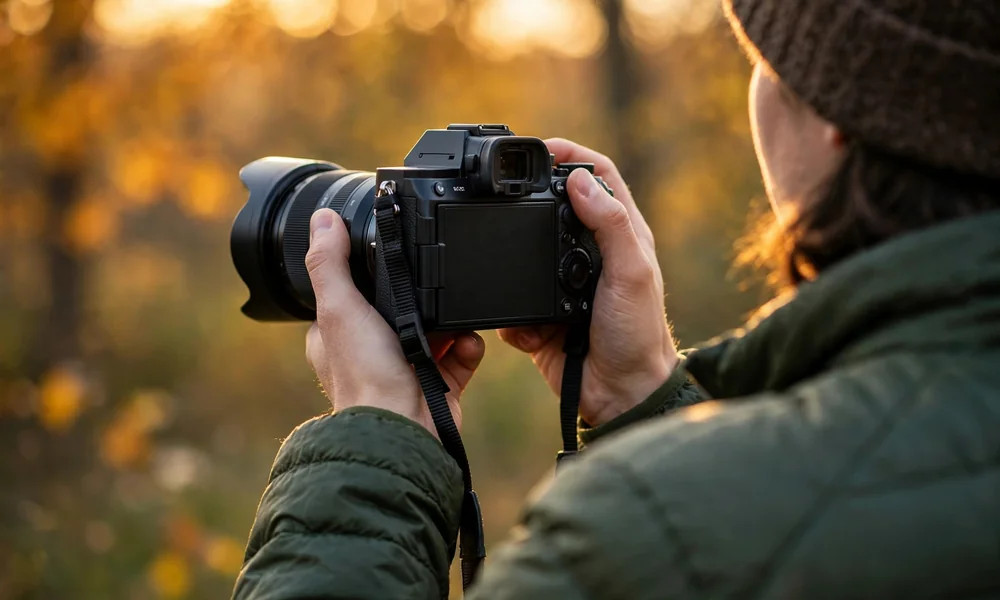
The one rule is the mount: a Canon RF lens will not fit a Sony E-mount camera, so confirm the recipient’s camera brand and mount before ordering. Canon, Nikon, Sony and Fujifilm all sell a 50mm f/1.8 in their current mirrorless mount, usually starting from around $130 to $200. If you are unsure which camera they use, our guide to the best mirrorless cameras can help you match a lens to a body.
Pros: Sharp images, great in low light, light and affordable for a lens. Cons: Fixed focal length, must match the camera mount exactly.
Camera shoulder bag — Best for daily carry
A good camera shoulder bag protects the gear and makes it easy to reach. The best bags in 2026, such as the Peak Design Everyday Sling or the Lowepro ProTactic, use padded dividers that can be moved to fit a camera body and one or two lenses, plus a pocket for cards, batteries and a phone.
Check what the recipient carries: a mirrorless body with a small prime needs far less space than a body with a 70-200mm zoom. Weather resistance is worth paying for, because a bag is the only thing between a camera and the rain.
Pros: Protects expensive gear, fast access, comfortable for a day out. Cons: Wrong size is useless, good bags cost more than they look.
Mini tripod — Best for travel and video
A mini tripod is a small, flexible support that fits in a bag pocket and steadies a camera for long exposures, group photos and video. Models such as the Joby GorillaPod start from around $50, and they double as a handle for vlogging when the legs are folded together.
A mini tripod rated for 1 kg will hold a mirrorless camera with a small prime lens, but not a heavy zoom. Check the weight of the recipient’s camera and heaviest lens together, and choose a tripod rated comfortably above that total.
Pros: Tiny and light, useful for photos and video, cheap for what it does. Cons: Not for heavy cameras, flexible legs can slip on smooth surfaces.
Fast SD cards — Best practical gift
Fast memory cards are the gift every photographer needs and few buy for themselves. A slow card makes a camera stall during burst shooting and turns a video shoot into a wait, while a fast UHS-II card from SanDisk or Lexar keeps up with the camera. A 128 GB card with a write speed of at least 150 MB/s is a good starting point, from around $25 to $40.
Most mirrorless cameras use SD cards, but some professional bodies use CFexpress cards, which look different and cost much more. Buying two smaller cards is often smarter than one large card, because a photographer can keep shooting if the first fails.
Pros: Cheap, always useful, speeds up shooting and transfers. Cons: Wrong format is useless, cards wear out over time.
Lens cleaning kit — Best budget pick
A lens cleaning kit is the cheapest genuinely useful photography gift, starting from around $15. A kit with a blower, a soft brush, a microfibre cloth and lens cleaning fluid keeps dust and fingerprints off the front element, and a clean lens is the difference between a sharp photo and a hazy one.
The blower is the most important part: it removes dust without touching the glass. Blow first, brush second, and wipe last, using a clean microfibre cloth and fluid made for coated lenses. Avoid paper tissues and household glass cleaner, which can damage coatings.
Pros: Very cheap, essential maintenance, fits any camera bag. Cons: Uninspiring as a main gift, best paired with another item.
Comfortable camera strap — Best for long days
A comfortable camera strap is the gift a photographer feels on every shoot. The thin strap that comes in the box digs into a neck after an hour, while a wide padded strap from Peak Design or BlackRapid spreads the weight and lets the camera hang at the hip, ready to lift and shoot. Prices start from around $40.
Some straps use quick-release anchors that clip on and off in seconds, while others use a tripod-socket mount that suits a heavier camera. Check whether the recipient uses a tripod plate, because a strap that blocks the tripod socket will annoy them.
Pros: Real comfort on long days, quick access to the camera, durable. Cons: Personal fit, wrong attachment style is frustrating.
Portable SSD — Best for backup and editing
A portable SSD is the gift that protects a photographer’s work. A 1 TB drive from Samsung or SanDisk, starting from around $80, holds thousands of raw photos, backs up a shoot in minutes, and is fast enough to edit from directly.
A drive rated for USB 3.2 Gen 2, around 1,000 MB/s, is fast enough for photo editing, while a rugged model survives life in a bag. Encourage the recipient to keep the SSD as a second copy, not the only copy.
Pros: Fast, compact, protects irreplaceable photos, useful for years. Cons: Capacity costs more, still needs a second backup elsewhere.
Instant photo printer — Best for fun and sharing
An instant photo printer turns phone photos into small prints in under a minute, and it is the most fun gift on this list. Models such as the Fujifilm Instax Mini Link or the Canon Ivy, starting from around $90, print from a phone over Bluetooth, so the photographer can share a print at a party, a wedding or a family gathering.
Film or paper packs cost extra, and each print works out at roughly $0.50 to $1, so include a pack of film with the gift. Print quality is charming rather than gallery-grade: these are keepsakes, not exhibition prints.
Pros: Fun, instant results, great for sharing prints with people. Cons: Film costs add up, print quality is modest.
How to choose
Start with the photographer’s camera. Lenses depend on the mount, cards depend on the format, and straps depend on how the camera is carried. A quick look at the camera brand and model, or a quiet question to someone who knows, avoids the most common photography-gift mistake: an accessory that fits a different system entirely.
Then match the gift to how they shoot: a portrait photographer will love a 50mm prime, a travel photographer will use a mini tripod and a shoulder bag, and a videographer needs fast cards and a portable SSD. Aerial photographers are a good example: our guide to the best drones for beginners shows how a second camera in the sky changes what a photographer can capture.
Finally, buy quality over quantity: one fast, reliable memory card beats a bundle of slow unbranded cards. Check current pricing before you buy, because camera gear discounts are deep in the holiday season.
Checklist: before you buy
- Confirm the recipient’s camera brand and mount before buying any lens.
- Check the memory card format: SD, microSD or CFexpress.
- Check the weight of the camera and lens against a tripod’s rating.
- Buy cards and drives from known brands with a clear warranty.
- Include film or paper with an instant printer so it can be used at once.
- Check current pricing and holiday deals, since camera gear prices move often in December.
Frequently asked questions
What is the best gift for a photographer overall?
A 50mm f/1.8 prime lens is the best overall gift, because it visibly improves photos in low light and for portraits. Fast memory cards are the best practical alternative if you are unsure about the camera mount.
How much should I spend on a gift for a photographer?
Most good photography gifts cost between $25 and $150. A $50 to $100 gift, such as a camera bag, a mini tripod or a portable SSD, is usually the sweet spot for a main gift, while a $15 cleaning kit makes a good extra.
What if I do not know the recipient’s camera model?
Choose a gift that does not depend on the camera: fast SD cards in the most common format, a lens cleaning kit, a portable SSD or a comfortable strap. Avoid lenses and batteries until you know the exact camera model.
Are cheap memory cards safe for photography?
No, cheap unbranded cards are a false economy. A failed card can lose a whole shoot, so buy from a known brand such as SanDisk or Lexar, and check the stated write speed rather than the headline read speed.
Do photographers still need printed photos?
Yes, prints are how most people actually enjoy photos. An instant printer is a fun way to share them, and a good editing workflow matters too: our guide to the best photo editing software covers the tools photographers use before a photo ever reaches print.
Is a portable SSD better than a hard drive for photos?
Yes, for most photographers. An SSD is faster, smaller and far more resistant to drops than a traditional hard drive, which makes it better for travel and for editing directly from the drive.
The bottom line
For most photographers, a 50mm f/1.8 prime lens is the best gift in 2026, with fast memory cards and a portable SSD as the best practical gifts. The lens changes the photos themselves, while the cards and the drive protect the work and speed up the workflow.
If you are buying for several photographers, match one gift to each person’s shooting style: a prime lens for the portrait shooter, a shoulder bag for the traveller, a mini tripod for the videographer. Confirm the camera mount and card format first, and check current pricing before you buy, because the best camera gear deals of the year usually appear in December.