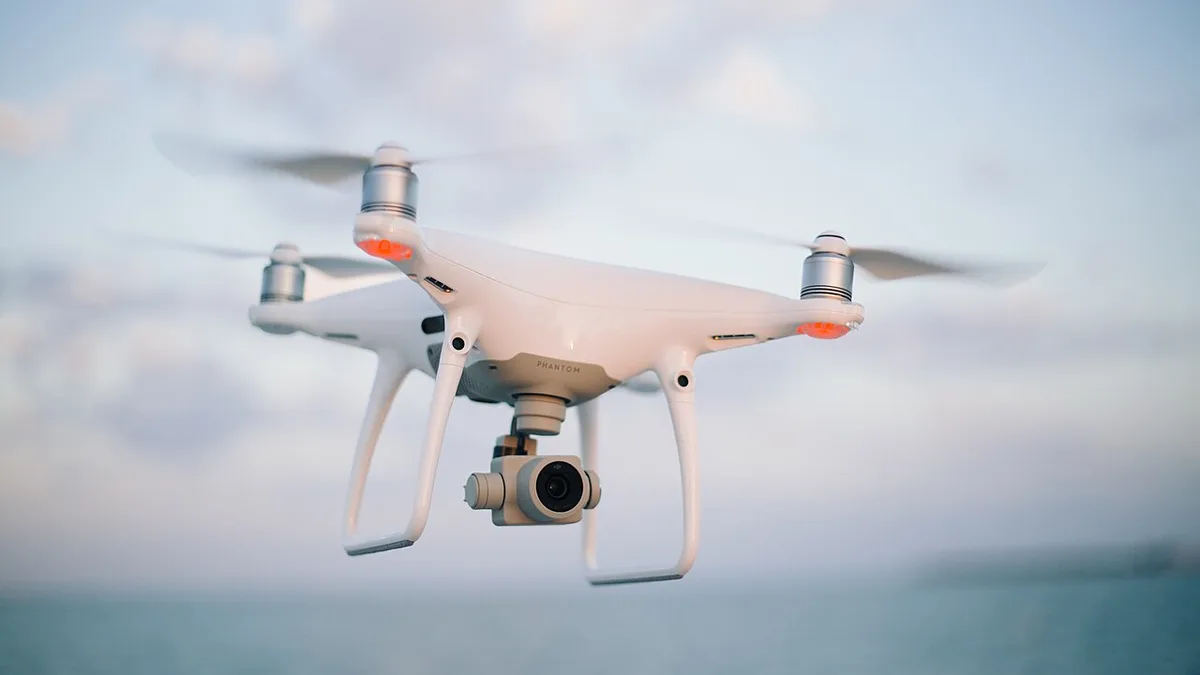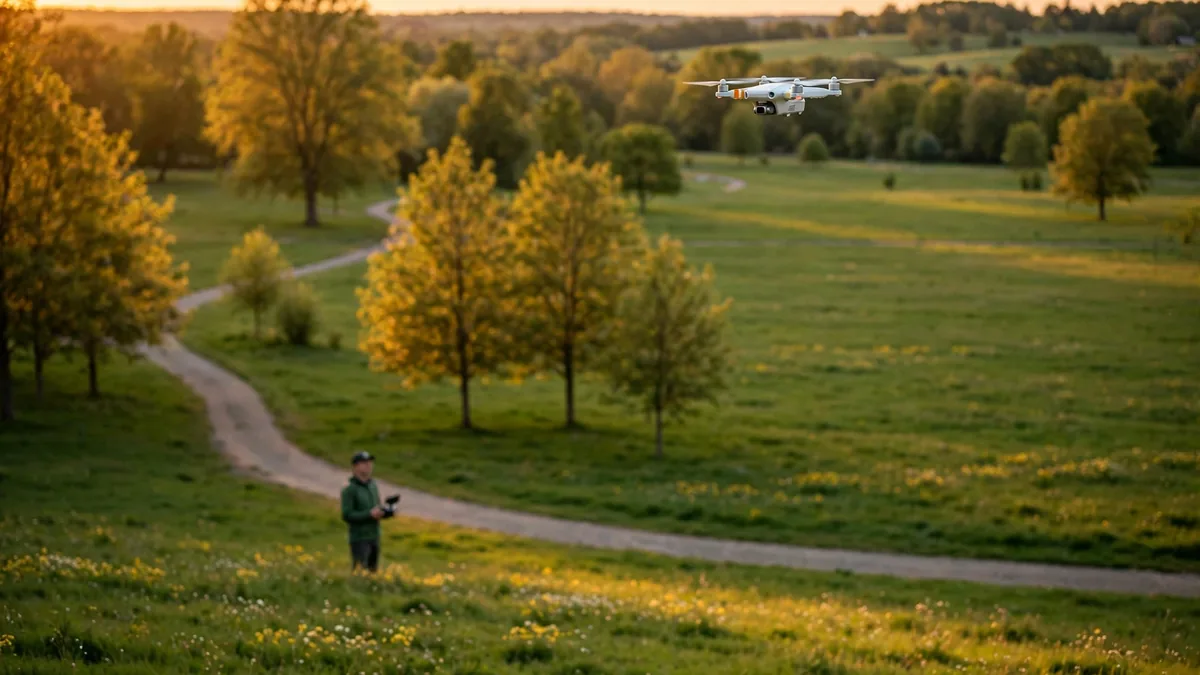
The best drones for beginners in 2027 are smaller, smarter and far more forgiving than the drones of even two years ago. Leading beginner models now weigh under 250 grams, shoot stabilized 4K video, hold position in wind, and return home when the battery runs low.
That progress has made the choice harder. DJI dominates the beginner market, but Autel and Potensic sell capable rivals, and the differences that matter are not megapixels: flight time, obstacle sensing, wind resistance and satellite lock speed decide whether a beginner enjoys flying or loses a drone on day one.
We judged the current range for new pilots on setup, automated modes, camera quality and what happens when things go wrong. The eight drones below are the strongest beginner picks of 2027, from a $199 palm-sized flyer to a camera drone that fits in a jacket pocket.
Key takeaways
- The DJI Mini 4 Pro is the best beginner drone overall: 4K/60 video, omnidirectional sensing, 34-minute flight time.
- The DJI Neo is the cheapest safe start, around $199, with palm takeoffs and follow-me modes.
- Under-250-gram drones avoid registration in many countries for recreational use, but local rules still apply.
- Budget for a spare battery; real flight time is 20 to 30 minutes per battery.
- Skip no-name drones with no obstacle sensing or return-to-home, however cheap they look.
At a glance: the shortlist
| Drone | Best for | Starting price | Standout limit |
|---|---|---|---|
| DJI Mini 4 Pro | Best overall | From around $759 | 34-minute flight time |
| DJI Neo | Cheapest starter | From around $199 | 18-minute flight time |
| DJI Flip | Easy first flights | From around $439 | 31-minute flight time |
| DJI Air 3S | Best camera step-up | From around $1,099 | 45-minute flight time |
| DJI Avata 2 | First-person flying | From around $999 | Needs goggles and practice |
| DJI Mavic 4 Pro | Best image quality | From around $2,049 | Over 250 grams |
| Autel EVO Lite+ | Best non-DJI option | From around $1,149 | 40-minute flight time |
| Potensic Atom 2 | Best budget 4K drone | From around $299 | 32-minute flight time |
DJI Mini 4 Pro — Best overall
The Mini 4 Pro is the beginner drone to beat in 2027: it removes the two mistakes that cost new pilots their drones, flying into things and losing signal. Omnidirectional sensing watches every direction, and ActiveTrack follows subjects while steering around trees and poles. Its 1/1.3-inch sensor records 4K/60 video plus true vertical video, At 249 grams it stays under the recreational registration threshold in many countries, and its 34-minute maximum flight time means roughly 25 minutes of real flying per battery. 4K video fills cards fast, so plan storage too; our guide to cloud storage options for drone pilots compares backup options.
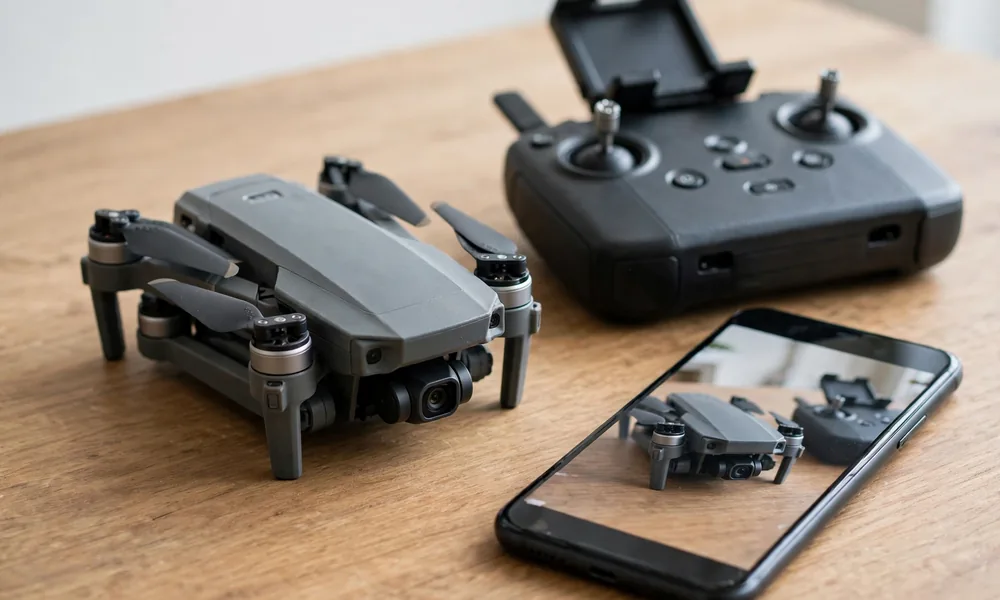
Pros: Omnidirectional sensing, excellent 4K/60 camera, under 250 grams, long flight time.
Cons: No screen on the basic controller, Fly More kit costs extra.
DJI Neo — Best for the cheapest start
The Neo is the least intimidating drone DJI has ever made. It takes off from your palm, follows you without a controller, and lands back in your hand, an easy way to learn the hobby before spending more. It weighs 135 grams and costs around $199. The trade-offs are honest: about 18 minutes of flight, a 4K/30 camera with a smaller sensor, and poor wind handling. But it includes the same quick-shot modes as DJI’s larger drones, and adding a controller later unlocks manual flight and longer range.
Pros: Very cheap, palm takeoff and landing, follow-me without a controller, extremely light.
Cons: Short flight time, weaker in wind, smaller sensor.
DJI Flip — Best for easy first flights
The Flip sits between the Neo and the Mini 4 Pro, and its selling point is simplicity. Its folding propeller guards stay on in flight, so bumps against branches usually end in a wobble, not a broken prop. It shares the Mini 4 Pro’s sensor and 4K/60 recording, with a 31-minute flight time close to the Mini’s. The Flip lacks the Mini’s full omnidirectional sensing, using forward and downward sensors instead. For a pilot who wants the Mini’s camera with crash protection and a lower price, around $439, it is a sensible middle step.
Pros: Propeller guards, Mini 4 Pro sensor, good battery life, lower price.
Cons: No sideways or backwards obstacle sensing, fewer automated modes than the Mini 4 Pro.
DJI Air 3S — Best camera step-up
The Air 3S is the drone to buy when a beginner knows they want better video and is ready to spend more. Its dual cameras pair a 48-megapixel wide camera with a 3x telephoto, so you can punch in without flying closer, and the 1-inch sensor handles low light far better than any sub-250-gram drone. Flight time reaches 45 minutes on paper, around 35 in practice, and omnidirectional sensing makes it forgiving for pilots moving up from a Mini. At around $1,099 and 724 grams it needs registration in more places, but for travel and landscape work the image quality jump is obvious on a big screen.
Pros: Dual cameras with 3x zoom, 1-inch sensor, strong low-light video, long flight time.
Cons: Over 250 grams, higher price, larger than a Mini.
DJI Avata 2 — Best for first-person flying
The Avata 2 is a different kind of beginner drone. Worn with goggles, it puts you inside the flight, making it the most fun drone here and the best way to learn the fast, low style used in action videos. Its protected ducted propellers make indoor flights and close passes far less risky than with an open-propeller drone. The camera records 4K/60 video with a wide field of view, and the motion controller lets a new pilot steer by pointing a hand, no sticks required. The catch is the price, around $999 for the full kit with goggles, and the immersive view takes practice to fly safely.
Pros: First-person view, protected propellers, motion controller, 4K/60 video.
Cons: Expensive full kit, goggles take getting used to, shorter range.
DJI Mavic 4 Pro — Best image quality
The Mavic 4 Pro is the most capable drone a beginner can buy, and the least beginner-priced. Its triple-camera system is led by a 100-megapixel Hasselblad camera with a 4/3 sensor, recording 6K video with cinema-grade dynamic range. The 51-minute maximum flight time is the longest here. At around $2,049 and 1,063 grams, it is not a first drone for most people, and it needs registration nearly everywhere. But its sensing, automated modes and rock-steady hover mean a careful beginner can fly it safely, and its camera will not be outgrown for years.
Pros: 100-megapixel camera, 6K video, longest flight time, pro-grade sensing.
Cons: Expensive, heavy, overkill for casual flying.
Autel EVO Lite+ — Best non-DJI option
The EVO Lite+ is the strongest alternative for buyers who want a non-DJI drone. Its 1-inch sensor shoots 6K video, and the variable aperture controls bright-light exposure without filters, a feature DJI reserves for pricier models. Flight time is 40 minutes with generous range. Autel’s app and automated modes are simpler than DJI’s, and accessory support is smaller, which is why it sits behind the Mini and Air ranges for most beginners. But image quality is genuinely close, the price of around $1,149 undercuts the Air 3S, and the orange airframe is easy to spot.
Pros: 1-inch sensor, variable aperture, 6K video, long flight time.
Cons: Smaller accessory range, simpler automated modes, heavier than the Mini.
Potensic Atom 2 — Best budget 4K drone
The Atom 2 proves that a sub-$300 drone can now shoot real 4K video. Its 1/2-inch sensor records 4K/30 with a 3-axis gimbal, which keeps footage smooth, and the 32-minute flight time beats the DJI Neo by a wide margin. At 249 grams it stays under the recreational registration threshold. Obstacle sensing is front-only, and the app is less polished than DJI Fly, so fly it in open spaces until you trust it. But for around $299 it delivers the core beginner experience, stable 4K footage, return-to-home and follow modes, at less than half the price of a Mini 4 Pro.
Pros: 4K/30 with a 3-axis gimbal, under 250 grams, long battery life, very low price.
Cons: Front-only sensing, less refined app, weaker in wind.
How to choose
Start with weight. A drone under 250 grams is the simplest first buy, avoiding recreational registration in the United States and several other countries, though local rules still apply. Check local rules before the first flight.
Next, weigh obstacle sensing against price. Omnidirectional sensing saves the most drones, and it is worth paying for if the budget stretches to a Mini 4 Pro or Air 3S. A cheaper drone without it suits open fields but risks trees and buildings.
Then think about the footage. A 3-axis gimbal matters more than megapixels, because it keeps video smooth. Battery life is the other hidden cost: most beginners need two or three batteries for a proper outing, and a portable monitor for photographers helps review footage in the field instead of squinting at a phone. Prices here are approximate, so check current pricing before buying; bundles and sales change the real cost.
Checklist: before you buy
- Confirm the drone is under 250 grams to skip recreational registration.
- Count the batteries and price a spare; one rarely covers an outing.
- Check whether sensing covers all directions or just the front.
- Make sure the camera has a 3-axis gimbal.
- Verify the controller is in the box; some bundles sell the drone without one.
- Buy spare propellers and a 4K-rated microSD card before the first flight.
Frequently asked questions
Do I need a license to fly a beginner drone?
In the United States, recreational flying of a drone under 250 grams needs no registration, but pilots must still follow FAA rules, staying below 400 feet and away from airports. Heavier drones need registration, and commercial use needs a Part 107 certificate.
How long does a beginner drone battery really last?
Advertised times are measured in ideal conditions with no wind. In real flying, expect 70 to 80 percent of the claim: around 25 minutes from a Mini 4 Pro, 15 from a Neo, and 30 from an Air 3S. Wind, cold and fast flying shorten it further.
Can a beginner drone fly in wind?
Most beginner drones handle winds up to 20 to 24 mph, but new pilots should stay grounded above 15 mph. Gusts near buildings are stronger than they feel at ground level, and a light drone can be pushed downwind faster than it can fly back.
What happens if the drone loses signal?
Every drone here has return-to-home: if the signal drops or the battery gets low, it climbs to a safe height and flies back to its takeoff point. Set the return height above nearby trees before takeoff.
Do I need a special memory card?
Yes. Use a microSD card rated U3 or V30, fast enough for 4K video without dropped frames. A 128GB card holds hours of 4K footage and is the practical minimum.
Should I buy the Fly More kit?
If you fly more than once a week, yes. The kit adds two extra batteries, spare propellers and a charging hub for less than buying separately. For editing, see our guide to the best laptops for creators for options that handle 4K timelines smoothly.
The bottom line
For most beginners, the DJI Mini 4 Pro is the answer: light, forgiving, and good enough for anything short of professional work. The DJI Neo is the best way to test the hobby for around $199, and the Potensic Atom 2 is the best budget route to real 4K footage. Buyers wanting a bigger step up should look at the Air 3S, while the Avata 2 suits first-person pilots.
Whatever you choose, start in an open field, keep early flights short, and learn return-to-home before you need it. The habit that saves the most drones is simple: fly within your limits and bring it home with battery to spare.