A great DS game might ask you to race, solve a puzzle with a stylus, or follow a story across two screens. The library covers platformers, role-playing games, puzzles, rhythm games, and story-driven adventures. You can find a quick round for a short break or a long quest to enjoy over many evenings.
A resistive touchscreen is a touch-sensitive display that responds to pressure from a finger or stylus. That simple feature helped games feel different from console versions, while the two screens made room for maps, menus, and fresh ways to play. These recommendations are grouped by play style, not ranked from best to worst.
Key Takeaways
- Start with a familiar genre if you want an easy first pick.
- Try touch controls for rhythm, drawing, and logic puzzles.
- Choose a longer RPG when you want a story that lasts.
- Compare used systems by model and condition before buying.
- Try one familiar game and one that feels new to you.
Start with the kind of play you already enjoy, then use the recommendations to branch into something new.
Which Best NDS Games Fit Your Play Style?
If you want one easy place to start, choose New Super Mario Bros. for its familiar side-scrolling action. Racing fans can jump to Mario Kart DS, while Pokémon HeartGold and SoulSilver suit players who want a role-playing game (RPG).
Elite Beat Agents fits rhythm-game fans, and Professor Layton and the Curious Village suits players who like puzzles wrapped in a mystery. This is a handpicked set of options, not a definitive ranking. Familiar franchises offer a low-friction start, while unusual controls can make a familiar game feel fresh.
Pick a genre you already enjoy, then try an unfamiliar control style when you want a change.
Series knowledge is not a requirement for most of these picks. You can start with a standalone story or enter a long-running series at a game that catches your eye.
For another Nintendo console list, explore these GameCube game recommendations. They also group picks by the kind of play you enjoy, rather than treating one taste as the right one.
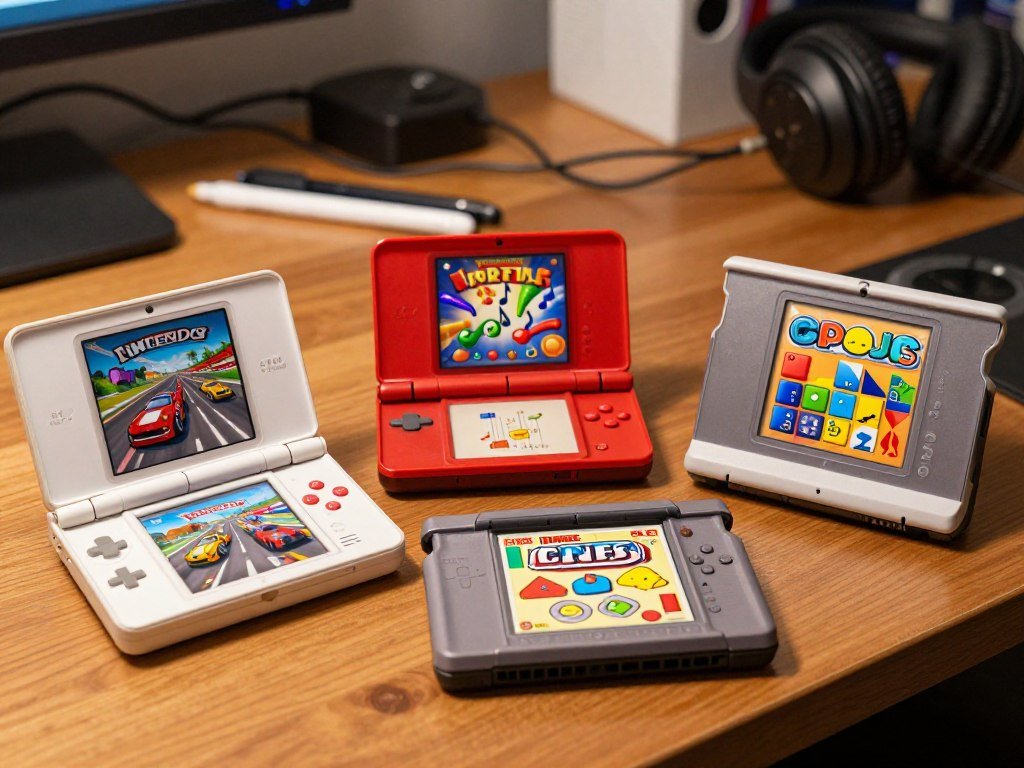
Pick the genre you are most likely to return to, not just the title with the biggest reputation.
Which Mario Games Make the Best Quick Picks?
For a quick burst of familiar platforming, New Super Mario Bros. is the easiest starting point in this group. Each game has a different pace, from short stages to races, board turns, and a full RPG story.
Choose by the activity you want to repeat, not only by the familiar Mario name. These games suit different moods and play sessions.
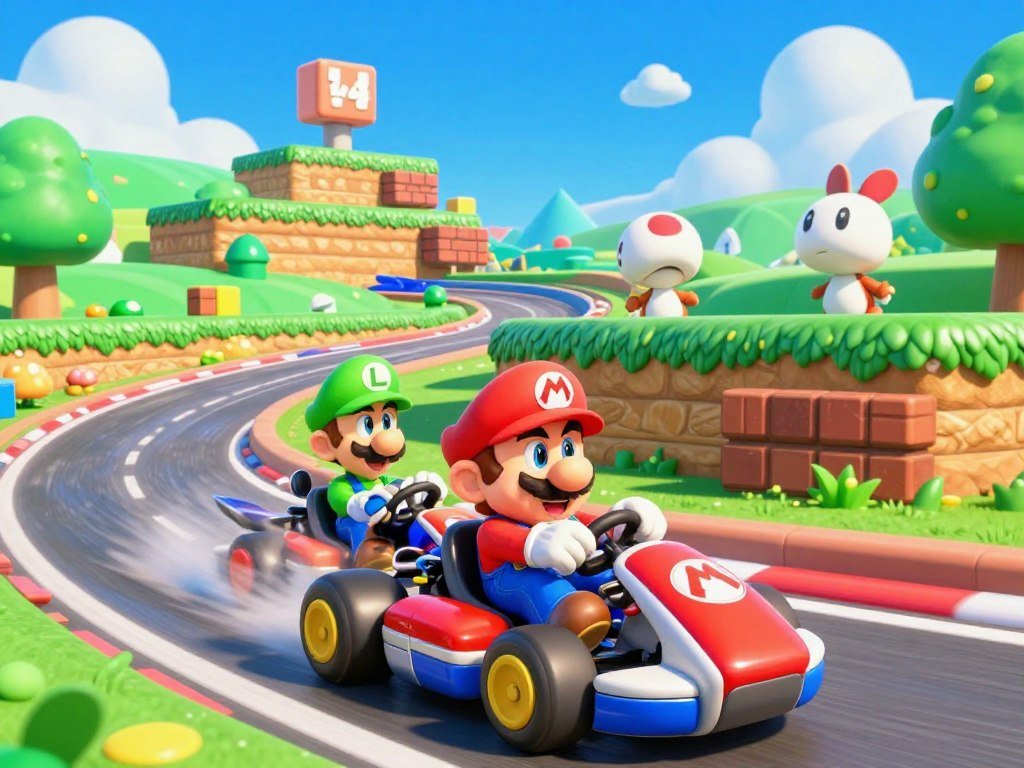
New Super Mario Bros.
New Super Mario Bros. brings side-scrolling Mario platforming to the DS. You move through stages, leap over gaps, dodge enemies, and look for hidden routes. Its basic controls will feel familiar if you have played an older Super Mario game, so it works well as a first pick.
Stages give you clear goals without asking you to learn a long set of rules. That makes it easy to play one level, pause, and return later. If you want classic platform action rather than a new control scheme, this is the cleanest fit in the group.
Mario Kart DS
Mario Kart DS turns the series’ racing into a handheld game, with familiar tracks, items, and fast races. It also offers mission-based play, which gives you specific tasks beyond simply finishing first. That added structure suits players who want goals between races.
The game includes online play and an unlockable character, R.O.B. Those features add variety, though they do not change the basic appeal: learn a track, pick a racer, and try again. Choose it if you like short competitions or want to race with other players.
Super Mario 64 DS
Super Mario 64 DS adapts the 3D adventure for handheld play. You explore open stages, collect stars, and use jumps and movement to reach new areas. The change from side-scrolling levels gives you more freedom to look around and choose your route.
It is a better match for players who enjoy exploring a level than racing through one fixed path. The game also adapts a console experience to two screens and handheld controls. If you want a Mario game with a bigger sense of space, start here instead of with short, linear stages.
Mario Party DS
Mario Party DS uses a board-game format. Players move around a board, gather coins, and compete in mini-games as they try to reach the end. The turn-based structure gives each round a clear rhythm, with small contests breaking up the board play.
Choose it when you want a social game built around changing challenges, rather than a solo platforming campaign. The mini-games offer different tasks, so the group does not repeat one kind of action for long. It works best for players who enjoy friendly competition and a little luck.
Mario & Luigi: Bowser’s Inside Story
Mario & Luigi: Bowser’s Inside Story puts the brothers inside Bowser, while also making Bowser playable. That unusual setup splits the adventure between the brothers’ teamwork and Bowser’s actions outside them. Battles use timed button presses, so fights ask for more than choosing a menu option.
The shifting roles give the story its own comic feel and keep the adventure from relying on one point of view. It suits players who want an RPG with active battles and an odd premise. For turn-based tactics instead, Advance Wars: Days of Ruin offers a strategy-focused change of pace.
Choose Mario Kart DS when repeated races and multiplayer matter more than a traditional platforming campaign.
Which Pokémon Games Make the Best DS RPG Picks?
For a broad Pokémon recommendation, start with HeartGold or SoulSilver if you want a remake with a long journey. They make the strongest classic-style pick for players who want a substantial adventure with plenty of places to visit.
HeartGold and SoulSilver include both Johto and Kanto, 16 Gym Leaders, and the Pokéwalker accessory. The other paired games each have their own releases, versions, and place in the series.
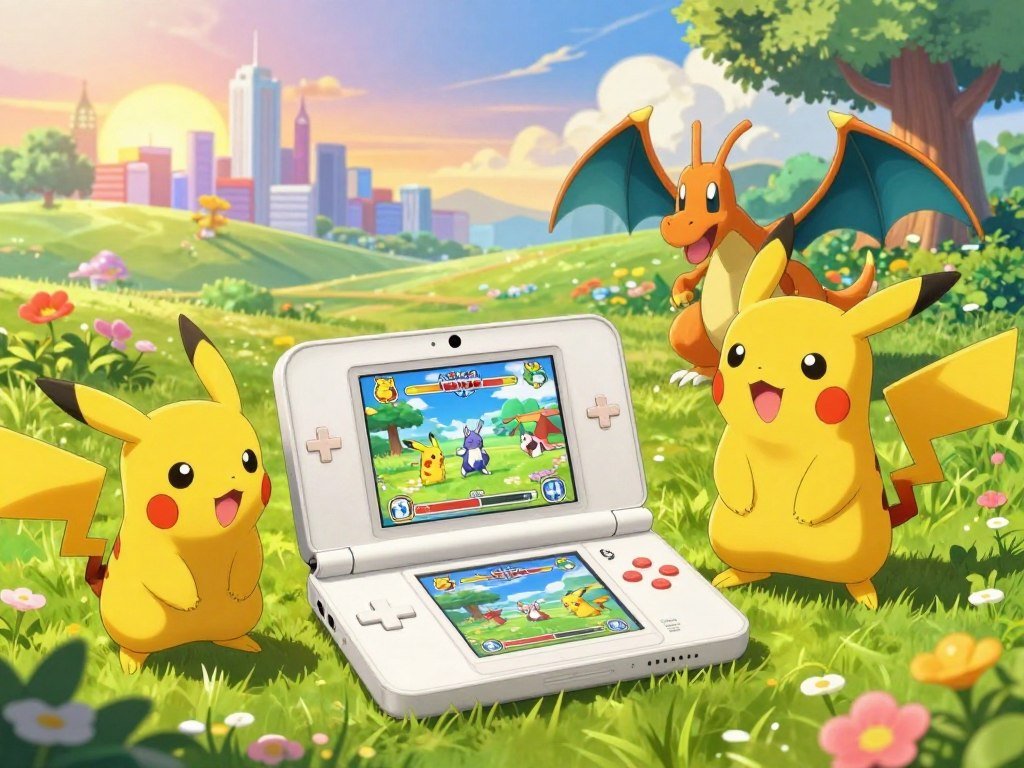
Pokémon Diamond and Pearl
Pokémon Diamond and Pearl introduce the Sinnoh region in two separate DS releases. Each version has its own selection of Pokémon, so your choice can shape which creatures you meet and trade for. The games keep the familiar pattern of catching Pokémon, building a team, and taking on Gym Leaders.
They suit players who want to experience the series’ original Sinnoh adventure. If you are choosing between the pair, look at the version-specific Pokémon you most want to find. The shared story and region make them close companions, but they are still distinct releases.
Pokémon Platinum
Pokémon Platinum is a separate Sinnoh release, rather than simply another name for Diamond or Pearl. It adds its own take on the region and offers a different version of that adventure. Players who already know the paired games may enjoy seeing Sinnoh presented through this distinct release.
Choose Platinum if you want a single game from this part of the series, or if you prefer its version-specific content. It also works for someone who wants to return to Sinnoh without treating the earlier pair as a required order. The games share a setting, but each release has its own identity.
Pokémon HeartGold and SoulSilver
HeartGold and SoulSilver remake the Johto adventure and later let you visit Kanto. Together, the regions give the games a longer route than a standard single-region trip. The 16 Gym Leaders make that two-region structure part of the main appeal, not a brief extra stop.
The Pokéwalker accessory adds a real-world step-counting element. These remakes fit players who want a classic Pokémon journey with plenty to do and a familiar turn-based battle style. If you are choosing one broad starting point among the DS releases, either version is a strong choice.
Pokémon Black and White
Pokémon Black and White are separate releases that take place in the Unova region. They offer a new cast of Pokémon and a distinct setting, which makes them a good choice if you want a break from older regions. Their story also gives the journey a stronger focus on the place of Pokémon in the world.
Choose this pair if you want a fresh-feeling entry rather than a return to a classic region. Each version has specific Pokémon and characters, so your choice can affect what you encounter. You can play either game on its own without starting with Diamond and Pearl.
Pokémon Black 2 and White 2
Black 2 and White 2 are separate sequels to Black and White. They return to Unova, but they are new releases with their own stories and version differences. Players who enjoyed the earlier games can see the region again, while newcomers can still approach the sequels as their own adventure.
These games suit you if you want more Unova after Black or White, or if a sequel sounds more appealing than a remake. The two versions keep the series’ split-release pattern. Choose between the paired releases by the version-specific Pokémon and characters you most want to encounter.
Which DS RPGs Go Beyond Pokémon?
For a story-first RPG with many possible outcomes, begin with Chrono Trigger. Its branching story rewards replay, while other DS role-playing games focus on exploration, unusual battles, or long quests.
Choose the structure that sounds fun for hours: a branching tale, a party-building quest, or active touch-based combat. These picks offer very different ways to spend your time.
Chrono Trigger’s branching story
Chrono Trigger follows a group of characters through time, with choices and events that can change how the story ends. The DS version keeps its turn-based battles and story focus, making it a good fit if you want a strong plot without constant action. Its story has 14 endings, which gives repeat play a clear purpose.
You can explore how different choices affect the final outcome instead of treating the game as a one-time trip. For more story-led recommendations across genres, browse these narrative-focused games. Chrono Trigger is a particularly good match if you like time travel, party stories, and endings that reward another run.
Dragon Quest IX and its monster-raising branches
Dragon Quest IX: Sentinels of the Starry Skies gives you a long quest with exploration, turn-based battles, and room to build a party. Its structure suits players who like making gradual progress, collecting gear, and deciding how their team should fight. You can spend time on side activities between story steps.
Dragon Quest Monsters: Joker and Dragon Quest Monsters: Joker 2 take another route, with monster raising at the center. They suit players who would rather recruit and develop creatures than follow a conventional party setup. The wider Dragon Quest series offers several ways to shape a team, so choose by the kind of battle planning you enjoy.
The World Ends With You’s dual-screen combat
The World Ends With You stands apart from a standard menu-based RPG. Its combat uses both screens, asking you to control different characters at once. That setup takes practice, but it makes each fight feel active and closely tied to the DS controls.
The story follows a young character through a strange contest in Tokyo, with music and fashion helping set its mood. It suits you if you want battles that demand quick attention and a setting unlike a fantasy quest. The game can feel busy at first, so patient players will get more from its unusual style.
Castlevania’s three DS adventures
The three Nintendo DS Castlevania games are Dawn of Sorrow, Portrait of Ruin, and Order of Ecclesia. Each centers on action, exploration, and finding routes through a large map. You fight enemies, gain new abilities, and use those powers to reach places that were closed earlier.
These games fit players who prefer action and map discovery to a long series of spoken scenes. Their shared style still leaves room for different heroes and settings. If you like opening new paths as your character grows stronger, the Castlevania trilogy offers a clear alternative to turn-based battles.
RPGs for players who want a deeper cut
One RPG ranking places 7th Dragon at #25, Nostalgia at #24, Dragon Quest Monsters: Joker 2 at #23, Shin Megami Tensei: Strange Journey at #22, Suikoden Tierkreis at #21, and Rune Factory: A Fantasy Harvest Moon at #20.
The same list places Golden Sun: Dark Dawn at #19, Dragon Quest Monsters: Joker at #18, and Tales of Innocence at #17. Those positions are a guide to alternatives, not an objective score of quality. For a story-led mobile option, see mobile game picks, including notes on controls in ports.
Match the game’s structure to your preferred pace, whether you want a long quest, active combat, or exploratory map design.
Which DS Puzzle and Rhythm Games Use Touch Well?
If you want a game that asks your hands to move with the music, Elite Beat Agents is the standout rhythm choice here. Its taps and traces follow the beat, while puzzle games favor calm deduction or quick pattern matching.
Choose by the kind of focus you enjoy: timing, logic, or short mental tasks. The DS library makes those activities feel natural with direct touch input.
Brain Age and Brain Age 2
Brain Age: Train Your Brain in Minutes a Day! and Brain Age 2: More Training in Minutes a Day! are separate releases. Each uses short exercises that ask you to solve simple tasks, write answers, or respond quickly. The brief activities make them easy to fit into a small break.
They suit players who want a routine of quick challenges instead of a long campaign. Brain Age 2 offers a separate set of training activities, so it is not simply a menu update to the first game. Treat the games as small daily puzzles, not as a test you must ace.
Elite Beat Agents and the Ouendan games
Elite Beat Agents asks you to tap numbered targets and trace paths in time with music. The story follows agents who help people through song, and your performance can lead to three possible endings. Its rhythm play rewards steady timing more than complex button skills.
The game came out on November 6, 2006, carries an E10+ rating, and has a Metascore of 87. Those details give context, not a verdict on whether its music or humor will suit you. Osu! Tatakae! Ouendan and its sequel use Japanese music and presentation, so they are good alternatives if you are open to that style.
Picross DS
Picross DS turns number clues into picture puzzles. You use the clues at the edge of a grid to decide which squares to fill, then remove squares that cannot fit the pattern. The challenge comes from careful reasoning, not quick reactions.
It is a strong fit if you like logic puzzles and want a game that lets you pause between moves. A small mistake can affect nearby clues, so working through each row and column slowly pays off. Pick it when you want focused problem-solving without a story or timer driving the pace.
Picross 3D
Picross 3D takes the same idea into three dimensions. Instead of filling a flat grid, you work with a cube and remove blocks based on number clues. You must think about the shape from more than one side to uncover the hidden object.
The added depth changes the puzzle rhythm. A clue that seems clear from one face may require checking how it fits with the other faces. It suits players who already enjoy logic puzzles and want to picture shapes in space, while Picross DS is the simpler fit for flat-grid deduction.
Tetris DS and Meteos
Tetris DS keeps the familiar task of arranging falling blocks, but its fast rounds reward quick decisions. It is a natural choice if you like a puzzle that becomes more tense as the playfield fills. You can pick it up for a short session without learning a story first.
Meteos also asks you to clear blocks, but its screen reacts to matches in a different way. You launch groups upward, so the board shifts and creates new chances to line up pieces. Choose Tetris DS for a known falling-block rhythm, or Meteos for a more unusual, energetic puzzle.
Choose Picross DS for deliberate deduction, or Elite Beat Agents for timing and musical energy.
Which DS Adventures Tell the Strongest Stories?
For a relaxed game that grows through small daily routines, Animal Crossing: Wild World is an inviting pick. Not every adventure needs a final boss; some build their appeal through a town, a mystery, or a changing story.
Choose the central activity you want to return to, from caring for a pet to solving clues. The games below offer very different kinds of connection and discovery.
Animal Crossing: Wild World
Animal Crossing: Wild World is a life-simulation game about settling into a town and making it your own. You can talk with animal neighbors, collect items, decorate your home, and take on small tasks. There is no single campaign path pushing you toward an ending.
That open structure suits players who enjoy returning to a familiar place and making gradual changes. Your town feels different as you spend time in it, even when you only have a few minutes to play. Pick it if you want a gentle routine rather than a goal-heavy adventure.
Nintendogs
Nintendogs centers on caring for virtual dogs. You can feed, train, walk, and play with them, so the game’s appeal comes from repeated care routines rather than a long plot. It uses the DS clock and wireless connectivity, tying some activities to the system and nearby play.
Choose it if you like looking after a pet and seeing small changes over time. The game is more about attention and routine than winning a series of levels. Its use of wireless play also gives you a reason to share the experience with another player nearby.
Professor Layton and the Curious Village
Professor Layton and the Curious Village follows a mystery built around logic puzzles. You explore a village, meet its residents, and solve challenges that reveal more about the story. The puzzles are the main activity, so the game suits players who enjoy stopping to think before moving on.
Its mix of clues and brainteasers gives you a steady reason to keep exploring. Phoenix Wright: Ace Attorney is another courtroom-story option if you prefer gathering evidence and arguing a case. Choose Layton for stand-alone logic puzzles, or Phoenix Wright for a story shaped by trials.
The Legend of Zelda: Phantom Hourglass and Spirit Tracks
The Legend of Zelda: Phantom Hourglass and Spirit Tracks both use touch-screen navigation, but they give travel a different feel. Phantom Hourglass sends Link across the sea, while Spirit Tracks puts him on a train. Both games use touch controls for movement and actions.
They suit players who want an adventure with puzzles and clear destinations, but prefer a different way to travel. Phantom Hourglass centers on sea routes, while Spirit Tracks makes the train part of the trip. Choose the setting that makes you more curious to explore.
Ghost Trick, 999, and Grand Theft Auto: Chinatown Wars
Ghost Trick and 999 are story-led puzzle adventures, though they approach problems in different ways. Ghost Trick has you use touch controls to interact with nearby objects and change events. 999 focuses on choices, characters, and escape-room puzzles. Both suit players who want plot and problem-solving together.
Grand Theft Auto: Chinatown Wars offers a very different kind of story. It is an open-world action game, with a city to explore and missions that move its plot forward. It fits players who want freedom to roam between story events, rather than a sequence of contained logic puzzles.
Choose the game whose central activity sounds fun even after the first story or challenge is finished.
How Do the DS Screens Shape Gameplay?
The DS’s key design choice is letting one screen show information while the other accepts direct input. That split can make play clearer, giving a map, clue, or menu its own space.
The two displays, touch screen, and microphone each support a different kind of play. Here are the main hardware features and how games use them.
| Feature | Hardware detail | Example use |
|---|---|---|
| Dual displays | Two 3-inch TFT LCD screens, 256 × 192 pixels each | Map on one screen, action on the other |
| Resistive touchscreen | Pressure-based touch input | Stylus taps in puzzles and rhythm games |
| Microphone | Built-in voice input | Nintendogs responds to voice interaction |
The stylus makes small targets and drawn paths easy to control. Some games use the lower screen for touch input while the upper screen holds a map or other details.
A game that gives each screen a clear job usually makes the hardware feel purposeful rather than gimmicky.
Which Nintendo DS Model Works Best for These Games?
For most players choosing one handheld, the DS Lite is the best balance of compact size and backward compatibility. It keeps the GBA slot while making the original DS design slimmer.
The DS Lite measures 133 × 73.9 × 21.5 mm and weighs 218 g. The comparison below shows how the three main models differ.
| Model | Dimensions | Weight | Game Boy Advance compatibility |
|---|---|---|---|
| Nintendo DS | 148.7 × 84.7 × 28.9 mm | 275 g | Yes |
| Nintendo DS Lite | 133 × 73.9 × 21.5 mm | 218 g | Yes |
| Nintendo DSi | 137 × 74.9 × 18.9 mm | 214 g | No |
The Nintendo DS line, including DS Lite and DSi models, sold 154 million units. The DS Lite accounted for over 60 percent of total Nintendo DS hardware shipments.
The DS Lite came out in North America on June 11, 2006. The DS Lite dimensions and design details show why it feels more compact than the original.
Choose the original DS if the lowest entry cost matters more than a slimmer design.
Is a DS Lite Worth Buying in 2026?
Yes, a DS Lite can still be worth buying in 2026 if its controls and screens work properly. It is a good fit if you want a dedicated handheld for DS games and Game Boy Advance titles.
Check the hinge, screens, buttons, and charging function before buying. DS retail games also work on Nintendo 3DS systems, and the original DS is region-free for DS retail games.
- Check that the hinge holds the screen at a steady angle.
- Look for cracks, dead pixels, or other screen damage.
- Press each button and confirm it responds.
- Connect the charger and make sure the system charges.
Imports are an option because DS retail games are region-free on the original DS. A 3DS can also play DS retail games, which gives you another way to use the same cartridges.
Make the purchase decision around the exact games you want to play, not nostalgia alone.
How Much Are DS Systems and Rare Games Worth?
The listed value changes sharply with model, color, and whether the box and inserts are included. Listings are asking prices, not guaranteed sale prices.
Black and White DS Lite listings range from $51.00 to $117.46 in this comparison. System color and completeness both affect the listed amount.
| System and color | Loose listing | Complete-in-box listing |
|---|---|---|
| Black Nintendo DS Lite | $57.00 | $117.46 |
| White Nintendo DS Lite | $51.00 | $110.08 |
| Black Nintendo DS | $39.00 | $54.60 |
A pre-owned Metallic Rose Nintendo DS Lite in Pre-Owned: Good condition was listed for $124.99. The Nintendo DS Lite’s U.S. list price in 2007 was $129.99.
Shepard’s Crossing 2, released for Nintendo DS in 2010, is a costly rare example. A loose copy is valued at around $200, while a complete copy can exceed $250. Those values do not prove it is the most expensive DS game.
Compare condition and completeness before treating any listing as a fair value for a particular unit.
Which DS Games Are Best to Emulate?
Turn-based RPGs and text-led adventures are usually easier to control through emulation than games built around precise stylus timing. Simple inputs travel well, while the DS’s two-screen layout needs thoughtful setup.
Elite Beat Agents and Ghost Trick depend more on accurate touch input. An emulator is separate from copyrighted game files, and U.S. copyright rules do not make every download lawful.
- Set the two screens in a layout you can read.
- Map stylus input to a mouse, touch screen, or controller.
- Check audio timing in games that depend on music.
- Use game files you obtained legally under U.S. copyright rules.
A Nintendo DS emulator guide can help compare options such as melonDS and its screen layout. A broader emulator comparison also discusses controls and lawful game files.
Test the two-screen layout and touch controls before committing to a long playthrough.
Which Nintendo DS Games Suit Adults and Girls?
Adults can enjoy any DS genre, and a player’s interests are a better guide than age or gender. There is no separate category of games that girls must prefer.
The best Nintendo DS games for adults depend on preferred genre and session length. Choose by interest instead of relying on a stereotype.
- For relaxed life simulation, try Animal Crossing: Wild World.
- For logic puzzles and a mystery, choose Professor Layton and the Curious Village.
- For music and quick timing, play Elite Beat Agents.
- For a long RPG, consider Pokémon HeartGold or SoulSilver.
These choices offer very different activities, from short rhythm rounds to a long role-playing adventure. A player who wants a quiet game may prefer a town to manage, while someone who likes a challenge may want puzzles.
Choose by the experience someone wants, not by assumptions about who a game is for.
Which DS Games Are Easiest to Start With?
For a first time playing DS games, New Super Mario Bros. is the safest starting point for a familiar, straightforward format. Its basic platforming is easy to grasp if you already know how Mario games work.
Pick a game by genre, session length, touch comfort, and story interest. Mario Kart DS is a clear choice for racing, Brain Age for short activities, and Professor Layton for puzzles.
- Choose a familiar genre if you want fewer new rules.
- Pick short activities or a longer game based on your free time.
- Decide whether you are comfortable using touch controls.
- Think about whether a story will keep you playing.
Brain Age suits small sessions, while Mario Kart DS makes sense when you want races. Professor Layton gives you a reason to pause and work through clues at your own pace.
Pick one game that fits your usual habits and one that offers a small, appealing change.
What Were the Most Popular DS Games of the 2000s?
New Super Mario Bros. leads the Nintendo DS sales list with 30.80 million copies worldwide. Sales show reach, but they do not tell you which game will suit your taste.
The top seller is not automatically the right game for every reader. These five leading titles span platforming, pets, racing, training, and RPGs.
| Game | Worldwide copies sold | Genre |
|---|---|---|
| New Super Mario Bros. | 30.80 million | Platformer |
| Nintendogs | 23.96 million | Pet simulation |
| Mario Kart DS | 23.60 million | Racing |
| Brain Age: Train Your Brain in Minutes a Day! | 19.01 million | Puzzle and training |
| Pokémon Diamond and Pearl | 17.67 million | RPG |
What the sales leaders show
Pokémon Black and White sold 15.64 million copies, and Brain Age 2: More Training in Minutes a Day! sold 14.88 million. Pokémon HeartGold and SoulSilver reached 12.72 million, while Animal Crossing: Wild World sold 11.75 million.
Super Mario 64 DS sold 11.06 million copies, and Mario Party DS sold 9.31 million. Pokémon Black 2 and White 2 reached 8.52 million, while Pokémon Platinum sold 7.60 million.
Dragon Quest IX: Sentinels of the Starry Skies sold 5.5 million copies. The Legend of Zelda: Phantom Hourglass sold 4.76 million, Mario & Luigi: Bowser’s Inside Story sold 4.56 million, and Professor Layton and the Curious Village sold 4.49 million.
What a Top 100 DS Games list needs beyond sales
A Top 100 DS Games list needs genre variety and critical judgment as well as sales figures. Popular games can point you toward familiar starting places, but a smaller audience does not make a puzzle or story game a poor fit.
Sales also reflect how widely a game reached players, not how much each person enjoyed it. A useful list should make room for different styles, from Dragon Quest RPGs to rhythm games and adventures.
Use the sales figures to spot popular starting points, then choose by the kind of play you enjoy.
What Should You Check Before Buying a Used DS Game?
Before paying for a used cartridge, check that it is the correct game and that the console can read it. A quick test can prevent a bad buy, especially when the cartridge has visible wear.
Cartridge condition and packaging completeness are separate considerations. New Super Mario Bros. and Mario Kart DS are familiar examples of Nintendo DS retail cartridges.
- Look for cracks or damage to the cartridge shell.
- Check the contacts for dirt or corrosion.
- Confirm that the game loads on a DS system.
- Ask whether the case and manual are included.
A cartridge can work even when its case is missing, so decide whether the game itself or a complete package matters more to you.
Test the cartridge in a console when you can, because a clean-looking shell does not prove that the game loads.
Ask to see the game load whenever the seller allows a quick test.
Conclusion
The best starting point is the DS game whose core activity sounds fun to you right now. The library rewards variety, and the right first game depends on your pace and comfort with its controls.
Try one title from a genre you already know and one outside it. That gives you a familiar starting place without closing the door on a surprise favorite.
Pick your first title, check that it plays on your chosen system, and make time for a new favorite.
FAQ
What is the best DS game ever made?
New Super Mario Bros. is the broad all-around starting pick for most players. Its side-scrolling action is familiar and easy to approach, even if you have not played many DS games. Pokémon HeartGold and SoulSilver are stronger picks for RPG fans who want a long adventure. Choose Mario Kart DS if racing and multiplayer matter most to you.
Which NDS is the best?
The DS Lite is the best all-around model for its compact size and Game Boy Advance compatibility. It keeps the GBA cartridge slot while using a smaller design than the original DS. The original Nintendo DS is a practical lower-cost alternative, especially if you do not mind a larger system. The DSi lacks a Game Boy Advance slot.
What is the most popular game on the DS?
New Super Mario Bros. is the best-selling DS game, with 30.80 million copies sold worldwide. Its familiar platforming helped it reach a broad audience, but sales alone cannot tell you whether it matches your taste. If you prefer racing, puzzles, or role-playing games, another popular series may be a better first choice.
Is it worth buying a DS Lite in 2026?
Yes, a DS Lite can be worth buying in 2026 if you want a dedicated handheld and its main parts work. Check that the screens display clearly, the hinges hold steady, the controls respond, and the system charges. A working DS Lite can play DS retail games and Game Boy Advance cartridges, making it useful for both libraries.
How much is a DS Lite worth today?
A loose Black DS Lite is listed at $57.00, while a complete-in-box Black system is listed at $117.46. A loose White DS Lite is listed at $51.00, and a complete-in-box White system is listed at $110.08. These are listing prices, not guaranteed sale prices. Condition and included items can change what a buyer will pay.
How much did a DS Lite cost in 2007?
The Nintendo DS Lite’s U.S. list price in 2007 was $129.99. That figure is the original list price for the system, not a current used-market value. Used listings can differ based on condition, color, and whether the box and other items are included. A loose console and a complete package are not the same offer.
What is the most expensive DS game?
Shepard’s Crossing 2 is a notable costly DS game, with a loose copy valued around $200 and a complete copy above $250. It came out for Nintendo DS in 2010. Those values make it an expensive example, but they do not establish a verified all-time record. Rare games can have different prices based on condition and package contents.
What is the cheapest DS model available?
The listed loose Black Nintendo DS at $39.00 is the lowest-priced model in this comparison. That is a listing, not a guaranteed sale price, and the system’s condition affects its appeal. A complete-in-box Black Nintendo DS is listed at $54.60. Check what comes with a console before comparing its price with another listing.