
A 20,000 mAh power bank can lose up to 40 percent of its rated capacity before a single electron reaches your phone. That gap between the number on the box and the energy that actually shows up in your battery is the single most important thing to understand before buying a power bank in 2026. Most shoppers never learn it, which is exactly why marketing departments keep printing big numbers in big fonts.
This guide cuts through that. It covers what the ratings really mean, which specs matter for phones, laptops, and travel, and how to pick a bank that still works two years from now instead of swelling up in a drawer.
Why Rated Capacity Is Not Usable Capacity
Power bank cells store energy at roughly 3.7 volts, but USB ports output at 5 volts (or higher with fast charging). Converting between those voltages costs energy as heat. Add cable resistance and conversion losses, and a “20,000 mAh” bank typically delivers somewhere between 12,000 and 14,500 mAh of real charge to a phone.
The honest way to compare banks is watt-hours (Wh), not milliamp-hours. Wh accounts for voltage, so it reflects true stored energy. A 20,000 mAh bank at 3.7 V holds about 74 Wh. That number matters twice: once for judging how many phone charges you get, and again at the airport. (U.S. Department of Energy)
The 100 Wh Airline Rule
Most airlines allow lithium-ion batteries up to 100 Wh in carry-on bags without special approval. Between 100 and 160 Wh, carriers generally require permission, and anything larger is usually banned outright. Lithium batteries must go in the cabin, not checked luggage, because a fire in the hold can’t be reached by crew.
Practical consequences:
- A 20,000 mAh bank (about 74 Wh) sails through security almost everywhere.
- A 27,000 mAh bank (about 100 Wh) sits right at the line. Some airlines treat “up to 100 Wh” strictly, so a bank rated 99.9 Wh is safer than one rated 100.5 Wh.
- A 40,000 mAh bank (about 148 Wh) needs airline approval and will occasionally be refused even then.
- Policies vary by carrier and change without notice. Check your airline’s dangerous goods page before a long trip, not at the gate.
People routinely get this wrong. They buy the biggest bank they can find for a long-haul flight, then get stopped at check-in because the label says 120 Wh. If you travel often, staying under 100 Wh is the boring but correct choice.
What to Look For in 2026
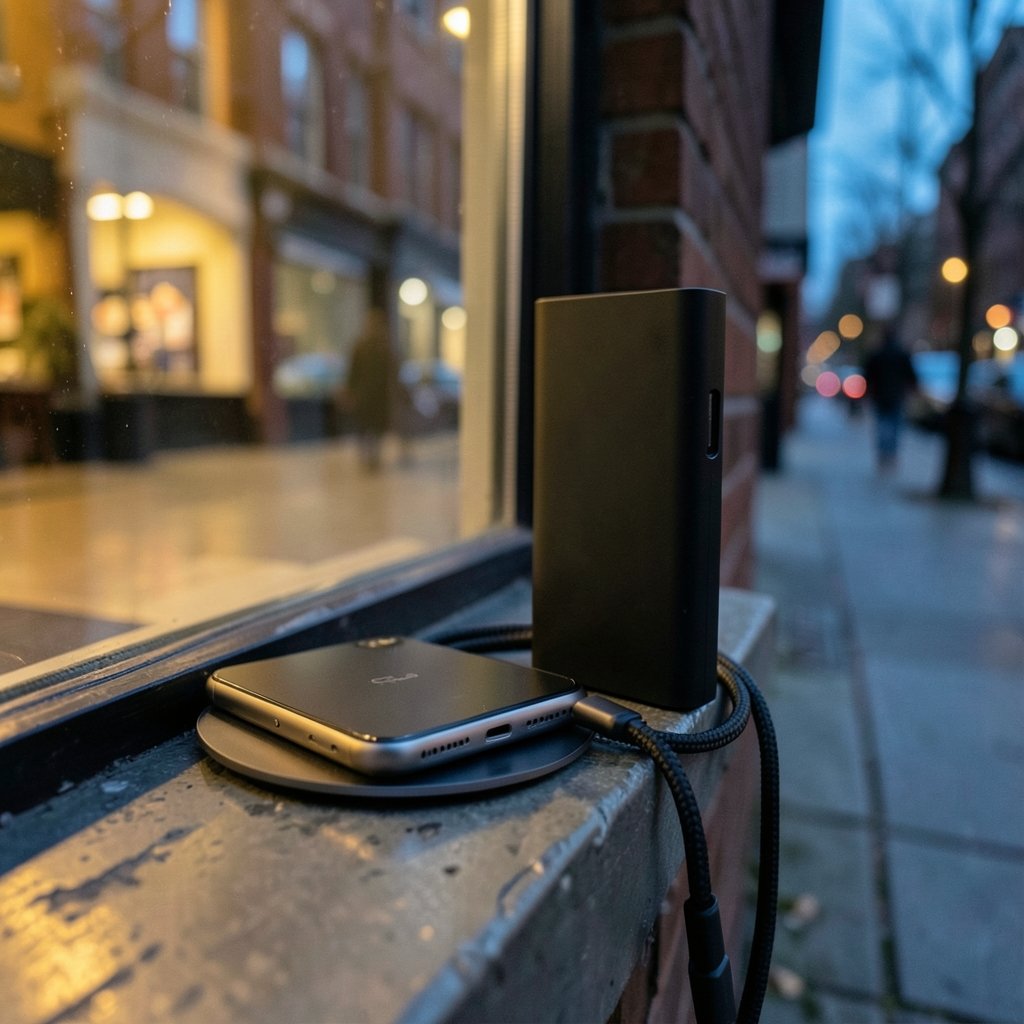
The market has settled into a few clear tiers, and the spec sheet tells you most of what you need to know. Here is the shortlist of features that separate a good bank from a frustrating one.
| Feature | Why it matters | What to accept | What to avoid |
|---|---|---|---|
| USB-C PD 3.1 with EPR | Enables up to 140 W charging for laptops | At least one 100 W+ port on premium banks | Banks capped at 18 W output |
| Total vs. per-port wattage | “140 W” may mean one port only when others are idle | Clear per-port ratings on the label | Vague “up to 140 W” claims |
| Rated capacity in Wh | Predicts real charges and airline compliance | Wh printed on the shell | mAh-only marketing |
| Pass-through charging | Charges the bank and your phone at once | Supported on most mid-range and up | Cheap banks that throttle badly |
| Safety certification | Confirms basic electrical safety testing | UL 2056, CE/UKCA marks | Unbranded units with no marks |
| Cycle life | How many full cycles before capacity drops | 500+ cycles to 80% capacity | No cycle rating at all |
| Weight | You will carry it | Under 400 g for 10,000 mAh | Anything over 700 g for daily carry |
Wattage Claims Deserve Skepticism
A bank advertising 140 W often delivers that only from a single port, only with an e-marked USB-C cable rated for the current, and only when the other ports are empty. Plug in a second device and the output can drop to 65 W or less. This is not fraud, exactly, but it is marketing. Read the fine print on per-port output.
The same logic applies to wireless charging. Qi2 pads are convenient for a phone, but they waste energy as heat and charge slowly compared to a cable. Treat wireless as a backup, not the main event.
The Categories That Matter
Rather than pretend there is one “best” bank, it helps to sort the market by job. Most buyers fit into one of four groups.
For phones only: slim 10,000 mAh banks
These weigh around 200 to 250 grams and fit a pocket. They deliver roughly two full phone charges. Look for 30 W USB-C output, which is enough for fast charging on most Android phones and reasonably quick on iPhone. A good one costs less than a mid-range phone case and lasts years.
The mistake people make here is buying a 10,000 mAh bank with only 18 W output to save a few dollars. It works, but it feels slow every single time you use it. Pay for 30 W.
For laptops: 20,000 to 25,000 mAh with 100 W+ output
If you carry a USB-C laptop, a bank with 100 W output can genuinely extend a workday. A 20,000 mAh bank adds roughly one full charge to a thin-and-light laptop. Heavier machines with dedicated GPUs will drain it faster than it can top them up, so match the bank’s output to the laptop’s charger wattage.
Check the laptop’s original charger. If it says 96 W, a 65 W bank will charge slowly or not at all while the laptop is running heavy tasks. Buy at or above the charger rating.
For travel: sub-100 Wh, dual-port, airline-friendly
The sweet spot for flyers is a 20,000 to 27,000 mAh bank that stays under 100 Wh, has two USB-C ports, and supports pass-through charging so it can refill overnight from a single outlet. Hotel rooms never have enough sockets, and this one feature solves that.
If you are already planning a big purchase season, it is worth knowing how retail calendars shift prices. The same timing logic that drives Black Friday car deals applies to accessories: discounts cluster around November, and the deepest cuts hit last year’s models.
For emergencies: high-capacity with a light and hand crank
Storm-season buyers want capacity, a built-in lantern, and solar or hand-crank input. Be realistic: tiny solar panels on power banks take days to recharge anything. They are a last resort, not a plan. A bank that charges from a car outlet in two hours is more useful than one with a decorative solar strip.
Common Mistakes That Cost Money
A few errors show up again and again in buyer complaints and return data.
- Buying on mAh alone. Compare Wh, per-port wattage, and cycle life instead.
- Ignoring the cable. A 100 W bank with a 60 W cable delivers 60 W. Buy an e-marked cable rated for the wattage.
- Leaving it at 0 percent for months. Lithium cells degrade when stored empty. Charge to about 50 percent before storing, and top it up every few months.
- Charging in a hot car. Heat is the biggest killer of battery life. A bank left on a dashboard in summer may lose a chunk of capacity permanently.
- Trusting unbranded listings. Cheap banks sometimes skip safety testing entirely. Stick to units with recognizable certification marks and a real warranty.
- Assuming all fast charging is equal. A bank that supports one fast-charge standard may not fast-charge your specific phone. Check compatibility before buying.
There is a broader lesson in that last point. Ecosystems lock you in, and accessory pricing often follows. The same dynamic shows up in app store economics, where debates over the Apple SCOTUS 27 percent App Store fee case illustrate how platform rules shape what consumers ultimately pay for hardware and software alike.
How to Test a New Power Bank in Ten Minutes
You do not need a lab to sanity-check a purchase. A few simple steps reveal whether a bank lives up to its label.
- Charge the bank to 100 percent.
- Note your phone’s battery percentage, then plug in and start a timer.
- Record how long it takes to go from 20 percent to 80 percent. Compare that to your wall charger. A big gap means the bank is not delivering its claimed wattage.
- Count how many full charges you get from one bank cycle. If a 20,000 mAh bank gives you fewer than two full phone charges, something is off.
- Check the bank’s temperature during fast charging. Warm is normal. Hot enough to be uncomfortable is not.
- Run the bank down to zero once, then recharge. If capacity drops sharply within the first month, return it.
Do this in the return window. Most problems show up immediately, and a bank that fails these checks will not improve with age.
Where Power Banks Fit in a Bigger Gear Picture
A power bank is one piece of a portable setup, and the rest of that setup matters. If you are weighing a handheld gaming PC against a bank-and-phone combo, the math changes fast. A device like the ones covered in this look at Steam Deck out-of-stock alternatives draws far more power than a phone, so you would need a 100 W-capable bank to keep it running on a train.
The same applies to phones themselves. Battery size and charging speed vary enormously across models, and a bank that pairs perfectly with one phone may underwhelm with another. It is worth checking current battery and charging specs in a roundup of the best phones before deciding how much bank capacity you actually need.
Gamers and developers face a related question: where to spend limited budget. Someone building a game for phones might reasonably ask whether Roblox Studio, Unity, or Godot is the right engine, and the answer affects what hardware they need to test on. A power bank is a small line item in that budget, but a dead phone during a playtest is an annoying one.
Conclusion
The best power bank in 2026 is not the one with the biggest number on the box. It is the one whose watt-hours, port wattage, and certifications match how you actually use it. For most people, that means a 10,000 mAh bank with 30 W output for daily carry, or a 20,000 mAh bank with 100 W output for laptop days and long trips. Stay under 100 Wh if you fly, buy an e-marked cable to match, and store the bank at half charge.
Get those basics right and a good bank will quietly serve you for years. Get them wrong and you will join the crowd wondering why their “20,000 mAh” brick dies after one and a half phone charges.
Frequently Asked Questions
How many phone charges does a 20,000 mAh power bank give?
Most 20,000 mAh banks deliver about 12,000 to 14,500 mAh of usable output after conversion losses. For a phone with a 5,000 mAh battery, that works out to roughly two and a half full charges. Expect fewer if you charge wirelessly or use a thick, low-quality cable.
Can I take a power bank on a plane?
Yes, in carry-on luggage. Banks rated up to 100 Wh are generally allowed without approval. Between 100 and 160 Wh, most airlines require permission, and larger units are usually banned. Lithium batteries should never go in checked bags. Always confirm with your specific airline before flying.
Is 140 W charging worth paying extra for?
Only if you charge a laptop that accepts that wattage. For phones, 30 W is plenty, and most phones cap their intake well below 140 W. Also check whether the bank delivers 140 W from one port only, since output often drops when multiple devices are plugged in.
How long do power banks last?
A well-made bank with a 500-cycle rating should hold about 80 percent of its original capacity after 500 full cycles. For typical use, that is three to five years. Heat, deep discharges, and storing the bank empty all shorten its life significantly.
Do cheap power banks actually work?
They charge devices, but the savings often come from smaller real capacity, slower ports, and skipped safety testing. Unbranded units have been linked to overheating and swelling. Look for certification marks, a stated cycle life, and a warranty from a brand you can contact.
What is the difference between mAh and Wh?
mAh measures charge at the cell’s internal voltage, while Wh measures actual energy. Because power banks convert from about 3.7 V to 5 V or higher, mAh overstates what you get. Wh is the honest number, and it is also the number airlines use to set limits.



