
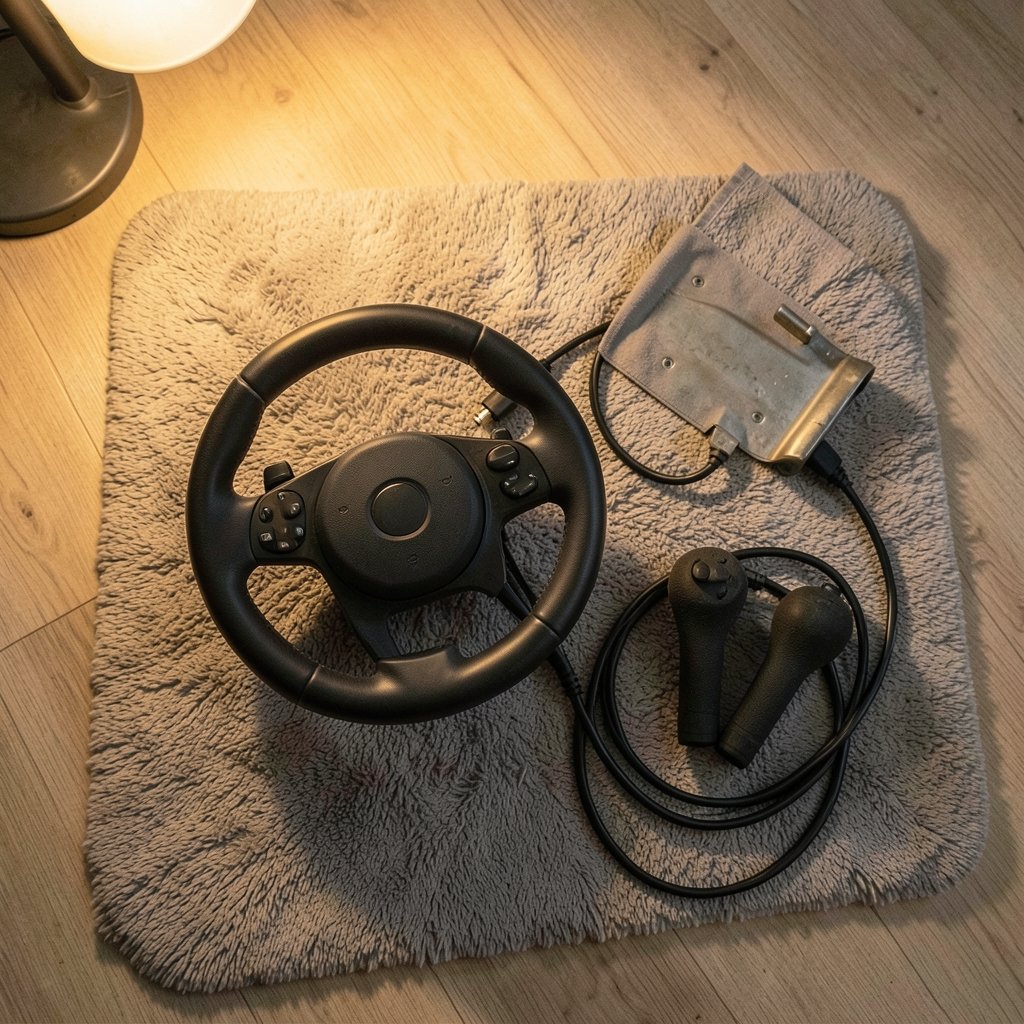
Quick Answer: What are the best racing wheels for beginners?
The best racing wheels for beginners are force feedback models from Logitech and Thrustmaster, with the Logitech G29 and G920 and the Thrustmaster T150 and TMX serving as the long-standing entry benchmarks. These wheels deliver real force feedback, roughly 900 to 1080 degrees of rotation, and bundled pedals at a price that does not hurt too much. Budget direct-drive options like the Fanatec CSL DD and Moza R5 are the step-up alternative, offering faster and cleaner feedback but demanding sturdier mounting and more money.
The main distinction is drive type: gear-driven wheels are the cheapest, belt and hybrid wheels feel smoother, and direct-drive wheels remove gears and belts entirely. Before buying, compare platform compatibility, drive type, pedal quality, mounting requirements, total bundle price, and available space.
So you have watched a few onboard laps, decided that controller steering feels like herding a shopping trolley, and now you are staring at a wall of wheels with prices that range from sensible to second-mortgage. The question is not really which wheel is “best” in some absolute sense. It is which wheel gets a beginner learning race craft without wasting money or killing the fun in week two.
This guide walks through what matters, what does not, and where the common traps hide.
Why force feedback is the line you should not cross
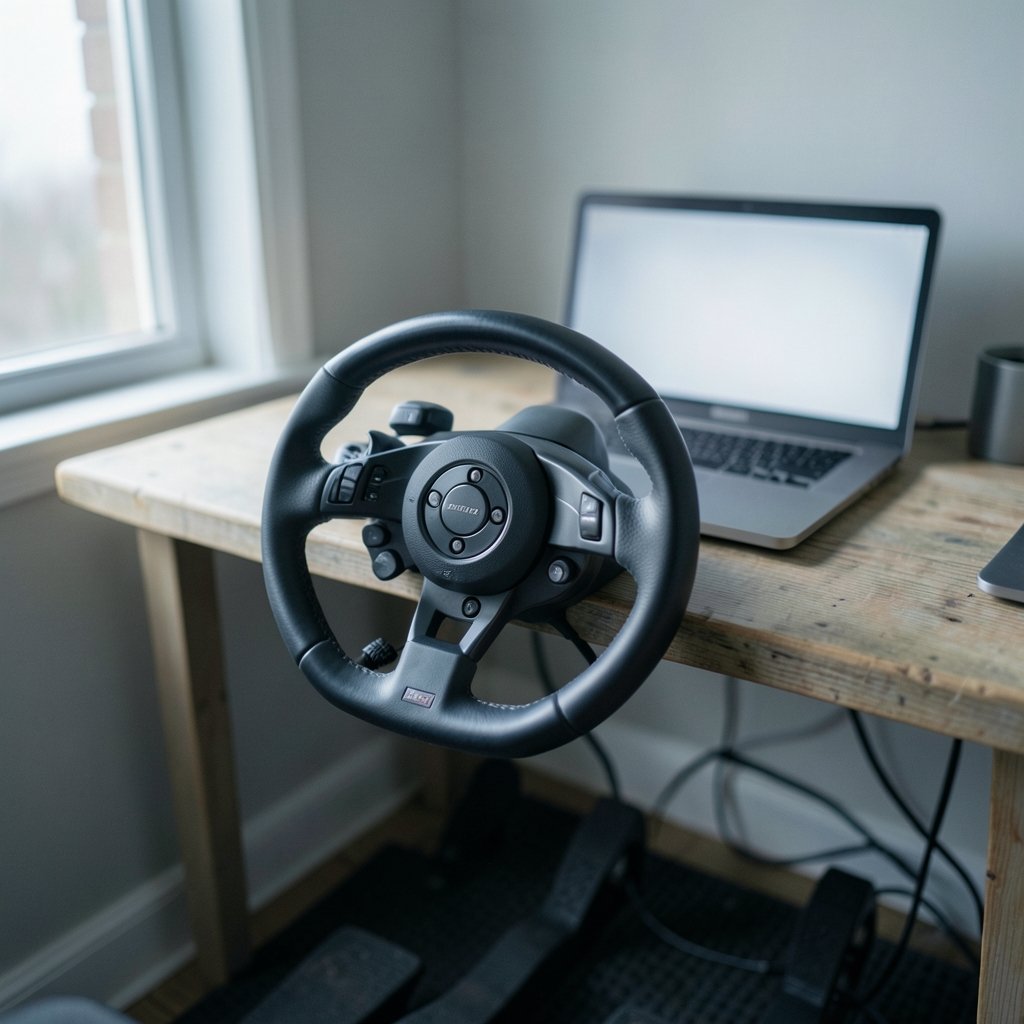
Here is the single most useful rule for a new sim racer: buy a wheel with force feedback (FFB) or buy nothing at all.
FFB wheels use motors to resist your steering and to communicate what the tyres are doing. You feel understeer as the wheel goes light. You feel the kerbs rattle through your hands. You feel the moment the rear steps out. Non-FFB wheels, sometimes called bungee wheels, use springs or elastic to create resistance. They cannot tell you anything about grip, so you end up driving by eyesight alone, which is a bit like playing a racing game with the sound off.
Everything recommended below has proper force feedback. That is the floor, not a bonus feature.
The entry benchmarks: Logitech G29, G920 and G923
For years, the default first wheel has been the Logitech G29 (PlayStation and PC) or its Xbox-flavoured twin, the G920. Both use gear-driven force feedback, offer around 900 degrees of rotation, and come with pedals. The G29 and the newer G923 include a three-pedal set with a clutch, while the G920 ships with two pedals. The G29 arrived back in 2015, and the G923 followed in 2020.
What beginners get right with these wheels: they clamp to a desk, they are widely available, and the ecosystem is enormous, so setup help is everywhere. What beginners get wrong: expecting silence. Gear-driven FFB is notchy and audible, and the brake pedal is soft and vague compared with anything more expensive. Neither flaw stops you learning. Plenty of fast drivers started on exactly this hardware.
If you are the type who researches every purchase to death, the same instinct that makes you read a breakdown of the best racing wheels in 2026 and what actually matters before buying will serve you well here. Check whether the G29 and G920 are still sold new in your region, because line-ups shift.
The budget alternative: Thrustmaster T150 and TMX
The Thrustmaster T150 (PlayStation and PC) and TMX (Xbox and PC) are the other classic first wheels. They use a hybrid belt-and-gear drive, offer around 1080 degrees of rotation, and come with a two-pedal set. The T150 launched in 2015 as well.
The practical difference is feel. Belt and hybrid wheels tend to smooth out the feedback compared with gear-only designs, and many beginners describe the T150 as gentler and less clattery than the Logitech. That is partly subjective, so treat it as a preference rather than a measured fact. The trade-off is that the bundled pedals are basic, and the clamp setup is fine for a desk but not elegant.
One tier up sits the Thrustmaster T248, launched in 2021. It uses a hybrid drive with around 900 degrees of rotation, adds magnetic paddle shifters and a small built-in display, and generally feels like a more finished product. It is a sensible pick if you want to skip the very cheapest tier without jumping to direct drive.
Direct drive on a beginner budget: Fanatec CSL DD and Moza R5
Direct-drive (DD) wheels remove gears and belts entirely. A motor connects straight to the wheel, which means faster, cleaner, more detailed feedback. For years this was premium territory. The Fanatec CSL DD changed that when it launched in 2021 at a then-unusually low price for direct drive, and budget bundles such as the Moza R5 arrived around 2022 to 2023 and pushed prices down further.
Should a beginner start here? Sometimes, yes. If you already know you will stick with the hobby, a budget DD bundle skips an upgrade step. But there is a catch that catches people out constantly: torque needs a sturdy home. Direct-drive wheels produce stronger forces, and a flimsy desk clamp will flex, rattle and eventually annoy you. Budget for a proper rig or a reinforced mounting solution, and the “cheap” DD wheel stops looking so cheap.
Compare the main options at a glance
| Wheel family | Drive type | Rotation | Pedals included | Best for |
|---|---|---|---|---|
| Logitech G29 / G920 | Gear | ~900° | Yes (3-pedal on G29) | Cheapest reliable entry, huge support community |
| Logitech G923 | Gear | ~900° | Yes (3-pedal) | Slightly newer Logitech option with extra features |
| Thrustmaster T150 / TMX | Hybrid belt and gear | ~1080° | Yes (2-pedal) | Smoother feel on a tight budget |
| Thrustmaster T248 | Hybrid | ~900° | Yes | Stepping up without going direct drive |
| Fanatec CSL DD | Direct drive | Varies by setup | Usually sold separately | Committed beginners wanting clean feedback |
| Moza R5 bundle | Direct drive | Varies by setup | Bundle dependent | Budget direct drive with ecosystem room |
Notice what the table does not tell you: which one is “best”. That depends on your platform, your desk, and your patience for upgrading later.
Platform compatibility: the mistake that ruins the party
This is where beginners lose money. PlayStation, Xbox and PC support differ by wheel, and it is not always the wheel base that decides. Pedal sets, handbrakes and add-ons can have their own compatibility rules. A bundle that works perfectly on PC may refuse to talk to your console.
The fix is boring but effective: check the specific bundle you are buying, not just the wheel name, and confirm it matches the platform you actually play on. If you game across PC and console, decide which one matters more before you spend. The same careful checking habit applies to any tech purchase, whether you are comparing Figma alternatives for beginners choosing the right design tool or picking a wheel. Read the fine print, not the marketing headline.
Pedals matter more than beginners expect
Here is an opinion you will hear from experienced sim racers again and again: pedal quality often shapes lap times more than the wheel brand does. A stiffer brake pedal, or one with a load cell that measures pressure rather than travel, helps you brake consistently. Consistency is where lap time comes from.
That said, most beginners start with the bundled pedals, and that is fine. Learn to trail brake on a soft pedal and you will appreciate a stiff one later. Do not let a forum thread convince you that you cannot start until you own load-cell hardware. You can. You will just upgrade eventually, and that is part of the fun.
Mounting, space and the reality of your desk
Most entry wheels use desk clamps. They work, with caveats. A glass desk is a bad idea. A wobbly folding table is a worse one. The clamp needs something solid, and the pedals need to stay put under braking, which often means a wall, a rug with grip, or a cheap pedal stand.
Direct-drive wheels raise the stakes because of the extra torque. Manufacturer setup guides are clear that these need sturdier mounting, typically a rig or a reinforced desk. Measure your space before you buy, and be honest about whether a rig will fit in the room. A brilliant wheel you cannot mount properly is an expensive ornament.
What actually works in practice
A few habits separate beginners who stick with sim racing from those who sell their wheel within a month.
First, set the wheel up properly before your first lap. Install the manufacturer software, check rotation range, and calibrate the pedals. Skipping this step produces a wheel that feels broken when it is merely misconfigured.
Second, start with one car and one track. Force feedback only becomes meaningful when you know what the car should feel like. Jumping between ten cars teaches you nothing except confusion.
Third, expect the first week to feel worse than a controller. It will. Your arms will ache, you will spin more, and you will question the purchase. Give it a fortnight. The moment the feedback clicks, you will wonder how you ever drove without it.
Fourth, buy used with care. Entry wheels hold up well, but check the clamp, the pedal wiring and the power supply. A bargain with a snapped clamp is not a bargain.
If your budget is genuinely tight and you are weighing up where to spend, remember that the same discipline applies to any hobby purchase. Whether you are comparing Trello alternatives for beginners comparing board tools or deciding between a G29 and a T150, the winner is usually the option that fits how you will actually use it, not the one with the longest feature list.
Conclusion
The best racing wheel for a beginner is the one that gets you driving with real force feedback, on the platform you own, mounted somewhere solid, without emptying your savings. For most people that means a Logitech G29, G920 or G923, or a Thrustmaster T150, TMX or T248. If you already know sim racing will become a long-term hobby, a budget direct-drive bundle from Fanatec or Moza is a legitimate shortcut, provided you budget for proper mounting.
Ignore the spec-sheet arms race. Buy the sensible wheel, set it up carefully, and spend your energy on learning to brake later and steer less. The hardware will keep up.
FAQ
Is a force feedback wheel worth it for a complete beginner?
Yes, if you intend to learn race craft rather than just steer. Force feedback communicates grip, understeer and kerb strikes through your hands, which is information a spring-loaded wheel simply cannot provide. It is the single feature worth paying for at entry level.
Should I buy a direct-drive wheel as my first wheel?
Only if you are confident you will stick with the hobby and you have a sturdy place to mount it. Direct drive gives faster, cleaner feedback, but the extra torque demands a rig or reinforced desk. Otherwise, start with a gear or hybrid wheel and upgrade later.
Does the Logitech G29 work on Xbox?
No. The G29 is built for PlayStation and PC, while the G920 is the Xbox and PC version. This is exactly why beginners should check platform compatibility for the specific bundle rather than assuming a wheel family covers every console.
How much space do I need for a beginner racing wheel?
Less than you might think for entry wheels, which clamp to a desk and can be unclamped and stored. You need a solid surface, room for the pedals to stay put under braking, and somewhere to put the wheel when not in use. Direct-drive setups need considerably more permanent space.
Are the pedals included with beginner wheels good enough?
For learning, yes. Bundled pedals are basic, and a stiff or load-cell brake helps with consistency later, but beginners can learn trail braking and threshold braking on soft pedals. Treat better pedals as a future upgrade rather than a starting requirement.
How long does it take to get comfortable with a racing wheel?
Expect the first week to feel awkward, with tired arms and more spins than usual. Most beginners notice the feedback starting to make sense within a couple of weeks of regular driving, especially if they stick to one car and one track while they adjust.



