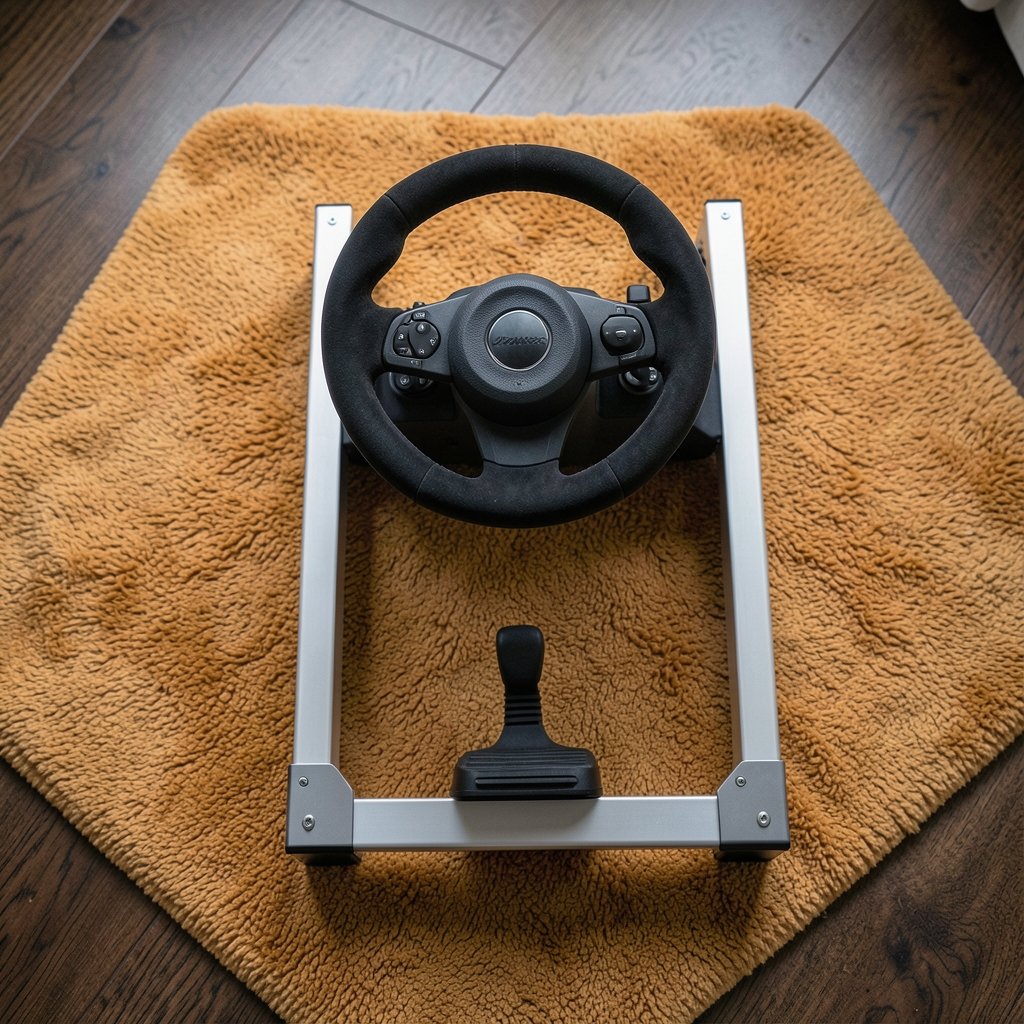
Sim racing hardware has quietly become one of the fastest-moving corners of consumer tech. A decade ago, a “serious” setup meant a belt-driven wheel clamped to a desk. Today, direct drive motors with double-digit torque figures sit in the same price bracket as mid-range graphics cards, and the gap between entry-level and pro-grade kit has never been narrower. That’s good news for buyers, and also a trap: the marketing language across brands is nearly identical, so the differences that actually change how you drive are buried in spec sheets. (Racing wheel)
This guide breaks down what separates the best racing wheels of 2026 from the rest, which categories suit which drivers, and the practical mistakes that cost people money. It focuses on how to evaluate hardware rather than hyping a single model, because the right wheel depends heavily on your platform, your space, and how deep you plan to go.
Why 2026 Is a Genuinely Different Buying Year
The biggest shift is that direct drive has gone mainstream. Motor and encoder costs have fallen far enough that direct drive bases now appear at price points that were belt-drive territory just a few years ago. That cascades through the whole market: entry wheels get cheaper, mid-tier wheels get better, and the used market fills with perfectly good gear at steep discounts. (Logitech G Driving Wheels and Pedals)
The second shift is ecosystem lock-in. Wheel bases, quick releases, pedals, and shifters increasingly only play nicely within one brand’s family. A base that looks like a bargain can become expensive the moment you want a second rim or a load-cell pedal set. Buyers who plan ahead save hundreds; buyers who don’t end up rebuying.
The third shift is platform fragmentation. PC remains the most flexible, but console compatibility is still decided by licensing, not hardware capability. A wheel that works flawlessly on PC may refuse to talk to a PlayStation 5 or Xbox without an official chip inside. Check compatibility before you fall in love with a spec sheet.
The Specs That Actually Change How You Drive
Torque (Nm) Is Not a Scoreboard
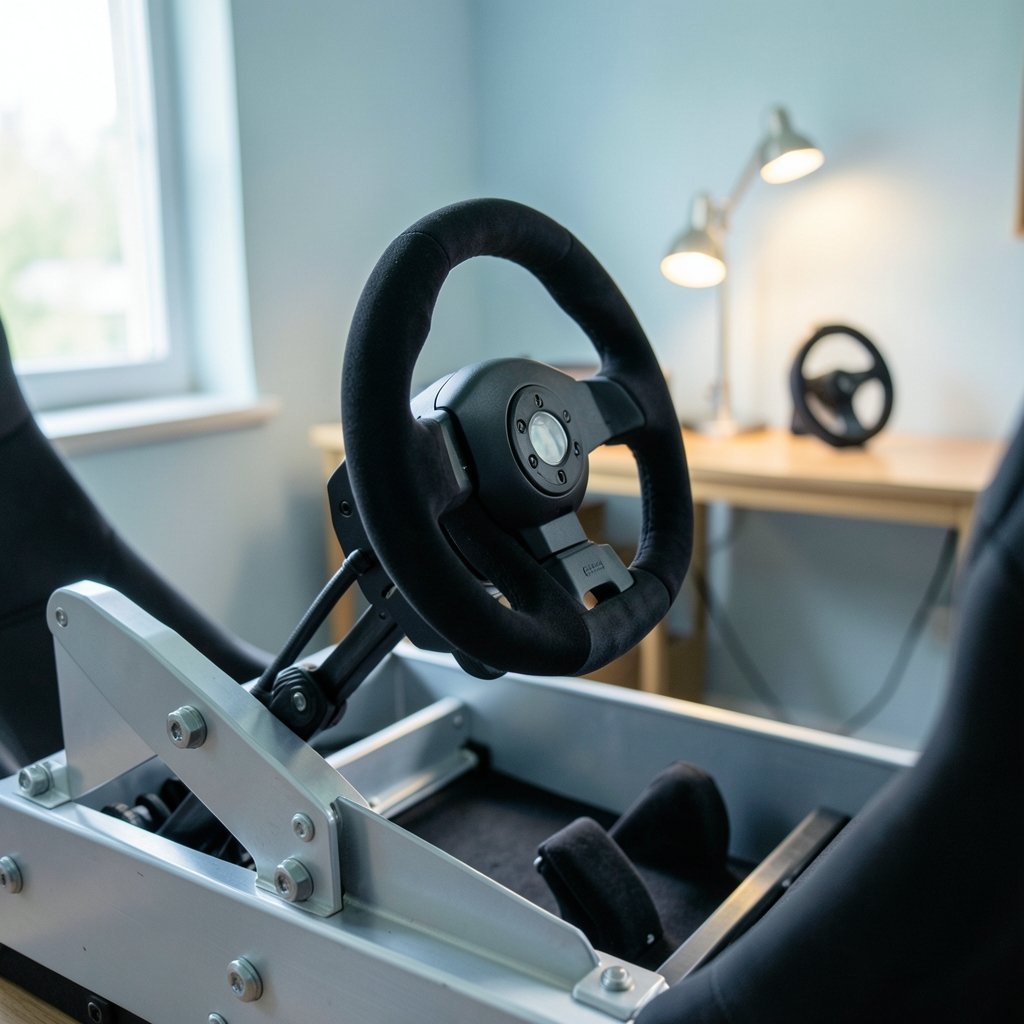
Manufacturers love big torque numbers, but more newton-meters is not automatically better. Torque determines how much force feedback detail you can feel and how quickly the wheel can communicate grip loss. It also determines how hard the base can fight you when something goes wrong.
For most drivers, a base in the 5–9 Nm range is the sweet spot: enough fidelity to feel the front tires load up, not so much that a snap of oversteer wrenches your wrist. Above roughly 10 Nm, you’re paying for headroom that mostly matters in high-downforce cars and for drivers who like heavy, physical steering. More torque without a rigid rig is money wasted — the force has to go somewhere, and a wobbly desk will absorb it as noise.
Resolution and Encoder Quality
A base’s encoder tells the motor where the wheel is. Higher resolution means smoother, more precise force feedback, especially in small corrections. This is where cheap direct drive units sometimes stumble: the motor is strong, but the sensing is coarse, so feedback feels grainy or “notchy” near center. Reviews that mention smoothness through the center are telling you something real.
Pedals Matter More Than the Wheel
This is the least popular advice in sim racing and the most true: a load-cell brake pedal will improve your lap times more than a wheel upgrade. Braking is where most time is won or lost, and a brake that measures pressure rather than travel lets you build muscle memory. If you’re choosing where to spend a fixed budget, weight pedals heavily.
Quick Release and Rim Ecosystem
A metal quick release and a healthy rim catalog future-proof your purchase. Plastic quick releases wear and develop play, which shows up as a dead zone you can feel. Before buying, count how many rims the brand actually sells and whether third-party adapters exist.
Matching the Wheel to the Driver
| Driver profile | Priority | What to look for | What to skip |
|---|---|---|---|
| Curious beginner | Low cost, easy setup | Gear or belt drive, clamp mount, console support | High-torque direct drive |
| Committed hobbyist | Fidelity per dollar | Entry direct drive (5–8 Nm), load-cell pedals | Flagship bases, exotic rims |
| Console-first racer | Guaranteed compatibility | Officially licensed hardware for your console | PC-only imports |
| Competitive sim racer | Consistency and rigidity | 8–12 Nm base, sturdy cockpit, spare rims | Desk clamps, flex-prone rigs |
| Space-limited user | Footprint | Compact bases, folding cockpits, clamp-friendly designs | Full aluminum profiles |
The pattern is consistent: spend on rigidity and brakes first, torque last. A modest base bolted to a solid rig outperforms a monster base shaking on a desk every single time.
Practical Setup Advice That Saves Money and Frustration
- Measure your space before you shop. Direct drive bases are heavy and need a mounting pattern, not just a clamp. Check the bolt spacing and whether your desk or rig can take it.
- Budget for the rig, not just the wheel. A basic wheel stand costs less than most people assume and transforms the experience. Skipping it is the most common first-purchase regret.
- Test force feedback settings in-game, not just in software. Drivers often crank gain to maximum, then wonder why feedback clips and feels numb. Lower gain and higher detail usually feels better.
- Check firmware support history. A brand that ships regular firmware updates is a brand that stands behind its hardware. Look at release notes and their dates.
- Buy pedals with a load cell or plan to upgrade. A cheap spring brake teaches bad habits that take months to unlearn.
- Verify console licensing on the box, not the website. Regional SKUs differ, and returns are painful.
A common mistake is buying the most wheel the budget allows and leaving nothing for mounting, pedals, or a shifter. The better move is buying slightly less wheel and putting the difference into the parts that touch your inputs every lap.
Where the Wider Tech Cycle Fits In
Sim racing hardware doesn’t exist in a vacuum. Chip supply, display prices, and platform economics all shape what you pay. The same component-cost pressures that reshaped console and handheld pricing this year are visible in wheel bases, where entry direct drive units keep undercutting older belt-drive stock. If you’re tracking hardware value generally, the best phones 2026 roundup shows the same pattern of mid-tier products absorbing features that used to be flagship-only.
There’s also a timing angle. Discount events move sim gear more than most categories, and buyers who plan around Black Friday car deals style promotions often find bundles that undercut standalone pricing. Similarly, platform policy shifts ripple outward: the Apple scotus 27 percent app store fee 2026 dispute is a reminder that software ecosystems can change the economics of hardware overnight, and sim racing’s reliance on companion apps makes that relevant.
Portable PC gaming is another crossover. Many sim racers run a compact PC alongside their rig, and if you’re weighing handheld or small-form-factor options, the Steam deck out of stock alternatives 2026 comparison covers the trade-offs. Console-side, the Nintendo switch 2 lite samsung 8lpu plus chip rumor 2026 chatter illustrates how component sourcing decisions land in consumer products months later. And for anyone curious how hype cycles distort hardware expectations, the GTA 6 25 minute gameplay leak nudity street racing 2026 saga is a case study in why verified specs beat rumors.
What to Ignore in Reviews
Reviewers who only test on a desk are testing the wrong thing. Force feedback quality is inseparable from mounting rigidity, so a base that feels “mushy” on a desk can feel precise on a proper rig. Look for reviewers who name their rig, state their firmware version, and date their testing.
Ignore torque bragging rights entirely. A 20 Nm base turned down to 8 Nm behaves nothing like an 8 Nm base at full tilt, and the difference rarely matters outside niche use cases. Also discount “best” lists that don’t mention pedals — a wheel review without pedal context is half a review.
Finally, treat launch-window reviews with caution. Firmware matures over the first six months, and early feedback often describes a product that no longer exists after updates. Dated, post-update impressions are worth more than day-one hot takes.
Conclusion
The best racing wheel for 2026 isn’t the one with the biggest torque number or the flashiest marketing. It’s the one that matches your platform, fits your space, and leaves budget for the parts that actually make you faster: rigidity, pedals, and a rim you enjoy holding. Direct drive has finally become affordable enough that most committed drivers should consider it, but beginners are still better served by a solid entry setup and a load-cell brake than by a flagship base wobbling on a desk.
Buy for the ecosystem, not the spec sheet. Check console licensing on the box. Spend on the rig before the motor. Do those three things and almost any mid-tier wheel will serve you well for years — which is a far better outcome than chasing the spec that looks best in a table.
Frequently Asked Questions
Is direct drive worth it for a beginner?
Usually not at first. A beginner gets more value from a reliable entry wheel plus a load-cell brake pedal and a stable mount. Direct drive shines once you’re driving consistently and can feel the difference in feedback fidelity. Buy the rig and pedals first, then upgrade the base.
Do I need a cockpit or is a desk clamp enough?
A desk clamp works for casual driving, but direct drive bases need a rigid mount. Clamps flex, and flex turns precise force feedback into vibration. A basic wheel stand is the cheapest meaningful upgrade and prevents the most common first-purchase regret.
How much torque do I actually need?
For most drivers, 5–9 Nm covers everything from road cars to formula machinery with plenty of detail. Higher torque adds headroom for heavy steering feel and high-downforce cars, but it demands a stronger rig and more careful settings. Torque beyond roughly 12 Nm is a specialist choice, not a default.
Will a PC wheel work on my console?
Only if it’s officially licensed for that console. Console compatibility is decided by licensing chips inside the hardware, not by USB support or firmware updates. Check the retail box and the region-specific SKU, because the same model name can ship in both compatible and PC-only versions.
Should I upgrade my wheel or my pedals first?
Pedals, almost always. A load-cell brake changes how you modulate braking, which is where most lap time lives. A better wheel improves immersion and feedback detail, but it won’t fix inconsistent braking. If your current pedals use a spring-loaded brake, upgrade those before the base.
How often should I update wheel firmware?
Update when a release note mentions a fix or feature you need, and keep a note of your current version first. Frequent updates aren’t automatically better; a stable version you understand beats constant changes. What matters is that the manufacturer still ships updates at all, since ongoing support signals long-term commitment to the hardware.
One last consideration: resale and longevity. Established brands with broad rim ecosystems hold value better, and spare parts—quick releases, mounting plates, pedal springs—are easier to source years later. Before committing, check whether the manufacturer publishes a compatibility list for future rims and whether community forums report failures in the first year. A wheel that still receives firmware fixes in year three is worth more than a cheaper base abandoned after launch. Buy once, mount it solidly, and spend the remaining budget on brakes and seat time.