

Quick Answer: What is a neural implant explained simply?
A neural implant is a small device placed in or on the brain or nervous system that reads electrical signals, sends stimulation back, or does both. The most common versions today are deep brain stimulation for movement disorders and cochlear implants for hearing loss, while experimental brain-computer interfaces let paralyzed people control computers. (Disorders)
It helps to separate two jobs. Read-out implants record what neurons are doing; write-in implants stimulate tissue. Invasive devices sit inside the skull, while non-invasive tools like EEG headsets never enter the body at all.
Before considering any implant, check the approved use, surgical risk, device longevity, battery replacement schedule, MRI compatibility, insurance coverage, and follow-up care requirements.
In 1984, a profoundly deaf man named Graham Carrick became one of the first people to hear again through a multichannel cochlear implant. That moment quietly launched the modern era of neural devices. Four decades later, millions of people carry some form of implant that talks directly to the nervous system, and a new generation of brain-computer interfaces is pushing the idea into territory that once belonged to science fiction. The technology is real, but it is far more varied than the headlines suggest.
What a Neural Implant Actually Is
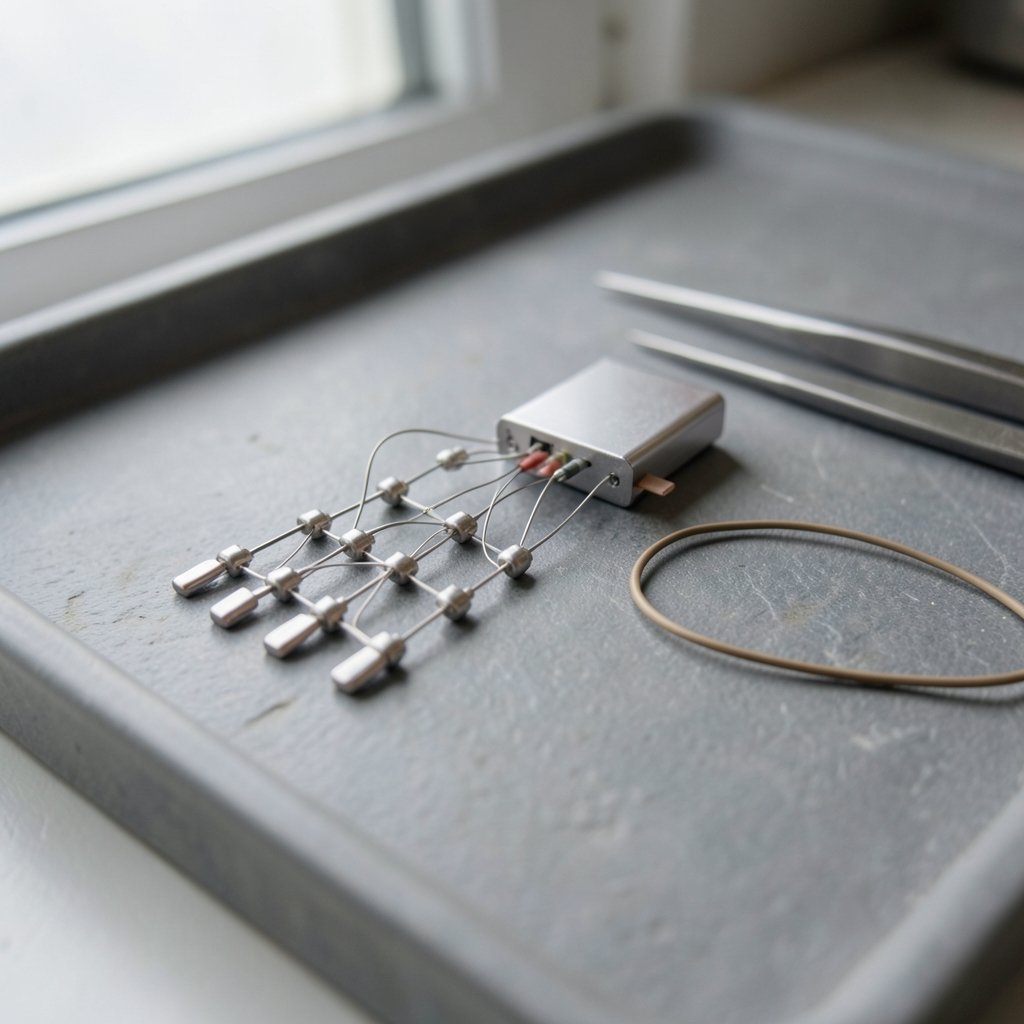
Strip away the jargon and a neural implant is an electrode-and-electronics package that sits close enough to nerve tissue to exchange electrical signals with it. Neurons communicate using tiny voltage changes, and metal contacts can detect or deliver those changes.
Think of it as a translator. On one side is biology, messy and analog. On the other side is a machine that only understands ones and zeros. The implant is the interpreter standing between them.
That basic architecture explains why the field splits so sharply. A device that listens is doing something very different from a device that speaks. And a device buried in brain tissue faces challenges a device resting on the scalp never will.
Read-Out vs. Write-In: The Two Directions of Signal Flow
Every neural implant falls into one of two functional camps, or a blend of both.
Read-out implants record activity. Electrodes pick up the crackle of neurons firing, and software decodes those patterns into intentions. This is how a paralyzed person moves a robotic arm or types on a screen using thought alone. The BrainGate trials, which began in the mid-2000s, demonstrated that people with severe paralysis could control computers and prosthetics through intracortical recordings.
Write-in implants stimulate. They deliver small electrical pulses to override or regulate faulty circuits. Deep brain stimulation is the flagship example, and it works because many neurological symptoms come from misfiring loops rather than damaged tissue.
Some devices do both. A closed-loop system can listen for a seizure signature and fire a corrective pulse before symptoms appear. That two-way capability is where the field is heading, and it connects to broader advances in what a neural network in AI actually does, since decoding brain signals increasingly relies on machine learning models trained on neural data.
| Feature | Read-Out | Write-In |
|---|---|---|
| Job | Records neural activity | Delivers electrical stimulation |
| Example | Brain-computer interface | Deep brain stimulation |
| Typical user | Paralysis, ALS, locked-in syndrome | Parkinson’s, tremor, epilepsy |
| Main challenge | Decoding accuracy | Calibrating dose and avoiding side effects |
Invasive vs. Non-Invasive: Where the Device Sits
Placement matters as much as function. The skull is a formidable barrier, and crossing it changes everything.
Non-invasive approaches never enter the body. EEG caps, functional near-infrared sensors, and similar tools record summed activity from millions of neurons at once. They are safe and cheap, but the signal is blurry, like hearing a stadium crowd through a wall.
Invasive implants sit on the brain surface (electrocorticography) or penetrate tissue with arrays of microelectrodes. Signal quality jumps dramatically. So does risk.
The trade-off is the central tension of the entire field. Better signal means better control, but it also means surgery, immune response, and the slow degradation of electrodes as scar tissue forms around them. Long-term biocompatibility remains one of the hardest unsolved problems in the discipline, and it is the reason many promising devices work beautifully for a year and then fade.
The Implants Already in Wide Clinical Use
It is easy to forget that neural implants are not futuristic. Two categories have been mainstream for decades.
Cochlear implants bypass damaged hair cells in the inner ear and stimulate the auditory nerve directly. The first multichannel version won regulatory approval in 1984, and the devices have since restored functional hearing to hundreds of thousands of people, including children born deaf who develop spoken language with early implantation.
Deep brain stimulation involves electrodes implanted deep in structures such as the subthalamic nucleus, connected by a wire to a pacemaker-like generator in the chest. It received approval for essential tremor in 1997 and for Parkinson’s disease in 2002. Clinicians program the stimulation settings over time, and many patients describe the effect as a dimmer switch on symptoms that medication could no longer control.
These two devices prove the concept works. They also show how unglamorous success looks: careful programming sessions, battery replacements, and years of follow-up rather than a single miracle surgery.
How Brain-Computer Interfaces Turn Thought Into Action
The headline-grabbing branch of the field is the brain-computer interface, or BCI. The premise is simple. If neurons fire in predictable patterns when a person imagines moving a hand, software can learn those patterns and map them to a cursor, a robotic limb, or a keyboard. (Neurotechnology)
The pipeline runs in stages. Electrodes record. Amplifiers boost the signal. Algorithms interpret intent. An output device executes it. Each stage adds latency and error, which is why early systems felt sluggish and current ones feel almost natural.
Progress has been rapid. Several companies now run FDA investigational device exemption trials, and Neuralink received breakthrough device designation in 2023 before beginning human trials around 2024. The regulatory pathway matters here. A breakthrough designation speeds review; it does not prove safety or efficacy.
Adjacent fields are accelerating the work. Biomedical research is being reshaped by artificial intelligence in ways that echo the broader AI biomedical shift, where large-scale data analysis shortens the path from lab finding to clinical tool. Neural decoding benefits from the same momentum.
What Neural Implants Can and Cannot Do Yet
Honest expectations matter more than hype. Here is the realistic picture.
What works now: restoring hearing, reducing tremor and Parkinson’s symptoms, controlling a cursor or robotic arm in laboratory and trial settings, and detecting seizure activity.
What is close: speech decoding from brain signals, closed-loop stimulation that adjusts in real time, and thinner electrodes that last longer inside tissue.
What remains distant: reading complex thoughts, uploading memories, or enhancing healthy brains. The gap between decoding the intention to move a hand and decoding an abstract idea is enormous. Current arrays capture hundreds to a few thousand neurons; the brain has roughly 86 billion.
Anyone who has watched a demo video of a patient typing with their mind should notice what the video does not show: the calibration sessions, the setup, the failure rates, and the months of training. The demonstrations are genuine achievements. They are also edited highlights.
The Real Risks and Practical Limits
Surgery on the brain carries the risks you would expect. Infection, bleeding, and anesthesia complications are rare but real. Beyond the operating room, the longer-term issues are more subtle.
Electrodes degrade. The body mounts an inflammatory response, and scar tissue insulates contacts from the neurons they were built to record. Signal quality declines over months or years, which is why researchers are testing flexible materials, smaller arrays, and alternative placements.
Hardware ages too. Batteries need replacement, which can mean another procedure. MRI compatibility is often restricted, which complicates care for unrelated conditions. And the data itself raises questions about privacy, consent, and who owns a recording of someone’s neural activity.
Cost is another barrier. Coverage varies widely by country and device, and the total expense includes surgery, hardware, programming visits, and long-term maintenance. It is worth thinking about the same way you would think about home and household insurance coverage options: the headline price rarely tells the full story, and the exclusions matter as much as the benefits.
Practical advice from clinicians tends to be consistent. Ask what happens if the device fails. Ask how many programming visits are typical in the first year. Ask whether the manufacturer has committed to supporting the hardware for a decade. Get those answers in writing before signing consent forms.
How to Evaluate Neural Implant Claims
The field attracts hype, and separating signal from noise is a skill. A few habits help.
First, check the trial phase. A feasibility study with a handful of participants is not the same as a pivotal trial. Second, look for peer-reviewed publication, rather than a company blog post or a conference demo alone. Third, note whether outcomes are measured by independent researchers.
Be wary of any claim that a device “reads minds.” Decoding a specific intention after months of individualized training is remarkable. It is not mind reading. And be skeptical of timelines. Neural hardware moves at the speed of clinical evidence, not the speed of press releases.
It also helps to understand adjacent consumer technology, since the line between medical device and consumer gadget is blurring. Pricing structures in creative AI tools, for instance, follow patterns that look a lot like tiered software plans, where higher tiers add capability rather than hardware. Neural implants will likely follow a similar subscription-and-service model for software updates and algorithms that translate neural signals.
The Cloud, the Chip, and the Future of Implanted Hardware
One underappreciated shift is architectural. Early implants did all their processing on-device or through a nearby computer. Newer designs push heavy computation to secure cloud infrastructure while keeping sensitive raw signals local.
That split mirrors debates happening across the tech industry, including the private cloud compute discussion about how to process personal data without exposing it. For neural implants, the stakes are higher because the data is literally inside someone’s head. Expect regulation to follow quickly.
Meanwhile, materials science keeps improving. Flexible polymer arrays, wireless power transfer, and electrodes that dissolve after use are all in development. Each advance chips away at the durability problem that has limited implants for decades.
Conclusion
A neural implant is a device that speaks the brain’s electrical language, either by listening, by stimulating, or by doing both. Cochlear implants and deep brain stimulation have quietly proven the concept over decades, restoring hearing and steadying movement for millions. Brain-computer interfaces are the newer, louder chapter, and they are genuinely impressive in controlled trials.
But the technology is not magic, and it is not finished. Signal quality fades, hardware ages, surgery carries risk, and the gap between decoding a movement intention and decoding a thought remains vast. The most useful mindset is curiosity paired with patience. Watch the peer-reviewed evidence, ask hard questions about longevity and cost, and treat dramatic demo videos as the beginning of a conversation rather than the end of one.
FAQ
How long does a neural implant last?
It depends heavily on the device. Cochlear implants often function for many years, though the external processor is upgraded periodically. Deep brain stimulation generators typically need battery replacement every three to five years, and rechargeable versions last longer. Experimental intracortical arrays tend to show signal decline over months to a few years as scar tissue forms, which is why durability research is such a priority.
Is brain surgery required for every neural implant?
No. Non-invasive systems like EEG headsets require no surgery at all, though they capture much blurrier signals. Devices that penetrate brain tissue or sit on its surface do require a craniotomy, a procedure in which a section of skull is temporarily removed. The choice between invasive and non-invasive comes down to how much signal quality a person needs versus how much surgical risk they are willing to accept.
Can a neural implant read your thoughts?
Not in the way movies suggest. Current systems recognize specific, trained intentions such as the urge to move a cursor or the imagined sound of a word. They require individualized calibration and capture only a tiny fraction of overall brain activity. Abstract thoughts, memories, and beliefs remain far beyond reach. That said, the data these devices record is deeply personal, which is why privacy rules are being debated now rather than later.
What is the difference between a neural implant and a brain-computer interface?
A neural implant is the physical hardware. A brain-computer interface is the complete system, including the implant, the decoding software, and the output device it controls. Every implanted BCI uses a neural implant, but not every neural implant is a BCI. A cochlear implant, for example, is a neural implant that restores hearing rather than controlling a computer.
Are neural implants covered by health insurance?
Coverage varies enormously by country, insurer, and device. Established treatments like cochlear implants and deep brain stimulation are commonly covered when deemed medically necessary, though prior authorization is often required. Experimental brain-computer interfaces in clinical trials are usually funded by the trial sponsor rather than insurance. Always confirm coverage in writing before committing to a procedure.
What should someone ask before agreeing to an implant?
Ask about the failure plan, the number of programming visits expected in the first year, the manufacturer’s long-term support commitment, MRI compatibility, battery replacement schedule, and total cost including follow-up care. Also ask how many procedures the surgical team has performed and whether outcomes are tracked independently. Getting those answers documented protects both the patient and the clinical team.


