
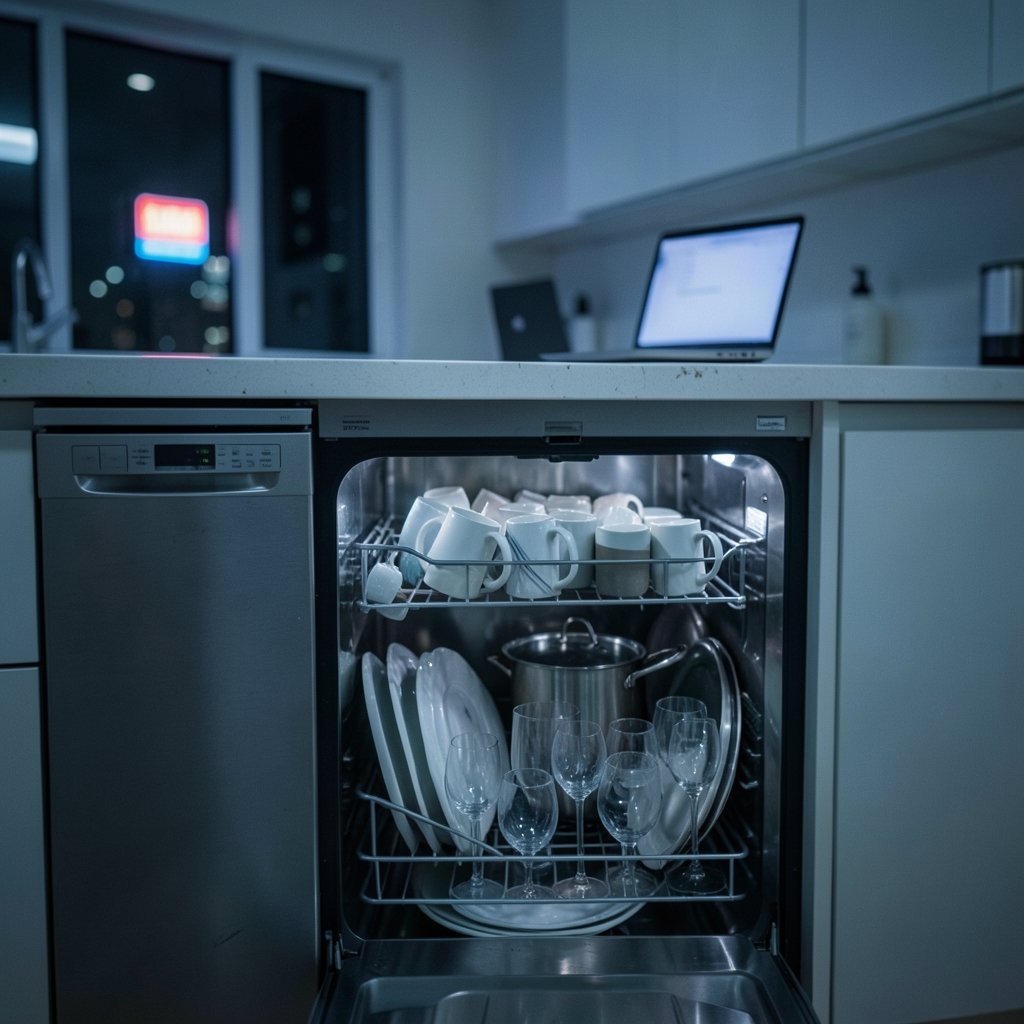
What if the dishwasher everyone calls “best rated” would actually be a poor fit for your kitchen? That happens more often than you’d think. Ratings get passed around like gossip, stripped of context, and turned into a single star count that hides more than it reveals. The truth is that “best rated” is not one thing. It depends on who did the rating, how they tested, and what you personally need a machine to do.
This guide walks through what the major rating systems actually measure, where they disagree, and how to translate their verdicts into a smart purchase. No hype, no brand cheerleading, just the mechanics of how ratings work and where they tend to break down.
What “Best Rated” Actually Means Across Rating Sources
The first thing to understand is that rating outlets rarely agree, and that is not a scandal. It is a methodological fact. Consumer Reports, Which? in the UK, and Stiftung Warentest in Germany all run their own test protocols with different sample sizes, different soil loads, and different weighting for things like energy use versus cleaning power.
A pattern that has held across recent testing cycles: mid-priced Bosch and Miele models tend to top reliability and cleaning tests, while budget brands win on price-to-performance. But specific model rankings shift every year, so a list from two years ago is not a buying guide. It is a historical document.
Retailer review averages are a different animal entirely. They are self-selected, they skew toward people who just unboxed a machine and are feeling generous, and they rarely capture what happens in year four when a pump starts rattling. Treat a 4.7-star average on a shopping site as a signal of buyer satisfaction at delivery, not a prediction of long-term durability.
Practical tip: Cross-reference at least two independent test sources before committing. If a model wins in one outlet and lands mid-pack in another, that gap is worth investigating.
The Numbers on the Label That Matter More Than Stars
A star rating is a summary. The label is the evidence. In the U.S., the FTC EnergyGuide label lists estimated annual energy use in kWh and an estimated yearly cost. In the EU, the label lists kWh per 100 cycles and liters per cycle, and since March 2021 it uses a rescinded-and-reintroduced A–G scale with a QR code linking to the EPREL product database. Older “A+++” labels are no longer valid for new sales in the EU.
Here is the comparison that matters most in practice:
| Metric | What It Tells You | Where to Find It |
|---|---|---|
| kWh per year (U.S.) | Running cost over time | FTC EnergyGuide label |
| kWh per 100 cycles (EU) | Running cost over time | EU energy label |
| Liters per cycle | Water use | EU energy label |
| dB(A) rating | Noise level | Manufacturer spec sheet |
| Place settings | Standardized capacity | Spec sheet, per IEC 60436 |
One number deserves special attention: water use. A new dishwasher typically uses roughly 3 to 4 gallons per cycle, compared with about 24 gallons for washing the same load by hand. That gap is the single strongest argument for running the machine rather than the sink, and it holds even if you prerinse lightly.
ENERGY STAR is worth understanding correctly. It is a certification that a model meets efficiency criteria. It is not a ranking, and it says nothing about cleaning performance or reliability. A machine can be ENERGY STAR certified and still be mediocre at scraping off baked-on lasagna.
Noise, Capacity, and the Specs People Misread
Noise is rated in dB(A), and the numbers are not intuitive. Typical dishwashers run 44 to 50 dB(A). Models marketed as quiet usually sit at 39 to 44 dB(A). Below about 40 dB(A) is often described as quieter than normal conversation, which is the threshold that matters if your kitchen opens onto a living area or a home office.
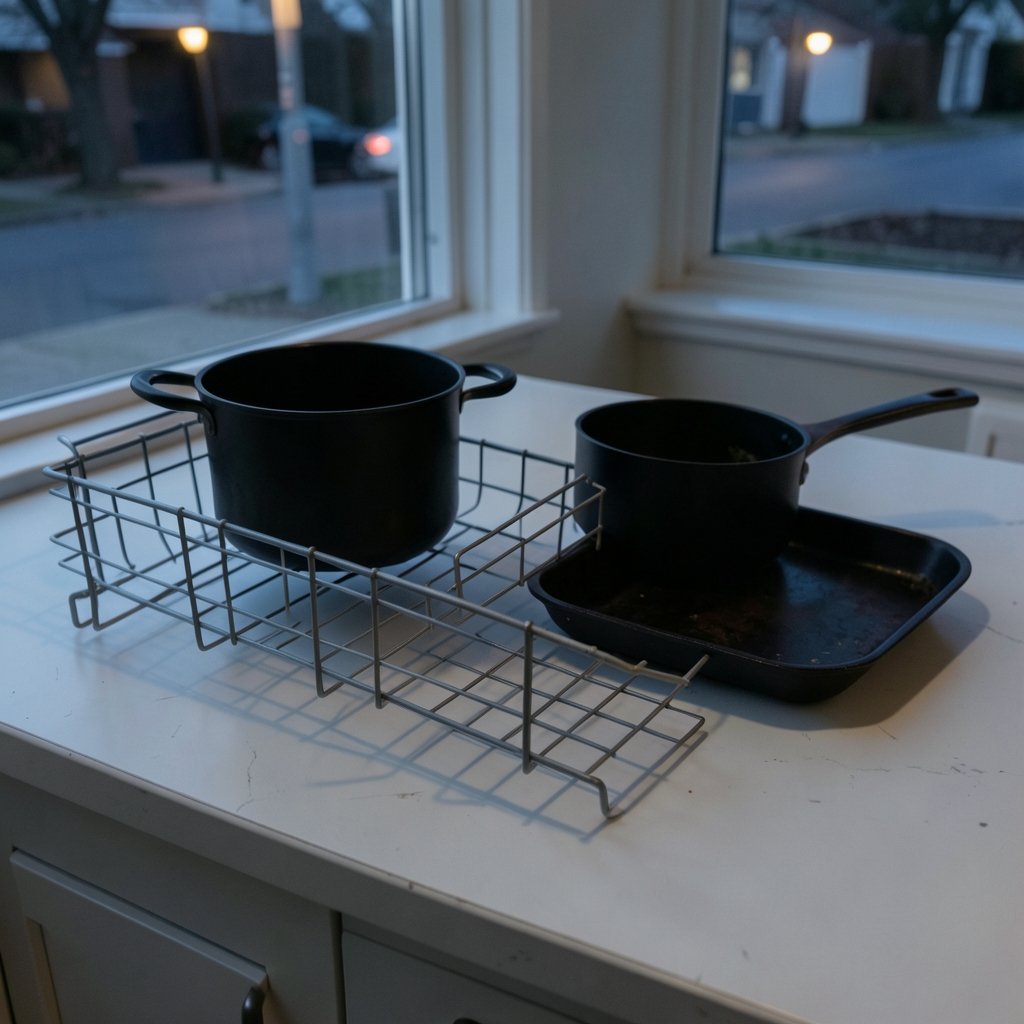
Capacity is measured in place settings, defined by standardized test loads under IEC 60436. U.S. models commonly rate at 12 to 16 place settings. Here is the catch: those ratings come from a lab load, not from the way you actually stack dishes. A 16-setting machine with an awkward rack layout can hold less real-world volume than a 14-setting machine with flexible tines. If you regularly wash stockpots or sheet pans, check the lower rack geometry in person before trusting the number.
Common mistakes people make when reading specs:
- Assuming a lower dB(A) number always means better build quality. It usually means better insulation, which adds cost and sometimes bulk.
- Comparing place settings across brands as if the test loads were identical. They are standardized, but rack design still decides real capacity.
- Ignoring height clearance. Standard U.S. built-in units are 24 inches wide, with 18-inch models for small kitchens, and height clearance under the countertop is a frequent deal-breaker.
- Overlooking the hard-wired versus plug-in question, which can turn a simple swap into an electrician’s visit.
Reliability: The Rating Nobody Puts on the Box
Here is the uncomfortable part. Dishwashers are among the more repair-prone major appliances, and typical useful life lands around 9 to 10 years. Surveys by major consumer testing organizations have repeatedly found this, though survey years and sample sizes vary, so the specific failure rates move around.
What does that mean for a buying decision? It means the difference between a top-rated machine and a mid-rated one often shows up in year five, not week one. Cleaning performance is easy to test in a lab. Long-term reliability is expensive to test, so most outlets lean on reader surveys and repair data instead.
What actually works in practice: look for models with widely available parts and a service network in your area. A slightly lower-rated machine from a brand with a technician twenty minutes away beats a higher-rated machine that requires a six-week parts order. This is the least glamorous advice in appliance buying and the most useful.
If you are the type who researches purchases to death, the same discipline that goes into picking conversion tools for a small business applies here: startups should choose best conversion rate optimization based on measured outcomes rather than marketing claims, and dishwasher shopping rewards exactly the same skepticism.
Where Efficiency Standards Fit In
U.S. efficiency standards are set by rule, not by the market. Standards were amended in 2012 with effect from 2013, and again in 2016 with compliance from 2018. A 2024 final rule tightened standards for some product classes, and litigation plus congressional action in 2025 created real uncertainty about its status. If you are reading a claim about the current legal footing, verify it before repeating it.
Why does this matter to a shopper? Because standards shape what is on the shelf. When rules tighten, manufacturers redesign pumps and cycles, and the first generation of a redesign is where quirks live. Buying a model that has been in production for a couple of years, rather than a brand-new platform, is a quiet reliability strategy.
The EU side is cleaner to navigate because the label change is settled. Since March 2021, the A–G scale applies and the QR code resolves to the official product registry, which gives you a verifiable spec sheet rather than a retailer’s paraphrase.
How to Build Your Own Shortlist
Ratings are inputs, not answers. The shortlist should come from your constraints first and the ratings second.
- Measure the cavity. Width, height, and depth, plus the path from the door to the cabinet. This eliminates half the market immediately.
- Set your noise ceiling. If the kitchen is open-plan, 40 dB(A) is a reasonable target. If it is behind a door, 46 dB(A) is fine and you will save money.
- Decide what “clean” means for your dishes. Heavy pots and pans reward strong cycle design. Mostly plates and glasses reward efficient, gentle cycles.
- Check the label numbers. Compare kWh per year or per 100 cycles across your finalists. The spread between a good and a poor performer is real money over a decade.
- Confirm parts and service. Search for local repair availability before you fall in love with a model.
- Read the one-star reviews specifically. They describe failure modes. The five-star reviews describe the unboxing.
That last step is where most shoppers learn the most. A pattern of “control board failed at 14 months” across dozens of reviews is more informative than any aggregate score.
The Verification Habit That Saves Money
Ratings age badly. Model numbers get revised, suppliers change, and a machine that earned praise in one production year can quietly shift. The same instinct that makes people double-check whether a photo is real applies to product research: how to detect AI generated images is essentially a lesson in provenance, and provenance matters for spec sheets too. Check who published the number, when, and from what test.
For video-based reviews, the same caution applies. Plenty of “hands-on” appliance content is assembled from press materials. Learning to spot AI generated videos with practical checks that actually work helps you tell a real kitchen test from a slideshow with a voiceover.
And when a review quotes a performance figure, ask what it was measured against. Even in gaming hardware, context decides whether a number means anything, as the DLSS 5 NBA 2K27 frame rate story illustrates: a figure without a baseline is decoration.
Conclusion
The best rated dishwasher is not the one at the top of a single list. It is the model that survives your constraints, clears your noise threshold, posts honest numbers on its energy label, and comes from a brand whose parts you can actually get. Mid-priced Bosch and Miele models have earned their reputations in independent testing, but reputation is a starting point, not a verdict.
Do the measuring, read the label, cross-check two independent test sources, and read the one-star reviews with the same attention you give the five-star ones. That combination will land you on a machine you still like in year seven, which is the only rating that ultimately counts.
Frequently Asked Questions
Are the best rated dishwashers always the most expensive?
No. Testing across major outlets consistently shows budget brands winning on price-to-performance while mid-priced Bosch and Miele models top reliability and cleaning tests. The expensive tier buys quieter operation, better racks, and stronger service networks rather than dramatically better cleaning.
How many decibels is considered quiet for a dishwasher?
Typical models run 44 to 50 dB(A). Anything marketed as quiet usually sits between 39 and 44 dB(A). Below roughly 40 dB(A) is often described as quieter than normal conversation, which is the practical target for open-plan kitchens.
Does ENERGY STAR mean a dishwasher cleans well?
No. ENERGY STAR is a certification that a model meets efficiency criteria. It says nothing about cleaning performance or long-term reliability. Use it as one filter among several, not as a quality ranking.
How long should a dishwasher last?
Around 9 to 10 years is typical, and dishwashers rank among the more repair-prone major appliances in consumer surveys. Survey years and samples vary, so treat the figure as a rough planning horizon rather than a guarantee.
What is a place setting on a dishwasher spec sheet?
It is a standardized capacity measure defined by test loads under IEC 60436. U.S. models commonly rate 12 to 16 place settings. Real-world capacity still depends on rack layout, so a lower-rated machine with flexible tines can hold more than a higher-rated one.
Is it cheaper to run a dishwasher or wash by hand?
A dishwasher generally wins. A new machine uses roughly 3 to 4 gallons per cycle, compared with about 24 gallons for washing the same load by hand, and modern units use about half the energy of models from 20 years earlier.



