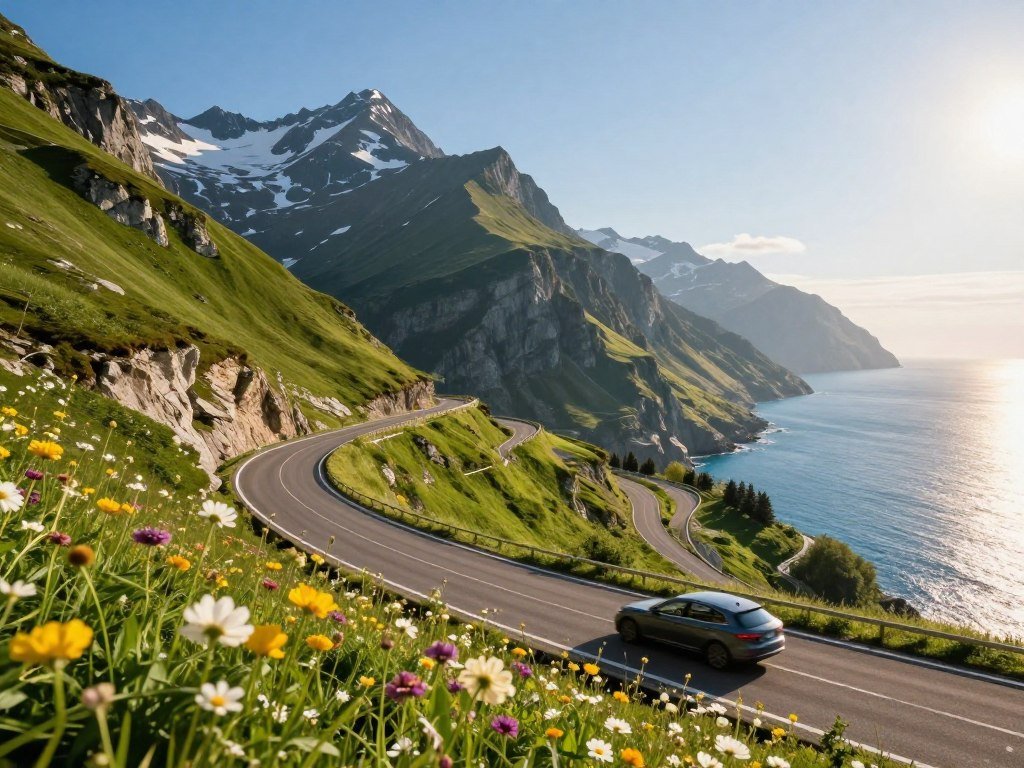
Europe’s best scenic drives range from short alpine climbs to multi-day coastal journeys. The best road trip routes in Europe depend on the views you want and how much time you have.
A switchback is a sharp road bend that turns back on itself as it climbs or descends a slope. These 15 picks span Iceland, the Alps, the Adriatic, Tenerife, and Germany, with routes for varied landscapes and driving styles.
Some drives suit a short escape; others need several days. Your best choice rests on scenery, driving pace, and time for stops. Plan for the adventure you want, not just the miles you can cover.
Key Takeaways
- Choose a route by its scenery and the time you have.
- Allow extra hours for viewpoints, beaches, and historic towns.
- Use a map to keep distant stops in sight.
- Check road conditions before setting out in Iceland.
- Get written approval before crossing borders in a rental car.
Choose a route that leaves enough time to stop safely and enjoy the places along the way.
Best Road Trip Routes in Europe for Iceland’s Landscapes
If you have about two weeks to explore Iceland, the Ring Road is the broadest choice, while the Westfjords can fit into about three days. Driving time is only part of the trip: Iceland’s spread-out sights need time for walks, meals, and weather delays.
Route 1, the Ring Road, is 1,333 km and takes 12-13 hours of nonstop driving. A South Coast drive between Reykjavík and Jökulsárlón Glacier Lagoon covers about 236 miles and takes 4.5-5 hours without stops.
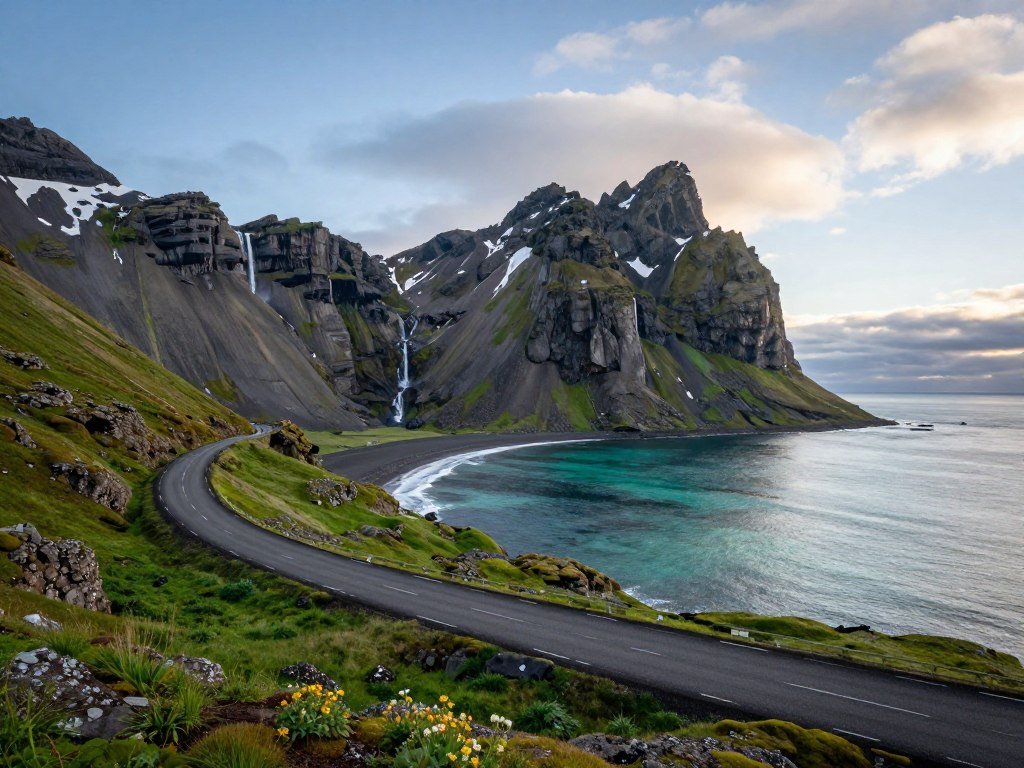
Ring Road and Westfjords for a Longer Iceland Trip
The Ring Road loops around the island, while the Westfjords offer a separate scenic drive that takes about three days. A 2-week European road trip itinerary could focus on Route 1, leaving time to explore most of Iceland’s sights.
A map for a European road trip helps you keep far-apart stops in view. Iceland’s roads can take longer than a map suggests, especially when conditions shift.
Check road and weather conditions before setting out, since either can affect a safe route.
The Ring Road passes through several regions, while the Westfjords add a more focused detour. Choose based on whether you want an island-wide loop or a smaller area to explore.
Snæfellsnes Peninsula on Road 54
Road 54 circles the Snæfellsnes Peninsula, making it a strong choice for a shorter Iceland road trip. Stops include Langaholt’s beaches, Bjarnarfoss, Snæfellsjökull lava fields, and Mount Kirkjufell.
The named sights sit across the peninsula, so leave room between stops rather than treating the loop as one quick drive. A short stretch of road can lead to a long walk or a beach visit.
The South Coast drive offers a more compact route, while the peninsula loop gives you a wider mix of sights. Allow daylight and time for stops rather than treating Iceland’s driving hours as the full trip.
Which European Alpine Roads Are Worth the Drive?
For a compact high-alpine drive, choose Grossglockner; for a multi-day pass route, choose the Route des Grandes Alpes. Grossglockner is the all-around alpine pick, with a high mountain setting and a clear start-to-finish crossing.
Check the 2026 ticket and seasonal dates before setting your Grossglockner travel day. Vršič Pass is a shorter crossing through Triglav National Park, with 50 numbered curves from Kranjska Gora toward the Trenta Valley.
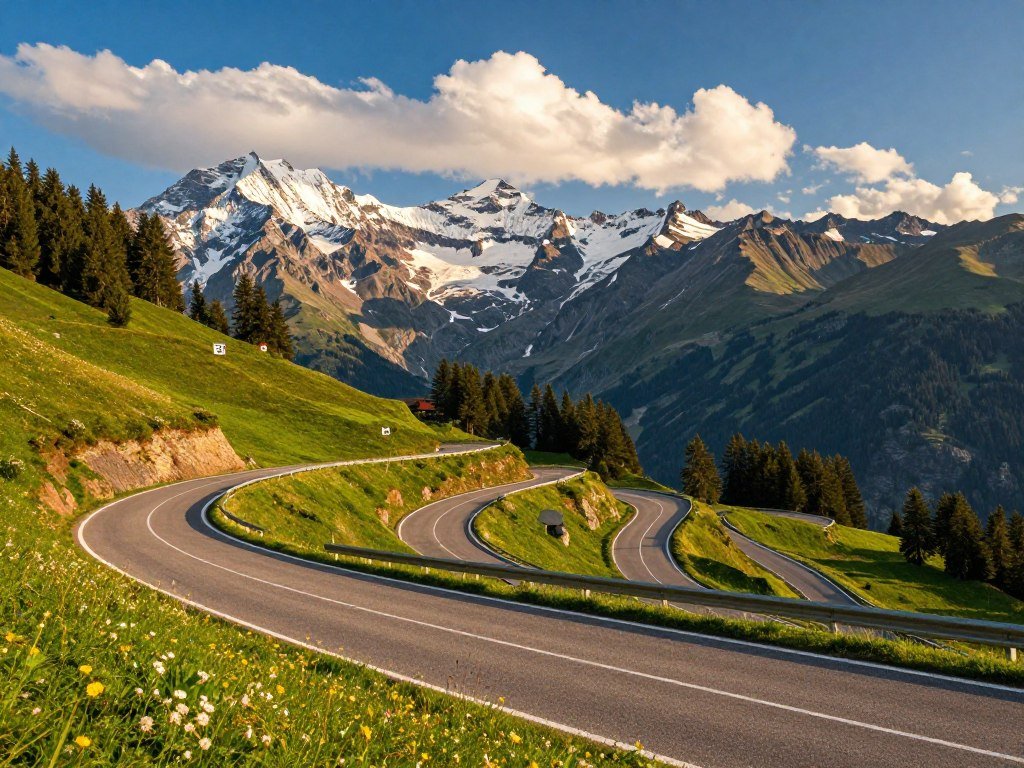
Grossglockner and Vršič Pass
The Grossglockner High Alpine Road runs 48 km from Fusch an der Großglocknerstraße in Salzburg to Heiligenblut am Großglockner in Carinthia. It has about 36 switchbacks and reaches the base of the 3,798-meter Grossglockner peak.
The 2026 car day ticket is €46.50, or €36.50 for entry after 6:00 p.m. Fully electric and hydrogen cars pay €40.00; hybrids do not qualify. The road is scheduled to stay open through November 1, 2026, then close for winter November 2.
Vršič Pass reaches 1,611 meters, making it Slovenia’s highest mountain pass. The National Geographic guide to Slovenia’s Julian Alps describes its bends and route toward the Soča Valley.
Transfăgărășan, German Alpine Road, and Route des Grandes Alpes
The Transfăgărășan Highway crosses Romania’s Făgăraș Mountains between Cârțișoara and Curtea de Argeș. It offers a mountain crossing, rather than the longer region-spanning drive of Germany’s Alpine Road.
The German Alpine Road stretches 280 miles from Lake Constance to Lake Königssee near Salzburg, Austria. France’s Route des Grandes Alpes runs 447 miles from Thonon-les-Bains to Menton and takes two to six days.
| Route | Country | Length or elevation | Endpoints |
|---|---|---|---|
| Grossglockner | Austria | 48 km | Fusch to Heiligenblut |
| Vršič | Slovenia | 1,611 m | Kranjska Gora to Trenta Valley |
| Transfăgărășan | Romania | 150 km | Cârțișoara to Curtea de Argeș |
| German Alpine Road | Germany | 280 miles | Lake Constance to Lake Königssee |
| Route des Grandes Alpes | France | 447 miles | Thonon-les-Bains to Menton |
On the French route, Col de l’Iseran reaches 9,088 feet, and the Cime de la Bonette loop reaches 9,215 feet. Check the Grossglockner’s 2026 ticket and seasonal opening details before choosing your travel date.
Which Coastal Drives Show Europe at Its Best?
Choose the Adriatic Highway for a multi-country coastal panorama, Amalfi for a compact cliffside drive, or the Wild Atlantic Way for a long Irish coast journey. Coastal roads bring close sea views, but they often ask you to slow down.
The Adriatic Highway follows about 640 km of coastline through Croatia, Bosnia, and Montenegro, with most of the route in Croatia. The Split-to-Dubrovnik drive is one stretch of that longer route, not the full coastal journey.
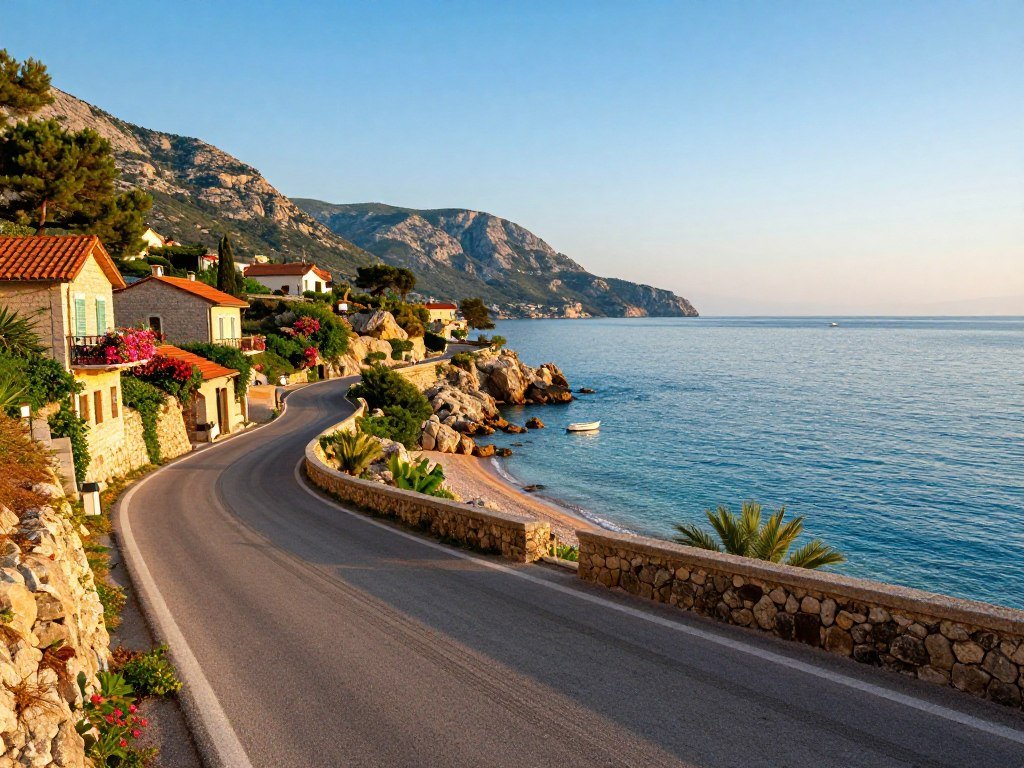
Croatia’s Adriatic Highway
The Adriatic route links beaches, towns, and sea-facing bends across several countries. The Split-to-Dubrovnik stretch is about 143 miles and can take up to four and a half hours.
Three stops give you different ways to break up that stretch:
- Split for a city stop beside the Adriatic.
- Makarska for a coastal town break.
- Dubrovnik for the southern end of this drive.
Amalfi Coast and Ireland’s Wild Atlantic Way
The Amalfi Coast Drive is a short, winding 35-mile route from Sorrento to Salerno, with about two hours of driving. Positano and the Fiordo di Furore offer memorable stops along its cliffs and beaches.
Ireland’s Wild Atlantic Way follows 2,600 km of the west coast, so it suits a longer trip rather than a quick drive. The Cliffs of Moher and Slieve League are among its well-known sights.
Coastal bends, busy summer traffic, and exposed roads all call for a slower pace. Set aside extra time for coastal stops instead of planning only around the wheel-time estimate.
What Can You See on Tenerife’s Anaga Rural Park Drives?
Tenerife’s Anaga Rural Park offers three distinct drives that can fit into a few hours of driving, with a full day better for enjoying the scenery. Each route has a different focus, from high viewpoints to villages, beaches, and natural pools.
Driving all three routes takes only a few hours, but at least a day gives you time to enjoy the views and beaches. Treat the roads as part of the visit, not simply as transfers between stops.
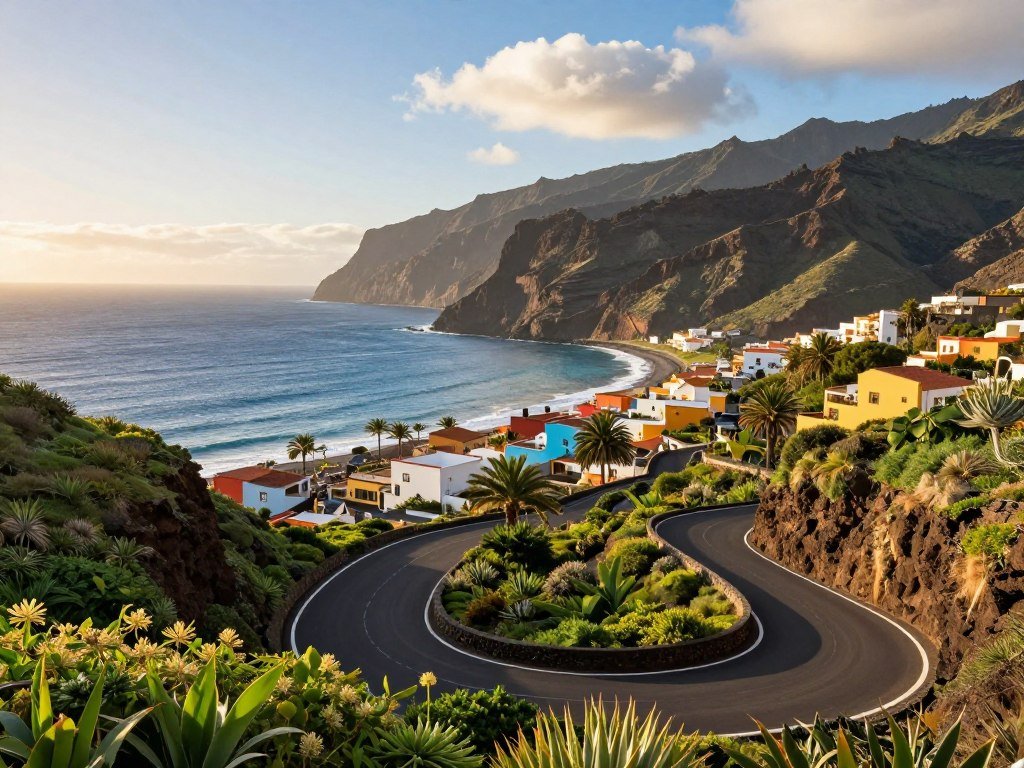
TF-12 from La Laguna to Chamorga
The TF-12 runs from San Cristóbal de La Laguna to Chamorga through the park. Its viewpoints give you places to pause, while short walks let you stretch your legs away from the road.
This drive fits travelers who want mountain views without spending the whole day behind the wheel. A viewpoint stop can turn a short stretch into a slower, more rewarding outing.
TF-12 and TF-134 from Igueste to Benijo
The route from Igueste de San Andrés to Benijo Beach uses the TF-12 and TF-134. It passes villages and beaches, so it suits a day built around small stops rather than one long drive.
Give yourself time to leave the car and explore the coast. The road connects several places worth seeing, and rushing between them can make the trip feel like a commute.
TF-13 from Bajamar to Punta del Hidalgo
The TF-13 runs from Bajamar to Punta del Hidalgo and ends at Mirador Punta del Hidalgo. Along the way, you can stop at Piscina Natural Punta del Hidalgo and Piscina Natural de Bajamar.
The Tenerife tourism guide to Anaga Rural Park covers its viewpoints, villages, trails, beaches, and access by car.
Each route gives you a different reason to pull over, whether you want a view, a walk, or a beach stop. Leave room in the day to stop at viewpoints and beaches rather than trying to cover all three routes at speed.
Where Can You Pair Castles With Medieval Towns?
Germany’s Romantic Road is the clearest pick for a drive built around medieval towns, Bavarian scenery, and a castle finish near Füssen. Historic stops shape the day here more than fast progress between cities.
The route runs 350 km from Würzburg to Füssen. You can drive it in a day, but spending several days gives you more time for towns and scenery along the way.
Rothenburg ob der Tauber is known for its medieval walls and red roofs. Its streets make a natural reason to pause, walk, and stay longer than a quick photo stop.
Füssen sits near the hilltop Neuschwanstein Castle, giving the southern end a strong finish. The route suits you if historic towns matter more than continuous high-speed progress.
Several days let you spend time in the towns and take in the Bavarian scenery between them. Plan time in the towns, not only time on the road, to make this route feel unhurried.
How Should You Pace a European Road Trip?
A relaxed European road trip usually works better when you limit daily driving and leave room for stops. The 3/3/3 guideline offers a flexible planning aid, not a law.
Use about 300 miles or around three hours of driving as a daily benchmark. Aim to arrive by 3 p.m. and stay at least three nights at a destination when your schedule allows.
| Planning measure | Suggested benchmark | How to use it |
|---|---|---|
| Daily distance | About 300 miles | Keep long drives occasional |
| Daily driving | Around three hours | Leave room for breaks |
| Arrival | By 3 p.m. | Keep the evening free |
| Destination stay | At least three nights | Unpack and explore locally |
A 7-day road trip in Europe works best in one region, while a 4-week European road trip itinerary can connect several regions at a gentler pace. A European road trip planner should show driving time separately from sightseeing time.
- For one week, choose one region and fewer hotel changes.
- For two weeks, add one nearby region or a longer stay.
- For four weeks, connect regions with rest days between drives.
Treat the 3/3/3 guideline as a starting point, then adjust it for the route, weather, and travelers.
What Should You Check Before Driving a Rental Car Across Borders?
Before driving a rental car across a European border, confirm in writing that every country on your route is approved. Written approval matters because each rental provider sets its own approved-country list.
Cross-border travel can bring extra fees and may require Green Card documents. Keep the rental agreement, approval, and any required Green Card accessible during the trip.
Countries outside the approved list are off-limits unless the provider confirms otherwise in writing. Check the list before you book, since a route can cross borders without making the rental terms clear.
Cross-border rental permission and an international one-way drop-off are separate matters. A one-way rental may need its own approval and fees, which can depend on the country, region, or rental period.
An international one-way drop-off is a separate booking permission, not a side effect of border approval.
Sixt allows cross-border travel with limits that can vary by route or vehicle category. One-way rentals may also bring extra fees, so check both permissions when planning a drop-off in another country.
Keep these items within reach while traveling:
- The approved-country list for your rental.
- Written cross-border approval from the provider.
- Your rental agreement.
- A Green Card, where required.
Keep the written approval and required rental documents accessible in the car throughout the trip.
Conclusion
The best choice is the drive that gives you time to enjoy the scenery you came to see. Match the route’s pace and views to the time you have, rather than squeezing in extra miles.
A shorter drive can leave room for a beach, a town, or an unplanned viewpoint. A longer trip can reward you with more variety, as long as the schedule leaves space to pause.
Choose one route that fits your plans, then mark two places you most want to see. Pick your route, mark two stops, and leave room in the schedule for a detour.
FAQ
What is the most beautiful road in Europe?
The Grossglockner High Alpine Road is a strong all-around choice, while the Amalfi Coast is best for seaside scenery. Grossglockner runs 48 km and has about 36 switchbacks, with views toward Austria’s highest peak. Choose Amalfi if cliffs, villages, and the sea matter more than mountain heights. Your favorite will depend on the scenery you most want from the drive.
What is the 3-3-3 rule for a road trip?
The 3-3-3 rule suggests about 300 miles or three hours of driving per day, arrival by 3 p.m., and at least three nights at a destination. It is flexible advice, not a law or a fixed test. Use it to avoid filling every day with driving, then change the pace for road conditions, weather, and your group.
Is $5000 enough for 2 weeks in Europe?
$5,000 can cover two weeks in Europe for one traveler on a moderate budget if airfare and major splurges stay controlled. The total depends on party size, lodging, car rental, and whether flights are included. A shared room and fewer paid activities can stretch the budget, while a rental car and costly hotels can use it quickly.
Can I drive a rental car across borders in Europe?
You can cross a European border in a rental car only when the rental provider approves the countries in writing. Check the approved-country list before travel, since some countries may be excluded. Ask about any fees and whether you need Green Card documents. Keep the approval and required papers accessible during the trip.
When does the Grossglockner High Alpine Road close in 2026?
The Grossglockner High Alpine Road is scheduled to remain open through November 1, 2026, and close for winter on November 2. The road’s seasonal opening can shape an alpine itinerary, so choose travel dates within the stated season. Snow and other conditions can also affect a mountain drive, even before the planned winter closure.



