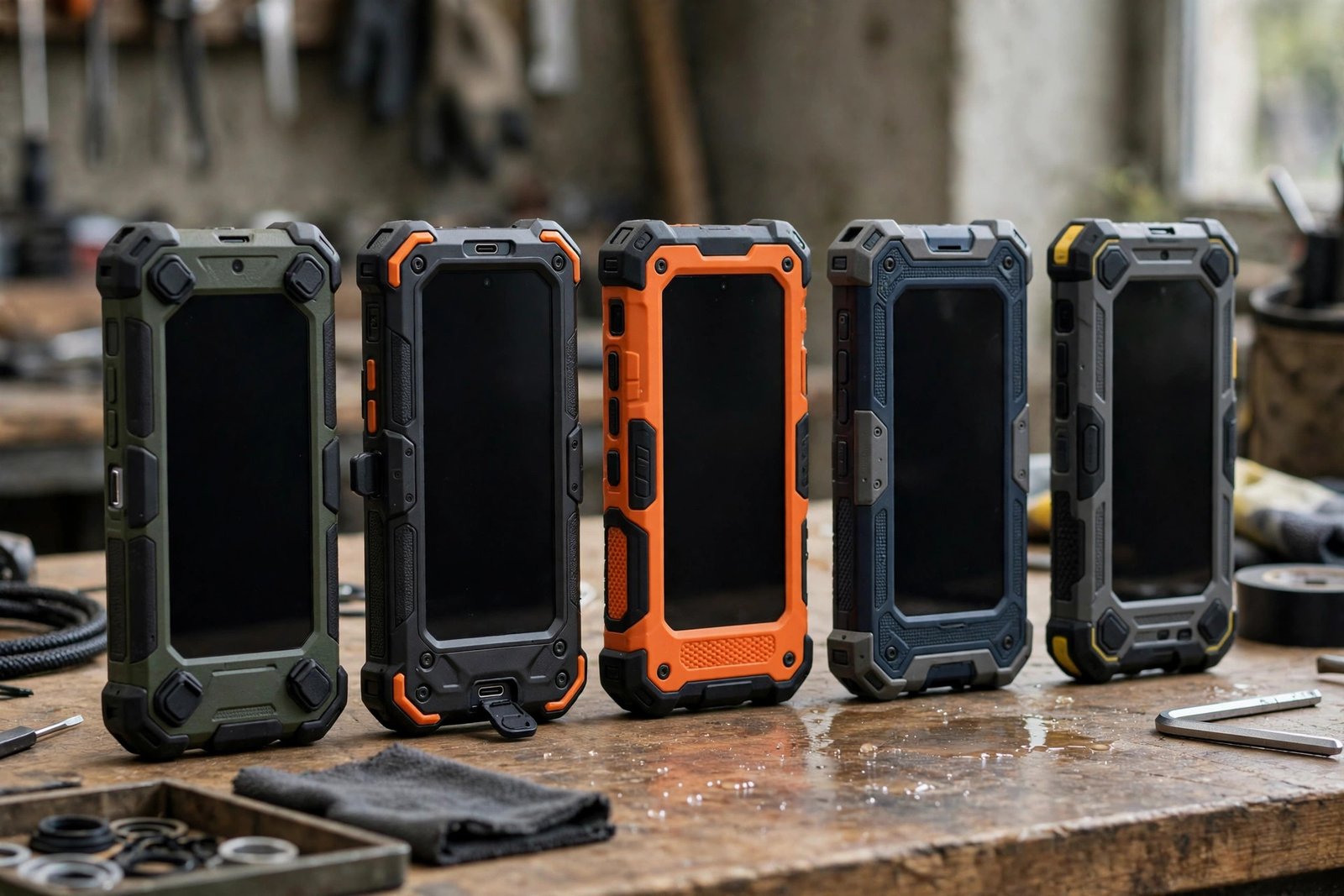
The best rugged phones 2027 are not the flashiest phones you can buy. They are the ones that keep working after a drop onto concrete, a dunk in a puddle, a day in dust and rain, and a shift on a building site. For builders, engineers, farmers and hikers, that toughness matters more than a slim design. So which rugged phone is worth buying? Start with the Samsung Galaxy XCover range for a dependable work phone, and look at CAT or Motorola for satellite messaging or a thermal camera.
Key takeaways
- Look for an IP68 water and dust rating and MIL-STD-810H drop testing as a baseline.
- Samsung XCover phones are the safest default for work, with a removable battery and familiar Android.
- CAT and Motorola offer specialist features, including satellite messaging and a thermal camera.
- A big battery and a bright, glove-friendly screen matter more than a top-end camera.
- Check software support before you buy.
What makes a phone genuinely rugged
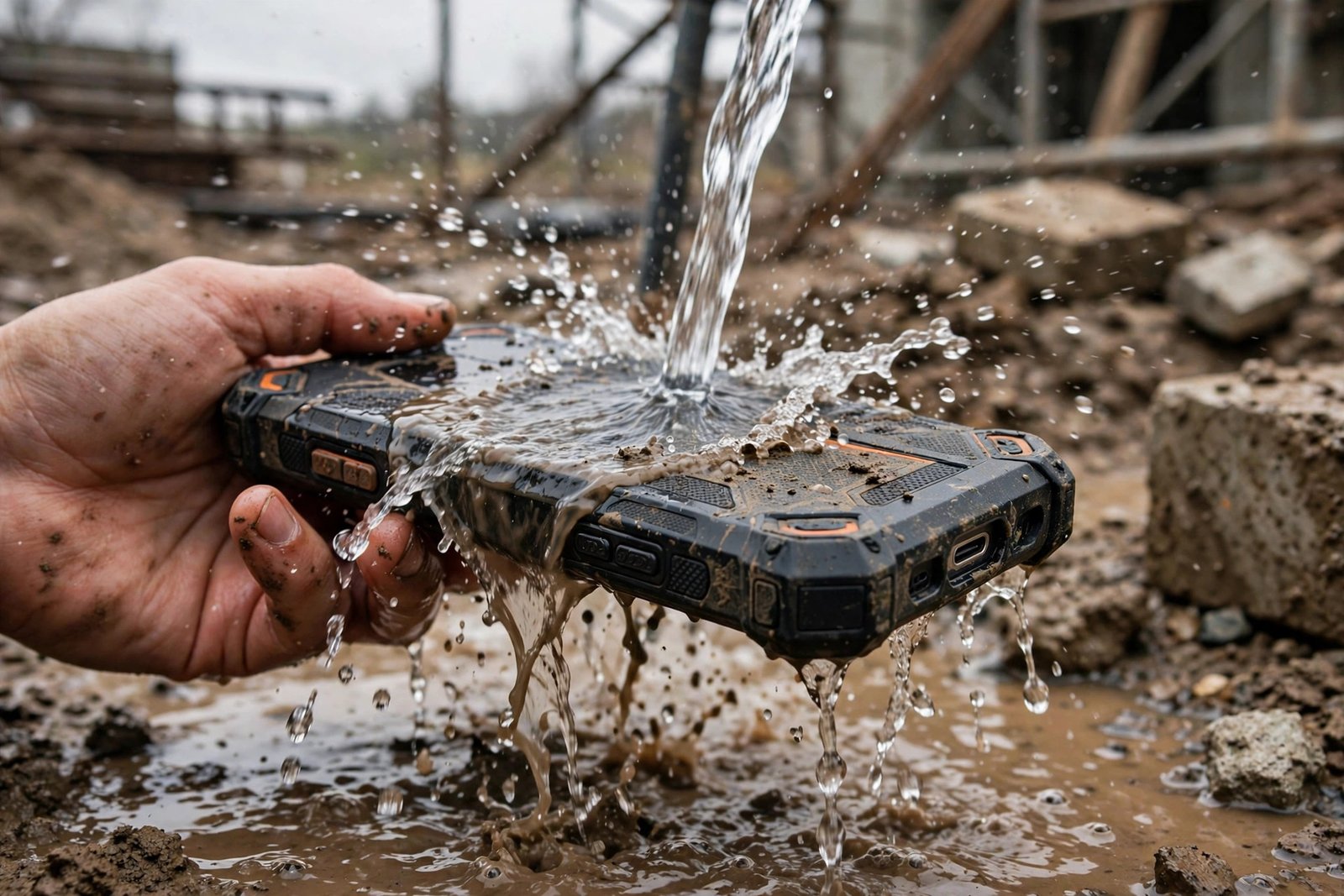
A rugged phone survives conditions that would crack or drown an ordinary phone. The two ratings to understand are the IP rating and the MIL-STD rating. An IP68 rating means the phone is dust-tight and can be submerged in water under the conditions set out by the maker, usually for a set depth and time. An IP69 rating adds protection against high-pressure water jets. MIL-STD-810H is a US military testing standard covering drops, vibration, temperature and humidity.
Those ratings are useful, but they are not the whole story. Check screen brightness and whether the phone works with wet hands or gloves. A large battery that lasts a full working day beats a fast charger you never have time to use. A removable battery, offered on some Samsung XCover models, can be swapped in seconds. Also check software support, because a rugged phone is often kept for years, and check size and weight: a phone you find too heavy will end up left in a van.
Best rugged phones at a glance
| Phone | Best for | Why it stands out |
|---|---|---|
| Samsung Galaxy XCover7 | Best all-round rugged work phone | Removable battery, IP68, familiar Android |
| CAT S75 | Satellite messaging and outdoor work | Satellite messaging, tough build, long battery |
| Motorola Defy 2 | Outdoor use on a budget | Satellite messaging, rugged design, practical price |
| Nokia XR21 | Everyday toughness without bulk | IP68, MIL-STD-810H, slimmer than most rugged phones |
| CAT S62 Pro | Thermal imaging on site | Built-in thermal camera, rugged and waterproof |
Table: A quick comparison of the five rugged phones in this guide, and who each one suits best.
1. Samsung Galaxy XCover7
Best for: the best all-round rugged work phone for most people.
The Samsung Galaxy XCover7 is the safest default in this guide. It is a proper rugged phone, with an IP68 rating for water and dust and MIL-STD-810H testing for drops and shocks, yet it still feels like a normal Samsung phone to use. It runs Android with the familiar Samsung interface, so there is no learning curve, and it works with the apps and tools most workplaces already use. Its standout feature is the removable battery: carry a spare and swap it in seconds on a long shift. The screen is bright outdoors, and the phone supports glove touch. Its camera is practical rather than impressive, which is the right trade-off for a work phone.
2. CAT S75
Best for: satellite messaging and outdoor work far from a signal.
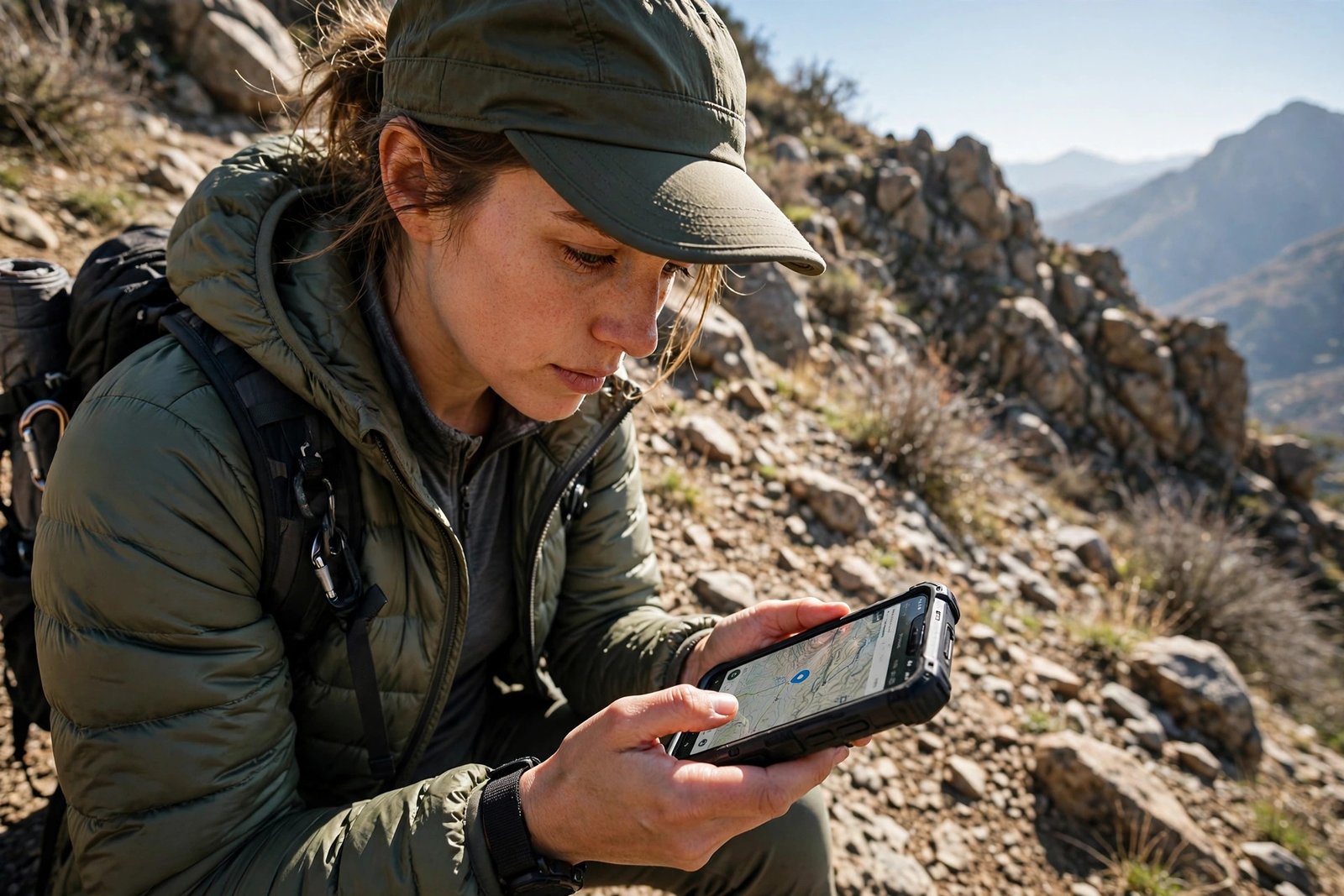
The CAT S75 is built for people who work or travel where mobile coverage is unreliable. Its headline feature is satellite messaging, which lets you send messages when there is no mobile signal, provided you have a clear view of the sky and a suitable plan. For lone workers and hikers, that is a genuine safety feature. It is a tough, practical phone, with an IP68 rating, MIL-STD-810H testing, and a large battery for long days away from a charger. The screen is large and readable outdoors. Buy it for the satellite messaging and battery life.
3. Motorola Defy 2
Best for: outdoor use on a budget, with satellite messaging included.
The Motorola Defy 2 brings satellite messaging to a lower price than the CAT S75, which makes it a smart choice for walkers, cyclists and outdoor workers who want that safety net without paying for a flagship rugged phone. Like the S75, it can send messages via satellite when there is no mobile coverage, subject to a clear sky and a suitable plan. That feature alone sets it apart from most phones at this level. It is rugged in the practical sense, with water and dust protection and drop testing, and it runs clean, near-stock Android. The battery lasts a full day outdoors, and the screen is clear in daylight. It does the basics well for less money. Check the satellite plan and coverage for your area before you buy.
4. Nokia XR21
Best for: everyday toughness without the bulk of a traditional rugged phone.
The Nokia XR21 is the rugged phone for people who want protection without carrying a brick. It is slimmer and lighter than most phones in this guide, yet it still carries an IP68 rating and MIL-STD-810H testing. It looks more like a normal phone, which makes it a good choice if you want a rugged phone for daily life as well as for work or the outdoors. The body feels well made, the screen is bright and clear, and the software is clean Android without heavy extras. The camera is capable for everyday photos, and the battery lasts a full day. It has no satellite messaging or thermal camera, and the battery is not removable.
5. CAT S62 Pro
Best for: thermal imaging on site, for trades and inspections.
The CAT S62 Pro is the specialist in this list. Its built-in thermal camera, made by FLIR, lets you see heat: a hot pipe, a cold draught, an overheating circuit, a damp patch behind a wall. For plumbers, electricians, builders and inspectors, that is a tool that saves time and finds problems a normal camera cannot see. It is the reason to buy this phone over any other rugged handset. It is also a tough phone, with water and dust protection and drop testing. The thermal camera is integrated into the body, so there is no separate device to carry. The phone is older than some rivals, so check software support before you buy. Buy the S62 Pro for the thermal camera; if you do not need it, another phone here will serve you better.
Before you buy: a quick checklist
- Check the IP rating. IP68 is the baseline for a waterproof rugged phone; IP69 adds jet-spray protection.
- Check for MIL-STD-810H testing, and read what was actually tested rather than trusting the word rugged alone.
- Decide if you need satellite messaging. It is vital off-grid, and irrelevant if you rarely leave coverage.
- Check the battery. A large battery, or a removable one, matters more than fast charging on a long shift.
- Test glove and wet-hand use if you can, and check screen brightness for outdoor work.
- Check software support. Ask how long the maker will provide Android and security updates.
For most buyers, the decision is simple: Samsung for work, CAT or Motorola for satellite messaging, and CAT again for thermal imaging. If you are weighing a normal phone against a rugged one, our guide to how to choose a smartphone sets out the trade-offs, and our round-up of the best small phones is useful if size matters as much as toughness.
Frequently asked questions
What does IP68 mean on a rugged phone?
IP68 means the phone is dust-tight and can be submerged in water under the conditions set out by the maker, usually to a set depth for a set time. It does not cover salt water, hot water or high-pressure jets.
Are rugged phones slower than normal phones?
They can be, but not always. Many use mid-range processors to keep costs down and battery life up, so they may feel slower than a flagship for video editing or demanding games. For calls, maps, email and work apps, a good rugged phone is fast enough.
Can I use a rugged phone as my everyday phone?
Yes, and many people do. Modern rugged phones run standard Android and work with the same apps as any other phone. The trade-offs are size, weight and camera quality.
Do rugged phones need a case?
Most do not need a case for drop protection, because that is built in. A screen protector is still worth fitting, because the display is the most exposed part.
How long do rugged phones last?
A well-made rugged phone can last several years, often longer than a normal phone. Battery life is usually the limiting factor, and a removable battery extends the useful life.
Which rugged phone has the best battery life?
Battery life depends on the model, the screen and how you use it. In general, phones with a large battery and a mid-range processor last longest. See our round-up of the best phones for battery life for more detail.
The bottom line
The best rugged phone is not the toughest phone on paper. It is the one that fits your working day: the right rating, a battery that lasts the shift, a screen you can read outdoors, and software that will still be supported in two or three years. For most people, that is a Samsung XCover. For remote work, look at CAT or Motorola. For thermal imaging, the CAT S62 Pro stands alone. Your next step: write down where your phone gets damaged, how long a shift lasts, and whether you ever lose signal, then buy the phone that covers them.