What if the shine on your forehead at 3 p.m. says less about your skin and more about the products sitting on it? That is the question worth asking before buying anything labeled “oil control.” Oily skin is not a flaw to scrub away. It is a sebum gland working enthusiastically, and the wrong routine makes it work harder. The right one calms it down without stripping it bare.
Below is a shortlist of specific product types and named formulas worth considering for 2027, each with who it suits, what it does well, and where it falls short. No miracle claims. Just a working plan.
Quick Comparison: What Each Option Is Best At
| Option | Best for | Standout strength | Main limitation |
|---|---|---|---|
| Non-stripping gel or foaming cleanser | Everyone with oily skin | Cleans without tightness | Won’t control oil alone |
| Salicylic acid (BHA) exfoliant | Congested, textured skin | Works inside the pore | Can over-dry if overused |
| Niacinamide serum | Shine plus enlarged pores | Balances sebum, supports barrier | Results build slowly |
| Oil-free gel moisturizer | Dehydrated oily skin | Hydration without heaviness | Not enough for dry patches |
| La Roche-Posay B5+ moisturizer | Oily and sensitive skin | Repairs while hydrating | Rich texture for some |
| Blotting papers | Midday shine | Absorbs oil, keeps makeup | Temporary fix only |
| Matte fluid sunscreen SPF 30+ | Daily protection | Prevents long-term damage | Needs careful reapplication |
| Clay or purifying mask | Weekly maintenance | Deep-cleans pores | Overuse irritates skin |
1. A Non-Stripping Gel or Foaming Cleanser
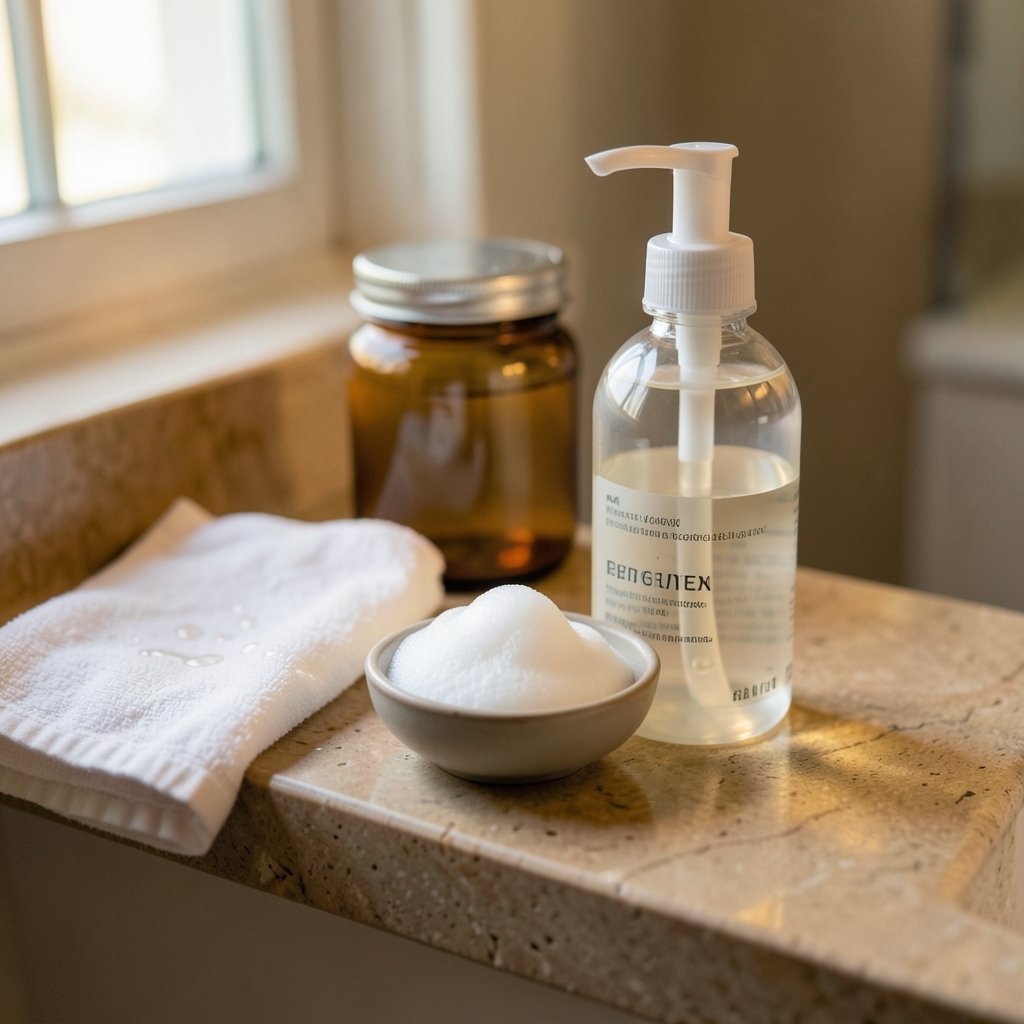
This is the foundation, and it is where most people go wrong first. The instinct with oily skin is to reach for something that squeaks. That tight, “clean” feeling is actually a warning sign. Over-cleansing pushes the skin toward irritation and often toward more oil production as the barrier tries to compensate.
A gentle gel or foaming cleanser removes excess sebum and impurities while leaving skin comfortable rather than tight. That balance is the whole point. Younger skin tends to produce more oil, especially during hormone fluctuations, so a formula that respects the barrier matters even more in your teens and twenties.
Who it suits: essentially everyone with oily skin, including people who also get dryness around the nose.
The limitation: a cleanser alone will not control shine through the day. It sets the stage; it does not finish the job.
Practical tip: if skin feels tight after washing, the cleanser is too harsh, not too weak. If you are layering actives later, a mild wash matters even more, which is why pairing a gentle cleanser with a retinol wash routine without wrecking your barrier is worth reading before you stack products.
2. A Salicylic Acid (BHA) Exfoliant
If oily skin is also congested, textured, or breakout-prone, this is the single most useful treatment on the list. Salicylic acid is oil-soluble, which means it slips into the pore rather than sitting on the surface like water-soluble acids do. Once inside, it helps dissolve the mix of oil and dead skin cells that clogs things up.
Paula’s Choice Skin Perfecting 2% BHA Liquid Exfoliant is the product that made BHA exfoliants mainstream. It is genuinely different from cheaper toners, and for people with persistently oily, congested skin, it often justifies the price. A budget-friendly alternative from The Ordinary or Simple can work as a starting point if you are testing tolerance.
Who it suits: oily skin with blackheads, rough texture, or frequent clogging.
The limitation: it is a treatment, not a daily essential for everyone. Start two or three nights a week and build up. Daily use from day one is a common mistake that leaves skin flaky and irritated.
3. A Niacinamide Serum for Shine and Pores
Niacinamide is the quiet workhorse of oily-skin routines. It supports the skin barrier and helps balance sebum, and it plays well with most other ingredients, which makes it easy to slot in. For skin that is oily but rarely reactive, it pairs neatly with stronger actives that rebuild collagen and refine pores.
Who it suits: oily skin with visible pores and midday shine, especially skin that tolerates actives well.
The limitation: results are gradual. Anyone expecting a matte finish in a week will be disappointed. Give it several weeks of consistent use.
Practical tip: apply it before moisturizer, on clean skin, morning or night. If it pills under makeup, you are using too much.
4. An Oil-Free Gel Moisturizer
Skipping moisturizer is the classic oily-skin mistake. When skin is dehydrated, it can ramp up oil production to protect itself. A lightweight, oil-free gel or water-cream hydrates without the heaviness that makes oily skin feel worse.
Who it suits: oily skin that still feels tight or dehydrated, and anyone layering actives that dry the skin.
The limitation: a single gel moisturizer will not fix dry patches around the nose or cheeks. Those areas may need a slightly richer product, applied only where needed.
Practical tip: judge a moisturizer by how skin feels four hours later, not in the first minute. If it feels greasy at lunch, switch to something lighter.
5. La Roche-Posay B5+ Moisturizer for Oily-but-Sensitive Skin
Not all oily skin is tough skin. Some people are oily and reactive at the same time, and that combination makes strong actives risky. This moisturizer earns its place because it hydrates without adding noticeable oiliness, which makes it usable as a night step for people who would otherwise avoid cream entirely.
Who it suits: oily and sensitive skin that irritates easily, and skin recovering from over-exfoliation.
The limitation: the texture is richer than a gel, so very oily skin may prefer it at night only.
Practical tip: if your skin stings when you apply products, pause the acids and let a barrier-focused moisturizer do the work for a couple of weeks.
6. Blotting Papers for Midday Shine
Sometimes the honest answer is the simple one. Blotting papers absorb excess oil without stripping the skin’s natural hydration or disturbing makeup, which is exactly why they remain a staple. They are popular in Japan and still a little under the radar elsewhere.
Who it suits: anyone who gets shiny by early afternoon, especially people wearing makeup.
The limitation: it is a cosmetic fix, not a treatment. It manages the symptom while your routine works on the cause.
Practical tip: press, don’t rub. Rubbing spreads oil and can drag at makeup.
7. A Matte Fluid Sunscreen, SPF 30 or Higher
Daily sunscreen is non-negotiable, even on cloudy days and even for a quick trip outside. Regular use shields skin from long-term sun damage, which can lead to wrinkles, dark spots, and skin cancer. For oily skin, the formula matters as much as the number: look for broad-spectrum protection with at least SPF 30, and choose something that does not trigger breakouts and is genuinely pleasant to wear.
Who it suits: every oily-skin routine, without exception.
The limitation: matte sunscreens can feel drying by late afternoon, and reapplication over makeup is fiddly. A light gel sunscreen may suit some skin better.
Practical tip: if a sunscreen breaks you out, the issue is usually the formula, not the SPF. Try a different finish before giving up on daily protection.
8. A Clay or Purifying Mask for Weekly Maintenance
A clay mask once or twice a week can deep-clean pores and soak up excess oil without becoming a daily habit. Think of it as maintenance, not rescue.
Who it suits: oily skin with visible congestion, used as a weekly step.
The limitation: overuse is a real problem. More than twice a week tends to irritate rather than help.
Practical tip: apply it to the T-zone only if the cheeks are drier. There is no rule that says a mask must cover the whole face.
How to Choose Without Wasting Money
The pattern across all eight options is the same: control oil without stripping, then treat the specific concern you actually have. A cleanser, a moisturizer, and a sunscreen are the base. Everything else is a targeted add-on.
Watch for three common mistakes. First, buying five actives at once and having no idea which one caused the irritation. Add one product at a time and give it a few weeks. Second, treating “oil control” as a goal in itself. The goal is balanced skin, and balance sometimes means adding hydration. Third, assuming a higher price means a better fit. A budget BHA can outperform a luxury cream for congested skin, and a cheap gel moisturizer often beats a rich one.
It also helps to know what is driving your oil in the first place. Oily skin tends to run in families, and younger skin generally produces more sebum, so the routine you need at 22 is not the one you need at 40. If you are weighing where your money actually goes in this category, it is worth understanding how the money really moves in skin markets and the real cash hidden risks before you commit to a full shelf of products. And if you have already bought a drawer full of things that did not work, the reasons the best skincare for oily skin often wastes money are usually the same handful of mistakes.
One more consideration: skin changes with age, weight fluctuations, and past breakouts, all of which can stretch pores and shift oil production. Reassess your routine once or twice a year rather than buying the same bottle on autopilot.
Conclusion
The best skincare for oily skin in 2027 is not a single hero product. It is a short, consistent routine built around a non-stripping cleanser, a lightweight moisturizer, and daily broad-spectrum sunscreen, with one or two targeted treatments layered in where you actually need them. A BHA earns its place for congestion. Niacinamide handles shine and pores over time. A barrier cream covers the oily-but-sensitive crowd. Blotting papers and a weekly clay mask handle the small stuff.
Start with the base, add one treatment, and judge results over weeks rather than days. That approach costs less, irritates less, and works better than any shelf full of half-used bottles.
Frequently Asked Questions
Does oily skin still need a moisturizer?
Yes. Skipping it can leave skin dehydrated, which may push oil production higher. Choose an oil-free gel or water-cream and judge it by how your skin feels four hours later, not in the first minute.
How often should I use a BHA exfoliant?
Start two or three nights a week and build up slowly. Daily use from the start is the most common mistake and tends to cause flaking and irritation rather than clearer skin.
Can I use niacinamide with salicylic acid?
Generally yes. Niacinamide plays well with most ingredients, and the pair is a sensible combination for oily, congested skin. Introduce one at a time so you can tell which product is doing what.
Why does my skin feel tight after cleansing?
That tight feeling usually means the cleanser is too harsh. A good cleanser leaves skin clean and comfortable, not squeaky. Switch to a gentler gel or foaming formula and the tightness should settle.
Is sunscreen really necessary if my skin is oily?
Yes, every day, even when it is cloudy. Look for broad-spectrum protection of at least SPF 30 in a formula that does not trigger breakouts. If one sunscreen breaks you out, the formula is usually the problem, not the SPF.
What if my skin is oily in some places and dry in others?
That is common, especially around the nose. Use a gentle cleanser everywhere, apply a gel moisturizer to oily areas, and add a slightly richer product only on the dry patches. Treat zones separately rather than forcing one product to do everything.