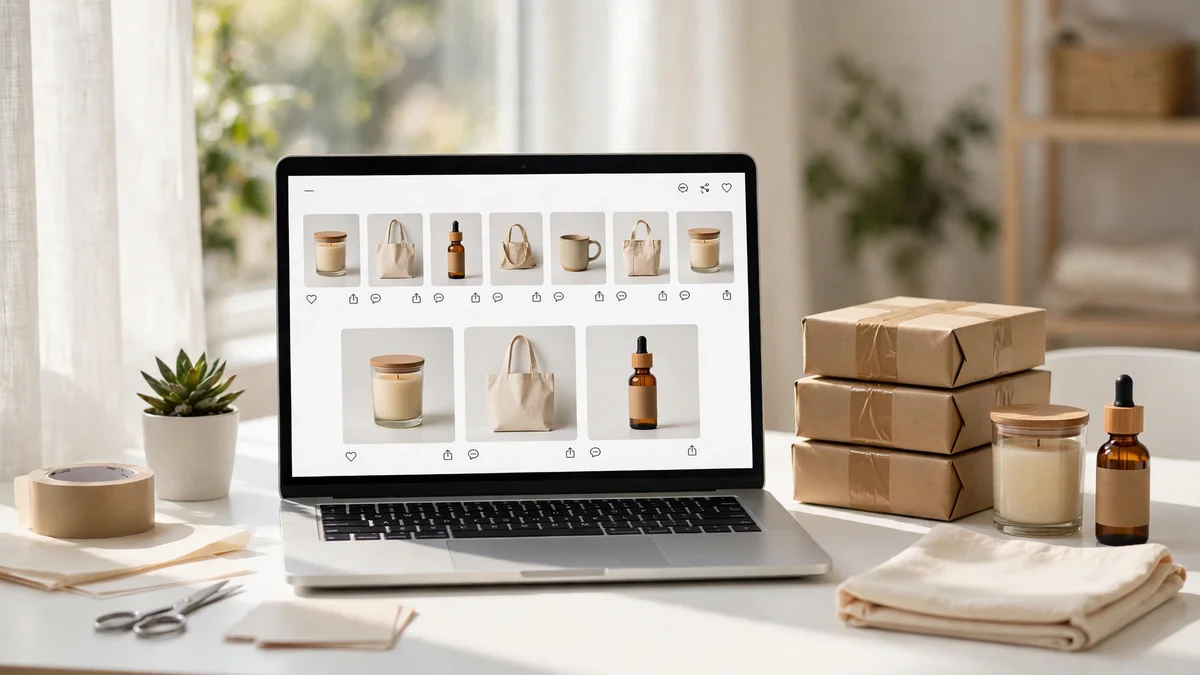
The best social media management tools for online stores in 2027 turn product photos into sales without turning the owner into a full-time content creator. A store’s feed has to do two jobs at once: show products well and answer the questions shoppers ask before they buy, from sizing and shipping to restocks and reviews.
What matters most for a store is different from what matters for a personal brand. Shoppable posts, a visual calendar that matches new arrivals, bulk scheduling for launches and sales, and reports that connect posts to clicks and orders matter more than approval workflows or team seats.
We compared seven tools on price, shopping features, visual planning, scheduling limits and how well they fit a small store’s workflow. Later leads for shoppable visual planning, Buffer leads for simplicity, and Sprout Social leads for stores that live on customer conversations. The full shortlist is below, with starting prices and the limits that matter most.
Key takeaways
- Later is the best overall choice for most online stores because of its visual planner and link-in-bio shop.
- Buffer is the simplest and cheapest way to keep a store posting consistently.
- Sprout Social is the best pick when customer messages and comments drive sales.
- Planoly is the best budget option for Instagram-first stores.
- Free plans work for testing, but a store with regular launches usually needs a paid plan.
At a glance: the shortlist
Prices below are approximate starting prices for paid plans, and they change often. Check current pricing on the product’s own plan page before buying. Free plans are listed where they exist, because they are a good way to test a tool for two or three weeks before paying anything.
| Product | Best for | Starting price | Standout limit |
|---|---|---|---|
| Later | Shoppable visual planning | From $25/month | One social set on the Starter plan |
| Buffer | Simplicity | From $6/month per channel | 10 scheduled posts on the free plan |
| Sprout Social | Customer conversations | From $199/month per seat | Five profiles on the Standard plan |
| Hootsuite | All-in-one depth | From $99/month | 10 accounts on the Professional plan |
| SocialPilot | Value | From $30/month | 10 social accounts on the entry plan |
| Metricool | Analytics | From $22/month | One brand on the free plan |
| Planoly | Instagram-first stores | From $16/month | One social set on the free plan |
Later — Best overall
Later is built around a visual calendar, which is exactly how a store should plan its feed. You drag product photos onto the calendar, preview how the Instagram grid will look, and line up posts with new arrivals, restocks and sale dates.

Later also includes a link-in-bio shop, so followers can tap from a post straight to the right product page. It pairs well with other ecommerce tools for small businesses that handle the store itself, while Later handles the social side. The Starter plan starts at around $25 a month, which is fair for a store that posts daily.
Pros: Excellent visual planner and grid preview; link-in-bio shop included; strong Instagram and TikTok support. Cons: Higher starting price than Buffer; one social set on the entry plan.
Buffer — Best for simplicity
Buffer is the simplest tool on this list, and for many small stores that is the point. You connect a channel, write a post, pick a time and move on to packing orders. The queue keeps a steady flow of content going even during a busy sale week, and the dashboard never gets in the way.
Buffer covers the main networks, including Instagram, Facebook, X, LinkedIn, TikTok and Pinterest, and its analytics highlight your best-performing posts without drowning you in charts. It has no built-in shop the way Later does, so you will rely on the link in your bio, but for a store that just needs consistent posting, it is the cheapest dependable option.
Pros: Very easy to learn; affordable per-channel pricing; reliable scheduling. Cons: No link-in-bio shop; analytics are basic compared with Metricool.
Sprout Social — Best for customer conversations
Sprout Social is the pick when shoppers message you. Its smart inbox pulls comments and direct messages from every network into one place, so shopper questions get answered fast instead of sitting unread on one app.
Sprout also offers strong reporting, including which posts drive clicks and how fast your team responds. The catch is price: plans start at around $199 a month per seat, which is a lot for a small shop. It earns that price only when social messages are a real sales channel for your store.
Pros: Best-in-class social inbox; deep reporting; strong team tools. Cons: Expensive for a small store; overkill if you rarely get messages.
Hootsuite — Best all-in-one
Hootsuite is the veteran all-in-one option, combining scheduling, monitoring streams, a social inbox and reporting in a single dashboard. For a store, the monitoring streams are genuinely useful: you can watch mentions of your brand, your products and your competitors without opening five apps.
The Professional plan starts at around $99 a month for ten accounts, which sits between Buffer and Sprout on price. It suits a store that wants one tool for posting, listening and reporting rather than three separate subscriptions.
Pros: Deep monitoring and reporting; covers every major network; mature and stable. Cons: Expensive for a small shop; interface can feel heavy.
SocialPilot — Best value
SocialPilot packs more connected accounts into its entry plan than almost any rival, which helps a store that sells on several networks at once. Scheduling, a shared calendar and a social inbox come as standard, and client-style reporting is included too, which is handy if you also manage a second brand or a side shop.
For a store, the practical benefit is headroom: you can add a new channel for a seasonal push without jumping to a much dearer plan. Setup takes a little longer than Buffer, and the interface feels busier, but the value is hard to beat at around $30 a month.
Pros: Ten accounts on the entry plan; good reporting; fair price. Cons: Interface feels busier than Buffer; no link-in-bio shop.
Metricool — Best analytics
Metricool stands out for reporting. It pulls your numbers into clear dashboards that show reach, clicks, follower growth and your best posting times, and it covers your website and ads as well as social accounts. If you want to know which posts actually bring shoppers to your store, rather than guessing, this is the tool to pick.
The free plan covers one brand and is genuinely usable for a small shop getting started. Scheduling is solid but less visual than Later, so Metricool suits store owners who care more about measurement than about grid previews.
Pros: Clear, detailed analytics; useful free plan; website and ad reporting included. Cons: Scheduling is less visual than Later; some reports need a paid plan.
Planoly — Best budget pick for Instagram-first stores
Planoly is the cheapest serious option for a store that lives on Instagram. It offers a visual planner, grid preview and a link-in-bio shop, which covers the three things an Instagram-first shop actually needs, for around $16 a month on its entry plan.
It also supports Pinterest and TikTok scheduling, so a store that sells visual products can cover its main channels from one place. The trade-off is breadth: it is thinner than Hootsuite or Sprout on monitoring, inbox features and reporting. If Instagram brings most of your sales, that trade-off is easy to accept.
Pros: Low price; visual planner and link-in-bio shop; good for Instagram and Pinterest. Cons: Weaker inbox and monitoring; less useful beyond visual networks.
How to choose
Start with where your shoppers are. If Instagram and TikTok bring your sales, pick a visual planner with a link-in-bio shop, like Later or Planoly. If Facebook drives orders, check that the tool supports Facebook Shops links and reliable scheduling there.
Next, test the daily workflow during a real launch week. A tool you open happily is worth more than a cheaper one you avoid, so use the free plan or trial to schedule posts, answer a few comments and check the reports. Good social media scheduling tools share the same test: if the trial feels like a chore during your busiest week, the paid plan will not fix it.
Finally, watch the renewal price and the limits. Some tools raise the price sharply when you add a channel or pass a post limit, so read the plan page and confirm what happens at the next tier. Check current pricing before you buy, and keep your content portable by exporting your media library and post history regularly.
Checklist: before you pay
- Try the free plan or trial with your real store accounts for at least two weeks.
- Confirm the plan covers every channel your shoppers use, not just the popular ones.
- Check that posts can link to the right product page, not just your homepage.
- Check the renewal price and what the next tier costs when you add a channel.
- Test scheduling, the mobile app and the social inbox during a launch or sale.
- Confirm you can export your scheduled posts, media and reports.
Frequently asked questions
What is the best social media management tool for an online store?
Later is the best starting point for most online stores because its visual planner and link-in-bio shop turn posts into product visits. Buffer is the better pick if you want the simplest, cheapest option, and Sprout Social is best when customer messages drive your sales.
Can I sell directly from social media posts?
Yes. Instagram, TikTok and Facebook all support shoppable posts and product tags, and tools like Later and Planoly add a link-in-bio shop that sends followers to the right product page. You still need a store to take payment; the social tool only connects the post to the product.
How much should an online store pay for a social media tool?
Most small stores spend between $16 and $30 a month. Planoly and Buffer sit at the low end, Later and SocialPilot in the middle, and Sprout Social is the premium option at around $199 a month per seat. Pay for the channels and shopping features you use, not for features you will not touch.
Do I need a separate tool for product photos?
Usually, yes. Scheduling tools include a basic composer and media library, but they do not replace a design tool. Many store owners pair their scheduler with dedicated content creation tools for small businesses for product graphics and short video, then schedule the finished posts from one dashboard.
How often should an online store post?
Four or five feed posts a week plus daily stories is a realistic rhythm for a small store. Batch your content so a launch week does not eat your whole day.
Is Hootsuite or Sprout Social worth it for a small store?
They are worth it only if social media is a major sales channel and you need their monitoring, inbox or reporting depth. For straightforward posting and a link-in-bio shop, Later, Buffer or Planoly will do the job for a fraction of the price.
The bottom line
For most online stores, Later is the right first pick: its visual planner and link-in-bio shop are built for exactly what a shop needs, and the price is fair for a store that posts daily. Choose Planoly if Instagram is your main channel and budget is tight, Buffer if you want the simplest tool, and Sprout Social if customer messages are where your sales happen.
The tool matters less than the routine. Pick one, plan your posts around your launches and restocks, and review the clicks after a month. If posting feels easy and the numbers are moving, you have the right tool; if it still feels like a chore, switch during the trial period rather than after a year of paying for the wrong fit.