Best Software for Car Washes in 2027
A car wash used to run on a cash drawer, a punch card and a manager with a good memory. That version of the business is gone. In 2027 the average wash sells memberships before single washes, takes payment at a kiosk, and depends on regulars driving in, getting recognised and washed without touching a wallet.
The stakes are higher than they look from the street. A wash that sells a hundred memberships a month but cannot bill them reliably, pause them when a customer asks, or tell the owner which plan is actually profitable is leaking money every day. The same is true of a wash that runs a great tunnel but cannot say how many cars it washed on Tuesday or why regulars stop coming after three months.
This guide covers the software that runs real wash businesses in 2027 — membership billing, point of sale, licence plate recognition, loyalty and reporting — for tunnels, in-bay automatics and full-service sites, from a single-site operator buying a first system to a multi-site group needing central control.
Key takeaways
- Membership billing matters most: recurring revenue is what carries a wash through a slow winter.
- Licence plate recognition and RFID make memberships effortless and cut queue times at the pay station.
- Most wash software is priced per site, so compare the total cost including hardware, processing and support.
- Single-site washes should prioritise ease of use; multi-site groups need central reporting and shared memberships.
- No platform wins on everything — the best choice depends on your wash type, volume and membership mix.
Car wash software at a glance
The table below sums up the six platforms in this guide.
| Software | Best for | Standout strength | Watch out for |
|---|---|---|---|
| DRB Systems | Tunnel washes and multi-site groups | Full tunnel control and central reporting | Heavier setup than simpler tools |
| EverWash | Membership-first washes | Membership marketing and member app | Less depth on tunnel hardware control |
| Washify | Small and mid-size washes | Simple point of sale and cloud dashboard | Fewer enterprise reporting options |
| Innovative Control Systems | High-volume express tunnels | Kiosks, gates and lane automation | Best with its own hardware stack |
| Sonny’s CarWash Controls | Operators building or upgrading tunnels | Deep equipment integration | Overkill for a simple in-bay site |
| NCS Vehicle Wash Systems | In-bay automatics and small sites | Reliable unattended payment | Lighter membership and marketing tools |
1. DRB Systems
DRB Systems is the long-established name in tunnel wash software, and it shows in the depth of the platform. It covers point of sale, memberships, licence plate recognition, gift cards, loyalty and reporting in one system, and it runs the tunnel itself: conveyor speed, wash packages and pay stations all tie back to the same software. The car moves through because the system knows what the driver bought before reaching the belt.
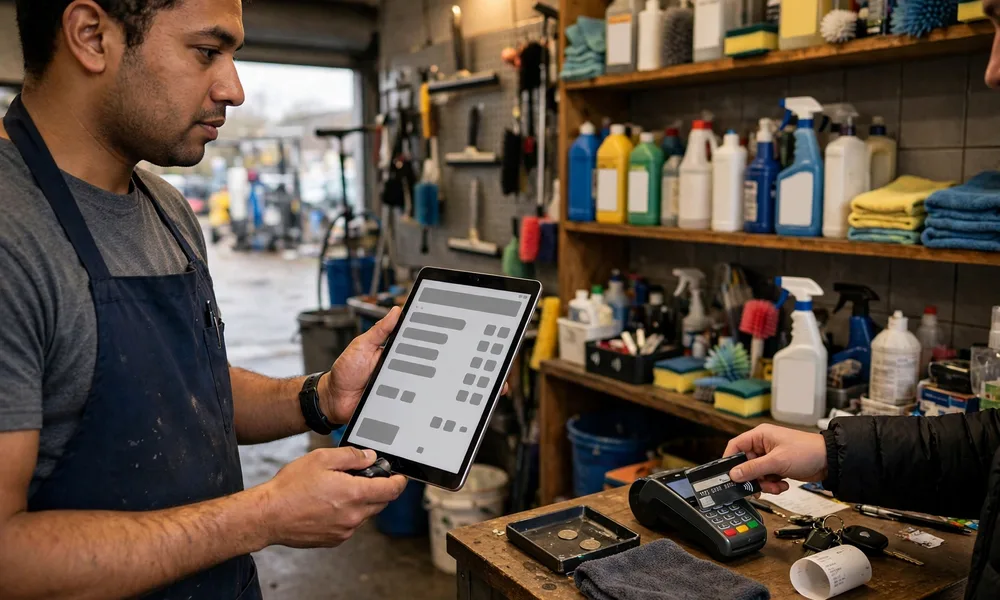
For larger operators, central management is where DRB earns its keep: a group can see every site in one dashboard and let a member wash at any location, with reporting on car counts by hour, membership churn and average ticket.
Pros:
- Deep tunnel and pay-station integration for high-volume sites.
- Central reporting and shared memberships across locations.
- Mature platform with a large base of tunnel operators.
Cons:
- Setup and training take longer than with simpler cloud tools.
- Pricing is quoted per site, so small operators should get a full quote first.
- Some features assume a tunnel layout and matter less to in-bay sites.
2. EverWash
EverWash is a membership platform first and a point of sale second. A wash joins the network, EverWash markets the plans, and members pay through the app and wash at participating locations — an attractive deal for an operator who wants membership growth without building a marketing operation.
Signing up takes minutes, the app handles the plan, and the wash recognises the member at the gate. EverWash also runs much of the membership marketing, including promotions that bring lapsed members back — the hard part is keeping the member in month six, not selling month one. Our report on top software for spas makes the same point about recurring plans.
Pros:
- Excellent sign-up flow and member app.
- Built-in marketing that helps grow and retain members.
- Quick to start compared with a full tunnel control system.
Cons:
- Less control over tunnel hardware than a dedicated control platform.
- Works best for washes that commit to the membership model.
- Check revenue share or fees against a straight software licence.
3. Washify
Washify is the straightforward option: a cloud-based point of sale and management system that does not try to run your tunnel hardware. It handles sales, memberships, gift cards, loyalty and reporting from a clean dashboard a small team can learn in a day — simplicity worth more than a long feature list for a single-site wash.
The cloud dashboard is the part owners use most: daily sales, car counts and memberships are visible from a phone, and licence plate recognition and RFID let regulars drive straight in. It suits an owner-operator who wants solid records and smooth checkout without hiring someone to manage the software.
Pros:
- Clean, easy-to-learn cloud dashboard with mobile access.
- Good membership, gift card and loyalty tools.
- Fast setup with no tunnel hardware overhaul required.
Cons:
- Fewer enterprise and multi-site reporting options than DRB.
- No deep equipment control for complex tunnel builds.
- Advanced marketing tools are lighter than EverWash’s.
4. Innovative Control Systems
Innovative Control Systems (ICS) builds the automation layer of the modern express wash: pay stations, kiosks, gates, licence plate cameras and tunnel controllers. Its software ties them together so a site runs with minimal staff at the entrance — a driver pulls up, pays at the kiosk, the gate opens, and the tunnel knows what was sold. At volume, that flow is the difference between a queue that moves and one that backs onto the road.
ICS is at its best on high-volume express sites, where it integrates with membership programmes so regulars are recognised by plate or tag and waved through. Operators already running ICS hardware get the most from it, and the reporting covers cars per hour, average ticket, kiosk conversions and downtime.
Pros:
- Excellent kiosk, gate and lane automation.
- Built for high throughput with minimal entrance staffing.
- Strong membership recognition at the pay station.
Cons:
- Best value comes with its own hardware, raising the upfront cost.
- More system than a small in-bay wash needs.
- Setup benefits from professional installation and training.
5. Sonny’s CarWash Controls
Sonny’s is a household name in wash equipment, and its controls software is the digital side of that heritage, aimed at operators building or upgrading a tunnel who want equipment and software from one place. It manages wash packages, chemical dosing, conveyor control, point of sale and memberships — and because it knows the state of the tunnel, it can adjust a wash package to the equipment actually running.
For a new build, that single-vendor route simplifies decisions: one supplier owns the tunnel and the system that runs it, and it handles memberships, fleet accounts, gift cards and reporting. It suits operators investing in a site rather than patching an old one. Our guide to the best software for salons shows the same benefit when booking, payment and membership live in one system.
Pros:
- Deep integration between equipment and software.
- Single-vendor support for new tunnel builds and upgrades.
- Solid membership, fleet and gift card management.
Cons:
- Overkill for a simple in-bay automatic or a self-serve site.
- Upfront investment is higher than a cloud-only point of sale.
- Best suited to operators committed to Sonny’s equipment.
6. NCS Vehicle Wash Systems
NCS Vehicle Wash Systems (Ryko and MacNeil brands) serves the in-bay automatic and small-site end of the market, focused on unattended payment and reliable operation: a driver pulls into the bay, pays at the terminal, and the wash runs. For a site with no attendant, or one attendant covering several bays, that reliability is everything. It handles credit and fleet payments, wash packages, and basic membership or loyalty.
NCS keeps a small site running with little attention: outdoor payment terminals, straightforward software, and reporting on washes sold, revenue by package and payment failures. It is not the platform for a five-site express tunnel, but for a gas station wash or a small in-bay site it is a proven fit. Our look at food truck software covers the same question for small operators taking payments without a full back office.
Pros:
- Reliable unattended payment for in-bay automatics.
- Simple to operate with minimal staffing.
- Proven hardware and software pairing for small sites.
Cons:
- Membership and marketing tools are lighter than the leaders.
- Multi-site management is not its strength.
- Reporting is practical rather than deep.
How to choose car wash software
Start with your wash type: a tunnel needs lane automation, pay stations and membership recognition at speed; an in-bay automatic needs reliable unattended payment; a full-service wash needs scheduling and staff tracking. A system built for one of those will always fight you on the others.
Next, decide how central memberships are: if they will be half your revenue, the billing engine matters most — failed payments, pauses, plan changes and cancellations must work without staff intervention. Ask every vendor how failed cards are handled and how a member pauses a plan.
Then look at the total cost, not the headline price: hardware, processing fees, installation and support. A cheap licence with expensive processing can cost more than a dearer licence with fair rates. Get the full quote in writing, ask what happens if a pay station fails on a Saturday, and call references from washes like yours.
Checklist: buying car wash software
Run through these checks before you sign anything.
- Confirm the system supports your wash type: tunnel, in-bay, full-service or self-serve.
- Test membership billing end to end: sign-up, failed card, pause and cancellation.
- Check plate or RFID recognition works with your lane layout and lighting.
- Get the full cost in writing, including hardware, processing and support.
- Ask what weekend support covers and how fast a failed pay station gets fixed.
- Call at least two reference customers running a wash like yours.
Frequently asked questions
How much does car wash software cost?
Most platforms are priced per site and quoted on request: a monthly fee plus hardware, installation and processing. Get the total cost in writing before comparing vendors.
Do I need licence plate recognition?
Not always, but it makes memberships far smoother: members are recognised automatically, cutting queue time. For a membership-heavy wash it is close to essential; for a small in-bay site it is optional.
Can car wash software run my wash unattended?
Largely yes, for express and in-bay sites: kiosks take payment, gates control entry, and the tunnel runs the package sold. Most operators still keep some staff on site, but no cashier is needed at every lane.
What is the best software for a single-site wash?
Ease of use matters most. A cloud point of sale with memberships and a mobile dashboard, such as Washify, usually fits better than a full tunnel control system.
How do memberships make a wash more money?
Memberships turn one-off visits into predictable monthly revenue, and members visit more often than pay-per-wash customers, smoothing out slow weeks and bad weather.
Can members wash at any of my locations?
Yes, if your software supports shared memberships across sites — multi-site platforms like DRB are built for this. If you plan to expand, choose software that already handles it rather than switching later.
The bottom line
For most wash owners in 2027, the choice comes down to size and ambition. A single-site or small in-bay wash should start with a simple cloud system like Washify or NCS; a busy express tunnel should look at DRB or ICS; a membership-first wash should look hard at EverWash; and anyone building a new tunnel should price Sonny’s controls as part of the build.
Whatever you choose, test it the way your customers will use it: drive in, buy a wash, join a plan, and cancel it. Get the demo on your own site, get the full price in writing, and call the references before you sign.