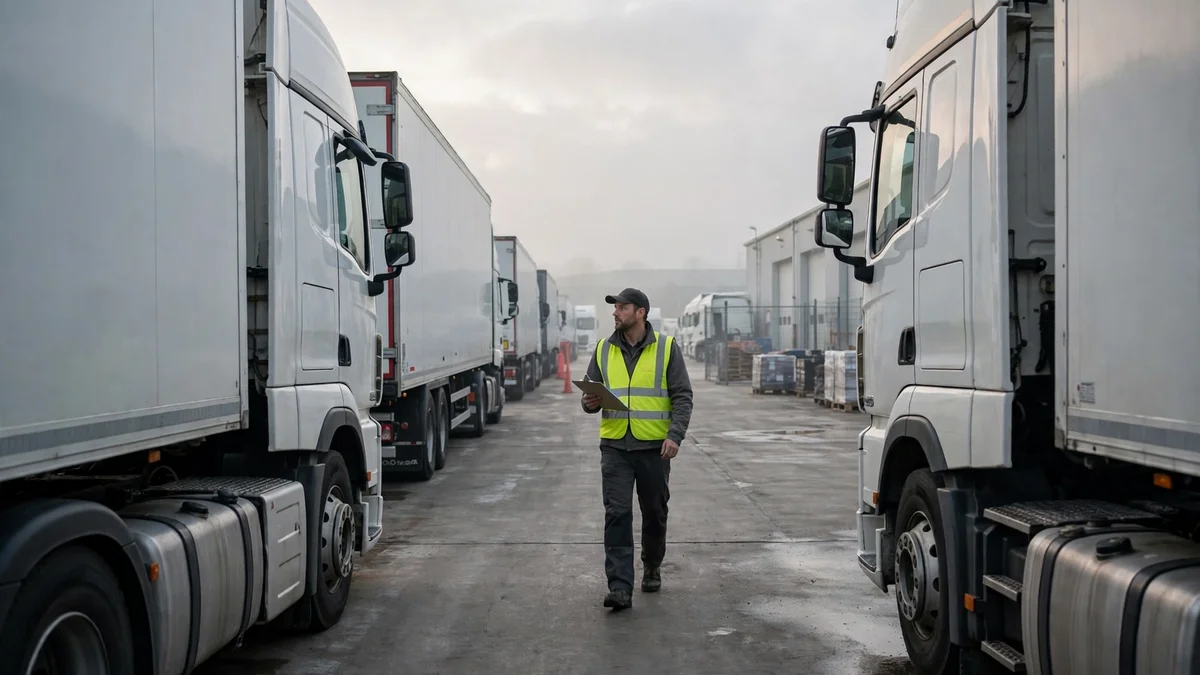
Trucking Company Software in 2027: The Best Tools for Dispatch, ELD and Fleet
A trucking company in 2027 runs on software as much as it runs on diesel. Dispatchers plan loads on a screen, drivers log hours on a phone, and the office invoices a load the same day it delivers. The days of a whiteboard, a paper logbook, and a filing cabinet full of rate confirmations are fading fast, and small carriers feel the change most.
The choice has also become harder. There are now dozens of tools that claim to cover dispatch, electronic logging, fuel tracking, maintenance, and billing, and many of them overlap. A small fleet that buys the wrong combination ends up paying for three subscriptions that do half the job each.
This roundup looks at the software a small or mid-size trucking company actually needs, from dispatch boards to ELD compliance to maintenance schedules.
Key takeaways
- Most small carriers need three pieces: dispatch, an ELD, and invoicing, and one platform rarely does all three well.
- Motive and Samsara lead on ELD and fleet tracking, but they are priced for fleets that can use the full platform.
- TruckingOffice and Tailwind TMS are the friendlier picks for owner-operators and fleets under twenty trucks.
- Maintenance software such as Fleetio pays for itself by catching services before a truck breaks down on the road.
- Before signing a contract, check the monthly cost per truck, the contract length, and whether the tools share data with each other.
What trucking software actually covers
Trucking software is not one product. It is a set of tools that cover different parts of the business, and the best setup is usually a small stack rather than a single app. Dispatch software assigns loads, plans routes, and tracks where each truck is. An ELD, or electronic logging device, records a driver’s hours of service automatically and keeps the company compliant with hours rules.
Billing and invoicing sit on top of all of that. A load is not finished when the freight is delivered; it is finished when the invoice goes out and the money arrives.
Our report on the best AI tools for vehicle fleet dispatch looks at the newer dispatch assistants that suggest loads and routes, which is a useful companion to the core software below. The tools in this roundup are the workhorses: the dispatch boards, ELD apps, and fleet systems that a company relies on every day.
How dispatch, ELD and fleet tools fit together
The cleanest setup starts with dispatch. A dispatcher sees available trucks, open loads, and delivery windows in one place, then assigns work without a round of phone calls.

The ELD is the second layer. It connects to the truck, records driving time automatically, and warns the driver before hours run out. Because the ELD knows where the truck is and how long the driver has been behind the wheel, dispatch can see the same picture and avoid assigning a load that cannot legally be finished in time.
Fleet and maintenance tools form the third layer. They track fuel use, flag trucks due for service, and record inspection reports. When these three layers share data, a dispatcher can see that a truck due for a brake service next week should not take a long cross-country load.
Motive: the strongest all-round ELD and fleet platform
Motive, formerly KeepTruckin, is the most widely used ELD and fleet platform among small and mid-size carriers. Its ELD is simple for drivers to learn, its dashcams and GPS tracking are solid, and its dispatch and fuel tools have grown steadily. For a fleet that wants one main platform with a reliable ELD at the centre, Motive is the default shortlist pick.
Pros: easy ELD that drivers accept quickly; strong GPS tracking, dashcam, and safety scoring in one place; dispatch and fuel tools included in higher plans.
Cons: pricing rises with each add-on, so the full platform costs more than the headline rate; the invoicing tools are lighter than a dedicated accounting package.
Samsara: the most complete fleet system for growing fleets
Samsara is the choice for fleets that want depth. Its telematics cover GPS, dashcams, fuel, maintenance, and driver safety in one dashboard, and its reporting is stronger than most rivals.
Pros: the most complete telematics and reporting in this roundup; excellent dashcam and safety features; scales well as a fleet grows.
Cons: priced at the premium end, with contracts that suit larger fleets; more dashboard than a small carrier will use in its first year.
TruckingOffice: the friendly pick for owner-operators
TruckingOffice is built for the smallest end of the market: owner-operators and fleets of a handful of trucks. It handles dispatch, invoicing, expense tracking, and basic reports such as profit per load and fuel tax summaries, all in a simple interface that does not need training. It does not include its own ELD, so it pairs with a separate logging app.
Pros: low monthly cost and no long contract; dispatch and invoicing in one simple screen; clear per-load profit and tax reports.
Cons: no built-in ELD, so a second app is needed; limited fleet tracking and no dashcam options.
Tailwind TMS: dispatch-first software for small fleets
Tailwind TMS puts dispatch first. It is a transport management system aimed at small carriers and brokers, with load planning, driver settlement, and invoicing built around the dispatch board. Companies that live in dispatch all day, rather than in ELD screens, tend to like Tailwind’s layout, and it handles the paperwork from quote to invoice without extra tools.
Pros: dispatch-centred workflow that suits small carriers; invoicing and driver settlement included; straightforward pricing for small fleets.
Cons: no ELD of its own; the interface looks dated next to Motive and Samsara.
Fleetio: maintenance software that prevents breakdowns
Fleetio does one job and does it well: keeping trucks maintained. It schedules services, tracks inspection reports, records fuel and repair costs per vehicle, and reminds the office before a service is overdue. It is not dispatch or ELD software, so it sits beside the main platform
Pros: the clearest maintenance scheduling and service history in this roundup; tracks cost per truck, which helps replacement decisions; simple for drivers to file inspection reports.
Cons: adds a separate subscription on top of dispatch and ELD tools; no dispatch or logging features of its own.
The caveats that matter
No single tool in this roundup covers everything, and the biggest mistake is buying a platform for features the fleet will never use. A five-truck carrier does not need enterprise reporting, and a fifty-truck fleet will outgrow a tool built for owner-operators within a year. Check contract lengths too: some fleet platforms lock a company in for a year or more, while others are month to month.
| Tool | Best for |
|---|---|
| Motive | Small to mid-size fleets wanting ELD, tracking, and dispatch in one platform |
| Samsara | Growing fleets that want deep telematics, safety, and reporting |
| TruckingOffice | Owner-operators and tiny fleets needing dispatch and invoicing |
| Tailwind TMS | Small carriers and brokers that live in the dispatch board |
| Fleetio | Any fleet that wants maintenance and service history under control |
| Biggest risk | Paying for three overlapping tools that do not share data |
| Check first | Cost per truck per month, contract length, and driver app quality |
Pricing also deserves a close look. Most fleet tools charge per truck per month, and the quoted rate usually covers the basic plan only. Dashcams, fuel tools, and advanced dispatch are often add-ons. Ask for the full monthly total for the whole fleet before comparing prices, and ask what happens to the price when trucks are added or removed.
How to choose the right software for your fleet
Start by counting trucks and naming the pain. A fleet of three trucks with late invoices needs dispatch and billing first, and TruckingOffice plus a simple ELD may be enough. A fleet of thirty trucks with safety worries needs a platform like Motive or Samsara, where tracking, dashcams, and driver scoring live together.
Next, test the driver app. Drivers use the ELD and dispatch app every day, and an app they hate will be used badly: logs will be late, inspections will be skipped, and dispatch will be working from stale information.
Finally, check how the tools connect. Dispatch should feed invoicing without retyping, and the ELD should feed dispatch without a second login. Our guide to the best invoicing software for logistics covers the billing side in more detail, which matters because fast invoicing is where software pays for itself most directly.
Checklist: choosing trucking software honestly
Use these checks before signing a contract or switching platforms.
- Count the real monthly cost per truck, including every add-on the fleet will use.
- Confirm the contract length and what it costs to leave early.
- Let drivers trial the app for at least a week before deciding.
- Check that dispatch, ELD, and invoicing share data without manual retyping.
- Ask how the company handles support when a driver is stuck on the road at night.
- Make sure the ELD is compliant with the hours rules the fleet operates under.
Frequently asked questions
What software does a small trucking company need first?
Dispatch, an ELD, and invoicing. Those three cover finding and assigning loads, recording hours legally, and getting paid. Maintenance and telematics can come next, once the core three are working.
Do Motive and Samsara include dispatch?
Both offer dispatch features, but they are strongest as ELD and fleet platforms. A company that dispatches all day may still prefer a dispatch-first tool such as Tailwind TMS alongside them.
Can one tool replace dispatch, ELD, and invoicing?
Not really. Most platforms do one or two of the three well and the third only lightly. A small stack of two tools that share data usually beats one tool stretched thin.
How much does trucking software cost per truck?
It varies widely by plan and features, from a low monthly fee for a simple dispatch tool to a much higher per-truck rate for a full telematics platform with dashcams. Always ask for the total for the whole fleet, not the headline per-truck figure.
What is an ELD, and is it required?
An ELD is a device or app connected to the truck that records driving time automatically. In the United States, most commercial drivers are required to use one to record hours of service, so the ELD is a compliance tool first and a tracking tool second.
How does fleet telematics help a small carrier?
Telematics shows where trucks are, how they are driven, and when they need service. Our explainer on what AI fleet telematics is covers how location, driving, and maintenance data come together, which is the same data that helps a dispatcher plan the next load.
The bottom line
For most small trucking companies, the best setup in 2027 is Motive or Samsara at the centre for ELD and tracking, with a dispatch-first tool such as TruckingOffice or Tailwind TMS handling loads and invoicing, and Fleetio keeping maintenance on schedule.
Owner-operators can start smaller: TruckingOffice for dispatch and billing, plus a simple compliant ELD, is enough until the fleet grows. Whatever the size, the rule is the same: pick software drivers will actually use, check the full monthly cost before signing, and make sure the tools talk to each other before the first load is dispatched.