Product teams run on estimates, and estimates are only as good as the time data behind them. The best time tracking software for product teams in 2027 turns scattered hours into a clear picture of where sprint time actually goes, which features eat the budget, and where the roadmap keeps slipping. It connects time to work items, not just to a clock.
What matters most for product teams is not the timer itself. It is the link between tracked time and the backlog: per-task and per-epic breakdowns, capacity views across the sprint, and reports a product manager can read in one glance.
The shortlist below covers eight tools that fit product work, from free trackers for small squads to automatic capture for larger teams. Toggl Track leads for its balance of simplicity and reporting, Clockify is the strongest free option, and Timely suits teams that hate manual timers. Prices are approximate starting prices; check current pricing before buying.
Key takeaways
- Toggl Track is the best overall pick for product teams, with fast timers and clear per-project reports.
- Clockify is the best free option, with unlimited users on its free plan and solid basic reporting.
- Everhour fits teams that live in task tools, with deep task-level tracking and budget alerts.
- Automatic tracking from Timely and RescueTime cuts manual entry, but costs more per user.
- Avoid tools without per-task reporting or export; product decisions need data you can slice and share.
At a glance: the shortlist
| Product | Best for | Starting price | Standout limit |
|---|---|---|---|
| Toggl Track | Overall product teams | From about $9 per user, per month | Advanced reports need a paid plan |
| Clockify | Free tracking | Free; paid from about $4 per user, per month | Forecasting and scheduling cost extra |
| Harvest | Budget and cost tracking | From about $11 per user, per month | Free plan covers one seat only |
| Everhour | Task-tool workflows | From about $8.50 per user, per month | Best features need a connected task tool |
| Timely | Automatic tracking | From about $9 per user, per month | No free plan for teams |
| Hubstaff | Distributed teams | From about $7 per user, per month | Screenshots can feel intrusive |
| Time Doctor | Focus insights | From about $7 per user, per month | Setup takes time to tune well |
| RescueTime | Personal productivity | From about $6.50 per user, per month | Weak team billing features |
Toggl Track — Best overall
Toggl Track is the easiest time tracker for a product team to adopt, and that matters more than any single feature. A one-click timer, a clean weekly view, and project tags mean engineers and designers actually log their hours instead of reconstructing them on Friday afternoon. Time lands against projects, clients, and billable flags without a training session.
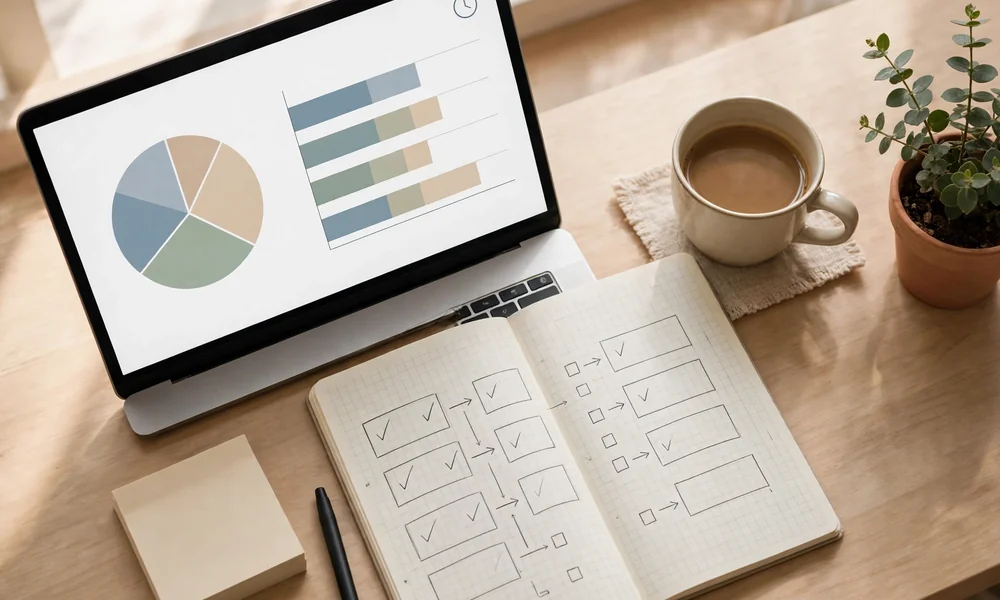
Where it earns its place for product teams is reporting. Managers can compare estimated versus actual hours per feature, spot the epics that keep overrunning, and export clean summaries for stakeholders. For teams that also plan capacity across people and projects, pairing it with a guide to the best AI tools for resource management helps turn tracked hours into realistic sprint plans.
Pros: Fast to start, clear reports, strong integrations, gentle learning curve.
Cons: Advanced reporting and billable rates sit on paid plans; no built-in scheduling.
Clockify — Best free option
Clockify gives small product teams a genuinely useful free plan, with unlimited users, projects, and time entries. That makes it the safest starting point for a squad that wants to prove the value of tracking before spending anything. Timers, manual entries, a calendar view, and basic reports all work without a card.
The trade-off is depth. Forecasting, scheduling, and approval workflows arrive on paid plans, and the interface is plainer than Toggl Track.
Pros: Free plan is genuinely usable, unlimited users, simple setup.
Cons: Advanced planning features cost extra; reports are less polished than Toggl Track.
Harvest — Best for budget and cost tracking
Harvest suits product teams that answer for budgets, not just hours. It pairs time tracking with expense capture and invoicing, so a product manager can see what a feature cost in people-hours and pass accurate numbers to finance. Budget alerts flag a project the moment it crosses a threshold, rather than at the end of the quarter.
Its timer is simple and its reports are readable, though it is less flexible than Toggl Track. The free plan covers a single seat, so even a small team will need a paid plan.
Pros: Strong budgets, expenses and invoicing, clear alerts, trusted by small studios.
Cons: Free plan is one seat only; fewer workflow integrations than rivals.
Everhour — Best for task-tool workflows
Everhour lives inside the tools product teams already use, adding timers and estimates directly to tasks. That closeness is its main strength: time is logged against the exact card or issue being worked on, so reports line up with the backlog instead of a separate system. Budget tracking, cost rates, and schedule views build on that foundation.
It works best when the team already runs its work in a supported task tool, and it is less useful as a standalone tracker. Pricing is reasonable for the depth it adds, and the reporting is strong for managers who want estimates versus actuals at task level. Teams that hate switching between apps will feel the difference within a week.
Pros: Deep task integration, task-level budgets, good estimate tracking.
Cons: Depends on a connected task tool; standalone use is limited.
Timely — Best for automatic tracking
Timely removes the timer entirely. It records work automatically from the apps, documents, and meetings a person uses, then drafts a private timeline the user reviews and approves. For product teams that lose hours to forgotten timers, that automation recovers time that would otherwise never be logged.
The catch is price and control. There is no free team plan, and managers need to respect that the draft timeline is private until the user confirms it. Reporting covers projects, clients, and capacity, and the interface is calm and well designed. Teams that value accuracy over manual discipline will find it worth the cost.
Pros: Automatic capture, private drafts, strong project reporting.
Cons: Higher starting price, no free team plan, less hands-on control.
Hubstaff — Best for distributed product teams
Hubstaff is built for teams spread across time zones. It combines time tracking with activity levels, optional screenshots, and payroll-friendly reports, which helps managers run a distributed squad without constant check-ins. Scheduling and GPS options extend it to field and hybrid roles too.
The monitoring features are the main judgement call. Used transparently, Hubstaff gives remote product leads the visibility they need; used quietly, it creates more problems than it solves.
Pros: Strong remote visibility, scheduling, payroll-ready reports.
Cons: Screenshots and activity monitoring need clear team agreement.
Time Doctor — Best for focus insights
Time Doctor goes beyond hours to show how work time is spent. It tracks time against tasks, flags distracting apps and sites, and produces focus reports that help a team see where deep work is being lost. For product teams fighting meeting overload and context switching, that view is genuinely useful.
It needs careful setup, since default settings can feel heavy-handed, so teams should tune alerts and privacy options before rolling it out. Once tuned, it gives product managers evidence for decisions such as protecting no-meeting days or rebalancing sprint load.
Pros: Focus and distraction reports, task-level tracking, good for remote teams.
Cons: Needs tuning to avoid feeling intrusive; setup takes longer.
RescueTime — Best for personal productivity
RescueTime is the lightest tool on this list, and that is its appeal. It runs in the background, categorises apps and sites, and shows each person where their day went, with focus sessions and goals to nudge better habits. It is ideal for individual contributors who want self-awareness rather than team oversight.
As a team tool it is limited, with no real billing, invoicing, or per-client reporting. Used alongside a team tracker, though, it helps engineers and designers protect focus time.
Pros: Effortless automatic tracking, focus goals, helpful personal reports.
Cons: Weak team and billing features; not a full project tracker.
How to choose
Start from the decision the data must support. If the goal is better sprint estimates, pick a tool with strong per-task and per-epic reporting, such as Toggl Track or Everhour. If the goal is budget control, Harvest or Everhour fit better. If the goal is simply knowing where the week went, an automatic tracker such as Timely or RescueTime removes the logging burden entirely.
Next, check the integrations. A tracker that does not connect to the team’s task tool will slowly be abandoned, however good its reports look in a demo. Run a two-week trial with real sprint work, compare estimated versus actual hours, and ask the team what annoyed them. When the wider workflow also needs structure, a guide to the best project management software for small businesses is a useful companion to this shortlist.
Checklist: before you pay
- Run a free trial on a real sprint, not a demo project, and compare estimates with actuals.
- Confirm per-task and per-project reporting, plus export to CSV or a spreadsheet.
- Check the renewal price, not just the first-year or monthly headline rate.
- Confirm how cancellation works and whether historical data stays exportable.
- Test the integrations with the team’s task tool, calendar, and payroll or invoicing stack.
- Agree the team’s rules on screenshots and activity monitoring before switching anything on.
Frequently asked questions
What is the best time tracking software for product teams?
Toggl Track is the best overall choice for most product teams, thanks to fast timers and clear per-project reports. Clockify is the best free starting point, while Everhour suits teams that want time tracked directly inside their task tool.
Do product teams need automatic time tracking?
Not always. Manual timers give cleaner project attribution when the team is disciplined about starting and stopping them. Automatic tracking helps when hours keep going missing, and tools such as Timely recover that lost time without extra effort.
How much should a product team pay per user?
Most good tools start at roughly $4 to $11 per user, per month, with free plans available from Clockify and others. Check current pricing before buying, and compare annual billing against monthly billing.
Can time tracking improve sprint estimates?
Yes, when estimates are compared with actuals every sprint. The comparison shows which kinds of work consistently overrun, and that evidence makes the next sprint plan more honest. Without the comparison step, tracking adds admin without improving estimates.
Should teams use screenshots and activity monitoring?
Only with open agreement. Monitoring can help distributed teams stay aligned, but it must be announced, explained, and limited to work hours. Teams that discover monitoring after the fact lose trust fast, and trust is harder to rebuild than any report is worth.
What about meetings — should they be tracked too?
Yes. Meetings are often the largest hidden cost in a product team’s week, and tracking them shows whether planning and review sessions are crowding out build time. If meeting load is the problem, a guide to the best AI tools for meeting transcription can cut the admin around them as well.
The bottom line
For most product teams, Toggl Track is the right default: quick to adopt, honest in its reports, and strong enough to support sprint planning and stakeholder updates. Clockify is the pick when budget is zero, Everhour when the backlog lives in a task tool, and Timely when manual timers keep failing.
Whatever tool wins the trial, the value comes from reviewing the numbers together each week. Track time against real work, compare estimates with actuals each sprint, and let the data decide where the next sprint’s hours go.