
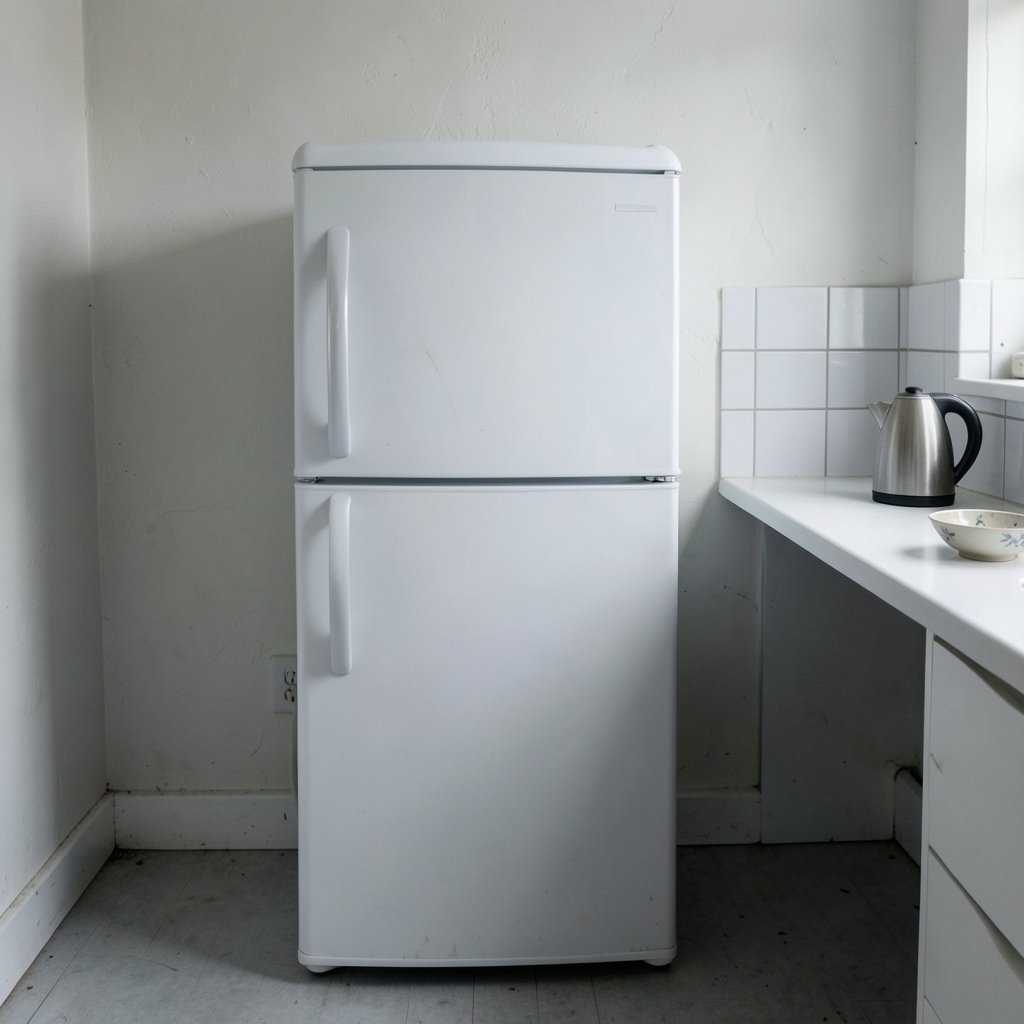
What if the smartest fridge in your kitchen is also the least fancy one? No touchscreen, no glass door, no app. Just a big box that keeps food cold, year after year, for less money than almost anything else on the showroom floor. That is the quiet case for the top freezer refrigerator — and it is a stronger case than most shoppers realize.
This guide walks through what actually matters when buying one: size, layout, efficiency, defrost systems, and the mistakes that cost people money. It also covers what to check before delivery day, because a fridge that fits the kitchen but not the doorway is a very expensive mistake.
Why Top Freezers Keep Winning on Value
Top freezer models are usually the cheapest common refrigerator style in the US, and they tend to rank among the lowest in energy use per cubic foot. That combination is hard to beat.
The design is simple. The freezer sits on top, the fresh food compartment below, and one cooling system handles both. Fewer parts means fewer things to break. It also means less to pay for upfront.
There is a trade-off. You bend down for produce and reach up for frozen peas. Side-by-side and French-door models put more food at eye level. But those layouts cost more to buy and often use more energy.
For a lot of households, the top freezer is the practical answer. It is the fridge you buy when you want cold food, a reasonable price, and a machine that does not demand attention.
The Specs That Actually Matter
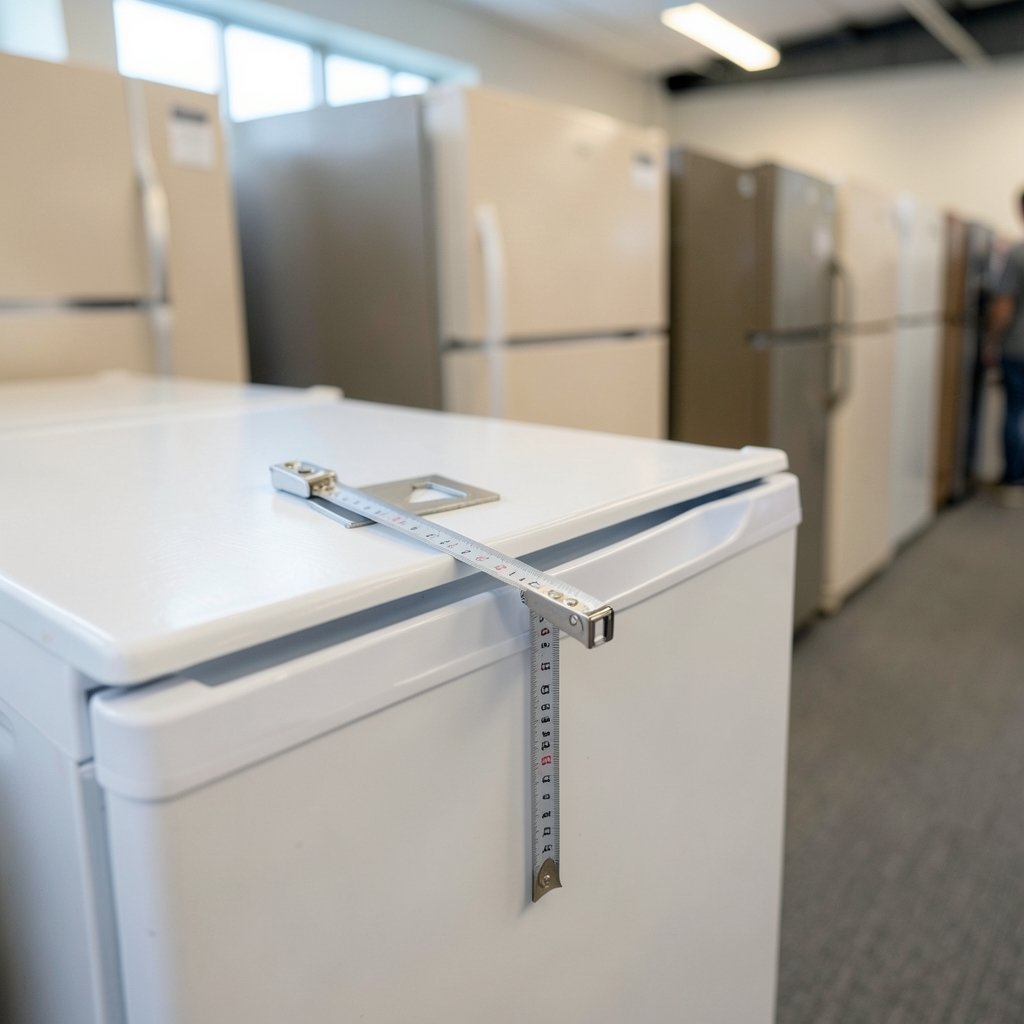
Most refrigerator spec sheets are noise. A handful of numbers do the real work.
Capacity: Match the Fridge to the Household
Typical top freezer capacities run roughly 14 to 21 cubic feet. A 30-inch-wide model usually lands around 14 to 18 cubic feet. A 33-inch model can stretch to about 21.
A rough rule many appliance sellers use is about 4 to 6 cubic feet of fresh food space per adult, plus extra for people who cook a lot or buy in bulk. A couple in a small apartment can live comfortably with 14 to 16 cubic feet. A family of four that cooks most nights will feel cramped below 18.
Do not buy the biggest fridge that fits the hole. Buy the one that fits the household. An oversized fridge runs half empty, wastes energy, and makes everything harder to find.
Dimensions: Measure Three Times
Standard top freezers are often about 28 to 33 inches wide, 60 to 67 inches tall, and 28 to 34 inches deep. Counter-depth top freezers are rare, so most models will stick out past standard counters.
Measure the opening, the doorway into the kitchen, the hallway, and the stairwell. Then measure again. Delivery teams deal with this constantly, and a fridge that will not clear a stair landing is a problem nobody wants on moving day.
Leave breathing room. Refrigerators need air circulation around the back and sides to run efficiently. Squeezing one into a tight cabinet is a common cause of overheating and shortened life.
Energy Use: Read the Label, Not the Sticker
New refrigerators sold in the US carry an EnergyGuide label showing estimated annual energy use and cost. That label is the single most useful piece of information on the appliance. It lets you compare two models side by side using the same yardstick.
A typical mid-size top freezer often lands in the 300 to 450 kWh per year range. Larger units and older designs run higher. Exact figures vary widely by size and model year, so check the label for the specific unit rather than trusting a general number.
Energy Star certification marks models that meet efficiency thresholds set by the program. Those thresholds have been tightened over the years, and the current version can change, so confirm a model’s status on the official listing rather than assuming.
Rebates and tax incentives for efficient appliances vary by utility and change every year. It is worth a quick check before buying, because a modest rebate can close the gap between two models.
Frost-Free vs. Manual Defrost
Frost-free (auto-defrost) is now standard on top freezers. A timer and heater cycle on periodically to melt frost off the evaporator coil, and the water drains away. You never chip ice with a plastic scraper.
Manual-defrost models still exist, mostly in small and compact sizes. They use less energy because there is no heater, but you have to empty the freezer and defrost it by hand every few months. For a main kitchen fridge, frost-free is almost always the right call.
One practical note: frost-free cooling dries the air inside. That is great for the freezer and less great for leafy greens and bread. Store produce in sealed containers or crisper drawers, and the difference mostly disappears.
Features Worth Paying For (and Ones That Aren’t)
| Feature | Worth it? | Why |
|---|---|---|
| Adjustable glass shelves | Yes | Spills stay contained; layout adapts to tall items |
| Gallon door bins | Yes | Practical storage that gets used daily |
| LED interior lighting | Yes | Bright, cool, and long-lasting |
| Ice maker | Sometimes | Convenient, but adds a water line and a common failure point |
| Humidity-controlled crispers | Yes | Noticeably better produce life |
| Digital temperature display | Mild yes | Handy, but a dial works fine |
| Wi-Fi and app control | Rarely | Adds cost and complexity for little daily benefit |
| Through-the-door water dispenser | Rarely on top freezers | Uncommon in this layout and adds repair risk |
The pattern is simple. Features that improve storage and temperature stability earn their keep. Features that add electronics and water lines create more ways for the fridge to fail.
If temperature monitoring matters to you — say, for a garage fridge or a household that travels — a separate sensor is often smarter than paying for a connected appliance. Just know the limits: a smart plug freezer temperature alert only works while power and Wi-Fi hold up, and a wireless freezer temperature sensor can lose its signal through thick walls. Neither replaces checking the door seal.
Common Buying Mistakes
Buying by brand name alone. Reliability varies by model as well as by brand. A well-reviewed budget model can outlast a premium one. Check owner feedback for the specific model, not brand reputation.
Ignoring the door swing. A fridge door that opens into a wall or blocks a walkway gets annoying fast. Check which way the door hinges and whether it can be reversed.
Skipping the delivery path. Measure doorways, hallways, and turns. Remove doors if needed. This is the most avoidable mistake in appliance buying.
Assuming the old fridge will last forever. Refrigerators do fail, and the failure mode is often quiet — food slowly warming while nothing looks wrong. Knowing how to fix a refrigerator that stopped cooling is useful knowledge before you need it, and it can save a freezer full of food.
Forgetting the cost of replacement. When a fridge does die, the decision to repair or replace gets emotional. Understanding what an RV refrigerator repair costs when it fails versus replacing it offers a useful framework, even though the appliances differ. The math is similar: age, repair cost, and efficiency gains all factor in.
Setup and Maintenance That Extends Life
A new fridge is not a plug-and-play appliance. A few habits make a real difference.
- Let it stand upright for a few hours before plugging in if it was laid down during transport. Compressor oil needs time to settle.
- Set the temperature correctly. Around 37°F for the fresh food section and 0°F for the freezer is the standard target. Colder wastes energy; warmer risks spoilage.
- Leave space around the unit. A few inches at the back and sides helps heat escape.
- Vacuum the condenser coils once or twice a year. Dusty coils make the compressor work harder.
- Check the door gaskets monthly with a simple paper test. Close the door on a dollar bill; if it slides out easily, the seal is weak.
- Keep the fridge reasonably full. A full fridge recovers temperature faster than an empty one. Jugs of water work fine as filler.
These steps are unglamorous, but they are the difference between a fridge that lasts fifteen years and one that struggles after five.
When a Top Freezer Is the Wrong Choice
Honesty matters here. The top freezer is not for everyone.
Skip it if you need a built-in look, a counter-depth fit, or a large French-door layout with wide drawers. Skip it if you regularly store platters and sheet pans, since top freezer widths are narrow. And skip it if bending down is physically difficult, because the fresh food section sits low.
In those cases, a bottom freezer or French door model makes more sense, even at a higher price. The best refrigerator is the one that fits how you actually live, not the one with the lowest sticker.
What to Check Before You Buy
Bring a short list to the store or the product page.
- The exact width, height, and depth, compared to your opening
- The EnergyGuide estimate for annual kWh
- Whether the door is reversible
- Warranty length, especially on the sealed cooling system
- Whether the shelves are adjustable and spill-proof
- Noise level, if the kitchen is open to living space
That list takes ten minutes and prevents most regret.
Conclusion
The best top freezer refrigerator is not the one with the most features. It is the one that fits the space, matches the household, and runs cheaply for years with minimal fuss. Simple design, honest energy numbers, and a sensible size beat glossy extras almost every time.
Start with measurements. Then compare EnergyGuide figures. Then pick a model with a layout you can live with. Do those three things and the fridge will quietly do its job, which is exactly what you want from an appliance you will open a dozen times a day.
FAQ
How long does a top freezer refrigerator usually last?
Most refrigerators last somewhere around 10 to 15 years, though that varies by brand, model, and how well the unit is maintained. Cleaning condenser coils and checking door seals regularly are the two habits that most reliably stretch lifespan. A fridge that runs constantly or feels warm inside is a warning sign worth acting on early.
Is a top freezer cheaper to run than a French door fridge?
Usually, yes. Top freezers tend to have lower energy use per cubic foot than side-by-side and French-door models, largely because they are simpler and lose less cold air when opened. The exact difference depends on size and model year, so compare the EnergyGuide labels rather than assuming. Two similarly sized fridges can differ noticeably.
Do top freezer refrigerators come in counter depth?
Rarely. Counter-depth top freezers are uncommon, and most models sit around 28 to 34 inches deep, which means they will protrude past standard counters. If a flush look matters, a bottom freezer or French door model is usually the better route. Measure the depth of your counters before shopping.
Should I choose frost-free or manual defrost?
For a main kitchen refrigerator, choose frost-free. Auto-defrost is now standard on top freezers and eliminates the chore of chipping ice by hand. Manual defrost models still exist in small and compact sizes and use slightly less energy, but the maintenance burden rarely justifies it for daily use.
What temperature should I set my refrigerator and freezer?
Around 37°F for the fresh food compartment and 0°F for the freezer is the standard target. Colder settings waste energy without improving food safety much. Warmer settings let bacteria multiply faster. A cheap appliance thermometer in each compartment removes all the guesswork.
How much space should I leave around a new refrigerator?
Leave a few inches of clearance at the back and sides so heat can escape. Refrigerators need airflow to run efficiently, and cramming one into a tight cabinet forces the compressor to work harder. Check the manufacturer’s clearance recommendation, since some models need more room than others.



