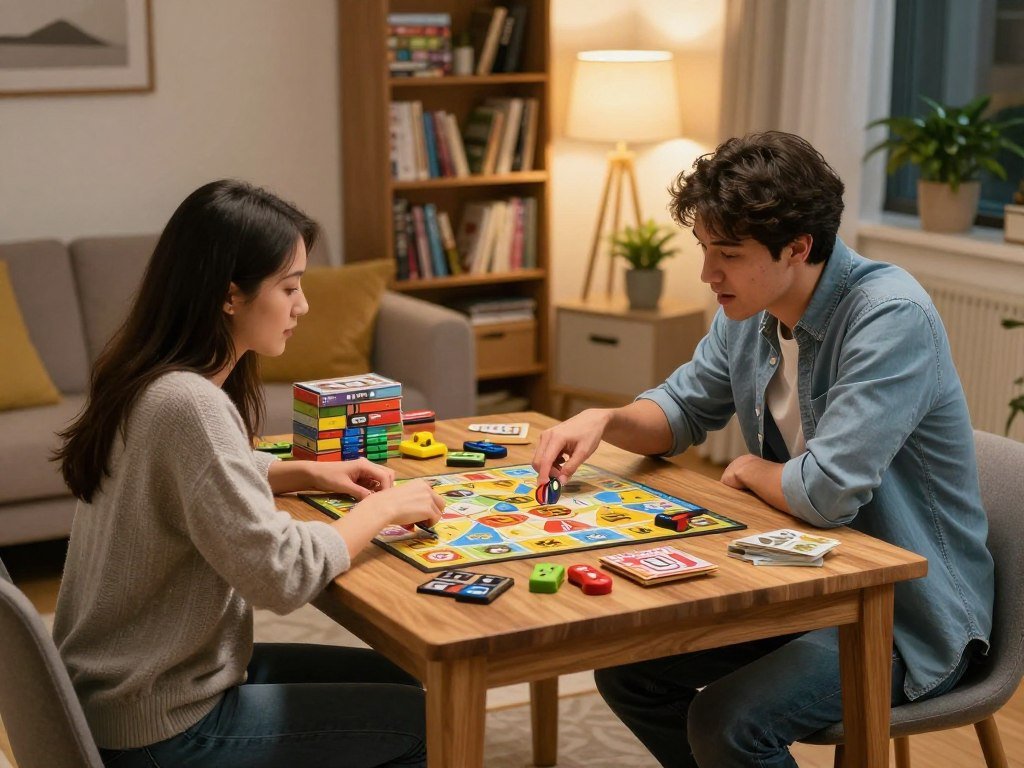
Two people can get very different game nights from a quiet card puzzle, a close duel, or a cooperative challenge. The best two player board games help you find a game that fits the evening, whether you want to think together or test your skills against each other. A set collection is a mechanic in which players gather matching or related items to score points.
This list brings together 25 picks across different play styles and levels of challenge. Use player count, interaction, rules, and available time as practical filters. A game that sounds fun to both people is more likely to earn another round than one chosen for its name alone.
Key Takeaways
- Pick teamwork or a head-to-head game before choosing a title.
- Match the rules and playtime to the energy you have tonight.
- Jaipur is an approachable choice for a pair starting with a trading game.
- Patchwork offers a spatial puzzle, while Codenames Duet gives you a shared goal.
- Check the player range and table space before bringing a game along.
The right choice is the one both players will be glad to bring to the table again.
How to Choose the Best Two Player Board Games for Your Table
For most people who want one approachable game to start with, Jaipur is a practical first pick, while the best alternative depends on whether they want teamwork, a puzzle, or a direct contest. Think about the kind of interaction you both enjoy before you weigh other details.
A good match gives both players the kind of evening they want, at a level of rules they can enjoy. A short teach can matter more than a clever theme when one person is new to board games.
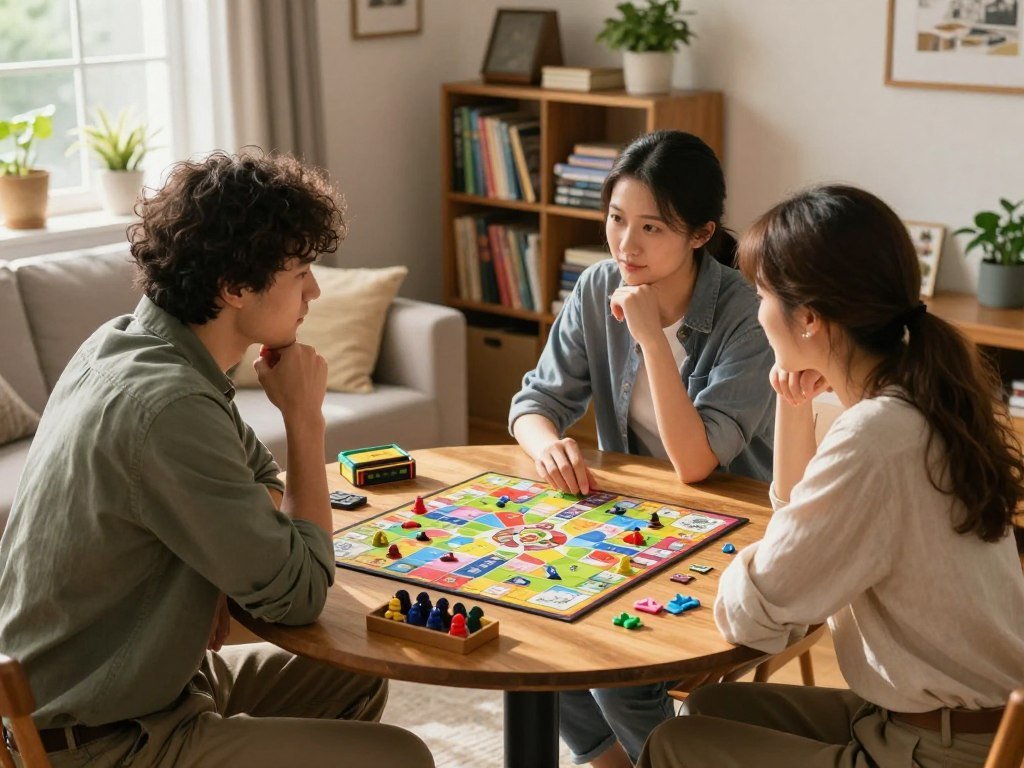
Start with the kind of interaction
In a head-to-head game, you try to outplay your partner. Each move can change what the other player can do, so a close contest suits people who enjoy reading an opponent.
A cooperative game gives you a shared challenge instead. Codenames Duet suits pairs who want to solve clues together, while Hive offers an abstract rivalry. For strategic competition, 7 Wonders Duel builds a duel around cards and choices.
If you want to compare teamwork with competitive video games, you can also browse co-op games for friends for another kind of shared play.
Decide whether you want to beat your partner or solve a shared challenge before you choose a game.
Match the rules to the players
Some games teach in a few minutes, while others ask you to learn several linked rules. If you want a light start, choose a game with clear turns and a simple goal. Patchwork is a spatial-puzzle alternative for players who like fitting shapes together.
A longer, more involved session can suit a pair that enjoys planning several turns ahead. A familiar card game may be a better fit when you have little time or want to start playing quickly.
The right level depends on both players, not just the person who knows more games. If a pair would rather work together than compete, a co-op video game can offer another shared format.
Before choosing, agree on whether winning against each other or solving something together sounds more appealing tonight.
Which Games Are Easy to Learn and Satisfying to Replay?
Lost Cities, Jaipur, and Patchwork offer clear decisions that stay interesting over repeat plays. Patchwork is especially gentle for a new player because its rules fit a five-minute explanation.
Choose a game whose main choice is easy to see, then enjoy getting better at it. These options ask you to weigh timing, cards, or space without a long rules talk.

| Game | Core mechanic | Main decision |
|---|---|---|
| Lost Cities | Matching colors and ascending numbers | Which cards to commit |
| Jaipur | Trade goods with camels; bonus points for sets of 3, 4, or 5 | When to sell or hold |
| Patchwork | Select quilt tiles while balancing buttons and time | Which shape and timing to take |
Lost Cities is a card game built around matching colors and rising numbers. You must decide which cards to commit, since a promising color can still become hard to finish.
Jaipur players trade goods with the market using camels. Selling a set can score now, while holding goods may earn a larger bonus for sets of 3, 4, or 5.
For more detail on the best card games, compare how different card games handle luck, timing, and risk.
In Jaipur, compare the immediate value of selling a set with the bonus for waiting to complete a larger one.
boop. makes a small board feel lively: adjacent pieces push away, and three kittens in a row upgrade to cats. Three cats in a row win.
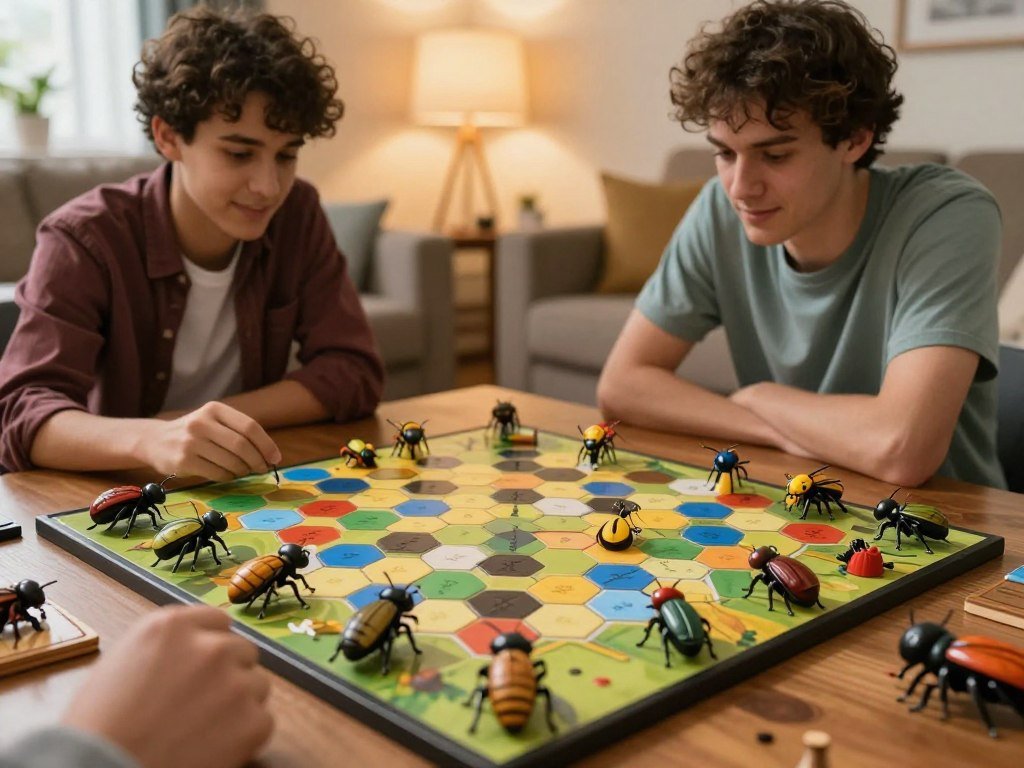
Hive uses insect pieces with different movement powers. Move them to surround the other player’s queen bee, without needing a board.
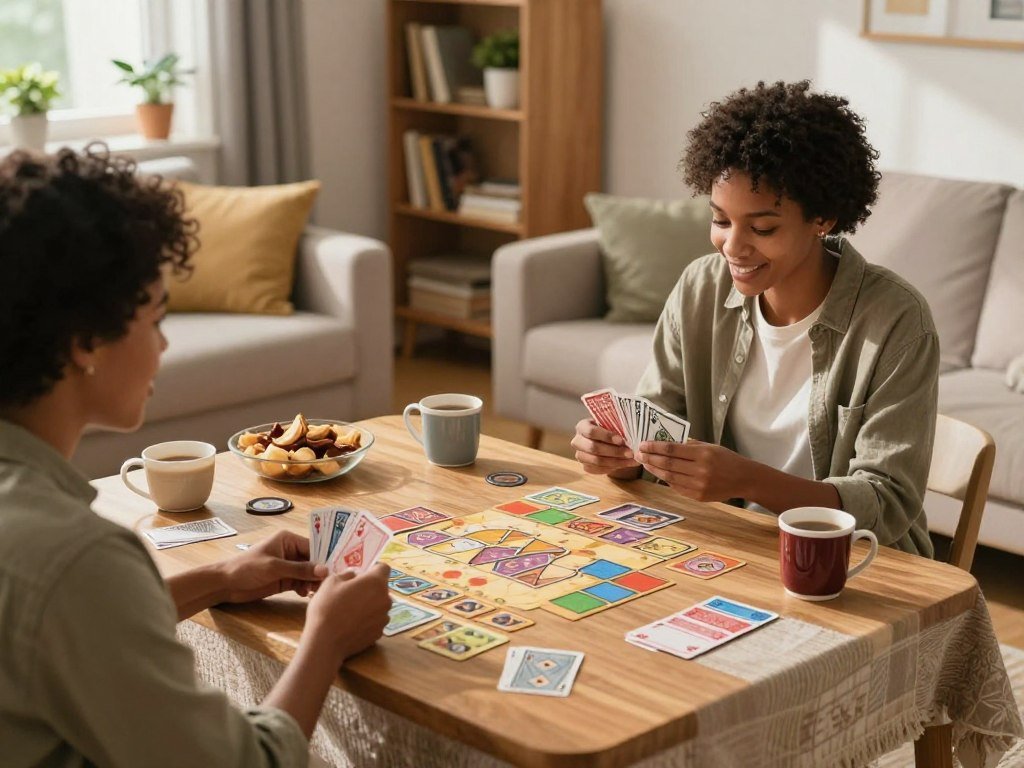
Which Cooperative Board Games Turn Two Players Into a Team?
Choose The Fox in the Forest Duet when a quiet shared challenge sounds better than talking through every move. Its silent play makes teamwork feel different from games that rely on discussion.
These games give two players a shared task, but they ask for different kinds of coordination. Pick the communication style that feels fun rather than stressful.
| Game | Player count | Communication style | Central task |
|---|---|---|---|
| The Fox in the Forest Duet | 2 | Silent | Cooperate through trick-taking |
| Codenames Duet | 2 | One-word clues | Find agents and avoid the assassin before time runs out |
| Sky Team | 2 | Coordinated dice placement | Land a plane safely |
| The Crew: The Quest for Planet Nine | 2-5 | Cooperative team play | Complete short missions |
| The Crew: Mission Deep Sea | 2-5 | Cooperative team play | Complete short missions |
The Fox in the Forest Duet asks partners to work through trick-taking without speaking. That quiet limit can make each choice feel important.
Codenames Duet uses one-word clues to help partners find agents. Avoid the assassin, and find the agents before time runs out.
Sky Team gives each player dice to place as they coordinate a safe landing. For pairs who enjoy short shared challenges, both Crew games use missions with changing goals.
For a clue-based session, Codenames Duet makes the risk of exposing the assassin part of each conversation.
Which Games Make a Satisfying Head-to-Head Duel?
Hive turns a small set of insect pieces into a tense contest over the opponent’s queen. The queen-surrounding goal makes every move matter.
Choose a duel where you enjoy watching each move change your opponent’s options. The games below vary in pace and the kind of pressure they create.
| Game | Main mechanism | Route to pressure |
|---|---|---|
| Hive | Insect pieces with different movement powers | Surround the opposing queen bee |
| The Duke | Flip a piece after moving to change its movement | Adapt to a new move pattern |
| Onitama | Shared set of five movement cards | Anticipate the opponent’s next available move |
| Santorini | Move and build | Race to a building’s top level |
| 7 Wonders Duel | Card drafting | Compete over a developing civilization |
The Duke takes 15-20 minutes, making it a focused option when you want a quick contest. Each piece changes its movement pattern when flipped after moving.
The Duke takes 15-20 minutes, so the match can fit between other plans. Check the board state before each move, since the pieces do not all move the same way.
In Onitama, each player controls one master and four martial artists. Five movement cards shape what each side can do, so it pays to watch the shared options.
Santorini asks you to move a pawn and build on an adjacent space, aiming for the top level. Optional god powers add another way to vary play.
In The Duke, check both sides of a piece before moving because its next move changes when it flips.
Which Deeper Strategy Games Challenge Two Players?
For a rules-driven challenge, Ace of Spades turns poker hands into limited resources against 12 demons. Its tight limits make each hand count.
These games offer different kinds of challenge, not the same level of complexity. Compare their listed times and prices, then consider what kind of decisions you want.
| Game | Listed playtime | Listed price |
|---|---|---|
| Ace of Spades | 45 minutes | $25 |
| Duel of Meloch | 45 minutes | $50 |
| The Two Towers Trick-Taking Game | 20 minutes | $27 |
Ace of Spades plays with one or two players, takes 45 minutes, and is rated for ages 10 and up. Players try to defeat 12 demons with poker hands, but each round limits hands and discards.
Duel of Meloch also plays with one or two players and takes 45 minutes. It costs $50 and is rated for ages 14 and up. You can match factions from Scythe or Expeditions, including Scythe against Scythe or Expeditions against Expeditions.
The Two Towers Trick-Taking Game plays with one to four players, takes 20 minutes, costs $27, and is rated for ages 10 and up. It can stand alone without The Fellowship of the Ring: Trick-Taking Game.
It is cooperative, so it offers a team-focused alternative rather than a direct duel. Readers who enjoy card play can explore more card game picks for other group sizes and styles.
Choose Duel of Meloch when matching factions from Scythe or Expeditions is the appeal.
Which Card and Tile Games Offer a Different Kind of Puzzle?
Sirens, Confusing Lands, Floristry, and The Mind turn cards or tiles into unusual puzzles. Sirens uses an 18-card deck for a two-player song-making challenge.
These picks change the puzzle itself, from arranging a song to bidding on flower tiles. Each gives you a different reason to pause before placing a card.
- Sirens uses 18 cards. Players draft and lay them out to create a song.
- Confusing Lands uses 18 cards. Overlap them to build a landscape of floating islands.
- Confusing Lands: Icebound Isles offers another setting in the same game family.
- Floristry runs for 10 rounds. Each round, players bid on four domino-style flower tiles; the winner takes three, and the other player takes one.
- The Mind asks players to play cards numbered 1-100 in numerical order without communicating.
Sirens asks you to shape a song with a small set of drafted cards. The order and layout give the puzzle its character.
In Confusing Lands, overlapping cards build a landscape of floating islands. Icebound Isles shifts the setting while keeping the family’s card puzzle at its heart.
Floristry’s auctions reward more than a single win. The player who bids the least overall gets bonus points, so a low bid can matter across the whole game.
The Mind removes table talk and asks players to sense when a card belongs in the growing numerical sequence. That silence can make a simple play feel tense.
Floristry’s bonus for the lowest total bid makes restraint as important as winning an individual auction.
Which Two-Player Picks Can Grow to a Group?
For a group that may grow from two to three or four, Tembo and The Two Towers Trick-Taking Game both list a 1-4-player range. Confusing Lands and Confusing Lands: Icebound Isles can also be played separately or combined for three or four players.
Check the player range and any extra-box needs before planning around a larger group. A wider range can keep a favorite in rotation when someone joins.
- Check the printed player range.
- Confirm whether an expansion is needed.
- Consider whether the game changes at a higher count.
- Ask whether players can join mid-session.
Tembo: Survival of the Savanna and The Two Towers Trick-Taking Game each support one to four players. Confusing Lands and Icebound Isles work separately or together to reach three or four players.
The Crew: The Quest for Planet Nine and The Crew: Mission Deep Sea use short cooperative missions. Players can join or leave during play, which can help when a game night has a shifting guest list.
For a wider look at games with different group sizes, browse these multiplayer game ideas for consoles and other setups.
Check whether the extra player count needs a second box before planning a mixed-set game night.
Which Picks Suit Adult Players?
Adults who want a competitive test can start with Onitama, while a pair who would rather work together can choose Codenames Duet. Those picks cover two distinct moods without requiring every game night to be long or complex.
Adult players can enjoy a light game just as much as a demanding one. Let the group’s taste shape the choice, not an age label on a box.
For head-to-head play, Onitama and 7 Wonders Duel give you direct competition. Codenames Duet and The Fox in the Forest Duet suit adults who prefer to work toward a shared goal.
A recommended age is guidance, not proof that a game belongs only to that age group. Adults can enjoy games with simple rules, bright themes, or a short playtime, especially when those features suit the evening.
Reviews may help you learn how a game feels at the table, but they cannot decide whether its style suits your pair. Think about how much planning you both enjoy and how often you want to talk during play.
A lighter game can work well after a busy day, while a deeper one may suit a planned game night. Neither choice is more adult by default.
Let preferred interaction, not a label on the box, decide whether the game feels right for the group.
What Should Couples Look for in a Game-Night Pick?
Couples usually have the best game-night fit when both people want the same kind of interaction, not just the same theme. A shared goal or a friendly contest can make the evening feel easy to settle into.
Talk about how you want to play before choosing a title. That small check can prevent one person expecting teamwork while the other expects a duel.
Shared challenges without one player taking over
Codenames Duet and The Fox in the Forest Duet offer shared play for couples who want to solve a challenge together. Look for a game where each person has chances to make meaningful choices.
Notice who is making the decisions as you play. If one partner keeps choosing the plan, pause and ask what the other person thinks before the next turn. A team game works best when both people can shape the outcome.
For more ideas that include tabletop, video, and conversation games, browse these game picks for couples.
Friendly rivalry that stays fun
Jaipur and Hive suit couples who enjoy a direct contest. Before starting, agree on whether you want a relaxed match or a game where every move gets close attention.
Skill levels can differ, so make room for a rematch or switch to another game if the mood changes. A first loss does not have to decide the whole evening.
Couples can also choose a shorter session when they want time to talk, or a more involved one when both feel ready to focus. The best fit is the one both people can enjoy, not the one with the most impressive box.
Agree on whether tonight calls for teamwork or a contest before opening the box.
How Can a New Player Join Without Feeling Outmatched?
A new player is more likely to enjoy the first game when the first explanation covers what to do now rather than every possible rule. Keep the teach clear and short, then add details when they matter.
Start with the goal, a turn, and the key exception. You can look up a rare case if it comes up instead of asking someone to memorize every rule.
Keep the first explanation focused
Tell the new player what they are trying to do and what choices they can make on a turn. Then explain the most important exception, such as a rule that could change a common move.
Use this three-step start:
- Explain the goal.
- Demonstrate one turn.
- Pause for questions after the first round.
Lost Cities, Jaipur, and Onitama each give you visible choices to point out during a teach. Show a real move rather than describing every possibility in the abstract.
Choose a game with room to learn
A low-pressure first round gives a new player space to test an idea and see what happens. Avoid treating a first mistake like a failure; the next turn is a chance to try another plan.
Keep the experienced player from rushing through decisions. A brief pause can give the other person time to read the cards or board and make their own choice.
Ask the newer player to explain the goal in their own words before the first turn begins.
How Long Should You Set Aside for a Two-Player Game?
Set aside 15-20 minutes for The Duke once both players know how its pieces move. Marvel United and Tembo: Survival of the Savanna can each finish in under an hour.
A listed playtime does not include every minute of a first session. Learning the rules and setting up the game can add time before the first turn.
- Allow extra time for learning rules.
- Account for setup and cleanup.
- Leave a buffer if you want a rematch.
The Duke is a quick option once both players know its movement patterns. Marvel United usually takes under an hour, and Tembo can also be finished in under an hour.
For a first play, reserve time for learning and setup beyond the game’s listed playtime.
How Much Table Space Does a Two-Player Game Need?
Hive needs no board, while Lost Cities and Jaipur suit smaller tables. Hive works on any flat surface, so its play area can stay simple.
A compact box does not mean the cards and pieces need no room. Leave space for a draw pile, played cards, pieces, and discards.
Lost Cities has a compact form that fits smaller pub tables, and Jaipur is a travel-sized card game. Those details make both easier to bring along when a large table is not available.
Even a small game needs a clear area for its parts. At a restaurant, food and drinks compete with cards and pieces for the same space.
A card game may need room for several rows of cards, while a tile game can spread as turns add pieces. Check the surface before taking a game to a pub or café.
Leave enough room for drinks and food before spreading cards or pieces across a dining table.
Is a Two-Player-Only Game Better Than One That Scales?
A two-player-only design is the better choice when nearly every session will be a direct match between the same two people. Its rules can focus on one opponent and a steady table size.
Choose a dedicated design for regular pairs, and a wider range for groups that often change. The right fit depends on who is likely to sit down.
When rules are built for exactly two
A game made for two can tune its turns, choices, and pace around one opponent. You know how many people will play, so the game does not need to adapt to a changing group.
That can suit a household where the same pair plays most evenings. The rules remain focused on the relationship between those two players.
When flexibility matters more
A wider player range can help when a third person sometimes joins. For example, a household may usually play as a pair but host a friend on weekends.
Adding players can change pacing, downtime, or interaction. A game that works well for two may feel different when more people take turns, so consider how often that larger group will meet.
Choose a flexible player range when occasional guests matter more than having every rule tuned to a pair.
What Should You Check Before Buying a Two-Player Game?
Before buying, verify that the game’s printed player range includes two and that its theme appeals to both people. The box details can help you avoid an obvious mismatch.
Check the player range, time, age guidance, and component needs before paying. Price can depend on the edition, included components, and retailer.
- Confirm the player range.
- Read the rules summary.
- Check component and storage needs.
- Make sure the theme appeals to both players.
A rules summary can show whether turns feel simple or ask for several linked choices. Reviews may add useful context, but focus on details that matter to your pair, such as pace and how much planning the game asks for.
Check whether any expansion or extra component is required for the version of play you want.
How Do You Keep Two-Player Game Night From Feeling Repetitive?
A familiar game can feel fresh when the pair changes the kind of challenge rather than replacing the whole collection. Try a new objective or swap from teamwork to a contest.
A different opponent, play style, or mission can change a familiar session. You do not need to buy another title to make game night feel new.
The Crew: The Quest for Planet Nine and The Crew: Mission Deep Sea use short cooperative missions. Different missions give a pair new objectives to work through within a familiar format.
You can also change who starts, choose a different game from your shelf, or switch between cooperation and competition. A small change can make a well-known game ask for fresh decisions.
Try a different objective or opponent before deciding that a game has run its course.
Choose a mission that feels unlike the last one, or invite a different person to play. A new set of choices can bring back the surprise that made the game appealing.
Conclusion
A good pick starts with the kind of evening both players want, not with the longest list of features. Interaction and available time are the most useful first filters.
Choose one game that sounds appealing to both people and try it before expanding your collection. A first play will show whether the rules, pace, and choices suit your table.
Choose one promising game, set aside time for a first play, and see whether both of you want a rematch.
FAQ
Can two people enjoy a cooperative board game?
Yes, two people can enjoy a cooperative board game by working toward one shared goal. The Fox in the Forest Duet suits pairs who want silent teamwork, while Codenames Duet uses one-word clues. Pick a communication style that feels natural to both players. If you prefer to talk through ideas, choose a game that allows discussion rather than one that limits it.
Are there games that can include a third player later?
Yes, some two-player choices support a wider group or can combine with another box. Tembo and The Two Towers Trick-Taking Game list a range of one to four players. Confusing Lands and Confusing Lands: Icebound Isles can be played separately or combined for three or four. Check the player range and any expansion needs before inviting someone to join.
What is a good first board game for a couple?
A good first game for a couple matches the kind of play both people enjoy. Choose a calm puzzle if you want quiet thinking, a direct contest if you like rivalry, or a shared challenge if you want teamwork. Jaipur is an approachable trading choice, while Codenames Duet offers a common goal. Agree on the mood before picking a title.
Do two-player games need a game board?
No, two-player games do not always need a board. Some use cards or tiles on any flat surface, while others need room for a board and several pieces. Hive needs no board, and card games can use a small table, though they still need space for piles and discards. Check the game’s layout before choosing a spot to play.
How do I choose a game when one player has more experience?
Start with a short teach, demonstrate one turn, and choose a game with a clear goal and visible choices. A new player can learn more easily by seeing a real move than by hearing every rule at once. Pause after the first round for questions. Keep the first match low-pressure, so the less experienced player has room to test ideas and learn.
Should I choose a cooperative or competitive game?
Choose cooperation when you both want to reach a shared goal, and choose competition when you enjoy trying to outmaneuver an opponent. A cooperative game can make each decision part of a joint plan. A head-to-head game gives each player a chance to read the other’s moves. Decide which mood fits the evening, then choose a title that supports it.