
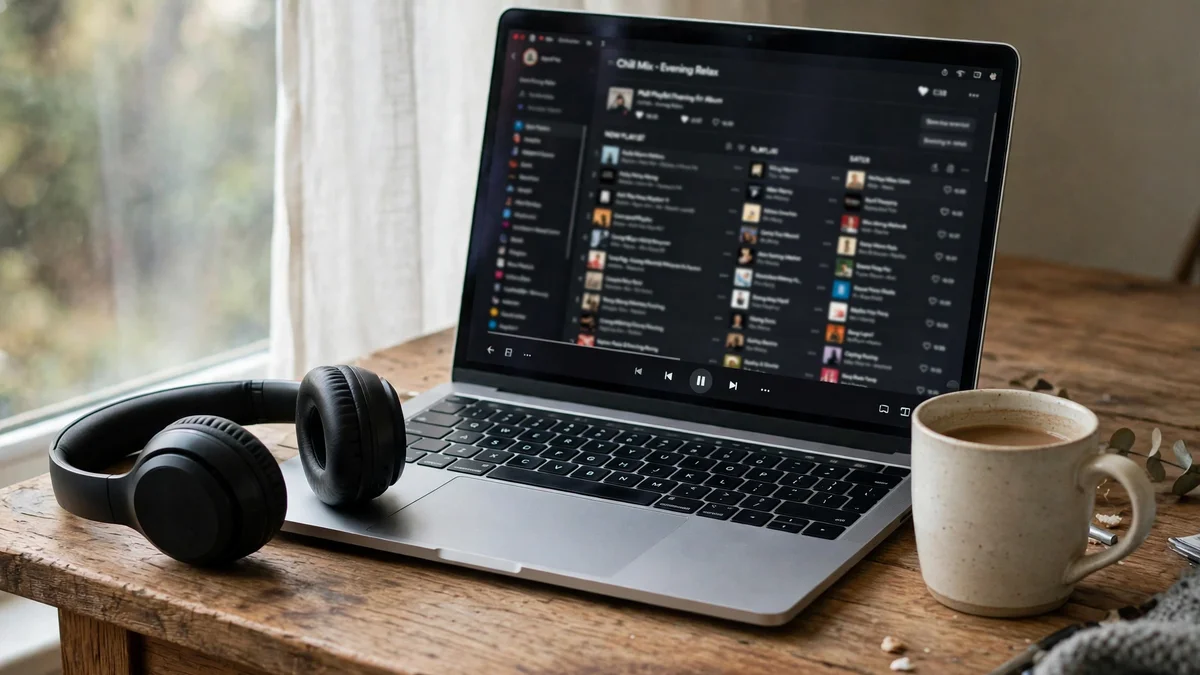
The best VPN services for music streaming in 2027 are the ones that stay out of the way: they keep audio playing without drops, work on the phone in your pocket and the speaker on your shelf, and never throttle the connection halfway through a playlist. Music uses far less data than video, so the ranking here is less about raw speed and more about stability, device coverage and keep your listening private on the networks you use.
That changes the priorities. A VPN for music needs to hold a steady, low-latency connection for hours, run cleanly on phones and smart speakers, and handle the switch between Wi-Fi and mobile data without cutting the song.
Every service below offers apps for iOS and Android, a kill switch, and a money-back guarantee, so you can test it with your own streaming service before committing. Prices are approximate starting prices on long-term plans, and they change often, so check current pricing before you buy.
Key takeaways
- NordVPN is the best overall pick for music streaming, with stable all-day connections and the fastest speeds in this roundup.
- Surfshark is the best value choice, with unlimited devices so one plan covers your phone, laptop, tablet and smart speaker.
- Proton VPN is the best privacy-first option, with a free tier for light listening and audited open-source apps.
- Expect to pay around $2 to $5 per month on a two-year plan for a good music-streaming VPN in 2027.
- Music needs only about 0.5 Mbps for standard quality and 5 Mbps for lossless, so stability matters more than top speed.
At a glance: the shortlist
| Service | Best for | Starting price | Standout limit |
|---|---|---|---|
| NordVPN | Best overall | From $3.09 per month | 10 simultaneous connections |
| ExpressVPN | Phones and travel | From $4.99 per month | 8 simultaneous connections |
| Surfshark | Best value for households | From $1.99 per month | Unlimited connections |
| CyberGhost | Streaming-optimised servers | From $2.03 per month | 7 simultaneous connections |
| Proton VPN | Privacy-first listening | From $3.59 per month | 10 simultaneous connections |
| Private Internet Access | Customisation and control | From $2.03 per month | Unlimited connections |
| Mullvad | Maximum anonymity | €5 per month, flat | 5 simultaneous connections |
NordVPN — Best overall
NordVPN tops this list for the same reason it tops most streaming lists: the connection simply stays up. Its NordLynx protocol holds a stable link for hours of continuous playback, handles the hop between home Wi-Fi and mobile data without dropping the song, and keeps latency low enough that skipping tracks feels instant.
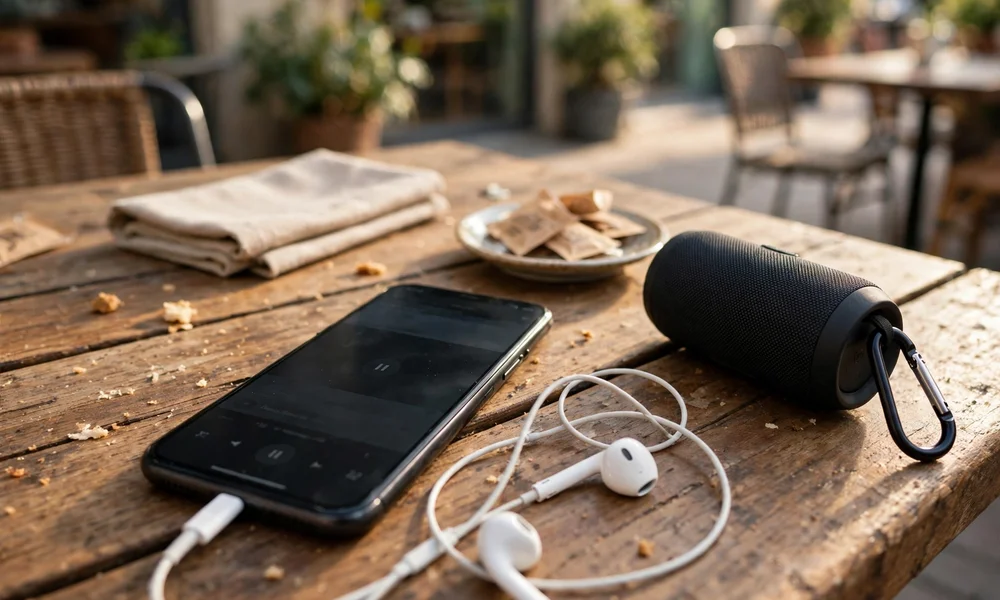
The mobile apps are light and easy on battery, with a quick-connect button that picks the fastest nearby server in one tap. Support covers iOS, Android, Windows, macOS, Linux and most smart speakers through router installation, Pair it with good listening gear: our roundup of the best headphones for noise cancelling covers the models that make the biggest difference to streamed music.
Pros: most stable long-session connections here; light, battery-friendly mobile apps; large server network.
Cons: best prices need a two-year plan; desktop app can feel busy for new users.
ExpressVPN — Best for phones and travel
ExpressVPN is the best choice if most of your listening happens on a phone while you are out. Its Lightway protocol reconnects almost instantly when you move between networks, so a playlist survives the walk from home Wi-Fi to the train to the office without a pause.
Speed is more than enough for lossless audio, The cost is higher than rivals, starting from around $4.99 per month, and the 8-connection limit is the lowest among the paid options here, though it covers a phone, a laptop, a tablet and a home speaker with room to spare.
Pros: fastest network switching on mobile; simplest phone app; a reliable, private connection on hotel and cafe Wi-Fi while travelling.
Cons: highest price in this list; 8-connection limit; fewer servers than NordVPN.
Surfshark — Best value for households
Surfshark is the cheapest way to put a VPN on every music device you own. One plan allows unlimited simultaneous connections, so your phone, your partner’s phone, a tablet, a laptop and a smart speaker can all stream through the VPN at once. Long-term plans start from around $1.99 per month, which works out to less than the cost of a single song download per month.
The apps are simple and consistent across platforms, and the WireGuard protocol keeps connections stable during long playlists. Speeds dip a little on distant servers, but music needs so little bandwidth that it rarely matters.
Pros: unlimited simultaneous connections; lowest long-term price; clean apps on every platform.
Cons: speeds dip on distant servers; support can be slow at peak times.
CyberGhost — Best streaming-optimised servers
CyberGhost labels its servers by the streaming service they are optimised for, which takes the guesswork out of setup. Open the app, choose your music service from the list, and it connects to a server tuned for that platform. For listeners who do not want to test servers one by one, that shortcut is worth a lot, and it works just as well for music apps as for video.
The network is one of the largest available, with more than 11,000 servers in 100 countries, and the service allows 7 simultaneous connections. A 45-day money-back guarantee on long plans gives you the longest test window in this roundup.
Pros: servers labelled by streaming service; huge network; 45-day refund window.
Cons: 7-connection limit; desktop interface feels dated; slower on distant servers.
Proton VPN — Best for privacy-first listening
Proton VPN is the pick for listeners who care about who sees their listening habits. The service is based in Switzerland, its apps are open source and independently audited, and its Secure Core servers route traffic through privacy-friendly countries before it reaches the streaming server. Your streaming service still sees your account, but your internet provider and the local network see only encrypted traffic.
Paid plans support stable, high-quality audio streaming with a VPN Accelerator feature that improves speeds on long-distance connections, and the service includes a genuinely useful free tier. Paid plans start from around $3.59 per month.
Pros: audited open-source apps; Swiss privacy protections; usable free tier for light listening.
Cons: free tier is too slow for lossless audio; fewer servers than the biggest rivals; higher starting price.
Private Internet Access — Best for customisation and control
Private Internet Access, usually called PIA, gives you more control over the connection than any other service here. Its open-source apps let you switch encryption levels, choose your protocol, and split traffic per app, so your music app uses the VPN while a game or a work app goes direct.
Speeds on WireGuard are strong, and the unlimited-device allowance matches Surfshark for covering a whole household. The service does not label servers for specific streaming platforms, so finding the best one takes a little experimentation, but once found it holds steady for hours. Long-term pricing starts from around $2.03 per month.
Pros: most configurable apps here; unlimited connections; very low long-term price.
Cons: no streaming-labelled servers; interface can overwhelm beginners; based in the US.
Mullvad — Best for maximum anonymity
Mullvad is the most private VPN you can buy. It asks for no email address and no name: you get a random account number, and you can pay in cash by post if you want no payment trail at all. The flat price is €5 per month, with no discounts, no long-term lock-in and no renewal-price surprise.
For music streaming, the connection is stable and fast enough for lossless audio, and the WireGuard-based apps are light on phones. The trade-offs are a smaller server network and only 5 simultaneous connections, which is enough for one person but tight for a family.
Pros: no personal details required; flat €5 price with no lock-in; open-source apps.
Cons: only 5 simultaneous connections; smaller network; less consistent on some shared or congested networks.
How to choose
Start with the devices you listen on. If music lives on your phone, pick a service with a light mobile app and fast network switching, and test it on your daily commute, not just at home. Travellers should also check the best noise cancelling headphones for travel, since good headphones and a stable VPN together make the biggest difference on the move.
Next, think about how many devices need cover. One listener with a phone and a laptop is fine with 5 connections, but a household with several listeners needs an unlimited plan or a router install.
Finally, use the refund window properly. Stream your usual playlists for a full week, including on mobile data and public Wi-Fi, and check for dropped songs, delayed skips and battery drain. Every service here offers at least 30 days, and CyberGhost offers 45, which is plenty of time to find a problem before you commit.
Checklist: before you pay
- Test playback for a full week on your phone, including on mobile data and public Wi-Fi.
- Confirm the VPN has an app for every device you listen on, or supports your router.
- Count every device that will stream at once and match it to the connection limit.
- Check the renewal price, which is often much higher than the first-term price.
- Watch battery drain on your phone during the trial week.
- Confirm the VPN works with the specific music services you actually use.
Frequently asked questions
Do I need a VPN to stream music?
No, a VPN is not required to stream music. It adds privacy on shared and public networks, and it can help when an internet provider slows down streaming traffic. For most listeners the main benefit is a private connection on networks they do not control, such as cafe or hotel Wi-Fi.
Will a VPN affect audio quality?
A good VPN does not affect audio quality. Music needs very little bandwidth, around 0.5 Mbps for standard quality and 5 Mbps for lossless, so even a large speed drop leaves plenty of headroom.
Which VPN is best for music streaming?
NordVPN is the best all-round pick here, with the most stable long-session connections and the fastest speeds. Surfshark is the best value for households thanks to unlimited connections, and Proton VPN is the best choice if privacy is your top priority. All three handle lossless audio without trouble.
Can I use a VPN on a smart speaker?
Most smart speakers cannot run a VPN app directly, so the usual approach is to install the VPN on your router, which protects every device on your home network, including the speaker. For tablet listening, the best VPN services for iPad users covers the tablet-specific setup in more detail.
Are free VPNs good enough for music?
For casual listening, a reputable free tier like Proton VPN can work, since music uses little data. But free VPNs usually limit server choice and speed, and many cap data or show ads. For daily lossless listening, a low-cost paid plan is the realistic option.
Does a VPN drain my phone battery?
Any VPN adds some battery drain because it encrypts traffic, but a well-built app adds only a small amount, typically a few percent over a day of listening. Test battery use during the refund window and switch protocols if the drain is noticeable.
The bottom line
For most listeners, NordVPN is the best all-round choice: the most stable connections, the fastest speeds and apps that stay out of the way. Households should pick Surfshark for unlimited devices and the lowest price, while privacy-focused listeners should pick Proton VPN for its audited apps and Swiss base.
Whichever service you choose, test it the way you actually listen: on your phone, on the move, for a full week.


