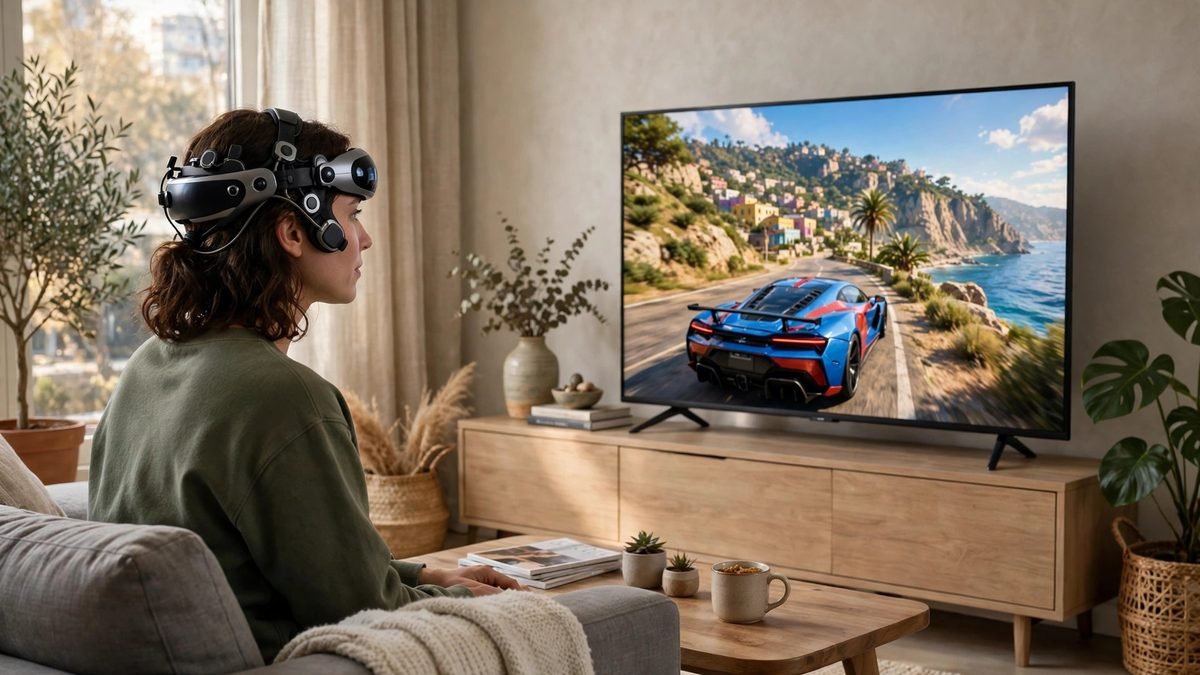
The best VR headsets for fitness in 2027 are not the most powerful headsets on the market. They are the comfortable, sweat-friendly, standalone headsets that stay put during a boxing round, track your hands reliably, and do not leave you tangled in cables.
The short answer is that most people should buy a standalone Meta Quest headset, with the Quest 3 as the best all-round choice and the Quest 3S as the best value option. If you already own a PlayStation 5, the PlayStation VR2 is a strong alternative.
Key takeaways
- Comfort and sweat handling matter more for fitness than raw graphics power.
- Standalone headsets are the practical choice for workouts: no cables, no PC, and room to move.
- A secure fit, a wipeable face cushion and a good head strap change a workout more than a sharper display.
- Battery life of about two hours per charge is normal, so plan short sessions and charge between workouts.
- Clear a safe play space, start with short sessions, and stop if you feel dizzy or unwell.
What makes a VR headset good for fitness
Fitness changes the priorities. A headset that feels fine for an hour of seated play can slip, fog or grow uncomfortable after ten minutes of boxing. Weight distribution matters as much as total weight: a front-heavy headset pulls forward when you duck and lunge, while a balanced design stays steadier.
Tracking is the second test. Fitness apps rely on hand and controller tracking to register punches, blocks and reaches. Inside-out tracking, where cameras on the headset follow the controllers, works well in a clear, well-lit room, but struggles in very dim light or direct sunlight.
Sweat is the third test, and the one buyers forget. A foam face cushion absorbs sweat and becomes unpleasant quickly, while a silicone or wipeable interface makes a real difference. Ventilation helps too: headsets with space for air to circulate fog less than sealed designs.
Finally, think about the workout library. Meta Quest has the widest range of dedicated fitness apps, from boxing and dance to guided workouts. PlayStation VR2 has a smaller fitness library, and Apple Vision Pro is still building one.
The best VR headsets for fitness compared
| Headset | Best for | Standalone or tethered | Fitness app choice | Comfort notes |
|---|---|---|---|---|
| Meta Quest 3 | Best overall fitness headset | Standalone | Widest fitness library | Pancake lenses, balanced design |
| Meta Quest 3S | Best value fitness headset | Standalone | Same Quest library | Lighter on features, easy to wear |
| PlayStation VR2 | Best for PS5 owners | Tethered to PS5 | Smaller fitness library | Comfortable halo-style fit |
| Apple Vision Pro | Best premium mixed reality | Standalone, tethered battery | Growing fitness options | Heaviest here, superb displays |
| Pico 4 Ultra | Best Quest alternative | Standalone | Good app range, smaller library | Light, balanced, pancake lenses |
| Valve Index | Best PC VR fitness | Tethered to PC | PC VR fitness apps | Excellent tracking, needs base stations |
Table: the leading VR headsets for fitness compared on setup, app choice and comfort. Check current price and app compatibility before buying, as models and stores change.
The best VR headsets for fitness in 2027
Meta Quest 3
Best for: most people who want the best all-round VR fitness headset.
The Quest 3 is the default fitness headset for good reason. It is standalone, so there is no cable to trip over and no PC to set up, and it runs the widest library of VR fitness apps, including boxing, dance, HIIT and guided workouts. Its pancake lenses give a sharp, clear image, and the colour passthrough lets you see your room between rounds without taking the headset off. The Touch Plus controllers are light and easy to grip when your hands get sweaty.
Comfort is good out of the box, and better with the optional Elite Strap. Battery life is about two hours, which suits most workouts. Check the current price before buying.
Meta Quest 3S
Best for: beginners and budget buyers who want the Quest fitness library for less.
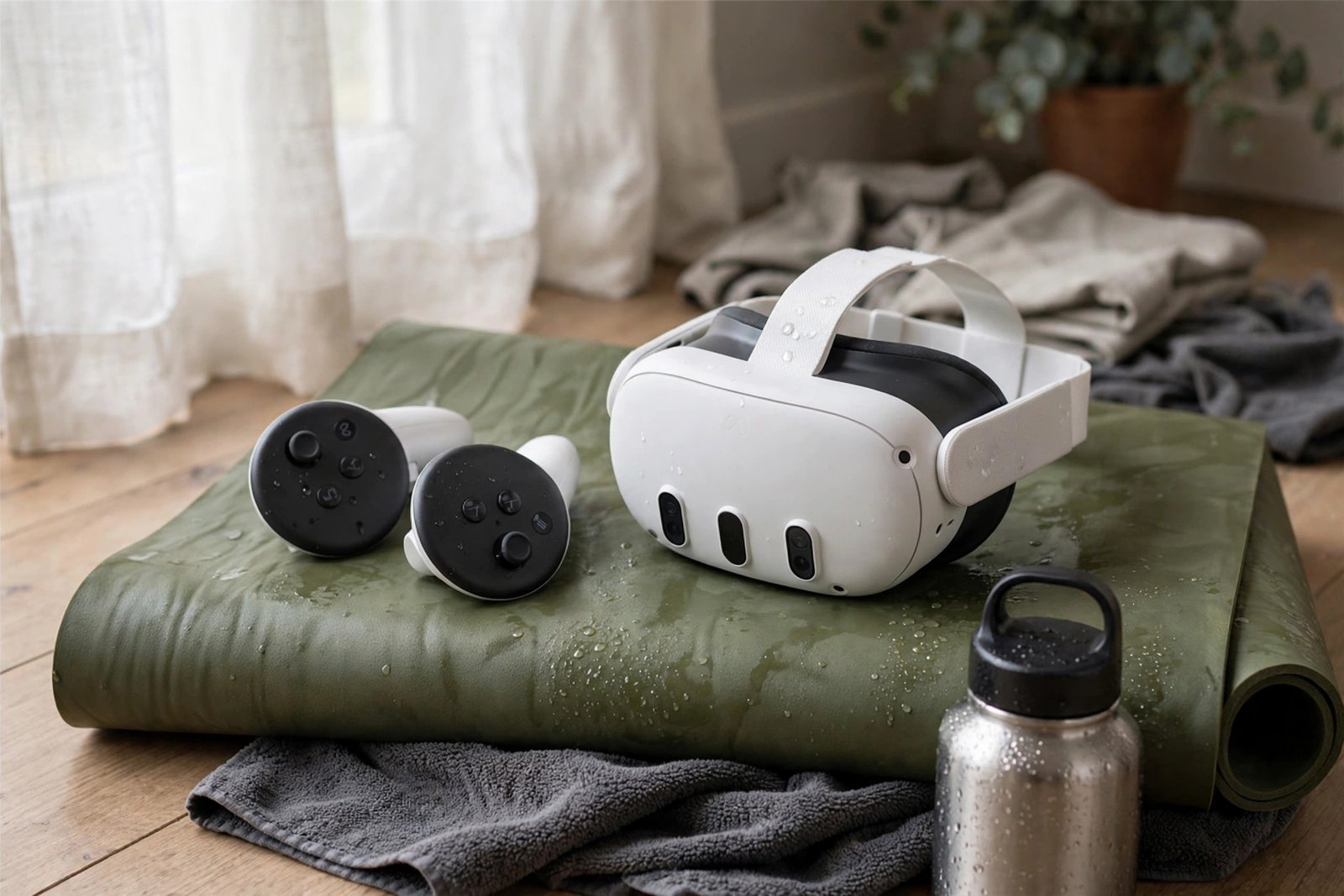
The Quest 3S runs the same apps and the same processor family as the Quest 3, so the workout experience is very similar. The main differences are the lenses and the display: the 3S uses Fresnel lenses and a lower-resolution display, which means a slightly narrower sweet spot and a less crisp image. For boxing, dance and guided workouts, that trade-off is easy to live with.
It is the best value pick for anyone unsure whether VR fitness will stick. Check the current price before buying.
PlayStation VR2
Best for: PlayStation 5 owners who want immersive workouts on hardware they already own.
The PlayStation VR2 is a capable fitness headset with sharp OLED displays, eye tracking, headset vibration and controllers with haptic feedback. Those features make workouts feel more physical, and the halo-style headband spreads the weight well. If you already own a PS5, it adds a fitness option without a second platform to learn.
It is wired to the console, so you need space near your television and a cable that stays out of the way. The fitness app library is smaller than Quest. Buy it for PlayStation games first and fitness second.
Apple Vision Pro
Best for: buyers who want premium mixed reality and guided workouts, and can accept the weight and price.
Apple Vision Pro has the sharpest displays of any headset here, with micro-OLED panels that make text and virtual environments look superb. Its mixed-reality passthrough is the clearest available, so you can see your room and your water bottle while you train. For guided stretching, mindfulness and lighter movement sessions, that clarity is genuinely pleasant, though the headset itself is still the heaviest here.
For intense fitness, the trade-offs are real: the price is far above every other headset here, the fitness library is smaller than Quest, and the weight becomes noticeable during fast workouts.
Pico 4 Ultra
Best for: buyers who want a light, comfortable Quest alternative with good mixed reality.
The Pico 4 Ultra is a standalone headset with pancake lenses, a balanced design and a light feel on the head, which helps during longer sessions. Its colour passthrough is clear, and its hand and controller tracking work well for fitness apps. It also supports PC VR, so owners of a gaming PC have a second library to draw on.
The main drawback is the app library, which is smaller than the Quest store. Check that the apps you want are in the Pico store before buying.
Valve Index
Best for: PC gamers who want the most accurate tracking for room-scale fitness.
The Valve Index remains the benchmark for PC VR tracking. Its base stations follow the controllers with a precision that inside-out systems cannot quite match, which matters for fast boxing and full-body movement. The headset has a wide field of view, a high refresh rate and excellent audio, and the finger-tracking controllers feel natural during workouts.
It needs a gaming PC, two base stations and a cable, which limits how freely you can move. Buy it for PC VR first; for fitness alone, a standalone headset is simpler.
Choosing the right headset: a decision framework
- Do you want to work out without a PC or console? If yes, buy standalone: Quest 3, Quest 3S or Pico 4 Ultra.
- Do you already own a PS5 or a gaming PC? A PS5 points to PlayStation VR2; a gaming PC opens up the Valve Index and PC VR.
- How hard will you train? Intense boxing and HIIT need a secure strap, a wipeable face cushion and good ventilation. Budget for both.
- How much space do you have? Most standing workouts need a clear area of about two by two metres. Measure it before you buy.
- Which apps do you want? Check the store for each headset first. The best fitness apps are covered in our guide to the best VR fitness apps, and many of them run only on Quest.
- Will anyone else use it? A headset with easy strap adjustment, glasses spacers and a simple Guardian setup is kinder to shared households.
If you already track workouts on your wrist, a fitness headset pairs well with a watch that handles the rest of the day. Our guide to the best smartwatches for hiking explains GPS, battery and toughness in plain terms. For the audio side of a workout, read our guide to the best gaming headsets for PS5 before you buy separate headphones.
Setting up for safe, comfortable workouts
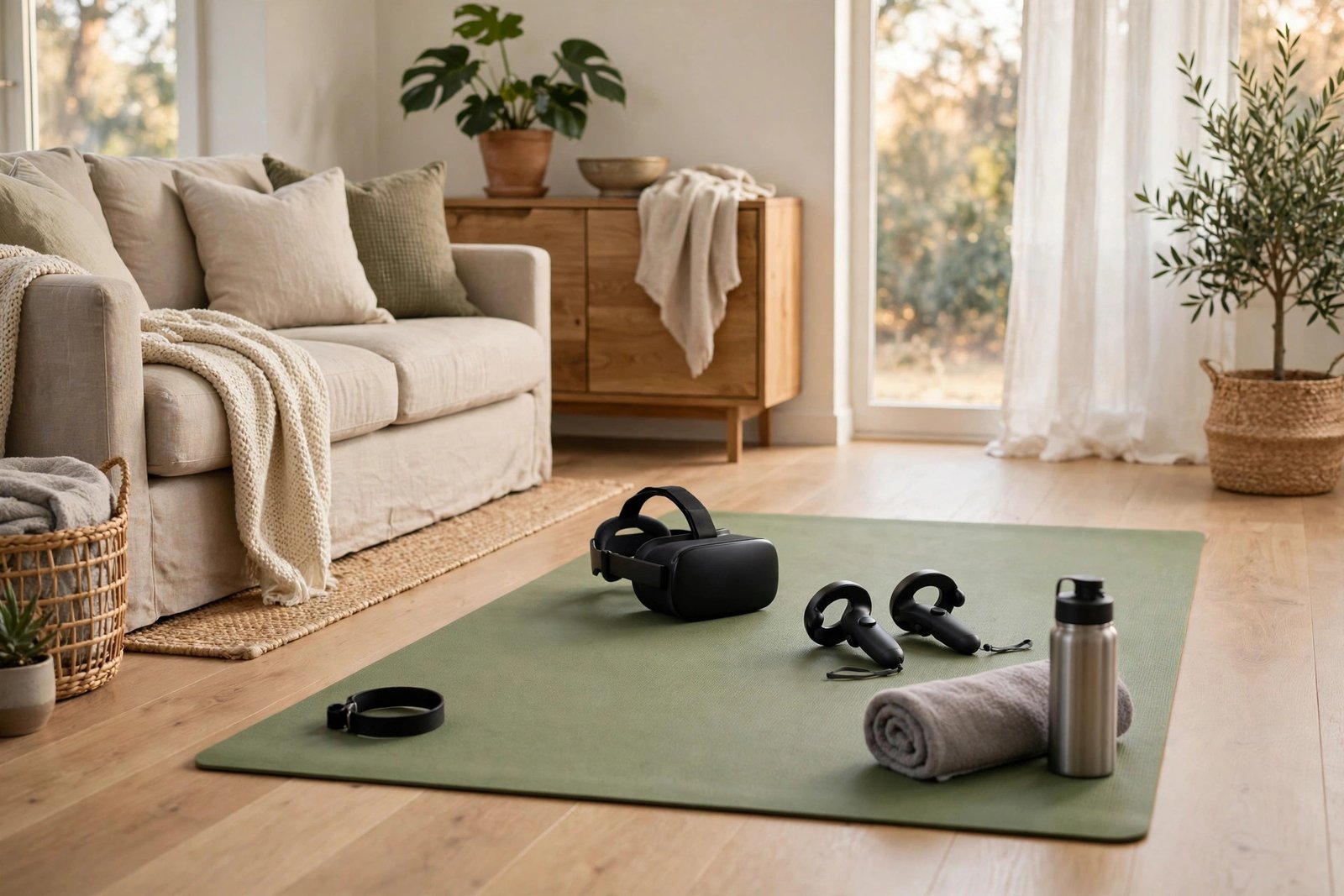
Start with the room. Clear a space of about two by two metres, move furniture, lamps and loose rugs out of the way, and keep pets and children outside the play area. Set up the Guardian boundary carefully, and re-check it if you move furniture.
Next, fit the headset properly. Tighten the strap until the headset stays put when you nod, but not so tight that it presses on your forehead. If you wear glasses, use the glasses spacer, and wipe the lenses before each session to reduce fog.
Finally, build up slowly. Start with ten- or fifteen-minute sessions at low intensity, and add time over a week or two. Keep water within reach, and stop if you feel dizzy, nauseous or unusually tired.
Frequently asked questions
Can VR workouts replace the gym?
For general fitness, partly. VR is excellent for cardio, coordination and consistency. It is weaker for heavy strength training, which still needs weights or resistance work.
Which VR headset is best for fitness?
For most people, the Meta Quest 3. It is standalone, comfortable, and runs the widest range of fitness apps. The Quest 3S is the best value alternative if you want the same library for less.
Do I need a lot of space for VR fitness?
Most standing workouts need a clear area of about two by two metres, free of furniture, lamps and pets. Some apps offer seated or small-space modes, but boxing and HIIT are far better with room to move.
How long does a VR headset battery last during workouts?
About two hours of active use is typical for standalone headsets. Charge between sessions, and keep the charging cable away from your play space.
Does VR fitness cause motion sickness?
It can, especially in the first weeks or in apps with fast virtual movement. Start with short, stationary sessions, take breaks, and choose apps where you stay in one place. If nausea persists, stop and try again another day.
The bottom line
The best VR headset for fitness in 2027 for most people is the Meta Quest 3, because it combines a standalone design, a wide fitness library and a comfortable fit. The Quest 3S is the best value choice, and the PlayStation VR2 is the best option if you already own a PS5. Apple Vision Pro leads on display quality but costs far more and weighs more, while Pico 4 Ultra is the best alternative to Meta and Valve Index suits dedicated PC VR rooms. Whichever you buy, the headset that gets used three times a week is the right one.
Safety note: clear a safe play space before every session, take regular breaks, and stop if you feel dizzy, nauseous or unwell. VR fitness is not a substitute for medical advice. Anyone with a heart condition, balance problem, injury or other health concern should check with their doctor before starting a new exercise programme.