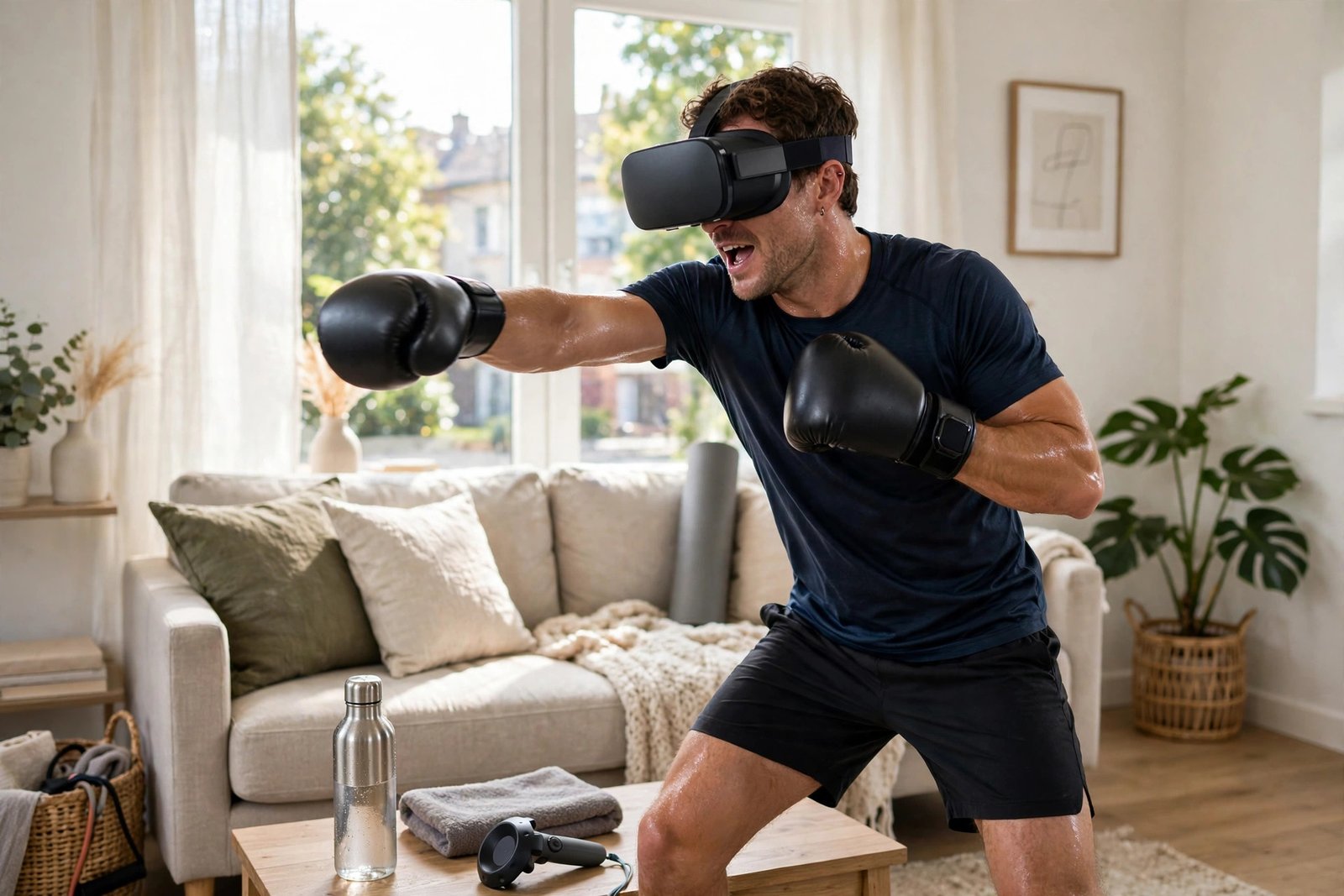
The best VR fitness apps in 2027 turn a headset into a gym you actually look forward to using. They wrap boxing, dance, HIIT and rhythm workouts in games that make you forget you are exercising — until you take the headset off, sweating, and realise you have been moving for forty minutes. The honest answer to the question every curious buyer asks is yes, VR workouts can be real exercise, but only if the app matches your fitness level, your space and your tolerance for subscriptions.
I was sceptical until I tried a boxing app on a rainy Tuesday and ended up breathless after three rounds. The trick was not the graphics; it was the structure. A good VR fitness app gives you a coach, a score to beat and a reason to come back tomorrow, which is exactly what most home workouts lack. This guide compares the leading apps on the Meta Quest platform on workout quality, intensity, subscription cost and how much room you need. Prices and subscriptions vary, so check the current price before buying.
Key takeaways
- VR workouts are real exercise when the app keeps your heart rate up for 20 to 30 minutes.
- Boxing and HIIT apps burn the most energy; rhythm games are gentler and better for beginners.
- Most leading VR fitness apps charge a monthly subscription on top of the headset cost.
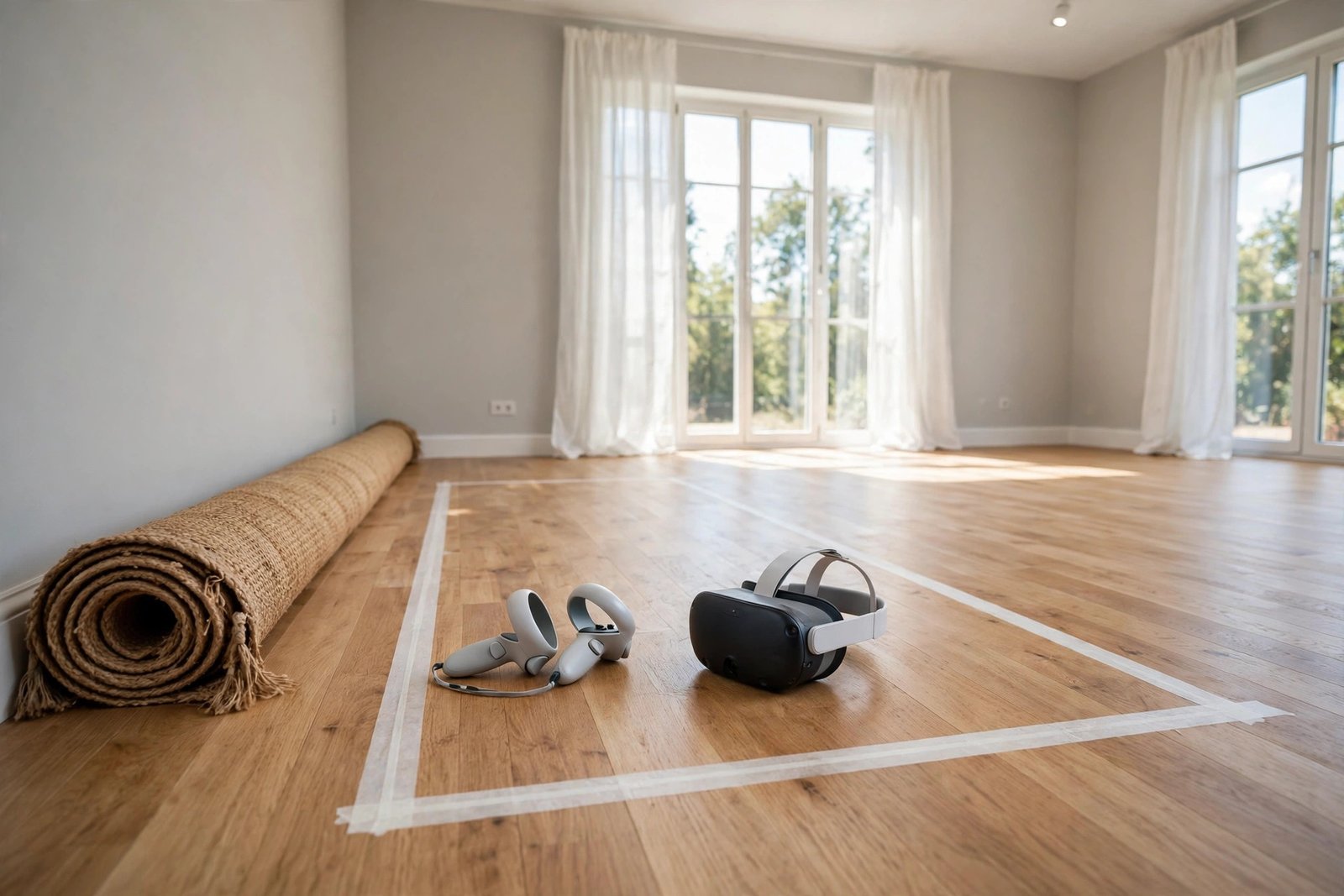
- You need a clear play space of roughly two by two metres, free of furniture and pets.
- Start with short sessions: VR motion sickness and sore muscles both reward a slow start.
How VR fitness works
A standalone VR headset such as the Meta Quest tracks your head and hands in three dimensions, so a fitness app can turn punches, squats, lunges and reaches into gameplay. The headset’s guardian system draws a virtual boundary around your play space and warns you when you approach its edge. Most apps estimate calories from your movement and, on some headsets, from heart rate if you pair a chest strap or watch. That estimate is a rough guide, not a laboratory measurement, but it is useful for comparing sessions.
Intensity varies enormously. Rhythm games that ask you to slash blocks to music are moderate exercise, closer to a brisk walk with arm movements. Boxing and HIIT apps that demand constant punching, ducking and squatting can push your heart rate into the same zone as a gym class. Look for apps with adjustable intensity and a clear difficulty ladder, so you can progress rather than plateau.
Comfort matters too. A headset is heavier than a pair of headphones, and a sweaty face cushion is unpleasant. A good head strap, a wipeable facial interface and a fan or open window make long sessions far more pleasant. Take breaks, drink water, and stop if you feel dizzy or nauseous — VR motion sickness is common in the first weeks and usually fades as you adjust.
The best VR fitness apps in 2027
Supernatural
Best for: coached full-body workouts with music, for people who like structure and variety.
Supernatural is the closest thing VR has to a boutique fitness studio. Coaches lead boxing, flow, meditation and stretching sessions set to licensed music, with new workouts added regularly. The production quality is high, the coaching is genuinely encouraging, and the programmes suit a wide range of fitness levels. It is a subscription app, so the monthly fee is part of the real cost, and you will want a comfortable head strap for longer sessions. If you want someone to tell you what to do each day, this is the pick.
FitXR
Best for: high-intensity boxing, HIIT and dance classes that feel like a gym session.
FitXR offers studio-style classes in boxing, combat, HIIT, dance and sculpt, led by real trainers in virtual studios. Its boxing classes are among the most intense workouts in VR, and the multiplayer options add a competitive edge that keeps people coming back. It runs on a subscription, and the class library is large enough that you will not repeat the same session twice in a month. If you want a serious workout rather than a game, start here.

Les Mills Bodycombat
Best for: martial-arts-inspired workouts with proven programming and a strong beat.
Les Mills brings its well-known Bodycombat format into VR, with punches, kicks, knees and elbows timed to driving music. The programming is designed by fitness professionals rather than game designers, which shows in the structure: a warm-up, escalating rounds and a cool-down. It suits people who already enjoy group fitness classes and want that same energy at home. Check whether it is sold as a one-off purchase or a subscription in your region, as this has varied.
Beat Saber
Best for: beginners, rhythm lovers and anyone who wants fitness disguised as a game.
Beat Saber is not a fitness app first — it is a rhythm game in which you slash blocks with lightsabers to the beat. But played on higher difficulties, it is a genuine arm and core workout, and its one-off purchase price makes it the cheapest entry point on this list. It lacks coaching, programmes and structured progression, so it works best alongside a more structured app or as a fun warm-up. If you are unsure whether VR fitness is for you, this is the low-risk way to find out.
Holofit
Best for: cardio on a rower, bike or elliptical, with virtual worlds to explore while you train.
Holofit is different: it connects to rowing machines, exercise bikes and ellipticals, and turns your workout into a journey through virtual landscapes, from tropical rivers to snowy mountains. The app suits people who already own cardio equipment and find staring at a wall boring. It runs on a subscription, so check compatibility with your machine before buying.
Best VR fitness apps compared
| App | Best for | Workout style | Pricing model | Space needed |
|---|---|---|---|---|
| Supernatural | Coached, structured workouts | Boxing, flow, stretch | Subscription | About 2 x 2 m |
| FitXR | High-intensity classes | Boxing, HIIT, dance | Subscription | About 2 x 2 m |
| Les Mills Bodycombat | Martial-arts fitness | Combat, cardio | Purchase or subscription | About 2 x 2 m |
| Beat Saber | Fun, beginner-friendly | Rhythm game | One-off purchase | About 2 x 2 m |
| Holofit | Cardio machine training | Rowing, cycling, running | Subscription | Machine plus room |
Table: the five leading VR fitness apps compared on style, cost and space. Check current pricing before buying, as models change.
Choosing the right app: a decision framework
- What is your fitness level? Beginners should start with Beat Saber or Supernatural’s low-intensity sessions; experienced exercisers will get more from FitXR or Bodycombat.
- Do you mind a subscription? Add the monthly fee to the headset cost. If you dislike subscriptions, Beat Saber is the obvious starting point.
- How much space do you have? Boxing and HIIT need a clear two-by-two-metre area. If your space is smaller, choose rhythm or seated workouts.
- Do you own cardio equipment? A rower or bike plus Holofit turns a boring machine session into something you look forward to.
- Do you get motion sick? Start with short, stationary sessions and stop at the first sign of nausea. Most people adjust within a week or two.
If you are buying a headset for a younger family member, read our guide to the best fitness trackers for kids first, as age guidance matters for wearables too. A VR headset pairs well with a simple everyday watch, and our guide to the best hybrid smartwatches covers watches that track your daytime activity without a screen demanding attention. Because subscriptions add up across apps, work out the true yearly cost before you commit — our guide on how to use AI to plan a monthly budget shows a simple way to do that.
Frequently asked questions
Can VR fitness replace the gym?
For general fitness, partly. VR is excellent for cardio, coordination and consistency, and many people exercise more often with it than they did at the gym. It is weaker for heavy strength training, which still needs weights or resistance work.
How many calories do VR workouts burn?
It depends on the app and your effort. Intense boxing and HIIT sessions can burn a similar amount to a gym class, while gentle rhythm games burn far less. Treat in-app calorie numbers as rough estimates, not precise measurements.
Do I need a lot of space for VR fitness?
Most standing apps need a clear area of about two by two metres, free of furniture, lamps and pets. Some apps offer seated or small-space modes, but boxing and HIIT are far better with room to move.
Does VR fitness cause motion sickness?
It can, especially in the first weeks or in apps with fast virtual movement. Start with short sessions, take breaks, and choose apps where you stay in one place. If nausea persists, stop and try again another day.
Which VR headset is best for fitness?
Most of the apps in this guide run on Meta Quest headsets, which are the most widely supported standalone platform for VR fitness. Check each app’s store page for the headsets it supports before buying.
The bottom line
The best VR fitness app in 2027 is the one that gets you moving three or four times a week without dreading it. If you want coaching and structure, choose Supernatural or FitXR. If you want the energy of a group class, Bodycombat delivers it. If you want fun first and fitness second, Beat Saber is the cheapest way in. And if you already own a rower or bike, Holofit will make it the best-used machine in the house. Start small: ten-minute sessions, a clear floor, and a glass of water nearby.
Clear a safe play space before every session, take breaks, and stop if you feel dizzy or nauseous. VR fitness is not a substitute for medical advice, and anyone with a heart condition, balance problem or injury should check with their doctor before starting a new exercise programme.