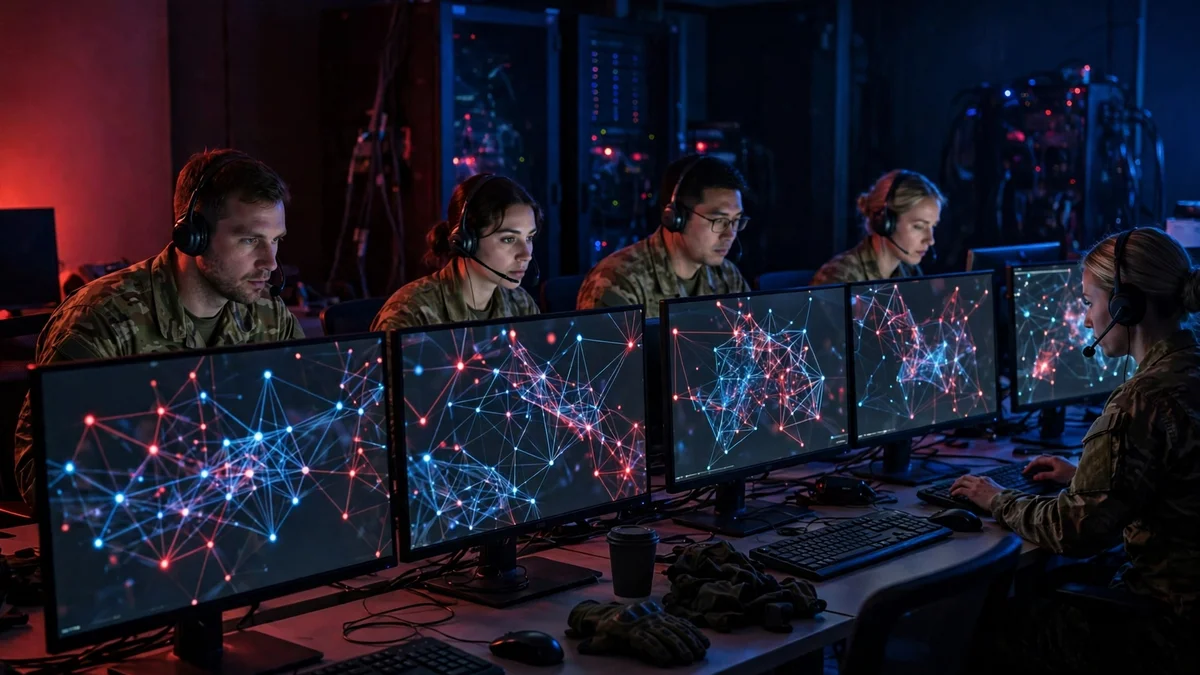
A new wave of cyberattacks has hit the United States military and spy agencies, weeks after an October hacking spree that security researchers have come to call Black October. The latest incident, reported on November 27, is a breach of Cloud One, the US Air Force’s cloud computing platform. It is the fifth US national-security agency tied to a cyber incident in about a week, and no agency has said who is behind any of them.
The sequence began on November 20, when intruders were reported inside the FBI’s National Crime Information Center, the nationwide database police use to check warrants, background records and wanted people. On November 24, hackers were reported inside an open-source intelligence system used by the CIA, the Office of the Director of National Intelligence and the National Geospatial-Intelligence Agency. Hours later, the Treasury Department’s Financial Crimes Enforcement Network said it was investigating unauthorised access to its own systems.
The Cloud One report widened the pattern from law enforcement and intelligence to the military itself. According to Reuters, the intrusion was discovered within the past month during an upgrade of the platform, disrupting application migrations and software updates. US Cyber Command has been called in to assess the impact, and the attackers, the scope of the breach and whether any data was stolen are all still unknown.
Key takeaways
- Five US agencies have been tied to cyber incidents in about a week: the FBI, the CIA, the Office of the Director of National Intelligence, the Treasury’s FinCEN, and the Air Force’s Cloud One platform.
- Cloud One, launched in 2017, hosts applications for military operations, personnel management, logistics and maintenance, and the breach was found during a platform upgrade.
- The FBI warned on November 13 that multiple threat actors have used ARTEX, an AI-powered hacking tool, since at least August 2026, with some intrusions reaching privileged access in under three hours.
- Researchers linked ARTEX to a campaign by a Chinese group tracked as Vapor Panda that hit more than 200 organisations in at least 14 countries from October 17.
- No agency has named an attacker, and investigators have not said whether the five incidents are connected.
| Date reported | Target | What was reported |
|---|---|---|
| November 20 | FBI, National Crime Information Center | Intruders inside the nationwide police database |
| November 24 | CIA, ODNI and NGA | Open-source intelligence analysis system breached |
| November 24 | Treasury, FinCEN | Unauthorised access under investigation |
| November 27 | Air Force, Cloud One | Cloud platform breached during an upgrade |
| October 17 onwards | 200+ organisations, 14 countries | ARTEX-linked campaign attributed to Vapor Panda |
The Air Force breach: what is known so far
Cloud One is an enterprise cloud computing platform managed by the US Air Force that lets Department of Defense agencies host and manage applications supporting military operations, personnel management, logistics and maintenance. It was launched in 2017, and the Air Force Materiel Command says it was built to follow Defense Department security rules, including zero trust, the approach that verifies every user and device rather than trusting anything inside the network.
According to a source who spoke to Reuters, the hackers exploited an unidentified software vulnerability to gain access to the platform, potentially exposing sensitive military operational and logistics information. The intrusion was discovered within the past month during an upgrade, and it disrupted application migrations and software updates. US Cyber Command has reportedly been called in to assess the impact. The Air Force declined to comment on the security or operational status of the affected systems, telling Reuters that it continuously takes measures to protect its information, systems and mission capabilities. The attackers, the scope of the attack and whether any data was stolen remain unknown,
The FBI, the CIA and FinCEN: a week of disclosures
The Cloud One report followed a week of disclosures that, taken together, describe the worst run of federal breaches in recent memory. On November 21, it was revealed that hackers had breached the FBI’s National Crime Information Center, a database used by local, state and federal law enforcement that holds information on wanted and missing persons, outstanding arrest warrants, stolen vehicles and firearms, and other criminal justice records. The intrusion came two months after the ShinyHunters extortion group breached FBI systems by exploiting an unpatched Oracle PeopleSoft vulnerability in the agency’s recruitment website, FBIJobs.gov.

Earlier in the same week, hackers were reported to have breached an open-source intelligence system at the CIA, in an incident that also affected the Office of the Director of National Intelligence and the National Geospatial-Intelligence Agency. The system studies open-source intelligence such as social media posts, satellite images and commercial data. Hours after that breach was reported, the Treasury Department’s Financial Crimes Enforcement Network disclosed that it was investigating unauthorised access to its systems. The lessons of past White House cyber crises are collected in our report on what past White House cyber crises teach about responding to breaches.
ARTEX: the AI tool at the centre of the wave
The thread running through the November wave is ARTEX, an open-source penetration testing framework that uses AI agents to automate stages of a cyberattack, including discovering and exploiting vulnerabilities, escalating privileges and stealing data. The framework integrates with external AI models from Anthropic Claude, OpenAI GPT, DeepSeek, Grok and others, allowing attackers to conduct autonomous attacks with minimal human intervention. The CIA breach was reportedly carried out using ARTEX, according to sources who spoke to The New York Times, although that has not been confirmed by any agency.
The FBI warned about the tool in an advisory on November 13, saying multiple threat actors had used ARTEX since at least August 2026 in attacks targeting government, defense, healthcare, financial and technology organisations. According to the FBI, some ARTEX-powered intrusions have progressed from initial targeting to privileged access in less than three hours. As of early November, researchers had identified more than 1,600 publicly exposed ARTEX management consoles, with the number believed to be much higher. Whether ARTEX was used against the Air Force, FBI or FinCEN is unconfirmed.
Black October: the campaign that came first
The November wave did not come from nowhere. In October, cybersecurity firm CrowdStrike linked a Chinese group tracked as Vapor Panda to ARTEX attacks on more than 200 organisations in at least 14 countries, starting on October 17. Microsoft has since tied the tool to Chinese and North Korean groups. The campaign is the October hacking spree behind the Black October label, a month in which AI-driven intrusions moved from proof of concept to industrial scale.
Other ARTEX-linked attacks show the same pattern. The platform was used by a Chinese state-aligned threat actor tracked by Microsoft as Storm-0940 in an October attack targeting ConnectWise’s Cloud Backup service, and cybersecurity firm Huntress identified at least 162 compromised Microsoft 365 customer tenants during the campaign. Attacks against South Korean financial institutions exposed personal information of approximately 67,000 people, and a South Korean hacking campaign targeting more than 90 organisations resulted in the theft of approximately 8.2 million data records and the arrest of seven suspects. The tool was released in July as a defensive testing framework.
What it means for security teams
For security teams, the November wave carries a practical lesson rather than a political one: the speed of attack has changed. When an intrusion can move from first contact to administrator access in under three hours, the window for detecting and containing it shrinks to minutes, and the defences that matter most are the ones that work without waiting for a human to notice. Patching, multi-factor authentication, network segmentation and continuous monitoring are not new ideas, but the ARTEX cases show what happens when they are missing or slow, and small organisations face the same tooling as federal agencies.
The second lesson is about attribution. No agency has named an attacker for any of the five incidents, and no one has said the five are linked. That silence is normal in the early days of an investigation, when naming the wrong actor would be worse than naming none, but it leaves defenders guessing about motive and method. Jay Clayton, the ODNI director named acting cyber director, has appeared on US news shows to argue that cyber spying has long been part of American life. The cost of waiting is explained in our guide to the real cost of ignoring website security.
Checklist: six defences that matter against AI-speed attacks
- Patch internet-facing software quickly, and treat unpatched vulnerabilities in recruitment, finance and collaboration tools as urgent, not routine.
- Require phishing-resistant multi-factor authentication for every account with access to sensitive systems, including cloud consoles and email.
- Segment networks so a breach in one system cannot reach operational, personnel or financial data without crossing another barrier.
- Monitor for unusual privilege escalation and data movement around the clock, because AI-driven intrusions can reach administrator access in under three hours.
- Keep offline backups of critical data and test restores regularly, so a breach or ransomware event does not become a permanent loss.
- Set up a business firewall and review its rules after every incident, using our guide on how to set up a business firewall for your team.
Frequently asked questions
What is Black October?
It is the label for the October hacking spree in which AI-powered attacks hit organisations at scale. CrowdStrike linked a Chinese group tracked as Vapor Panda to ARTEX attacks on more than 200 organisations in at least 14 countries from October 17, and the November wave against US agencies followed weeks later.
Which agencies were hit in the November wave?
Five agencies were tied to incidents in about a week: the FBI’s National Crime Information Center, an open-source intelligence system used by the CIA, the ODNI and the NGA, the Treasury’s FinCEN, and the Air Force’s Cloud One platform. No agency has said the incidents are connected.
What is ARTEX?
ARTEX is an open-source penetration testing framework that uses AI agents to automate stages of a cyberattack, including finding and exploiting vulnerabilities, escalating privileges and stealing data. It was released in July as a defensive tool, and the FBI warned on November 13 that multiple threat actors have used it since at least August 2026.
Has anyone been blamed for the attacks?
No. No agency has named an attacker for any of the five incidents, and investigators have not said whether they are linked. Sources told The New York Times that investigators suspect ARTEX was used in the intelligence-system breach, but that has not been confirmed.
What is Cloud One?
Cloud One is the US Air Force’s enterprise cloud platform, launched in 2017. It lets Department of Defense agencies host applications for military operations, personnel management, logistics and maintenance, and it was built to follow Defense Department security rules, including zero trust.
What should organisations do now?
Patch internet-facing systems quickly, enforce multi-factor authentication, segment networks, monitor for privilege escalation around the clock, keep tested offline backups, and review firewall rules. The defences are familiar; the November wave shows the cost of leaving them half done.
Bottom line
The November wave is striking not for any single breach but for its concentration: five agencies, including the FBI, the CIA and the Air Force, tied to cyber incidents in about a week, with no attacker named and no link confirmed. The Cloud One breach brought the pattern to the military itself.
Behind the wave sits a larger shift. ARTEX and tools like it have compressed the time and skill needed to break into a network, and the October campaign against more than 200 organisations showed that shift operating at scale. Whether the five November incidents share an attacker is unconfirmed. What is already clear is that the defence has to move at the speed of the attack.