
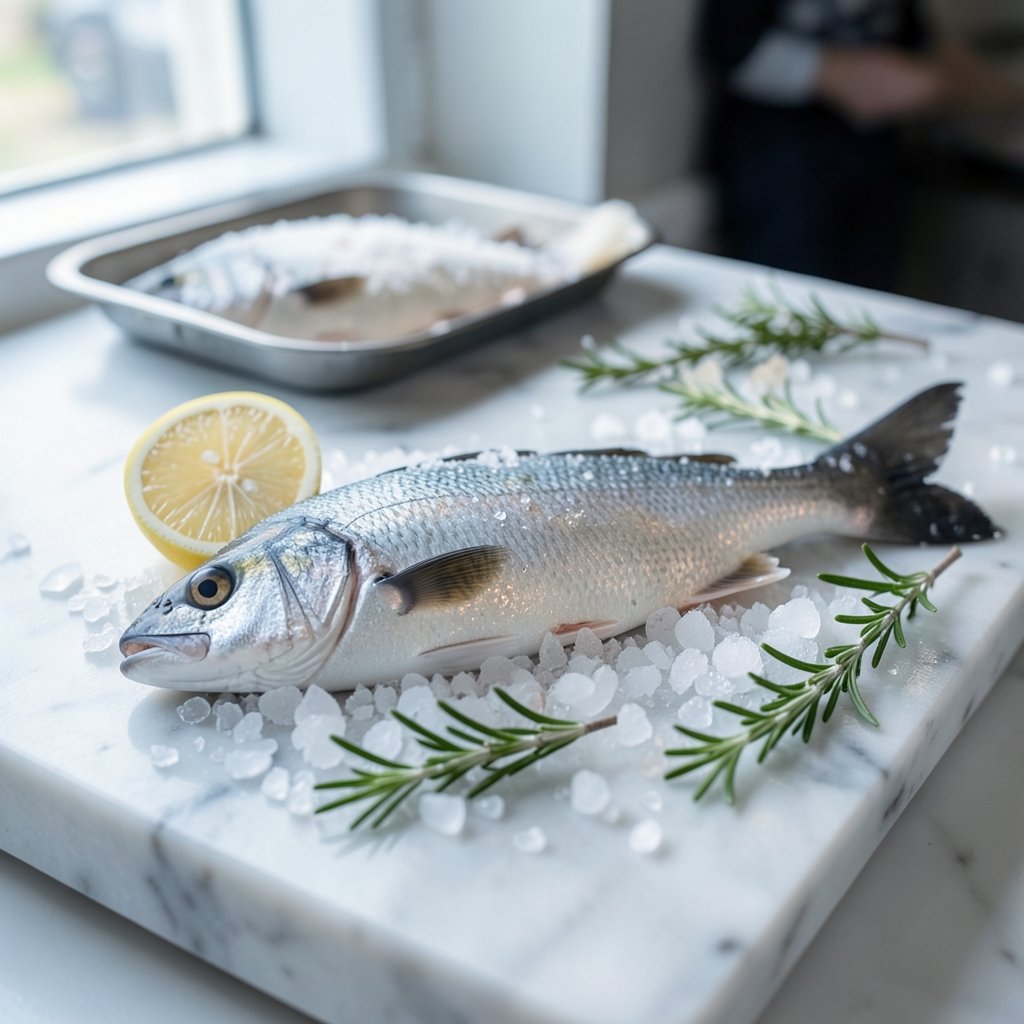
Have you ever ordered branzino at a restaurant, loved it, and then gone to a fish counter hoping to buy the same thing, only to find nothing with that name? That experience is common. That gap between the menu and the market shows how names and marketing work, and how one fish travels under several identities.
Branzino is the Italian word for the European sea bass, a silvery fish with firm white flesh that has become a restaurant staple across North America and Europe. But the name on the menu is not the name in the science books, and it is not always the name at the fish counter. Understanding what branzino actually is, how it is farmed and sold, and how to cook it will save you money and confusion. This guide walks through the whole picture, from taxonomy to the salt-crust technique that made the fish famous.
What Is Branzino, Exactly?
Branzino is the common Italian name for Dicentrarchus labrax, the species that English speakers usually call European seabass or simply sea bass. In Italy the same fish may appear as branzino in the north and as spigola or lupo di mare further south, which hints at how regional the naming gets.
Scientifically, the fish belongs to the family Moronidae, the temperate basses. It is native to the eastern Atlantic Ocean, the Mediterranean Sea, and the Black Sea. That native range explains why the fish sits so comfortably in Italian, Greek, Spanish, and Turkish cooking: it has been swimming off those coasts forever.
The name “branzino” in English is largely a restaurant invention, or at least a restaurant adoption. Food writers and menu designers borrowed the Italian word because it sounds specific, elegant, and a little exotic. “Sea bass” can mean many things to many people; “branzino” sounds like one particular fish. That is good marketing, and it is also where confusion starts.
Branzino vs. Sea Bass vs. Striped Bass
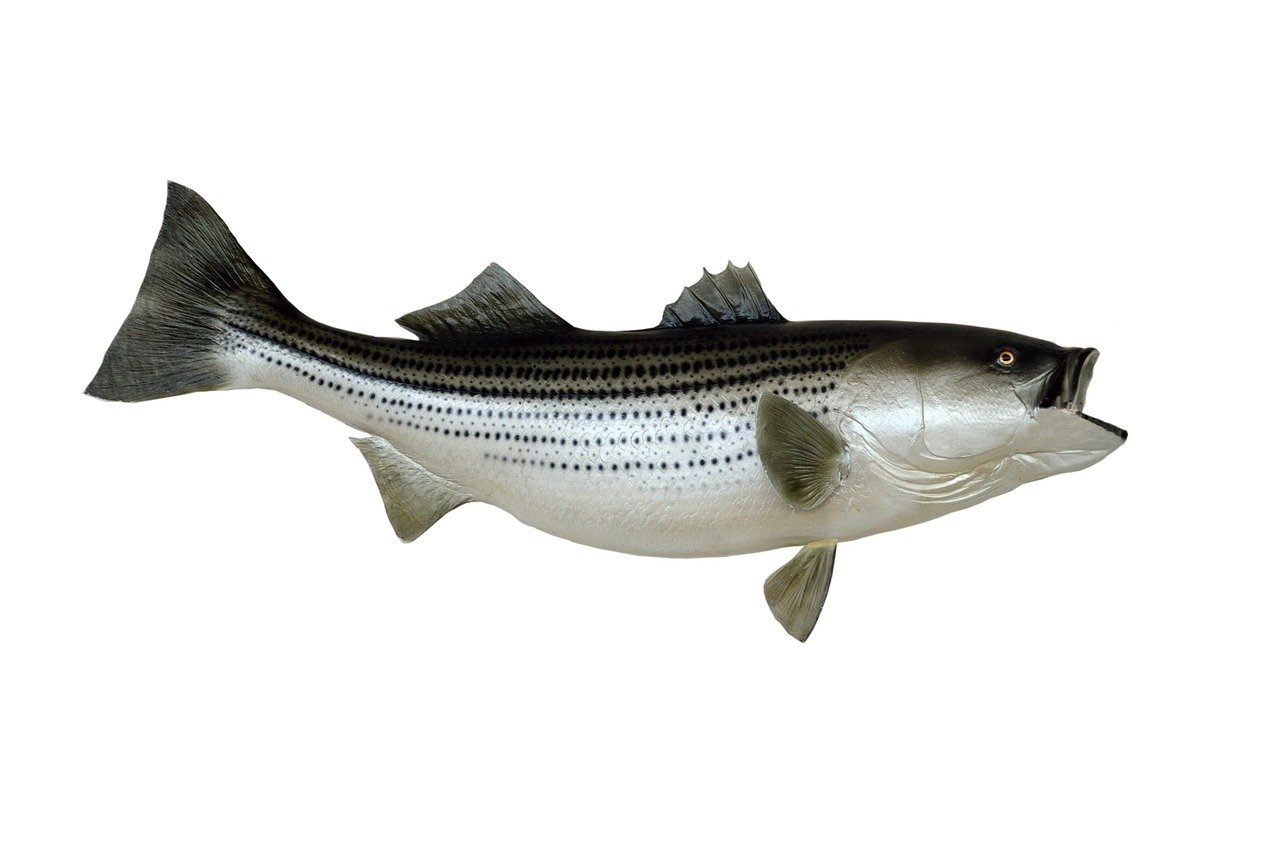
The single most common mistake shoppers make is assuming that every fish labeled “sea bass” is branzino. It is not. “Sea bass” is a loose, international term applied to dozens of unrelated species, from the giant Chilean sea bass (actually a toothfish) to various groupers and rockfish sold under friendlier names.
Branzino is a true temperate bass. So is the North American striped bass (Morone saxatilis), a close relative in the same family but a completely different species with a different flavor profile, different farming history, and different price. When a menu says “local sea bass” in the United States, it may well be striped bass or a hybrid.
| Feature | Branzino (European seabass) | Striped Bass |
|---|---|---|
| Scientific name | Dicentrarchus labrax | Morone saxatilis |
| Family | Moronidae | Moronidae |
| Native range | Eastern Atlantic, Mediterranean, Black Sea | Atlantic coast of North America |
| Typical size | Often 1 to 3 pounds whole | Frequently larger, 3 to 10 pounds |
| Flavor | Mild, sweet, delicate | Fuller, slightly stronger, often described as bass-like |
| Common menu role | Whole roasted or salt-baked | Fillets, grilling, chowder |
The practical takeaway: if you want the delicate, mild fish you enjoyed at a Mediterranean restaurant, ask for branzino by name and ask where it came from. If the answer is vague, you may be getting a substitute.
Why the Name Travels So Poorly
Names for fish are famously unstable. The same species can carry a dozen market names, and regulators, chefs, and fishmongers each have their own habits. Branzino is a textbook case.
First, the spelling wobbles. Menus print “branzino,” “bronzino,” and the plural “branzini” almost interchangeably. Some restaurants use “bronzino” for the same fish, and a few use it for something else entirely. There is no single authority enforcing the spelling on a dinner menu.
Second, the species label is not guaranteed. In the United States, wild-caught fish sold as “sea bass” can legally refer to several different species depending on the region and the market. Farmed fish are easier to trace because they usually come with a country of origin, but the menu name still may not match the scientific name.
Third, translation layers add noise. An Italian menu says branzino; a Greek menu says lavraki; a French menu says loup de mer; a Spanish menu says lubina. All four are the same species. A diner who loved “lavraki” in Athens may not realize they are ordering the identical fish as “branzino” in Chicago.
The Farming Story Behind Most Branzino
Here is a fact that surprises many diners: the branzino on most restaurant plates is farmed, not wild-caught. The European sea bass is one of the most important aquaculture species in the Mediterranean, and Greece and Turkey are among the largest producers. Farming made the fish affordable and available year-round, which is precisely why it spread so quickly through restaurant kitchens.
Mediterranean sea bass farming typically happens in sea cages along sheltered coastlines. Fish are raised from juveniles to market size over roughly a year and a half to two years, depending on water temperature and target size. The result is a consistent product: uniform size, reliable fat content, and a mild flavor that chefs can plan around.
Farming has trade-offs worth knowing. Critics point to nutrient loading in coastal waters, the use of wild-caught fish in feed, and the risk of escapees mixing with wild populations. Supporters point to lower pressure on wild stocks, stable pricing, and steady employment in coastal regions. Certification schemes and improved feed formulations have pushed the industry toward better practices, but standards vary by country and producer.
For shoppers, the practical move is simple: look for a country of origin on the label and, where available, a sustainability rating. A fish labeled “product of Greece” or “product of Turkey” is almost certainly farmed. That is not a red flag by itself, but it is information you should have before you pay premium prices.
How to Buy Branzino Without Getting Burned
Buying branzino well comes down to a few habits that experienced fish buyers use every week.
- Ask for the scientific or species name. A good fishmonger will know whether the fish is Dicentrarchus labrax or something else. If the answer is a shrug, shop elsewhere.
- Check the eyes and gills. Fresh whole fish have clear, slightly bulging eyes and gills that are red or pink, not brown or slimy.
- Press the flesh. It should spring back. A dent that stays put means the fish is past its best.
- Smell it. Fresh branzino smells like clean seawater, not ammonia or fishiness.
- Buy whole if you can. Whole fish keeps better and lets you see exactly what you are getting. Fillets hide a lot.
- Match size to method. A 1 to 1.5 pound fish is ideal for one person when roasted whole. Larger fish work better for salt-crust baking or for filleting.
- Weigh the price against the yield. A whole branzino loses roughly 40 to 50 percent of its weight to head, bones, and trim. A $14-per-pound whole fish can cost more per edible ounce than a $22-per-pound fillet.
A common mistake is buying frozen branzino and thawing it carelessly. Thaw it overnight in the refrigerator, never on the counter, and pat it very dry before cooking. Wet fish will steam instead of sear, and you will lose the crisp skin that makes the fish worth eating.
Cooking Branzino: What Actually Works
Branzino is forgiving, which is part of its appeal. Its flesh is firm enough to hold together on a grill but delicate enough to flake at the touch of a fork.
Whole roasted is the classic. Score the skin a couple of times, stuff the cavity with lemon, garlic, and herbs, and roast at high heat until the flesh near the spine pulls away cleanly. A meat thermometer helps: aim for about 145°F at the thickest point.
Salt-crust baking is the showstopper. The Italian technique known as branzino al sale packs a whole fish in a crust of coarse salt and sometimes egg white, then bakes it. The crust hardens into a shell, the fish steams gently inside, and the result is remarkably moist. Crack the crust tableside for effect, then brush away the salt before serving.
Grilling works best with whole fish or thick fillets. Oil the grate, oil the fish, and resist the urge to move it until it releases naturally.
Pan-searing skin-side down in a hot pan gives crisp skin and juicy flesh, but only if the fish is bone dry and the pan is genuinely hot. Press the fish gently for the first few seconds to keep the skin flat.
What does not work: overcooking. Branzino dries out fast once it passes the flake stage, and because the flesh is mild, dryness is very noticeable. Pull it off the heat a touch early and let it rest.
What Branzino Tastes Like and What to Serve With It
The flavor is mild, sweet, and clean, with a fine flake and moderate fat. It does not taste “fishy” in the strong sense, which is exactly why it appeals to people who claim not to like fish. The skin, when crisped, is one of the best parts.
Because the flavor is gentle, pairings should not overwhelm it. Good choices include:
- Lemon, olive oil, and parsley
- Fennel, raw or roasted
- Tomatoes and capers
- Potatoes roasted in the same pan
- Light white wine, dry and crisp
- Salsa verde or a simple herb sauce
Heavy cream sauces, strong cheeses, and aggressive spice blends tend to bury the fish. Save those for stronger-flavored species.
Nutrition and Sustainability in Plain Terms
Branzino is a lean-to-moderate-fat fish with a solid protein profile. It provides omega-3 fatty acids, though generally less than oily fish such as salmon or sardines. It is also a source of vitamin B12, selenium, and phosphorus. For most people, it fits comfortably into a balanced diet.
On sustainability, the picture is mixed but improving. Farmed Mediterranean sea bass has benefited from better feed and certification, while wild stocks face pressure from fishing and habitat change. Buyers who care about this should look for recognized certification labels and ask their fishmonger for origin details. The Monterey Bay Aquarium’s Seafood Watch program is a widely used reference for current ratings, and it is worth checking before a big purchase.
Common Mistakes and How to Avoid Them
A few errors come up again and again, even among confident home cooks.
- Assuming branzino is always wild. Most of it is farmed. That is fine, but know what you are buying.
- Paying a premium for a substitute. If the fish is not Dicentrarchus labrax, it should not carry a branzino price.
- Skipping the drying step. Moisture is the enemy of crisp skin.
- Overcooking by a minute or two. Mild fish shows overcooking more than strong fish does.
- Ignoring the bones. Whole branzino has a straightforward skeleton, but small pin bones near the top fillet catch people out. Run a finger along the fillet before serving.
- Buying too small. A fish under about three-quarters of a pound is fiddly to bone and yields little meat.
Conclusion
Branzino is one fish with many names and a marketing story attached. It is the European sea bass, a temperate bass native to the Mediterranean and nearby waters, and most of what reaches restaurant plates is farmed in Greece, Turkey, and neighboring countries. The name on the menu is Italian, the science is settled, and the cooking is genuinely forgiving.
The practical approach is to treat branzino as a specific species, not a mood. Ask for the origin, check the eyes and gills, dry the fish thoroughly, and cook it hot and fast. Do that, and the delicate, sweet flesh that made the fish famous can appear on your own table as well as at the restaurant.
Frequently Asked Questions
Is branzino the same as sea bass?
Yes, mostly. Branzino is the Italian name for the European sea bass, Dicentrarchus labrax. The catch is that “sea bass” in English is a loose term used for many species, so not every fish sold as sea bass is branzino. Ask for the species name if you want certainty.
Is branzino a fatty fish?
No. It is a lean-to-moderate-fat fish with firm white flesh. It contains some omega-3 fatty acids but far less than oily fish such as salmon, mackerel, or sardines. That is part of why its flavor is so mild.
Does branzino taste fishy?
Generally no. Branzino has a clean, sweet, delicate flavor that most people find approachable, even those who usually avoid fish. Strong “fishy” flavors usually come from older fish or species with higher oil content, not from fresh branzino.
Is branzino usually farmed or wild?
Most branzino sold in restaurants and fish markets is farmed, largely in Mediterranean countries such as Greece and Turkey. Wild fish are available but less common and often more expensive. Check the label for country of origin.
Can I substitute another fish for branzino?
Yes. Good substitutes include striped bass, red snapper, dorade, and small grouper, all of which have firm white flesh and a mild flavor. Avoid oily fish such as mackerel, which will change the dish completely.
How do I know when branzino is cooked?
The flesh should be opaque and flake easily with a fork, and it should pull away from the backbone cleanly. At the thickest point, an instant-read thermometer should register about 145°F. Pull it off the heat slightly early and let it rest, because mild fish dries out quickly.



