
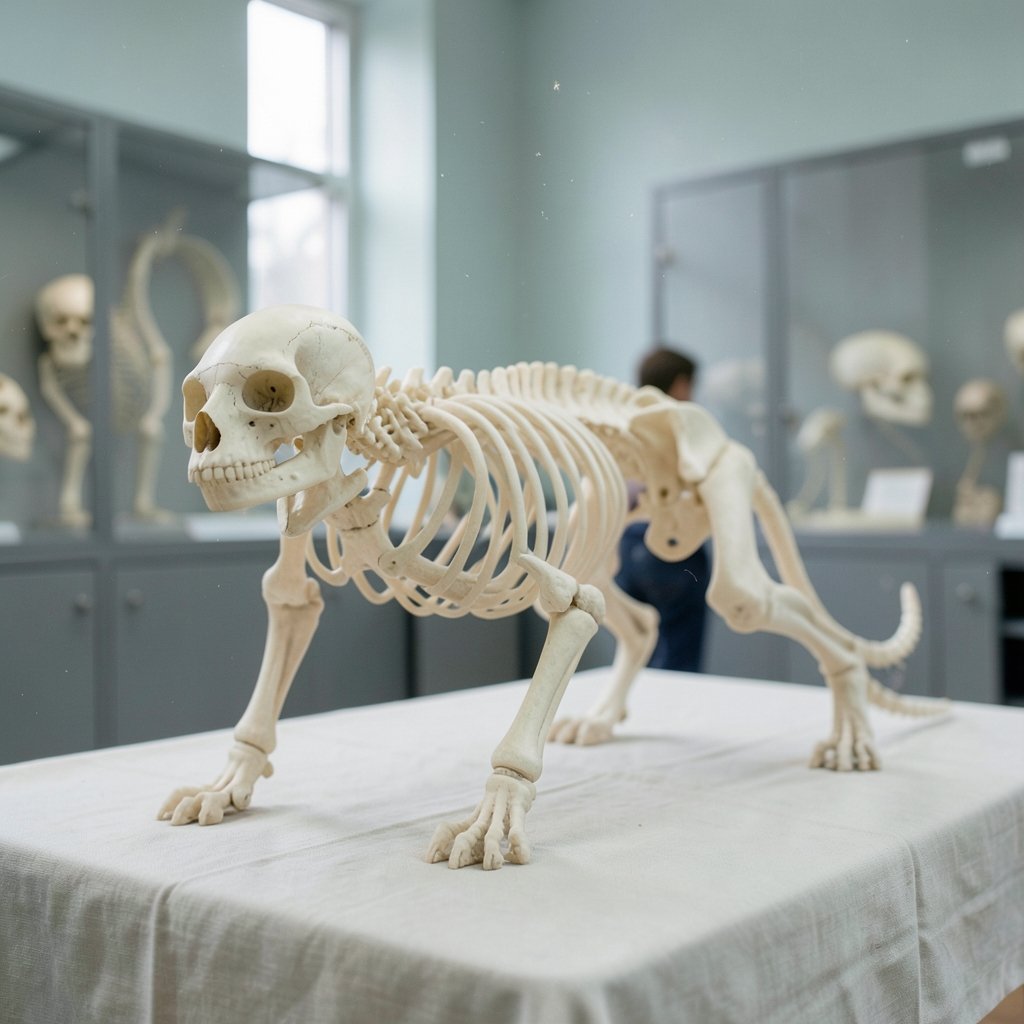
What lets a cat pour itself through a gap the width of its own head, land on its feet from a fall, and creep across a wooden floor without a single creak? The answer sits just under the fur: a cat skeleton built for silence, spring, and shock absorption. Every bone in that frame does a job, and a few of them do jobs no human bone could manage. Understanding this anatomy explains a lot of everyday feline behavior, from the way a cat lands to why its tail matters so much.
How Many Bones Are in a Cat Skeleton?
Most sources put the number at roughly 244, but that figure is a convention rather than a fixed standard. A typical cat skeleton has somewhere between 230 and 250 bones, and the range exists for good reasons. Some bones fuse together as a cat matures, so an older animal may have fewer distinct bones than a young one. Breed also matters, mostly because of the tail.
The tail is the big variable. A long-tailed breed carries many caudal vertebrae, while a Manx cat may have almost none. Since the tail alone can account for around 20 bones, it is easy to see how two healthy cats can end up with noticeably different totals. Anyone quoting an exact number without a range is oversimplifying.
| Region | Approximate count | Main job |
|---|---|---|
| Skull and jaw | About 29 | Brain protection, biting, sensory housing |
| Spine (excluding tail) | About 30 | Flexibility, shock absorption |
| Ribs and sternum | About 25 | Chest protection, breathing |
| Front limbs (both) | About 20 | Spring, swatting, landing |
| Hind limbs (both) | About 28 | Push-off, jumping power |
| Tail | Variable, often about 20 | Balance and communication |
The Spine: A Flexible Chain, Not a Stiff Pole
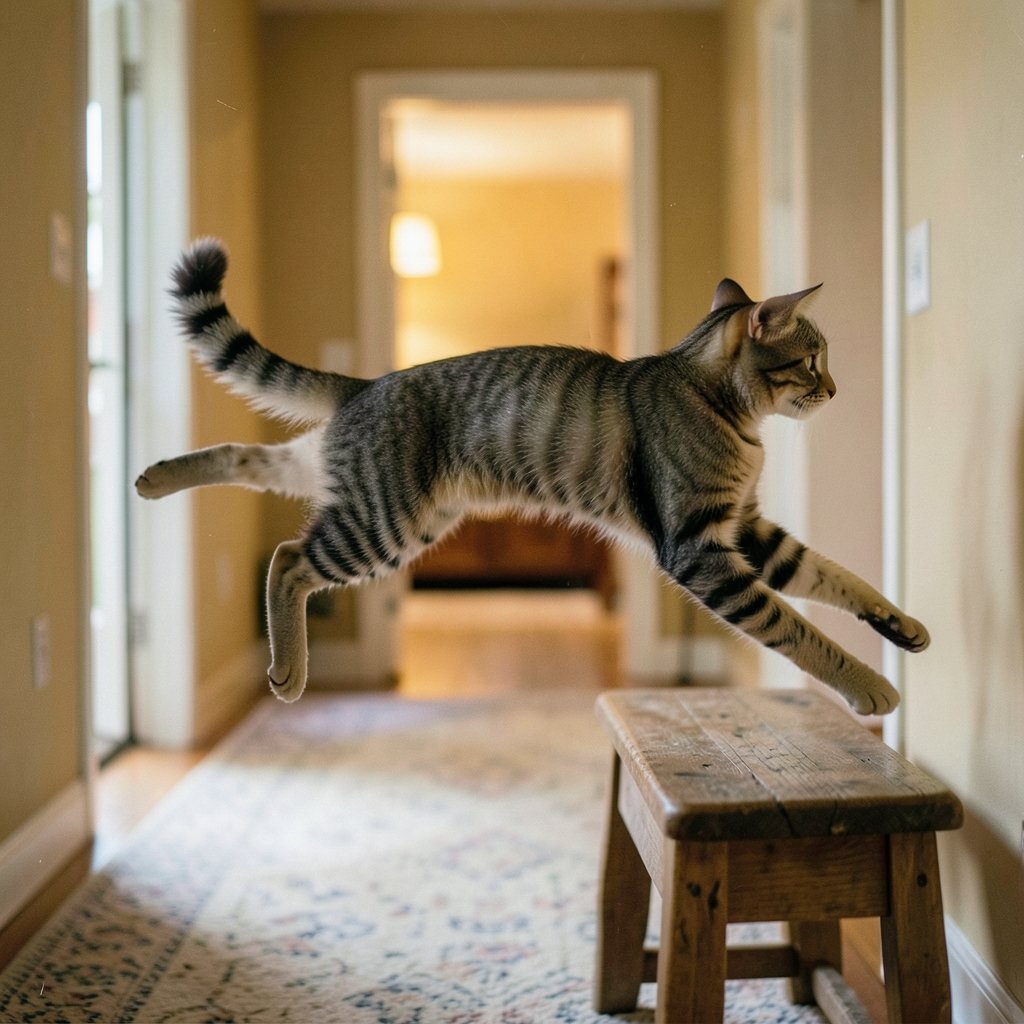
A cat’s spine carries roughly 30 vertebrae before the tail begins: seven cervical, thirteen thoracic, seven lumbar, and three sacral. That is a lot of lumbar vertebrae compared with many mammals, and it is the secret behind the famous feline arch. Elastic intervertebral discs sit between the bones and let the spine compress and stretch like a spring.
This design pays off in two ways. First, it allows the righting reflex, the mid-air twist that lets a falling cat turn its body around. Second, it stores and releases energy during a run, which is why a sprinting cat looks like a Slinky with legs. The same flexibility has a downside: a spine that moves this much can be injured by rough handling, which is one reason cats should be lifted with both hands supporting the chest and hindquarters.
The Floating Collarbone and the Art of Squeezing Through
Here is the detail that surprises most people. A cat’s clavicle, or collarbone, is tiny and not firmly attached to the rest of the skeleton. It floats in muscle rather than locking into a bony joint. In humans, the collarbone anchors the shoulder to the trunk; in cats, the forelimb connects to the body mainly through muscle.
That single difference explains a lot. Free-floating shoulders give the front legs an enormous range of motion, which is why a cat can reach, swat, and climb with such precision. It also lets the shoulders narrow as the animal moves forward, so if a cat’s head fits through a gap, the rest of the body usually follows. The trade-off is stability: cat shoulders are built for mobility rather than heavy load-bearing, which is why cats are not built to carry weight on their backs the way a pack animal is.
Skull, Jaws, and the Teeth of an Obligate Carnivore
The cat skull is short and rounded, with large eye sockets and a sturdy zygomatic arch, the bony bridge at the side of the face that anchors powerful jaw muscles. The lower jaw, the mandible, is a single bone on each side, and the jaw joint works like a hinge with very little sideways grinding motion. Cats shear meat rather than chew it thoroughly, and the skull reflects that.
Teeth tell the same story. A kitten starts with 26 deciduous teeth, which are gradually replaced. An adult cat ends up with 30 permanent teeth, including the long canines for gripping prey and the small incisors between them. The back teeth, the carnassials, work like scissors. This dental setup is a reminder that the cat skeleton is the frame of a hunter, not a grazer, and it explains why dental disease is such a common problem in older cats: a mouth built for tearing meat needs regular care.
Front Legs, Hind Legs, and the Digitigrade Stance
Cats walk on their toes, a posture called digitigrade. What looks like the lower leg is actually a set of elongated foot bones, the metacarpals in front and metatarsals behind, held almost upright. This arrangement lengthens the effective stride without adding bone mass, and it puts a springy, elastic curve in every step. It is also why cats move so quietly: they place only the padded toes on the ground, not the whole foot.
The long bones carry the same names as their human counterparts, which is why the cat skeleton is a favorite teaching model in anatomy classes. The front leg has a humerus, radius, and ulna; the hind leg has a femur, tibia, and fibula. The hindquarters are where the power lives. A cat’s rear legs are packed with muscle and long levers, letting a healthy adult leap several times its own body length from a standstill.
The Tail: Balance Beam and Mood Ring
Tail vertebrae, called caudal vertebrae, vary in number and length by breed, and they do double duty. Mechanically, the tail acts as a counterweight during a jump or a tight turn, and it helps a cat balance on narrow surfaces. Socially, it is a signal flag: a high, relaxed tail reads as friendly, a puffed tail signals alarm, and a quick flick says something is bothering the cat.
Because tail length varies so much, it is the main reason cat bone counts differ between individuals. A tailless breed like the Manx has a shortened or absent tail, while a long-tailed cat may carry more than twenty caudal vertebrae. The tail is also vulnerable. Pulling it, shutting it in a door, or letting a child grab it can cause serious nerve damage, so handling the tail gently is one of the simplest ways to protect a cat’s skeleton.
Growth Plates and Skeletal Maturity
Kittens are not miniature adults. Their bones form with growth plates, soft zones of cartilage near the ends of long bones where new bone is added. These plates gradually close as the cat matures, typically somewhere between one and two years of age depending on the bone and the cat’s sex. Until they close, the skeleton is more vulnerable to injury, and a kitten’s bones can be damaged by a fall that an adult would shrug off.
This matters for anyone raising a young cat. Rough play, high jumps from slippery surfaces, and unsupervised outdoor access all carry more risk during the growth phase. It also matters clinically: veterinarians reading an X-ray look at the growth plates to estimate a cat’s age and to check that development is on track. The practical takeaway is simple: keep kittens off high shelves, provide sturdy scratching and climbing options, and let them build strength gradually.
What Actually Works: Practical Tips for Protecting a Cat’s Skeleton
Knowing the anatomy is useful only if it changes what you do. A few habits make a real difference.
- Support the whole body when lifting. Slide one hand under the chest and one under the hindquarters so the spine is not left hanging.
- Never grab the scruff of an adult cat. It works for tiny kittens, but an adult’s weight strains the skin and neck.
- Keep the tail out of doors and drawers. A tail injury can affect balance and nerve function.
- Watch the waistline. Extra weight loads the joints, especially the hips and spine, and cats hide weight gain well under fur.
- Provide a stable landing zone. Place cat trees away from slick floors and check that shelves can hold a jumping cat.
- Schedule dental checks. With only 30 permanent teeth, a cat has little margin for loss.
A common mistake is assuming a cat always lands safely. The righting reflex is impressive, but it has limits, and falls from height remain a genuine hazard in apartments with unsecured windows. Screens and balcony netting are worth the effort.
How the Cat Skeleton Compares With a Human’s
The comparison is a favorite in anatomy classes because the bone names match, but the differences are what make a cat a cat.
| Feature | Cat | Human |
|---|---|---|
| Total bones | Roughly 230 to 250 | About 206 |
| Collarbone | Small, floating, muscle-anchored | Large, firmly jointed |
| Lumbar vertebrae | Seven | Five |
| Tail | Present, variable length | Absent |
| Stance | Digitigrade (on toes) | Plantigrade (on whole foot) |
| Teeth (adult) | 30 | 32 |
Those extra lumbar vertebrae and the loose shoulder give the cat a range of motion humans simply do not have. The human skeleton favors stability and upright load-bearing; the cat skeleton favors flexibility, speed, and stealth. Neither is better, but only one of them can walk a narrow fence rail without thinking about it.
Why the Skeleton Explains So Much Behavior
Once you know the frame, the behavior stops looking mysterious. The slinky stretch after a nap is a spine working through its range. The head-bump greeting is a cat presenting its skull, the most protected part of its body. The crouch before a pounce is a set of hind legs loading like springs. Even the habit of squeezing into a box far too small makes sense: a body with a floating collarbone and a flexible spine is built to fit into tight spaces.
There is a cultural layer here too. Cats have been read as symbols of luck and fortune for centuries, and that reputation rests partly on the animal’s uncanny physical poise. If the folklore interests you, it is worth reading about what the money cat meaning and beckoning cat really symbolizes and how much of that symbolism leans on the cat’s grace and self-possession.
Conclusion
The cat skeleton is a study in trade-offs. Around 240 bones, give or take, arranged for flexibility over brute strength: a spine that springs, a collarbone that floats, feet that stand on tiptoe, and a tail that steers. Every one of those features shapes how a cat moves, jumps, lands, and even communicates. Understanding the frame does more than satisfy curiosity. It changes how you lift a cat, how you kitten-proof a home, and how quickly you notice when something is wrong. A cat’s body is a precision instrument, and the better you understand it, the better you can care for the animal living inside it.
Frequently Asked Questions
How many bones does a cat have?
Most sources say about 244, but the honest answer is a range of roughly 230 to 250. Bones fuse as a cat matures, and tail length varies by breed, so two healthy cats can have different totals. Treat any single exact number with a little skepticism.
Do cats really have a floating collarbone?
Yes. A cat’s clavicle is small and not firmly attached to the skeleton, so the shoulders connect to the body mainly through muscle. That is what gives cats their huge range of motion in the front legs and lets them squeeze through narrow gaps.
Why do cats land on their feet?
The righting reflex combines a flexible spine, loose shoulders, and a strong sense of balance. A falling cat twists its body in stages to bring its feet underneath it. The reflex is impressive but not a guarantee, which is why window screens and balcony netting still matter.
How many teeth does a cat have?
Kittens have 26 deciduous teeth, and adult cats have 30 permanent teeth. The long canines grip prey and the back carnassial teeth shear meat. Because cats have relatively few teeth, regular dental checks are worth prioritizing.
At what age does a cat’s skeleton stop growing?
Growth plates typically close between roughly one and two years of age, depending on the bone and the cat’s sex. Until then, the skeleton is more fragile, so limiting high-risk jumps and rough play during the first year is a sensible precaution.
Why does my cat’s tail matter so much?
Tail vertebrae act as a counterweight for balance and as a signal for mood. The tail is also delicate and vulnerable to pulls and crushing injuries, which can affect balance and nerve function. Handle it gently and keep it clear of doors and drawers.



