
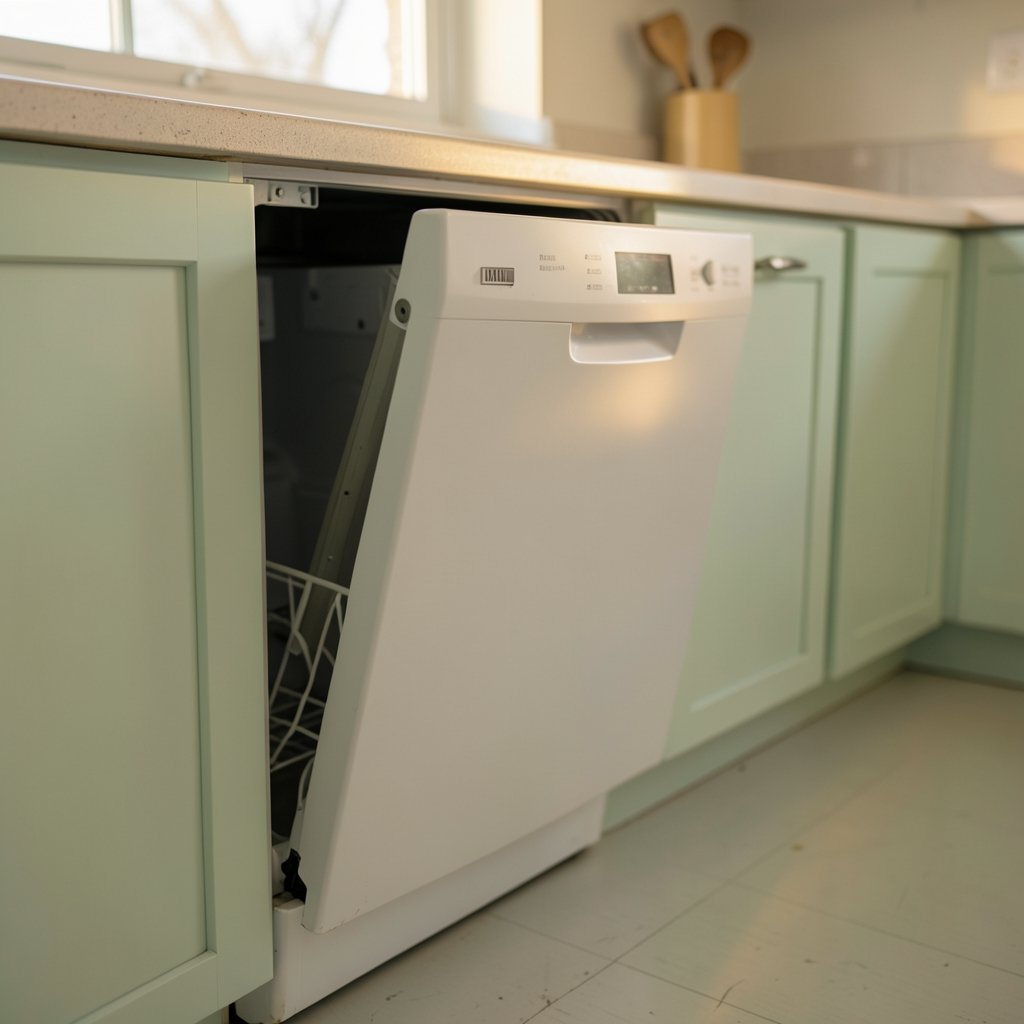
Can a cheap dishwasher actually clean your dishes, or are you just buying a future repair bill with a door on it? That’s the question worth asking before you hand over money, because the answer is more interesting than a simple yes or no. Budget machines have improved a lot, and a careful shopper can walk away with a genuinely good appliance for far less than the flagship models cost. But the savings have to come from somewhere, and knowing exactly where they come from is what separates a smart buy from a slow, noisy regret.
This guide looks at what a cheap dishwasher really is, which features matter, which ones are marketing fluff, and how running costs can quietly undo your bargain. It also covers the mistakes people make most often, the numbers that actually help you compare machines, and what to check before the delivery van arrives.
What “Cheap” Actually Means in Dishwashers
There’s no official price line that divides cheap from mid-range, and anyone who tells you otherwise is guessing. Prices shift by country, by season, and by retailer promotions. The more useful way to think about it is relative: a cheap dishwasher is the lower tier of whatever market you’re shopping in, usually a machine that strips out extras rather than core cleaning ability.
That distinction matters. A budget model still has a pump, a heating element, spray arms, and a filter. What it often lacks is the quiet insulation, the third rack, the fancy sensor array, the stainless steel tub, and the app connectivity. Those are real differences, but most of them affect convenience and comfort more than whether your plates come out clean.
The one place where cheap models genuinely vary is build quality. Some budget machines use plastic tubs and lighter components that may not last a decade. Others use solid internals and simply skip the frills. The trick is telling them apart without taking the machine apart in the store.
The Labels That Do the Real Talking
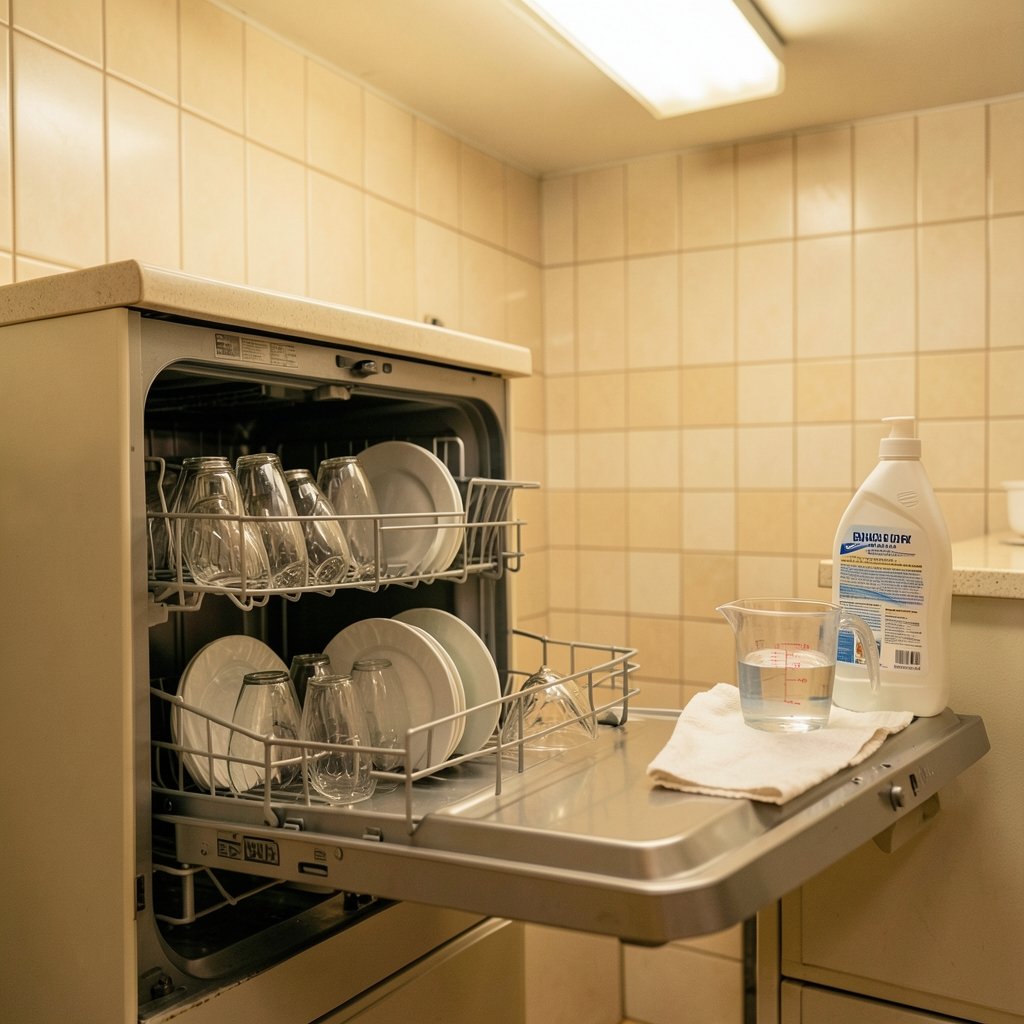
Energy labels are the single most useful tool a budget shopper has, and most people barely glance at them.
In the EU and UK, dishwashers moved to a stricter A to G label in March 2021. The old A+++ ratings disappeared, so a C on the new label is roughly comparable to an old top rating. If you’re comparing a cheap machine against an older model you already own, that rescaling explains a lot of apparent downgrades.
In the US, Energy Star certification means a dishwasher is meaningfully more efficient than the federal minimum standard. The exact percentage above the standard has shifted across versions of the criteria, so it’s worth checking the current specification rather than trusting a number you remember.
Two figures on the label do most of the work:
| Label figure | What it tells you | Why it matters for a cheap buy |
|---|---|---|
| Energy per 100 cycles (kWh) | Electricity used over a typical year of washes | Small gaps compound over a decade |
| Water per cycle (litres or gallons) | Water consumed in a normal cycle | Affects both bills and environmental footprint |
| Noise in dB(A) | How loud the machine runs | Cheap models often sit at 45 to 52 dB(A) |
| Noise class | Letter grade for quietness | Below about 44 dB(A) counts as genuinely quiet |
Modern full-size dishwashers typically use roughly 9 to 13 litres (about 2.5 to 3.5 US gallons) per normal cycle. Older or very cheap designs can use more. That range is worth remembering, because it’s the difference between a machine that sips water and one that gulps it.
Where Budget Machines Cut Corners
Manufacturers aren’t charities. If a dishwasher costs a lot less, something was removed or downgraded. Here’s what to look for, in rough order of how much it affects daily life.
Noise and insulation
This is the most common sacrifice. Cheap machines often skip sound-deadening blankets and heavier tub insulation, which is why they hum along at 45 to 52 dB(A). In a separate kitchen that’s fine. In an open-plan living space, it’s a nightly annoyance. If your kitchen opens onto the living room, noise deserves more of your budget than any other feature.
Tub material
Stainless steel tubs hold heat better, resist staining, and tend to last longer. Plastic tubs are cheaper to make and common in budget models. They’re not automatically bad, but they retain odors more readily and can discolor over time.
Drying performance
Cheap dishwashers often rely on residual heat rather than a fan-assisted or zeolite drying system. The result is more water left on plastic items, which don’t hold heat the way ceramic does. If you mostly wash plastic containers and kids’ cups, expect to hand-dry some of them.
Rack flexibility
Adjustable racks, folding tines, and third cutlery racks are frequent casualties of cost-cutting. None of them affect cleaning, but they affect how much you can fit in one load, and fewer loads per week is a real saving.
Sensors and cycles
Budget machines tend to offer fewer automatic programs. A soil sensor that adjusts water and time based on how dirty the load is can save energy, but simpler timed cycles are predictable and easy to live with. Fewer options is not automatically worse.
The Running Cost Trap
Here’s where a bargain can turn sour. Over a typical ten-year life, electricity and water costs can exceed the price gap between a cheap machine and a mid-range one. The purchase price is a one-time hit. Running costs arrive every month.
Do a rough calculation before you buy. Take the annual energy figure from the label, multiply by your local electricity rate, and multiply again by the years you expect to keep the machine. Then do the same for the model one tier up. Sometimes the cheaper machine wins outright. Sometimes the gap closes to almost nothing, and at that point you’re choosing between a noisier machine and a quieter one for the same lifetime money.
Water matters too, but usually less. If your water is metered and expensive, the per-cycle figure deserves a closer look. If it isn’t, energy is the number that counts.
One more cost people forget: detergent and rinse aid. Budget machines sometimes need hotter cycles or extra rinse aid to get glassware spot-free, and running a heavy cycle every time because the eco program underperforms wipes out the efficiency advantage. Read the manual, use the eco setting, and load properly. Most “my dishwasher doesn’t clean” complaints trace back to loading and detergent, not the machine.
Repair Rights, Warranties, and the False Economy
A cheap dishwasher is only a false economy if it fails early and can’t be fixed affordably. Two things protect you here.
The first is spare parts availability. In the EU, ecodesign rules that took effect in March 2021 require manufacturers to make certain spare parts available for household dishwashers for a set period and to provide repair information. The exact durations are often misquoted online, so check the regulation text itself rather than a forum post. In the US, right-to-repair legislation has been spreading at state level since 2023, but appliance coverage varies, so check your own state’s rules.
The second is warranty terms. Most budget dishwashers carry a one to two year limited warranty, and “limited” is doing real work in that sentence. It typically covers manufacturing defects, not wear items or labor after a certain point. Extended coverage is often sold separately and rarely pays off on a machine that already cost little.
Practical rule: before buying, look up the model number and see whether parts are listed for sale and whether independent repairers will touch it. If the answer is no on both counts, you’re buying a disposable appliance. That’s a legitimate choice for a rental unit or a short-term kitchen, but it should be a deliberate one.
Practical Buying Tips That Actually Work
These are the habits that separate happy budget buyers from frustrated ones.
- Measure the gap before anything else. Width, height, depth, and door swing. A cheap machine that doesn’t fit is an expensive mistake.
- Check the noise figure, not the marketing. Look for the dB(A) number on the spec sheet. Under 44 is quiet, 45 to 52 is normal for budget, above 52 is noticeable.
- Read the energy label properly. Compare kWh per 100 cycles between the two or three models you’re actually considering, not across the whole store.
- Confirm the cycle time. Some eco programs run three hours or more. If you cook late and want dishes done before bed, check.
- Look for a cutlery basket or third rack. Small detail, big daily impact.
- Check water hardness in your area. Hard water plus a budget machine means more salt and rinse aid, and possibly faster limescale buildup.
- Buy from a retailer with a real return policy. Budget models have higher unit-to-unit variation, and a dead-on-arrival machine is much easier to deal with in the first thirty days.
If you’re outfitting a whole kitchen on a budget, the same discipline applies elsewhere. The logic behind choosing a cheap tablet that still does the job or budget earbuds that actually deliver is identical: identify the features that matter, ignore the ones that don’t, and check the running costs. The same goes for picking an electric pressure washer for real household work rather than paying for specs you’ll never use.
Common Mistakes People Make
The most frequent error is buying on sticker price alone. A machine that costs a little more but uses noticeably less energy per cycle can be the cheaper appliance by year three.
The second is overestimating what features deliver. Sensor-driven programs and app controls sound impressive and rarely change how clean your dishes are. Quiet operation, a sensible rack layout, and a decent filter are the things you’ll notice every single day.
The third is skipping installation costs. Delivery, old machine removal, plumbing adjustments, and cabinetry trimming can add a meaningful sum. Budget for them before you commit.
The fourth is ignoring maintenance. Clean the filter weekly, run a hot maintenance cycle monthly, and use the right amount of salt in hard-water areas. A well-maintained cheap dishwasher will outlast a neglected premium one, every time.
And if you’re also sorting out laundry while you’re at it, the same principles apply. Understanding what each clothing care label symbol actually means prevents the kind of damage no warranty will cover, and knowing when commercial-grade durability is worth paying for helps you decide where to spend and where to save.
Conclusion
A cheap dishwasher is not a compromise so much as a trade. You give up silence, some flexibility, and often a stainless tub. You keep clean dishes, a lower upfront bill, and money left for the things that matter more. The buyers who end up happiest are the ones who read the energy label, check the decibel rating, measure the gap, and do a rough ten-year running cost before they commit.
Buy for the kitchen you actually have, not the showroom fantasy. If your kitchen is closed off and your budget is tight, a basic machine at 48 dB(A) will serve you well for years. If the dishwasher sits beside the sofa, spend the extra on quiet. Either way, the numbers on the label will tell you more than the badge on the door.
Frequently Asked Questions
Are cheap dishwashers worth buying?
Often, yes, provided you check three things: the energy figure per 100 cycles, the noise rating in dB(A), and whether spare parts are available for that model. A budget machine that scores well on all three is a sensible buy. One that’s cheap because it’s inefficient and unfixable is not.
How much noise is normal for a budget dishwasher?
Most budget models run at around 45 to 52 dB(A). Anything below about 44 dB(A) counts as genuinely quiet and usually costs more. If your kitchen is open to a living area, treat noise as a priority rather than an afterthought.
Do cheap dishwashers use more water and electricity?
Not necessarily, but the spread is real. Modern full-size machines typically use roughly 9 to 13 litres per normal cycle. Budget models can sit at the higher end of that range. The energy label’s per-100-cycles figure is the honest comparison, so use it rather than assuming.
How long should a cheap dishwasher last?
It depends far more on build quality and maintenance than on price. Cleaning the filter regularly and running a monthly hot cycle does more for lifespan than any single feature. Check spare parts availability before buying, because a machine that can’t be repaired is a machine with a shorter practical life.
Is it better to buy a cheap new dishwasher or a used mid-range one?
A used mid-range machine can be excellent value if it’s recent, has a documented service history, and parts are still available. The risk is inheriting someone else’s problem. A cheap new machine comes with a warranty and known history. Weigh the warranty against the build quality and decide based on how long you plan to stay.
What should I check before the dishwasher is delivered?
Measure the cabinet gap in all three dimensions, confirm the door can open fully, check whether the old machine removal is included, and verify the connection type matches your plumbing. Also confirm the retailer’s return window. Doing this before delivery avoids the most common and most avoidable budget-buying headache.



