
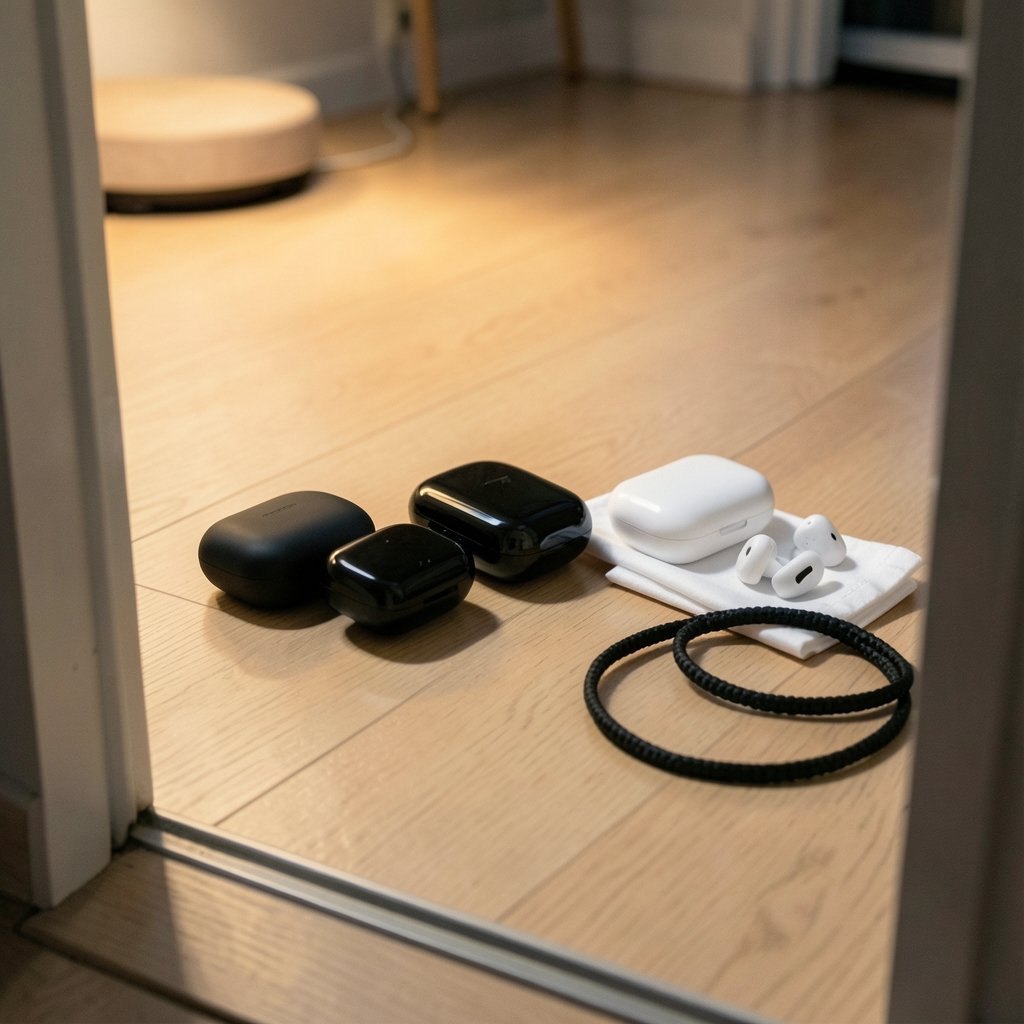
Wireless earbuds have quietly become one of the fastest-commoditizing categories in consumer tech. A decade ago, a decent pair cost $150 or more. Today, the sub-$50 segment is the volume leader in unit sales across most major retailers, and the gap between “cheap” and “cheap-looking” has never been wider. The catch: the category is also crowded with lookalike models that share the same factory shell, the same spec sheet, and wildly different real-world performance. This guide cuts through that noise and focuses on what you can genuinely expect for under fifty dollars.
Why $50 Is the New Sweet Spot
The economics of audio hardware have shifted fast. Bluetooth chipsets that once cost $8 now cost under $1 at volume, and battery cells have improved in both density and safety. That means the basic building blocks of a working pair of earbuds are now cheap enough that manufacturers can spend their margin on the parts that actually matter to listeners: the driver, the microphone array, and the fit. (Radio Frequency Safety)
What you are not paying for at this price is premium active noise cancellation. Real ANC requires dedicated silicon, multiple microphones, and careful tuning, and that combination still costs more than $50 to build well. Budget “ANC” modes exist, but most of them simply boost the bass and call it a day. If noise cancellation is your priority, expect to double your budget. If you mostly listen in quiet environments, commute on foot, or work from home, the sub-$50 tier is genuinely capable.
The other thing $50 buys you now is codec support. Several budget models ship with AAC, and a few include higher-bitrate options. That matters more than most spec sheets admit: a well-tuned single driver with AAC will sound better than a poorly tuned dual-driver setup with a fancy codec it cannot actually exploit.
What Actually Matters (and What Doesn’t)

Before comparing models, it helps to know which specs are meaningful and which are marketing.
| Feature | Worth caring about? | Why |
|---|---|---|
| Battery life (buds + case) | Yes | 6+ hours per charge is the practical floor |
| Bluetooth version | Somewhat | 5.2+ improves connection stability, not sound |
| Driver size | Rarely | Tuning matters far more than diameter |
| IPX rating | Yes | IPX4 handles sweat and light rain |
| “ANC” at this price | Skeptically | Often just EQ, not real cancellation |
| Multipoint pairing | Yes, if you work | Switching between phone and laptop is huge |
| App with EQ | Yes | Lets you fix the tuning to your taste |
The single most underrated factor is fit. Earbuds that do not seal properly lose bass, leak sound, and force you to turn up the volume, which drains the battery and hurts your ears over time. A $30 pair with the right ear tips will outperform a $50 pair that never seals. Most budget models ship with three tip sizes; if none of them fit, aftermarket foam tips cost under $10 and are the best upgrade you can make.
The Categories That Deliver
Rather than list models that will be discontinued by the time you read this, it is more useful to understand the four archetypes that consistently perform well under $50.
The value-brand workhorses
Brands like JLab and Anker’s Soundcore line have built their reputation on this exact price tier. Their models typically offer solid battery life, a usable app with EQ, and a no-frills design. They are the safest default for most buyers because the software support and warranty are real. If you want a broader comparison of what the budget tier looks like across brands, a roundup of the best budget earbuds under 50 is a good starting point. (Headphones)
The phone-platform picks
If you use an Android phone, pairing and firmware updates tend to go more smoothly with buds tuned for Android. The best earbuds for Android roundup covers the models that handle fast pairing and codec support properly. The tradeoff is that buds tuned for Android often work less gracefully with other devices.
The call-focused models
Microphone quality is where cheap earbuds most often fall apart. A single-mic design with no beamforming will make you sound distant and echoey on calls. Models built for meetings usually include a stem design (which puts the mic closer to your mouth) and some form of noise reduction on the mic path. If you spend your day on video calls, the best earbuds for phone calls and meetings picks are worth checking before you buy anything else.
The open-style and clip-on options
A newer sub-category, open-ear and clip-on buds, has dropped below $50. They trade isolation for situational awareness, which makes them popular with runners and cyclists. The catch is bass: without a seal, low frequencies largely disappear. Buy these for safety and comfort, not for sound quality.
How to Test Earbuds Before the Return Window Closes
The most common mistake buyers make is judging a new pair in the first ten minutes. Your ears and brain need time to adjust, and the factory tuning is often bass-heavy in a way that sounds impressive briefly and fatiguing after an hour.
Here is a practical routine that works in practice:
- Try every ear tip size in both ears. Your ears are probably not the same size, and a mismatched seal is the number one cause of “these sound thin.”
- Play a familiar track you have heard a hundred times. You are listening for whether details you know are still there, not for whether it sounds exciting.
- Make a real phone call to a friend and ask how you sound. Do this on day one, not day twenty-nine.
- Walk around your home and test the connection through a wall or two. Dropouts show up in real environments, not at your desk.
- Drain the battery fully once, then time a full charge. Advertised numbers are often measured at low volume.
- Check the app for firmware updates and EQ. Many budget buds ship with mediocre default tuning that a five-minute EQ adjustment fixes.
Keep the packaging and receipt until you have done all six. Most retailers give you at least two weeks, and a defect that shows up in week three is far more common at this price than at the premium tier.
Where Cheap Earbuds Genuinely Fall Short
Honesty matters here. Under $50, you should expect compromises in a few specific places.
Microphone performance in wind and crowds is the biggest one. Even good budget buds struggle when there is background noise, because the mic array is small and the processing is basic. If you take calls outdoors, a model with a stem and a dedicated voice-isolation mode is worth prioritizing.
Latency for gaming is another. Standard Bluetooth audio adds delay that is fine for music and video (where the phone compensates) but noticeable in mobile games. Some buds include a low-latency mode; check before buying if you play competitively.
Durability over years is the quiet one. Battery cells in budget buds degrade faster than in premium models, and the buds are usually not repairable. Expect two to three years of daily use before capacity drops noticeably. That is not a defect; it is the tradeoff you accepted for the price.
Comfort for small ears is hit or miss. The housing on budget models is often bulkier because the components are less miniaturized. If you have had trouble with earbuds falling out, look for a model with a smaller nozzle and include foam tips in your budget.
Cheap Earbuds as Part of a Bigger Setup
It is worth remembering that earbuds are rarely the only thing people buy. Many buyers pair a budget set of buds with a budget tablet for streaming, or with a budget gaming PC for voice chat. If you are building out a low-cost setup, the best cheap tablet and the best gaming PC under 1000 guides cover the other end of that equation. The point is that a $40 pair of earbuds does not need to be a compromise if the rest of your gear is chosen with the same discipline.
For buyers who want a bit more headroom, the best wireless earbuds under 200 tier is where real ANC, better mics, and multipoint pairing start to appear. The jump from $50 to $100 buys more than the jump from $100 to $200, in most cases.
Common Buying Mistakes to Avoid
A few patterns show up again and again among disappointed budget buyers.
- Buying on spec sheet alone. Driver size and “HiFi” labels mean nothing without tuning. Reviews that measure frequency response are more useful than any marketing copy.
- Ignoring the return policy. The best earbuds under $50 are the ones you can actually return if the fit is wrong.
- Assuming ANC at this price is real. It usually is not. Do not pay a premium for a feature that does not work.
- Skipping the app. A surprising number of buyers never open the companion app, which is where EQ, firmware, and button customization live.
- Overpaying for brand names. A recognizable logo at $49 does not guarantee better sound than an unfamiliar one at $29. The internals are often closer than the price gap suggests.
Conclusion
The best cheap earbuds under 50 are not a single model; they are a category that has matured to the point where most buyers can find something genuinely good. The winning strategy is to prioritize fit, microphone quality, and app support over spec-sheet bragging rights, and to test thoroughly inside the return window. Buy for the way you actually listen, not for the way the marketing department imagines you do. If you get the seal right and pick a model with real software support, a $40 pair will serve you well for years, and you will not miss the premium tier nearly as much as you expect.
FAQ
Are cheap earbuds under $50 worth buying?
Yes, for most everyday use. The sub-$50 tier now offers solid battery life, decent sound, and usable apps. The main compromises are microphone quality in noisy places and the absence of real active noise cancellation.
Do any earbuds under $50 have real active noise cancellation?
Rarely, and usually weakly. Most “ANC” modes at this price are EQ tricks that boost bass and lower treble. If noise cancellation is essential, budget closer to $100 or more.
How long do budget earbuds last?
With daily use, expect roughly two to three years before battery capacity drops noticeably. The buds are generally not repairable, so treat them as a consumable rather than a long-term investment.
What is the most important feature to check before buying?
Fit. A proper seal determines bass response, isolation, and how loud you need to turn up the volume. Try every included ear tip size, and consider aftermarket foam tips if none seal well.
Can cheap earbuds be good for phone calls?
Some can, especially stem-style models with a dedicated mic array and voice-isolation mode. Test a real call on day one and ask the person on the other end how you sound before the return window closes.
Should I buy earbuds with an app?
Yes, if the app offers EQ and firmware updates. A five-minute EQ adjustment often fixes the mediocre default tuning that budget buds ship with, and firmware updates can resolve connection bugs.



