
Quick Answer: What is quantum computing explained simply?
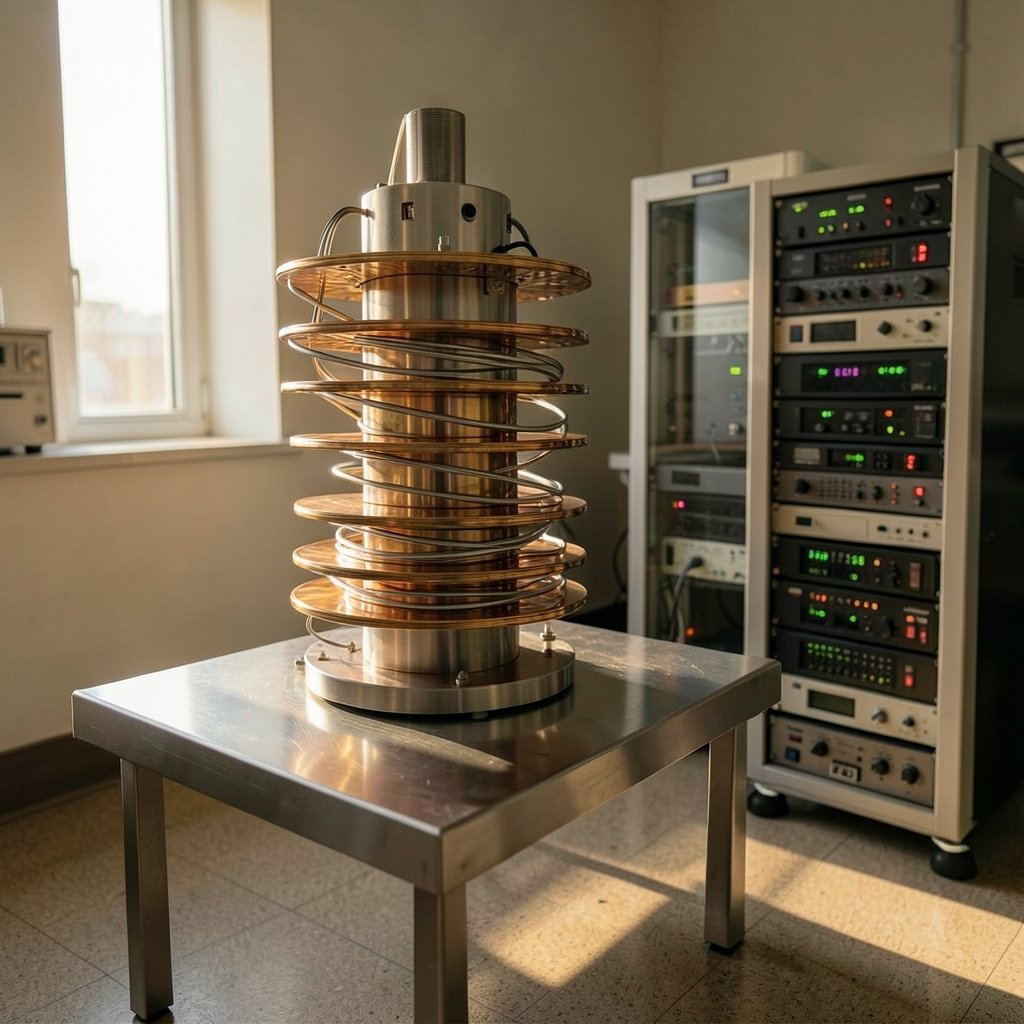
A quantum computer is a machine that processes information using qubits, which can hold a blend of 0 and 1 at the same time instead of being locked to one or the other. That single difference lets certain calculations run in ways ordinary computers cannot match.
It is not a faster version of your laptop. It is a specialist tool built for a narrow set of problems: simulating molecules, factoring large numbers, and searching huge spaces of possibilities. For email, spreadsheets, and video calls, classical machines remain the right choice.
Before you invest time or money in the field, compare hardware type, qubit error rates, connectivity between qubits, software support, access model, and realistic use cases.
In 1981, physicist Richard Feynman stood up at a conference and asked a question that sounded almost naive: could a computer be built that follows the rules of quantum physics itself? Four decades later, that question has grown into a global industry, billions in funding, and a race between governments and tech giants. Yet most explanations of the field either drown readers in math or wave their hands and say “it’s magic.” Neither helps. What follows is the plain version, including the parts that are genuinely hard.
The core idea: bits versus qubits
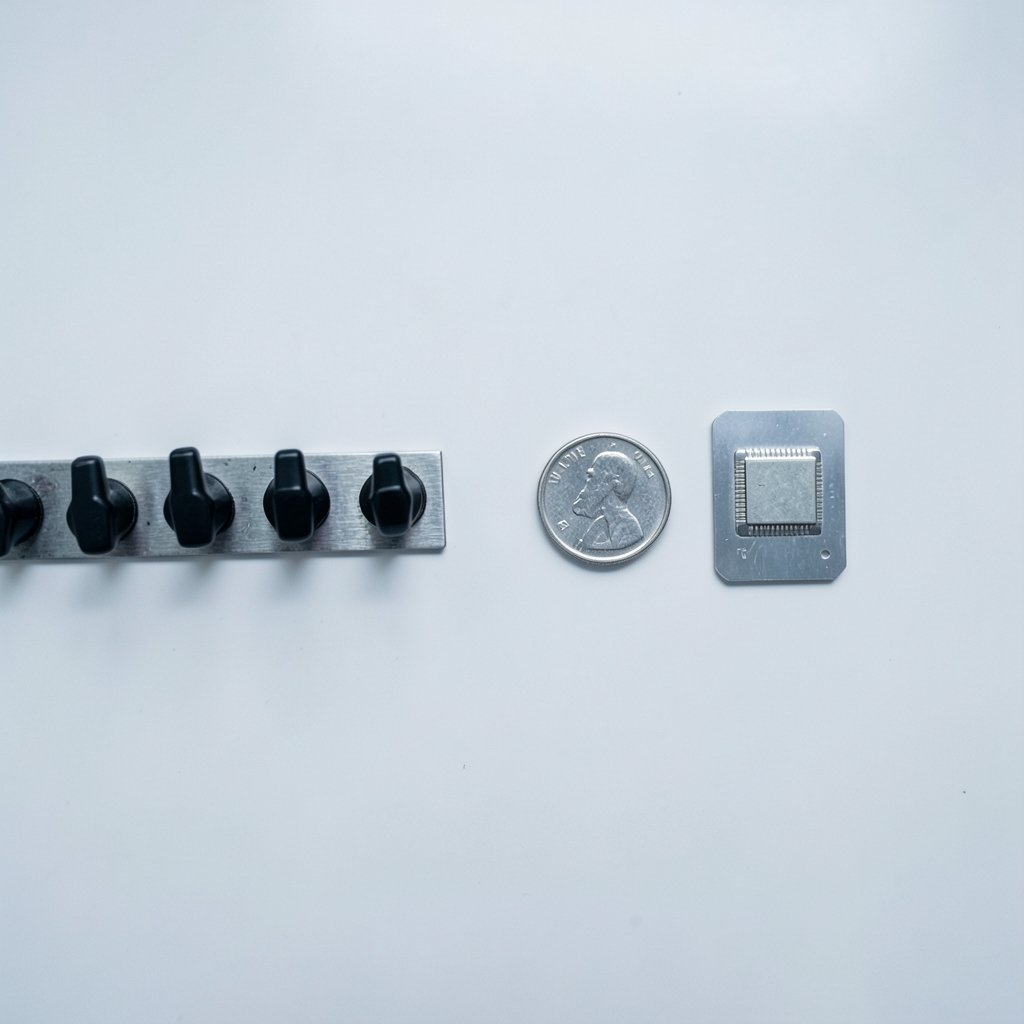
A classical computer thinks in bits. Each bit is a switch, either off (0) or on (1). Every photo, message, and spreadsheet you have ever opened is, underneath, a long string of those switches flipping in patterns.
A quantum computer uses qubits. A qubit can be 0, can be 1, or can sit in a superposition of both at once, much like a coin spinning in the air before it lands. This behavior matters beyond a simple demonstration. When many qubits work together, the number of possible states grows exponentially. Two qubits hold four states, three hold eight, and by the time you reach 300 qubits the count exceeds the number of atoms in the observable universe.
That is why the field attracts so much attention. It is also why the hype gets out of hand, because raw state count means nothing if you cannot read the answer out.
Entanglement and interference: the two ideas most explanations skip
Entanglement links qubits so that measuring one instantly tells you something about another, no matter the distance. It is the resource that lets quantum machines coordinate across many possibilities at once.
Interference is the part that actually does the work, and it is the piece most simple explanations leave out. Quantum algorithms are designed so that the amplitudes of wrong answers cancel each other out while correct answers reinforce. Without interference, a quantum computer would just be a very expensive random number generator. If you want the deeper mechanics, this breakdown of what quantum computing is and how it works walks through the physics step by step.
Where the idea came from
Feynman’s 1982 paper “Simulating Physics with Computers,” published in the International Journal of Theoretical Physics, is usually treated as the founding document. His argument was practical rather than philosophical: classical computers struggle to simulate quantum systems because the math grows explosively, so perhaps we should build computers out of quantum systems instead.
The field then sat largely theoretical until 1994, when Peter Shor published an algorithm showing that a quantum computer could factor large numbers exponentially faster than any known classical method. Since RSA encryption, which protects much of the internet, depends on factoring being hard, Shor’s result turned a curiosity into a strategic priority. Two years later, Lov Grover added a search algorithm offering a quadratic speedup for unstructured search. Those two results, plus Feynman’s vision, remain the intellectual backbone of the field.
What quantum computers are actually good at
Here is where expectations usually need recalibrating. Quantum machines are not general-purpose speed machines. They are specialists, and the list of problems where they theoretically win is short but valuable.
| Task | Classical approach | Quantum approach | Realistic status |
|---|---|---|---|
| Simulating molecules and materials | Approximations that get very expensive | Native fit for quantum systems | Most promising near-term use |
| Factoring large numbers (breaking RSA) | Effectively impossible at scale | Shor’s algorithm, exponential speedup | Needs fault tolerance, years away |
| Searching unsorted data | One check at a time | Grover’s algorithm, quadratic speedup | Modest but real advantage |
| Optimization problems | Heuristics that often work well | Unclear advantage | Contested, heavily researched |
| Everyday business software | Fast and cheap | No advantage | Not a use case |
The chemistry row deserves emphasis. Drug discovery, battery design, and fertilizer production all hinge on molecular behavior that classical computers approximate clumsily. This is the same frontier driving the Zuckerberg Chan CZI Biohub AI biomedical shift, where computational power and biology increasingly overlap. Quantum simulation could eventually make those models dramatically sharper.
Why error correction is the real bottleneck
Ask a working quantum engineer what keeps them up at night and the answer is almost always decoherence. Qubits are fragile. Heat, vibration, stray electromagnetic fields, even the act of measuring them can knock a qubit out of its delicate state. The longer a calculation runs, the more likely it collapses into noise.
The fix is quantum error correction, which spreads one reliable “logical” qubit across many physical ones so that errors can be detected and corrected. The catch is the overhead. Depending on hardware quality, a single logical qubit might require hundreds or thousands of physical qubits. This is why headline qubit counts are so misleading: a 1,000-qubit machine with high error rates may be far less capable than a 100-qubit machine with excellent fidelity and connectivity.
The theoretical foundation for this was laid in the mid-1990s, when Shor and Andrew Steane independently showed that error correction was possible in principle. Turning that principle into engineering is the defining challenge of the field.
The hardware race, in plain terms
Several completely different technologies are competing, and none has won.
Superconducting circuits are the most mature approach, used by Google and IBM. They operate at temperatures colder than deep space and are built with chip-fabrication techniques, which helps them scale.
Trapped ions use individual atoms held by electromagnetic fields. They are slower but extremely precise, with high fidelity and good connectivity.
Neutral atoms and photonic systems offer different trade-offs in scaling and networking, and both have produced notable demonstrations.
Spin qubits in silicon aim to piggyback on the world’s existing semiconductor manufacturing base.
The honest summary is that relative standings shift every few months. Anyone who tells you one approach has definitively won is selling something.
Supremacy, advantage, and what the headlines really mean
In 2019, Google announced it had achieved “quantum supremacy” with a processor called Sycamore, completing a sampling task in minutes that would take a classical supercomputer thousands of years. IBM pushed back within days, arguing that with enough disk storage and smarter classical techniques, the same task could be done in days rather than millennia.
This exchange captures the field’s central communication problem. The demonstrations are real and impressive, but they are narrow. They prove a machine can do something a classical computer struggles with, not that it can do anything useful. Many researchers now prefer the term “quantum advantage” precisely because “supremacy” overstates the case.
In 2018, physicist John Preskill coined the term NISQ, meaning noisy intermediate-scale quantum, to describe the era we are in: machines with enough qubits to be interesting but too much noise to be fault-tolerant. That framing remains the most accurate description of where the industry stands. For a fuller comparison of where the two paradigms diverge, this look at quantum computing vs classical computing lays out the trade-offs side by side. (Quantum computing)
Common mistakes people make when learning about this field
A few traps catch almost everyone new to the subject.
Counting qubits instead of measuring quality. Error rate, coherence time, and qubit connectivity matter more than raw counts. Vendors rarely lead with those numbers.
Assuming quantum replaces classical. It does not. Quantum machines will likely act as accelerators attached to classical systems, handling specific subroutines while ordinary processors do everything else.
Believing the timeline hype. Predictions for cryptographically relevant machines range from a decade to several decades, and experts disagree sharply. Anyone offering a precise date is guessing.
Confusing quantum computing with quantum-inspired software. Some classical algorithms borrow quantum math and run on ordinary hardware. That is useful, but it is not quantum computing.
Ignoring the security angle. Organizations storing sensitive data today should already be planning for post-quantum cryptography, because encrypted data captured now could be decrypted later.
Those last two points connect to a broader trend: the boundary between quantum, AI, and cloud infrastructure is blurring fast. The same forces reshaping Apple private cloud compute and Google cloud in 2026 are shaping how quantum resources will eventually be delivered, most likely as rented cloud services rather than machines in a basement.
What actually works if you want to engage with the field
For the curious, the practical path is straightforward. Start with the concepts, not the hardware: superposition, entanglement, interference, and measurement. Then learn one algorithm properly, usually Grover’s, because it is intuitive and needs less math than Shor’s.
For developers, cloud access is the realistic entry point. IBM, Amazon, and Microsoft all offer quantum simulators and real hardware time through their platforms, often with free tiers. Running a five-qubit circuit in a simulator costs nothing and teaches more than a month of reading.
For businesses, the sensible move is a watching brief rather than a budget line. Track which problems in your industry are quantum-shaped, keep encryption inventories current, and resist vendor pressure to buy “quantum-ready” products that do not yet solve anything. The intersection of quantum computing and artificial intelligence is worth monitoring closely, since that is where speculative interest currently runs hottest. (What is quantum computing?)
Conclusion
Quantum computing is best understood as a fundamentally different way of processing information, not a faster version of what already exists. Qubits, superposition, entanglement, and interference combine to create machines that could one day crack problems classical computers cannot touch, from molecular simulation to the factoring that underpins modern encryption.
The honest caveat is that the field is still in its noisy, error-prone adolescence. Real machines exist, real demonstrations have happened, and real money is flowing. But fault-tolerant, general-purpose quantum computing remains a goal rather than a product. Understanding the difference between what has been shown and what is promised is the single most useful skill anyone can bring to this subject. The technology is genuinely remarkable. It just deserves to be understood clearly rather than mystified.
Frequently asked questions
Can a quantum computer replace my laptop?
No. Quantum computers are specialists, not general-purpose machines. They are poor at the everyday tasks classical computers excel at, and they need extreme cooling and careful isolation. The likely future is hybrid: quantum processors handling specific calculations alongside conventional hardware.
How fast is a quantum computer?
There is no single speed number, because quantum machines do not run everything faster. For specific problems like factoring or simulating molecules, they offer theoretical speedups that can be exponential. For most other tasks, they offer nothing at all.
Do quantum computers exist today?
Yes, but with major limits. Companies and research labs operate real quantum processors with dozens to hundreds of qubits. None is fault-tolerant or large enough for the most famous applications, such as breaking modern encryption.
Will quantum computing break encryption?
Shor’s algorithm would break RSA and similar schemes if run on a sufficiently large, error-corrected machine. That machine does not exist yet. The risk is serious enough that standards bodies and security researchers are already developing and deploying post-quantum cryptography.
What is a qubit in simple terms?
A qubit is the quantum version of a bit. Where a classical bit is either 0 or 1, a qubit can hold a blend of both until measured. That flexibility, combined with entanglement, is what gives quantum computers their distinctive power.
Do I need advanced math to learn quantum computing?
Not to start. The core concepts can be grasped with basic probability and a willingness to think abstractly. Many cloud platforms offer visual circuit builders and simulators, so you can experiment before touching linear algebra.



