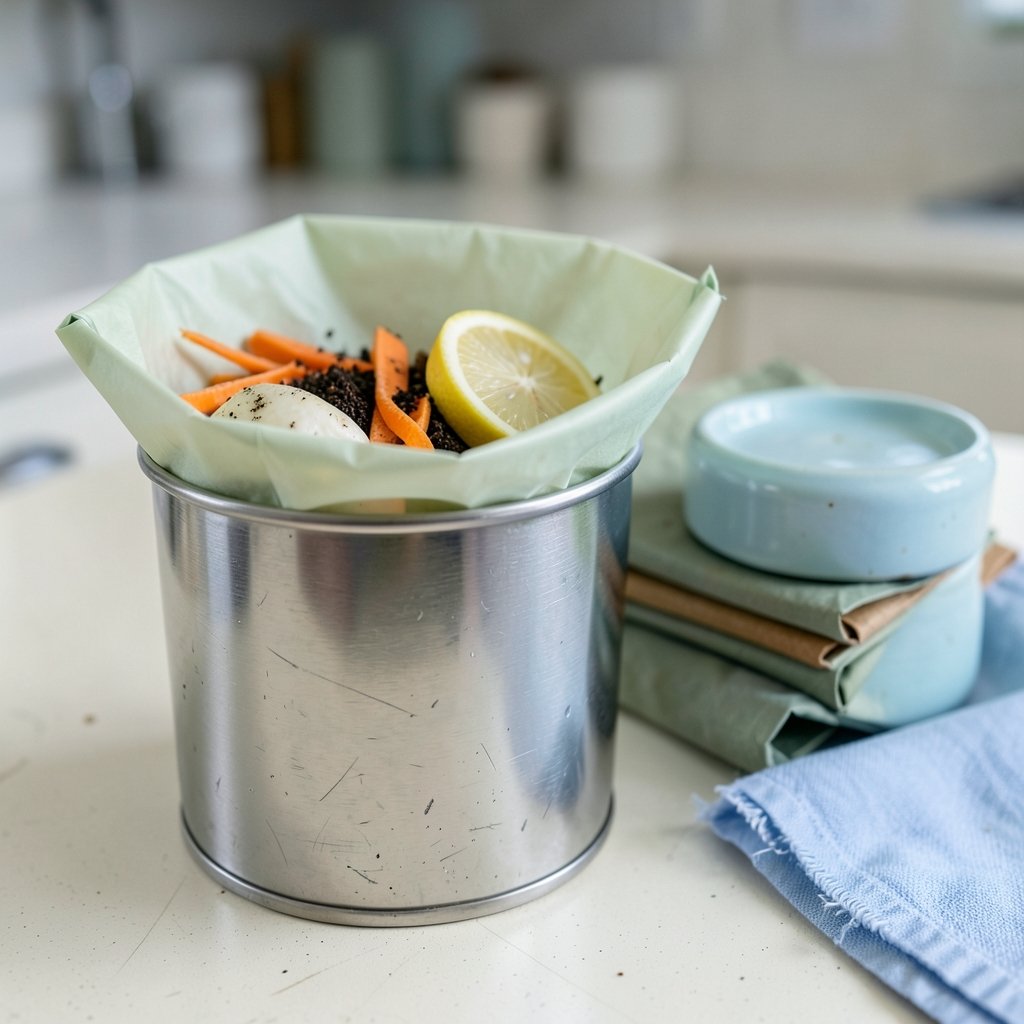
What happens to the “compostable” bag you toss in the bin after a picnic? If you picture it melting quietly into soil within weeks, the reality is more complicated. Most compostable trash bags only break down under specific industrial conditions, and many end up in landfills where they barely change at all. That gap between the label and real life is exactly why picking the best compostable trash bags takes more than grabbing the greenest box on the shelf. (Best camera bags)
This guide walks through what the certifications actually mean, which bags hold up in a kitchen pail, where they can and cannot go, and the mistakes that trip up even careful shoppers.
What “Compostable” Really Means on a Bag
The word compostable has a technical definition, and it is not the same as biodegradable. A compostable product breaks down into water, carbon dioxide, and biomass at a known rate, leaves no toxic residue, and does not harm the quality of the finished compost. Biodegradable is a looser term that says nothing about how long breakdown takes or what is left behind.
In the United States, the benchmark is ASTM D6400, a standard that covers plastics designed to be aerobically composted in municipal or industrial facilities. It tests for disintegration, biodegradation, and limits on regulated metals. A bag that meets it will break down in a commercial composting system, not necessarily in your backyard.
Europe uses EN 13432 for packaging recoverable through composting and biodegradation, and the European Commission has been revising its policy on bio-based, biodegradable, and compostable plastics. The takeaway for shoppers is simple: a bag without a recognized certification is making a claim, not proving one.
The Certification Logos to Look For
Third-party certification is the fastest way to separate real compostable bags from greenwashed ones. Here is what the common marks signal.
| Certification | Region | What It Confirms |
|---|---|---|
| BPI Compostable | US | Meets ASTM D6400 or D6868 for industrial composting |
| Seedling | EU | Meets EN 13432 for industrial composting |
| OK compost HOME | EU | Breaks down in a home compost pile at lower temperatures |
| OK compost INDUSTRIAL | EU | Requires commercial facility conditions |
The Biodegradable Products Institute runs the US certification program and maintains a lookup tool so you can check whether a specific bag is certified. If a package shows a leaf graphic but no certification mark, treat the claim as marketing until proven otherwise.
Industrial vs. Home Compostable: The Distinction That Matters Most

Here is where most people get burned. A bag stamped “compostable” is usually certified for industrial composting, where temperatures reach 55 to 60 degrees Celsius and moisture is controlled. Your backyard pile rarely gets that hot for that long. A bag certified only to ASTM D6400 may sit intact in a home bin for years. (Zigbee coordinator placement where put it stable mesh) (Composting At Home)
Home compostability is covered by separate schemes, most notably OK compost HOME from TÜV Austria, which tests breakdown at ambient temperatures. If you plan to compost in your own yard, look specifically for a home-compostable certification. If you send waste to a municipal facility, an industrial certification is the right match. (Compost)
Match the Bag to the Disposal Route
Before buying, answer one question: where will this bag actually go? The answer determines everything else.
- Curbside organics program: Check your hauler’s accepted materials list. Some programs accept certified compostable bags; others ban them because their facility cannot separate them.
- Drop-off composting site: Ask the site directly. Many accept BPI-certified bags but not home-compostable ones.
- Backyard bin: Choose a bag with a home-compostable certification, or skip the liner entirely.
- Regular trash: A compostable bag offers little benefit here, since landfill conditions are anaerobic and breakdown is not guaranteed.
That last point deserves emphasis. Compostable bags buried in a landfill may persist for a long time or generate methane as they slowly break down. Certification does not promise safe degradation in a landfill.
What to Look For in a Good Compostable Trash Bag
Once you know your disposal route, judge bags on a handful of practical traits. Strength matters more than most shoppers expect, because compostable films tend to be thinner and less puncture-resistant than conventional polyethylene.
Thickness and tear resistance. A bag that rips on the way to the bin defeats the purpose. Look for bags described as heavy-duty or with a stated micron thickness, and read reviews that mention leaks and tears rather than just compostability.
Size and fit. Compostable liners are commonly sold in 2 to 4 gallon sizes for kitchen pails and 13 gallon sizes for tall bins. Measure your can’s rim before ordering, because these bags often run small.
Moisture handling. Food scraps are wet. A bag with a poor seam will leak into your pail, and that smell is hard to forget. Bags with reinforced bottoms and gusseted sides handle produce scraps better.
Certification clarity. The best bags print the certification mark and the standard number directly on the packaging or the bag itself. Vague phrases like “eco-friendly” or “planet-conscious” tell you nothing.
Storage conditions. Compostable film degrades over time, especially in heat and humidity. Buy in quantities you will use within a few months and store the roll somewhere cool and dry. A bag that sat in a hot garage all summer may tear before it ever holds a scrap.
Common Mistakes People Make With Compostable Bags
Even well-intentioned buyers run into the same problems. Avoiding these saves money and keeps composting systems working.
Putting them in the recycling bin. Compostable plastics are not recyclable in most programs and can contaminate PET and HDPE streams. The US EPA’s recycling guidance and most municipal programs advise keeping them out of recycling carts entirely. They belong in an organics bin or the trash, never the blue bin.
Assuming “biodegradable” equals “compostable.” These are different claims with different standards, and marketing copy blurs them constantly.
Trusting marine or soil degradation claims. Some products are sold as biodegradable without certification, and independent testing has found that certain bags fragment into pieces rather than fully breaking down in soil or seawater. Fragmentation is not composting.
Overfilling the bag. Compostable film stretches less than plastic. Leaving headroom and tying the bag loosely prevents seam failures.
Ignoring local rules. Labeling laws are tightening. California’s SB 54 and related truth-in-labeling rules restrict “compostable” claims unless an item is certified to a recognized standard and accepted in the relevant composting system. Your local program’s list is the final word.
For anyone who also spends time photographing their garden or documenting a zero-waste setup, the same care that goes into choosing the best camera bags applies here: fit, durability, and honest materials matter more than a nice-looking label.
The Infrastructure Reality Check
Certification is necessary but not sufficient. Industrial composting infrastructure in the United States is limited, and only a small fraction of municipal solid waste gets composted. Fewer facilities still accept compostable plastics, because they need extra time and screening to confirm the material broke down properly.
That means a certified bag may have no facility within driving distance that will take it. Before committing to a brand, call your hauler or check your city’s organics program page. If no program accepts compostable bags, your realistic options are a home compost setup or skipping liners and rinsing the pail instead.
This is also why some sustainability advocates argue that reusable liners, newspaper, or no liner at all beat single-use compostable bags. It is a fair point. A compostable bag is a better choice than a conventional plastic bag only when it actually reaches a composting system.
How Compostable Bags Compare to the Alternatives
A quick comparison helps put the trade-offs in perspective.
| Option | Breaks Down in Home Compost | Accepted in Curbside Organics | Strength | Best Use |
|---|---|---|---|---|
| BPI-certified bag | Usually no | Sometimes | Moderate | Municipal organics programs |
| OK compost HOME bag | Yes | Rarely | Lower | Backyard bins |
| Conventional plastic bag | No | No | High | Landfill trash only |
| Paper liner | Yes | Often | Low when wet | Dry scraps, small pails |
| No liner, rinsed pail | Not applicable | Not applicable | Not applicable | Lowest-waste kitchens |
Paper liners compost readily but weaken fast with wet scraps. Plastic bags are strong but defeat the purpose. For most households, a certified compostable liner matched to their actual disposal route is the practical middle ground.
Practical Tips That Actually Work
A few habits make compostable bags perform better in daily use.
- Line the pail with a layer of shredded newspaper or a paper towel to absorb moisture before adding the bag.
- Empty the pail every two to three days, before the bag gets heavy and the seams strain.
- Keep a small counter container and transfer scraps to a larger freezer bag or outdoor bin rather than letting a full bag sit in the kitchen.
- Store unused bags flat, away from sunlight and heat.
- If a bag feels stiff or brittle out of the package, it has likely aged. Return it.
For readers tracking down reliable gear reviews and practical how-tos on everything from mesh network setup to posting schedules, sites like best times to post on instagram show how the same research-first approach pays off. The principle carries over: verify the claim before you buy.
Conclusion
The best compostable trash bags are not the ones with the boldest green packaging. They are the ones certified to a recognized standard, matched to a disposal route you can actually access, and sturdy enough to survive the trip from kitchen to bin. Look for the BPI mark in the US or the Seedling and OK compost marks in Europe, confirm that your local program accepts compostable liners, and choose a home-compostable certification only if you compost at home.
Get those three things right, and a compostable bag does what it promises. Get them wrong, and you have paid extra for a bag that ends up in a landfill behaving much like the plastic one you were trying to replace.
Frequently Asked Questions
Are compostable trash bags really better for the environment?
They are better only when they reach a composting facility or a working home pile. In a landfill, they may persist or generate methane, so the environmental benefit depends entirely on disposal. A certified bag sent to a proper composter returns nutrients to soil; the same bag in household trash offers little advantage over conventional plastic.
Can I put compostable bags in my recycling bin?
No. Compostable plastics are not recyclable in most programs and can contaminate recycling streams for PET and HDPE. Keep them out of the blue bin and place them in an organics collection or the regular trash instead.
What is the difference between biodegradable and compostable?
Biodegradable means a material can break down through biological processes, with no guarantee of how long it takes or what remains. Compostable means it meets a specific standard, such as ASTM D6400 or EN 13432, for breakdown rate, residue, and toxicity in a composting environment. Compostable is the stricter, more verifiable claim.
Will compostable bags break down in my backyard compost pile?
Usually not, unless they carry a home-compostable certification such as OK compost HOME. Most compostable bags are certified for industrial conditions with sustained high heat. Backyard piles rarely reach those temperatures, so an industrial-only bag may sit intact for years.
How do I know if a compostable bag is legitimately certified?
Look for a third-party certification mark printed on the packaging or the bag, such as the BPI logo in the US or the Seedling and OK compost marks in Europe. You can verify products through the certifying body’s online lookup. Words like “eco-friendly” or “green” without a certification mark are not proof of anything.
Do compostable bags cost more than regular trash bags?
They generally do, often noticeably more per bag. The premium reflects certification testing and the cost of compostable resins. Buying in bulk, choosing the right size to avoid waste, and using liners only where a program accepts them helps keep the cost reasonable.