
What if the flashiest bag on the shelf is the wrong choice for your cat? Walk down any pet aisle and you’ll see mountains of kibble promising shiny coats, “human-grade” ingredients, and “vet recommended” formulas. The labels shout. The prices vary wildly. And somehow, the more options there are, the harder the decision gets.
Here’s the good news: picking a good cat food is a learnable skill, not a guessing game. Once you understand how labels work, what cats actually need, and where marketing ends and nutrition begins, the whole aisle gets a lot less confusing. This guide walks through the label rules, the nutrient basics, the wet-versus-dry debate, and the practical habits that separate a confident shopper from a confused one.
Start With the Label, Not the Front of the Bag
The front of a cat food bag is advertising. The back panel is where the real information lives, and it follows rules. In the United States, pet food labeling is enforced at the state level, with rules typically modeled on frameworks developed by the Association of American Feed Control Officials (AAFCO). AAFCO itself is a voluntary association of state feed regulators. It does not approve, certify, or test individual foods, which is a common misconception worth clearing up right away.
What the label does tell you:
- A life-stage statement. Every complete food must declare a life stage, such as growth, maintenance, or all life stages. Foods labeled “all life stages” must meet the more demanding growth profile, which matters if you’re feeding a kitten alongside an adult cat.
- A nutritional adequacy statement. This is the sentence confirming the food is “complete and balanced” for a stated life stage, either through meeting nutrient profiles or through feeding trials following established protocols.
- A guaranteed analysis. This lists crude protein (minimum), fat (minimum), fiber (maximum), and moisture (maximum).
That last one trips up a lot of shoppers. The guaranteed analysis reports minimums and maximums, not exact values. It is not a precise nutrient breakdown, and comparing two foods by their crude protein percentages alone is misleading, especially when one is wet and one is dry.
The Moisture Problem Nobody Explains
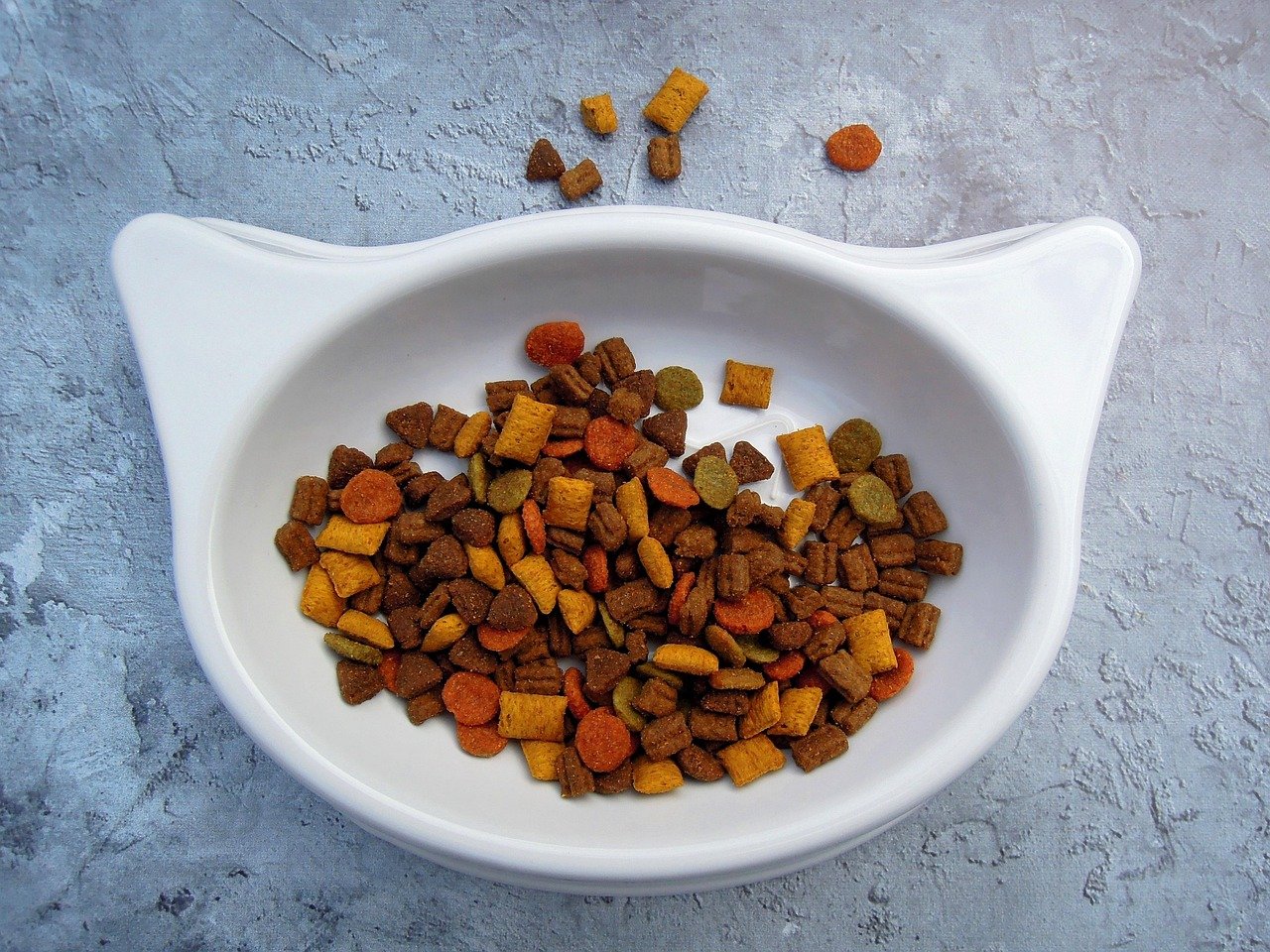
Wet cat food is typically around 70 to 80 percent moisture. Dry food usually sits somewhere around 6 to 12 percent. That single difference changes everything about how you read a label.
Imagine two foods. The dry food lists 32 percent protein. The wet food lists 11 percent protein. The dry food looks like a protein powerhouse, right? Not necessarily. Once you account for water, the wet food may deliver more protein on a dry-matter basis than the kibble does. To compare fairly, you have to convert both to dry matter, which means subtracting the moisture percentage first and then recalculating each nutrient. (Best thai food near me)
Most shoppers never do this math, and they don’t have to. The practical takeaway is simpler: don’t compare wet and dry numbers directly. Compare wet to wet and dry to dry, or ask your veterinarian to help you run the conversion if you’re choosing between the two formats.
What Cats Actually Need
Cats are obligate carnivores, which is a fancy way of saying their bodies are built around meat. One nutrient deserves special attention: taurine. Cats have a dietary requirement for taurine, and a deficiency has been linked to dilated cardiomyopathy, a serious heart condition, as well as retinal degeneration. Most commercial cat foods are supplemented with taurine for exactly this reason, which is one argument against improvising a homemade diet without professional guidance.
Beyond taurine, the core requirements are straightforward: adequate protein, appropriate fat, controlled minerals, and enough water intake. That last point is where wet food earns genuine praise. Cats evolved to get much of their moisture from prey, and many cats are notoriously poor water drinkers. Wet food quietly adds hydration to every meal.
Kibble, Cans, or Both?
There’s no single correct answer here, and anyone who insists otherwise is overselling their certainty. Here’s an honest comparison:
| Factor | Dry Food | Wet Food |
|---|---|---|
| Cost per meal | Usually lower | Usually higher |
| Convenience | Easy to leave out, easy to store | Needs refrigeration once opened |
| Water content | Low | High |
| Palatability | Varies; some cats love crunch | Often highly appealing |
| Dental claims | Weak evidence for cleaning teeth | None |
| Shelf life | Long | Long unopened, short once opened |
Many households land on a mix: wet food for hydration and variety, dry food for convenience and cost control. That’s a reasonable middle path. If you’re building a feeding routine around a busy schedule, the same practical thinking that goes into packing a reliable lunch applies to your cat’s meals. The best lunch boxes for adults that actually keep food cold and leak free solve a similar problem for people, and the principle carries over: good containers and a bit of planning beat good intentions. (Takeout food near me find good food fast)
By-Products Are Not the Villain
Few terms generate more confusion than “by-product.” AAFCO defines by-products as secondary products, things like organs and other parts beyond muscle meat. The word sounds unappetizing to human ears, but it is a regulatory category, not a quality grade. Organ meats are nutrient-dense, and in many cases they contribute vitamins and minerals that muscle meat alone doesn’t provide.
The mistake people make is scanning the ingredient list for scary-sounding words and assuming the worst. Ingredients are listed by weight, and weight includes water, which is why a fresh meat listed first can be less impressive than it looks once moisture is removed. Reading ingredient lists is fine. Treating them as a precise quality scorecard is where shoppers go wrong.
What the Research and Regulators Have Flagged
A few safety topics come up often enough that cat owners should know the basics.
Raw diets. Major veterinary bodies have cautioned about bacterial contamination risks from raw meat diets, both for the pets eating them and for the households handling them. That doesn’t mean every raw feeder has a problem. It means the risk is real and worth weighing carefully, especially in homes with young children, older adults, or immunocompromised family members.
Grain-free and heart concerns. The FDA investigated reports of canine dilated cardiomyopathy potentially linked to certain grain-free diets, particularly those heavy in peas and lentils. The investigation was largely closed without a definitive cause identified. The honest summary is that the question remains unresolved, and grain-free is a marketing category more than a nutritional necessity for most cats.
Recalls. Pet food recalls happen, and they’re posted by regulators and manufacturers. Checking recall listings periodically, or signing up for alerts, is a small habit with real payoff.
Life Stage Matters More Than You Think
A kitten and a senior cat have genuinely different nutritional needs. Kittens need more calories, protein, and specific nutrients to support growth. Senior cats often benefit from different protein levels and easier-to-digest formulas. Pregnant and nursing cats have demands that rival kittens’.
This is why the life-stage statement on the label is not fine print. Feeding a growth formula to an adult cat isn’t dangerous in most cases, but feeding an adult maintenance food to a growing kitten can leave gaps. If you’re shopping for a young cat, it’s worth understanding what separates kitten food from the adult version before you commit to a brand. The same care you’d take choosing the best kitten food applies to any life-stage switch: read the adequacy statement, transition gradually, and watch how your cat responds. (Money cat meaning beckoning cat really symbolizes)
How to Switch Foods Without a Mess
Cats are creatures of habit, and their digestive systems are too. A sudden switch is one of the most common mistakes people make, and it usually announces itself on the carpet.
- Start with a 75/25 mix. Three parts old food to one part new food for the first few days.
- Move to 50/50. Hold there for several days if your cat has a sensitive stomach.
- Shift to 25/75. Watch for changes in stool, appetite, and energy.
- Finish with 100 percent new food. The whole transition typically takes seven to ten days, longer for sensitive cats.
- Stop and reassess if things go sideways. Persistent vomiting, diarrhea, or refusal to eat warrants a call to your veterinarian, not a push through.
Refusing food entirely is a bigger deal for cats than for dogs. Cats that stop eating can develop serious liver problems within a few days, so a hunger strike is not something to wait out casually.
Practical Shopping Habits That Actually Work
After the label reading and the nutrient math, the day-to-day decisions come down to a few habits.
Buy small first. A new food your cat refuses is money in the trash. Start with the smallest bag or a few cans before committing to a case.
Watch the bowl, not the bag. The best evidence of whether a food works is your cat: steady weight, good energy, healthy coat, consistent litter box habits. Marketing claims can’t compete with that feedback loop.
Keep a rotation if it suits your cat. Some cats do well on variety, which can hedge against supply problems and recipe changes. Others get digestive upset from constant switching. Know which cat you have.
Store food properly. Dry food goes stale and loses palatability once opened. Keep it sealed, cool, and dry, and check the expiration date. Wet food left out too long is a bacterial risk, plain and simple.
Don’t overlook hydration. If your cat eats mostly dry food, consider water fountains, multiple water bowls, or adding some wet food. Small changes add up.
Budget realistically. Premium food isn’t automatically better, and budget food isn’t automatically worse. What matters is the adequacy statement, the life stage, and how your cat does on it. A mid-priced food that meets the profiles and agrees with your cat beats an expensive one that doesn’t.
If you’re also trying to eat well yourself while managing a busy household, the same logic applies to your own meals: balance, planning, and not overthinking every bite. Understanding how to balance flavors when you order Thai food, for instance, is not so different from balancing nutrients in a cat’s bowl. Both reward a little knowledge over blind enthusiasm.
When to Ask a Professional
Your veterinarian knows your cat’s weight history, dental health, and any medical conditions. That context beats any article, including this one. Ask for help when:
- Your cat has a diagnosed condition like kidney disease, diabetes, or urinary issues, all of which often call for specific diets.
- Your cat is losing or gaining weight without an obvious explanation.
- You’re considering a homemade diet, which requires professional formulation to avoid nutrient gaps.
- Your cat is a kitten, pregnant, nursing, or senior, and you’re unsure which formula fits.
A quick conversation at a routine visit can save months of trial and error.
Conclusion
Choosing cat food comes down to a short list of things that actually matter: the life-stage statement, the nutritional adequacy claim, honest attention to moisture content, and your cat’s real-world response over weeks and months. Everything else, from the front-of-bag claims to the scary-sounding ingredient names, deserves a healthy dose of skepticism. By-products aren’t the enemy. Grain-free isn’t a magic word. The guaranteed analysis isn’t a precise scorecard. What works is reading the back panel, transitioning slowly, watching your cat, and asking your veterinarian when something doesn’t add up. Do that, and the wall of bags stops being overwhelming and starts being what it really is: a set of options you’re now equipped to sort through.
Frequently Asked Questions
Is wet food better than dry food for cats?
Neither format wins outright. Wet food delivers more water, which helps with hydration, while dry food is cheaper and more convenient. Many cats thrive on a mix of both. The right choice depends on your cat’s health, your budget, and your routine.
What does “complete and balanced” mean on a cat food label?
It’s a claim that the food meets the nutrient requirements for a stated life stage, either by meeting established nutrient profiles or by passing feeding trials. The life-stage statement next to it matters just as much as the claim itself.
Are by-products bad for cats?
No. By-products are a regulatory category covering secondary parts like organs, and they can be nutritious and nutrient-dense. The term describes what a part is, not how good it is. Judge the whole food, not a single ingredient word.
How long should I take to switch my cat’s food?
Aim for seven to ten days, mixing increasing amounts of the new food into the old. Cats with sensitive stomachs may need longer. If your cat refuses to eat entirely, contact your veterinarian promptly, since cats can develop liver problems after just a few days without food.
Do cats really need taurine in their food?
Yes. Cats have a dietary requirement for taurine, and a deficiency has been linked to heart disease and retinal degeneration. Most commercial cat foods are supplemented with it, which is one reason homemade diets need professional formulation.
How do I compare protein levels between wet and dry cat food?
You can’t compare the numbers directly, because wet food is mostly water and dry food is not. Convert both to a dry-matter basis by subtracting the moisture percentage first, then recalculating. Or ask your veterinarian to run the comparison for you.



