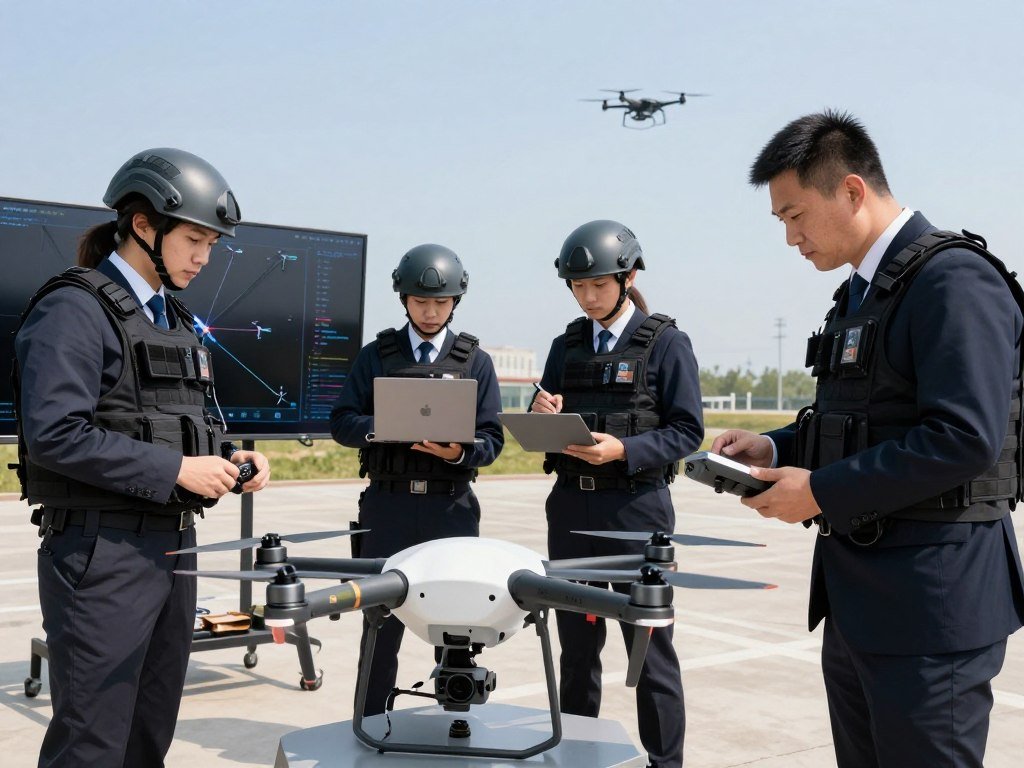
DHS brought first responders and public-safety partners together to test commercial counter-drone technology in operational scenarios. DHS S&T, NUSTL, and its SAVER program organized the responder-focused field assessment to help agencies weigh equipment for real operational needs. C-UAS means counter-unmanned aircraft systems, technologies and services used to detect or mitigate UAS threats.
The hands-on assessment gives emergency operations teams a way to consider how systems might fit their work before they make procurement decisions. It does not name a winning product or grant agencies permission to interfere with aircraft. The assessment offers agencies practical evidence to consider as they prepare for drone threats and procurement decisions.
Key Takeaways
- DHS S&T and NUSTL brought responders into a field assessment.
- SAVER offers independent information to support equipment choices.
- The test focused on commercially available C-UAS systems.
- Assessment findings do not provide authority to mitigate drones.
- Agencies still need to meet applicable federal rules.
- Local mission needs should guide procurement decisions.
Why NUSTL’s SAVER Program Tests Technology With Responders
NUSTL manages SAVER to give emergency responders independent, practical information for technology procurement. Responder-informed assessments help agencies judge whether equipment may meet their needs, while not acting as a sales pitch or product endorsement.
SAVER stands for the System Assessment and Validation for Emergency Responders program. The program helps public-safety teams compare equipment and make choices that fit their work.

NUSTL’s role in SAVER
The National Urban Security Technology Laboratory is part of the Department of Homeland Security’s Science and Technology Directorate. NUSTL manages the national urban security effort called SAVER, which gives agencies independent information about equipment for emergency response.
Since 2004, SAVER has produced more than 1,100 publications. Those reports cover security technology, including urban security technology, and give agencies a basis for discussing costs, capabilities, and practical use. The DHS SAVER resources explain how responders help set assessment criteria and realistic scenarios.
Why responder-informed assessment matters
A system that works for one team may not suit another. A city agency might need to protect a crowded event, while a rural department may cover a wide area with fewer staff. Equipment needs also change by mission, location, training, and available support.
SAVER seeks impartial information rather than marketing claims. Responders can consider factors such as affordability, capability, deployability, maintainability, and ease of use. That approach helps first responders ask practical questions before spending public funds.
SAVER findings inform procurement decisions, but they do not certify that a product fits every agency or mission.
Agencies can use SAVER’s responder-informed findings to frame questions about fit for their own missions.
DHS Counter Drone Test First Responders NUSTL SAVER 2026: What Did the Field Assessment Cover?
The field assessment brought responders together for a week of operational testing at a federal test facility. DHS S&T announced the effort Oct. 1, and NUSTL invited public-safety partners from around the country. Its practical focus was commercially available counter-UAS systems, with attention on mitigation.
Responders test counter-drone technology in conditions designed to reflect operational use, rather than relying only on product descriptions. The announced scope included several drone targets and scenarios intended to examine how systems handled mitigation tasks.
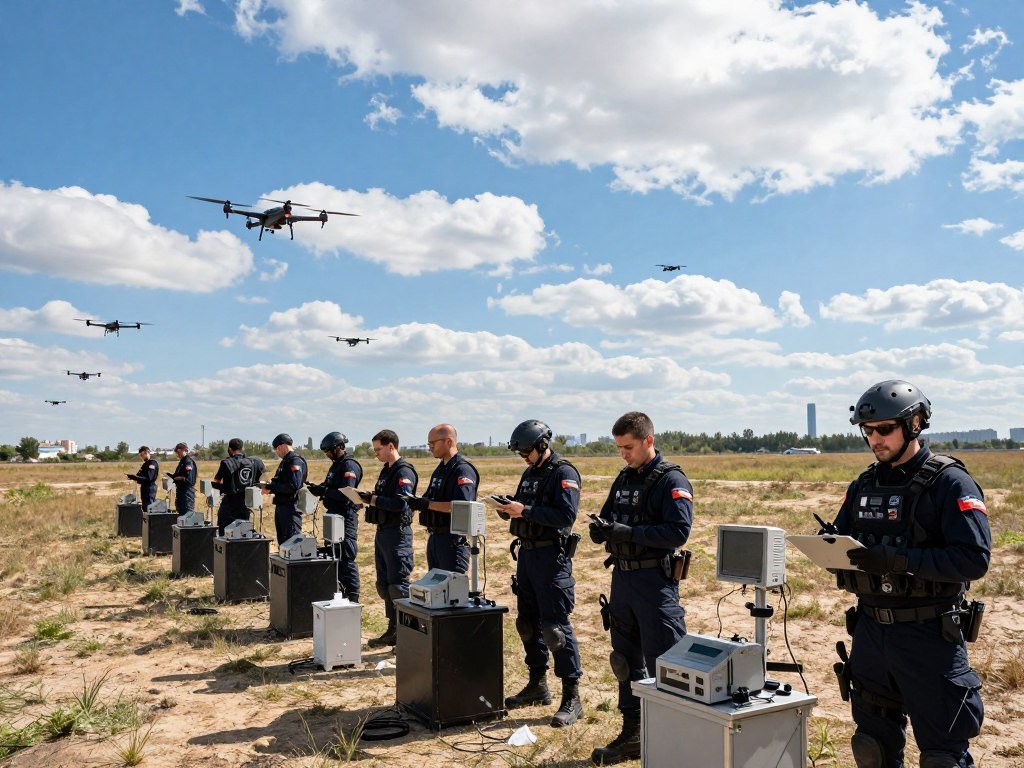
The assessment covered four central elements:
- First responders and public-safety partners from around the country.
- Commercially available counter-UAS systems.
- Several drone targets used during the assessment.
- Operational scenarios focused on mitigation.
This setup gave participants a chance to examine systems in a field setting. It did not turn the event into a product contest, and no scores or winners were announced in the stated scope.
For agencies, the distinction matters. A test can show how technology behaves during selected tasks, but local teams still need to decide whether those tasks match their own risks and resources. A target aircraft in a test does not stand in for every drone that may appear during an incident.
Public-safety partners may face different drone types and settings, from open grounds to dense urban areas. The operational conditions help make an assessment more useful than a simple feature list, especially when responders need to understand limits as well as capabilities.
Its stated focus was how mitigation technologies performed under operational conditions.
How Does an Operational Assessment Turn Testing Into Useful Evidence?
A useful field assessment records how a system behaves in a defined scenario, not only what its specification sheet promises. Clear records let teams compare results, while standardized, repeatable test methods support fairer comparisons between systems.
Conditions matter because wind, terrain, buildings, and radio traffic can affect equipment. A record of the setting helps explain why a system may behave differently during another test or live operation.
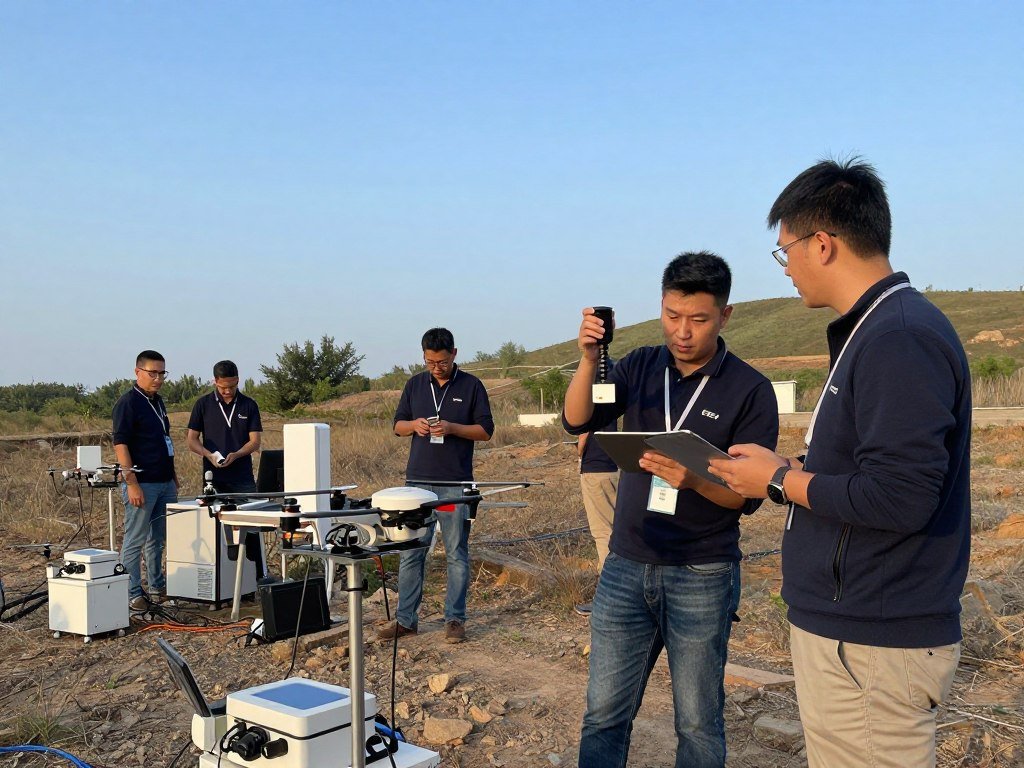
Capture operating conditions, not just equipment specifications
Teams can log GPS and sensor data, flight logs, and environmental readings alongside system behavior. These records give evaluators details about where a drone flew, what sensors reported, and what conditions surrounded each event.
For example, a system may track an aircraft well in an open area but struggle near buildings. Without notes on location and conditions, evaluators may not know whether the gap came from the system, the setting, or both.
DHS S&T’s Test and Evaluation Division supports testing across program stages. Its test and evaluation work can inform risk management and acquisition decisions through independent assessment.
Convert observations into comparable measures
After collecting records, an agency can define measures before comparing systems. Possible measures include tracking accuracy, detection probability, and sensor range. These are evaluation options, not reported results from the DHS field assessment.
Detection and tracking measures can help explain how a system sees and follows a UAS, even when a particular assessment focuses on mitigation. Teams should record the same measures in the same way for each system under review.
Defined measures also help staff explain results to leaders who must weigh cost, staffing, and mission needs. A number has little value without its test condition, so reports should pair each measure with the setting that produced it.
Comparing systems is more meaningful when each is tested against the same documented conditions.
What Did the SAFER SKIES Act Authorize for Local Agencies?
The SAFER SKIES Act gives qualifying SLTT agencies limited authority to address credible UAS threats, subject to federal conditions. Limited authority means the law does not grant blanket permission to interfere with drones; its scope covers defined threats and settings.
Signed on Dec. 18, 2025, the Act was included in the FY2026 National Defense Authorization Act. It allows state, local, Tribal, and territorial agencies to take certain measures against credible UAS threats to protected targets.
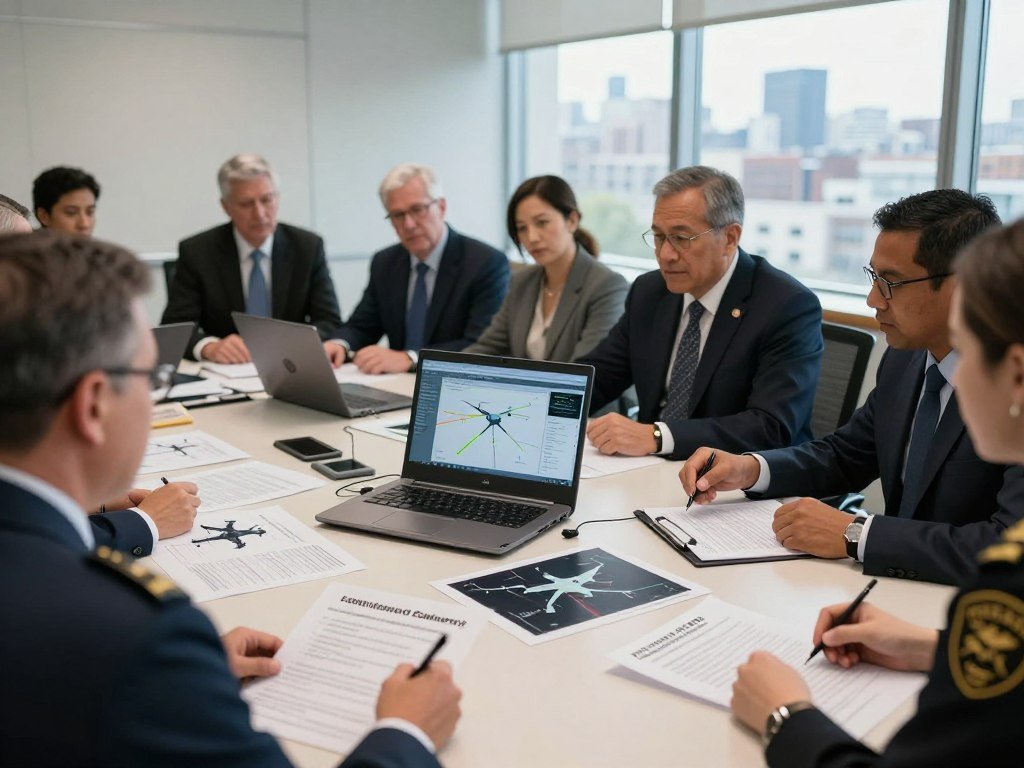
The law identifies six settings or targets that may be covered:
- People.
- Facilities.
- Assets.
- Large public gatherings.
- Critical infrastructure.
- Correctional facilities.
Those categories describe where a credible threat may create a concern. They do not mean every drone near a person, building, or event poses a threat. Agencies must assess the situation and stay within the law’s conditions.
The word “certain” is important. The authority applies to qualifying agencies and actions, not every public-safety department or every type of counter-UAS system. A local policy cannot expand a federal power beyond the law’s scope.
The SAFER SKIES Act addresses mitigation, which differs from ordinary drone operations and routine observation. Agencies should keep those tasks distinct in planning, training, and internal procedures.
The authority applies only within the law’s defined scope and conditions.
What Must Agencies Do Before Using Counter-UAS Mitigation?
An agency needs more than a qualifying mission before it can use authorized mitigation measures. Federal requirements include training, certification, approved technologies, and coordination, and agencies cannot disable drones at will.
A joint interim final rule from DHS and the Department of Justice took effect July 1. It sets requirements for covered agencies that use authorized mitigation measures and separates detection-and-warning work from mitigation.
The rule requires covered personnel to receive training and certification from the Attorney General or a designee. Training runs through a national schoolhouse, so agencies must ensure the people involved meet the required standard before operations.
The rule also limits which technologies covered agencies may use. DOJ, DHS, DOD, DOT, the FCC, and NTIA jointly maintain lists of technologies for the framework. An agency must use a listed technology when the rule requires it.
Detection and warning have separate levels from mitigation. That distinction matters because detecting a drone does not, by itself, grant permission to disrupt or disable it. The agency’s authorization and the action planned must match.
Airspace coordination, reporting, and privacy duties are also part of the framework. Agencies need procedures for sharing relevant information and recording what happened, while protecting information under applicable rules.
A written plan can assign each duty to a role before an incident. For example, command staff can identify who confirms authorization, who handles coordination, and who completes required reports.
Staff should not treat a technology list or training certificate as a substitute for mission approval. Each operation must still meet applicable federal requirements and receive authorization for the planned action.
Agencies should confirm their authorization, personnel certification, approved technology, and coordination duties before an operation.
Which Part 107 Rules Apply to Public-Safety Drone Flights?
Agencies can operate qualifying small UAS under Part 107 when they meet its pilot, aircraft, and flight requirements. As of July 2026, the rules cover aircraft weighing less than 55 pounds, with stated limits for altitude, speed, and visibility.
A remote pilot needs a small-UAS remote pilot certificate, or must fly under the direct supervision of a certificate holder. Part 107 drones must also be registered for $5 per drone.
The Part 107 regulation sets these common operating limits:
| Requirement | Part 107 rule | Condition or exception |
|---|---|---|
| Aircraft weight | Less than 55 pounds | Small UAS category |
| Altitude | 400 feet above ground | May fly higher within 400 feet of a structure |
| Speed | 100 mph, or 87 knots | Maximum operating speed |
| Visibility | At least 3 miles | Measured from the control station |
Controlled airspace has its own step. Part 107 flights in Class B, C, D, and E airspace need air traffic control authorization. Class G airspace does not require that Part 107 authorization.
Airspace tools can help pilots understand conditions, but awareness tools do not grant permission to fly. A local site may also have access rules, hazards, or temporary restrictions that differ from FAA airspace requirements.
Public-safety crews choosing a location can review drone flying locations and airspace checks as general planning context. That information is not a substitute for the agency’s Part 107 duties or required authorizations.
Small UAS flights may support search, response, or scene awareness, but the aircraft and pilot must still fit the chosen operating rule. The Part 107 weight and flight limits define key checks for routine civil operations.
Before each flight, verify both the operating limit and the airspace authorization requirement.
When Does a Public-Safety Agency Use a Part 91 Waiver?
A public-safety agency flying as a public aircraft can follow the Part 91 pathway and use the waiver checklist that matches its detection capability. The right checklist depends on whether the operation uses a qualifying detection system.
The FAA toolkit has separate Part 91 public-aircraft pathways for beyond visual line of sight, or BVLOS, operations. A waiver request uses FAA Form 7711-2 with supporting information sent to the FAA’s designated waiver email address.
The difference between a drone claim and verified evidence is one reminder that aircraft identification can be uncertain. For flight planning, agencies should focus on the FAA pathway that matches their aircraft, mission, and safety controls.
| Pathway | Detection-system condition | FAA step |
|---|---|---|
| Part 91 waiver submission | Supporting information matches proposed operation | Submit FAA Form 7711-2 by designated email |
| 200-foot BVLOS checklist | No qualifying FCC-approved aviation-use detection system | Use checklist for aircraft without ADS-B Out |
| Separate DAA checklist | Uses qualifying detection system | Use the distinct detect-and-avoid checklist |
The 200-foot BVLOS checklist addresses operations without an FCC-approved aviation-use detection system that can detect non-cooperative aircraft lacking ADS-B Out. Non-cooperative aircraft do not transmit that signal, so the detection condition affects the checklist choice.
A separate DAA checklist applies when the agency uses such a system. About 13% of departments typically invest in that detection system, so many agencies may need to examine the other pathway.
The FAA public-safety toolkit was last updated March 23, 2026. Its checklist approach helps agencies connect a proposed operation to the right waiver materials instead of treating every BVLOS flight alike.
Agencies should match their proposed operation to the correct checklist before submitting Form 7711-2.
What Does DHS’s Counter-UAS Contract Actually Buy?
DHS’s contract separates counter-UAS technology purchases from broader integration and service work. Two tracks cover products and ancillary support, or larger projects that combine systems and services.
DHS awarded 12 companies positions on a shared contract ceiling of up to $1.5 billion. The five-year ordering period runs from Aug. 1 through July 31, 2031.
The DHS counter-UAS contract details describe the tracks and selected firms. Planned allocations total up to $1 billion for hardware and software, and about $489 million for comprehensive services.
Technology products and ancillary services
The technology track received 57 offers. It selected Dedrone Defense, D-Fend Solutions AD, Leidos, Fortem Technologies, CACI Federal, BAE Systems Technology Solutions & Services, and EMS Defense Technologies.
Technology-track ancillary services include training, maintenance, installation, customization, and support. Those services can help agencies set up or sustain products, but they do not replace local mission review.
Comprehensive integration and support
The comprehensive-services track received 47 offers. It selected Booz Allen Hamilton, General Dynamics Information Technology, Parsons Government Services, BAE Systems Technology Solutions & Services, Leidos, Anduril Industries, and Astrion Group.
| Contract element | Scope | Planned allocation or term | Selected companies or offers |
|---|---|---|---|
| Technology track | Hardware, software, ancillary support | Up to $1 billion | 57 offers; Dedrone Defense, D-Fend Solutions AD, Leidos, Fortem Technologies, CACI Federal, BAE Systems Technology Solutions & Services, EMS Defense Technologies |
| Comprehensive-services track | Integration and broad services | About $489 million | 47 offers; Booz Allen Hamilton, General Dynamics Information Technology, Parsons Government Services, BAE Systems Technology Solutions & Services, Leidos, Anduril Industries, Astrion Group |
| Shared contract | Ordering vehicle for both tracks | Up to $1.5 billion; five years, Aug. 1 through July 31, 2031 | 12 companies; Leidos and BAE Systems Technology Solutions & Services hold positions on both tracks |
The shared vehicle gives federal buyers a way to order covered products and services. It does not mean every agency has the same mission, funding path, or procurement needs.
Agencies should distinguish an available contract vehicle from the separate question of whether a system fits their authorized mission.
How Can an Agency Turn Test Findings Into a Local Procurement Decision?
An agency should choose technology against its missions and operating environment, not a generic product description. Local fit depends on what staff must do, where they work, and the conditions they face.
Public-safety UAS missions include search and rescue, disaster response, and situational awareness. A repeatable scenario can help compare products, but the agency should build the test around its own operational needs.
A practical procurement checklist can start with five questions:
- Which missions and operator needs must the system support?
- How quickly can staff deploy and set up the equipment?
- Does the agency need detection, mitigation, or both?
- Which environmental and communications conditions matter locally?
- What training and ongoing support will staff need?
A rural agency may care about coverage across open land, while an urban team may face buildings and crowded radio signals. Search-and-rescue crews may value quick setup and clear tracking, while disaster teams may need equipment that works around damaged infrastructure.
Situational-awareness missions may call for detection and reporting, while a mitigation mission brings separate authority and conditions. Agencies should not treat every counter-UAS product as a single-purpose answer.
Standardized, repeatable scenarios can support more useful comparisons. Teams can record the same steps and operating conditions for each system, then assess whether the results match the duties staff expect to perform.
Agencies can also use responder-informed assessment findings to shape questions about affordability, capability, deployment, upkeep, and ease of use. A field result is most useful when the local team knows what task it represents.
Before committing funds, document the mission each system must perform and how the agency will verify it.
What Should Be in a Field-Ready Drone Response Plan?
A field-ready plan connects the aircraft, trained personnel, incident command, and applicable flight rules. Clear roles help staff make timely choices and keep the flight tied to the response mission.
Public-safety drones must comply with Title 14 of the Code of Federal Regulations. A response plan for those flights is separate from the authority needed for counter-UAS mitigation.
Permission to fly a public-safety drone does not, by itself, authorize counter-UAS mitigation.
Agencies can use this four-part readiness check:
- Identify the agency’s operational lead.
- Set how pilots and incident command will communicate.
- Assign reporting and documentation duties.
- Check the FAA public-safety toolkit for current flight guidance.
Before a call, personnel should know who launches the aircraft, who receives information, and who records the flight. A shared plan can prevent command staff from relying on an unclear radio handoff during a busy incident.
Reporting duties also need an owner. The team should know which records to keep and who submits required reports after the operation.
Flight guidance changes as rules and tools are updated. The FAA public-safety toolkit was last updated March 23, 2026, so agencies should review its current material before operations.
Review the FAA toolkit before operations because its guidance is updated over time.
Conclusion
The practical value of a counter-UAS assessment is helping agencies ask whether technology fits both the mission and the rules. Responder-informed evidence can support better procurement choices, while legal authority and aviation compliance remain separate requirements.
A useful next step is to write a mission-specific test plan and confirm the approvals that apply. Before buying or deploying equipment, agencies should write down the mission, test conditions, and approvals their operation requires.
FAQ
Does taking part in a SAVER assessment authorize an agency to mitigate a drone?
No, taking part in a SAVER assessment does not authorize an agency to mitigate a drone. The assessment provides information that can support procurement, not permission to interfere with aircraft. The SAFER SKIES Act and its federal conditions govern mitigation authority. Agencies must also meet the requirements that apply to their personnel, technology, and planned operation.
What does the FAA’s 400-foot Part 107 altitude limit allow near a structure?
A small UAS may fly above 400 feet above ground while staying within 400 feet of a structure. The exception is tied to the structure, not a general increase in the operating ceiling. Pilots still need to follow other Part 107 rules and any airspace authorization that applies to the flight.
Can a public-safety agency fly under Part 91 without an FCC-approved aviation-use detection system?
Yes, the FAA toolkit has a separate 200-foot BVLOS waiver checklist for agencies without that qualifying system. It covers operations without a system able to detect non-cooperative aircraft that do not transmit ADS-B Out. Agencies submit FAA Form 7711-2 with supporting information through the FAA’s designated waiver process.
What is the difference between counter-UAS detection and mitigation?
Detection identifies or tracks a UAS, while mitigation is a separate response level governed by distinct authority and conditions. A detection system can provide information about an aircraft without stopping or disrupting it. Agencies should treat the two functions as separate operational tasks, with their own approval and reporting needs.
Does a DHS counter-UAS contract position require an agency to buy from an awardee?
No, a DHS contract position does not require an agency to buy from an awardee. The vehicle makes specified products or services available through its terms. An agency still needs to assess mission fit, funding, and applicable procurement rules. A position on a contract is not proof that a product suits every local need.
What should a department check before operating a public-safety drone in controlled airspace?
Part 107 operations in Class B, C, D, and E airspace require air traffic control authorization. The department should identify the airspace class and secure the required authorization before flight. Class G airspace does not require that Part 107 authorization, though other flight rules and local access limits may still apply.



