
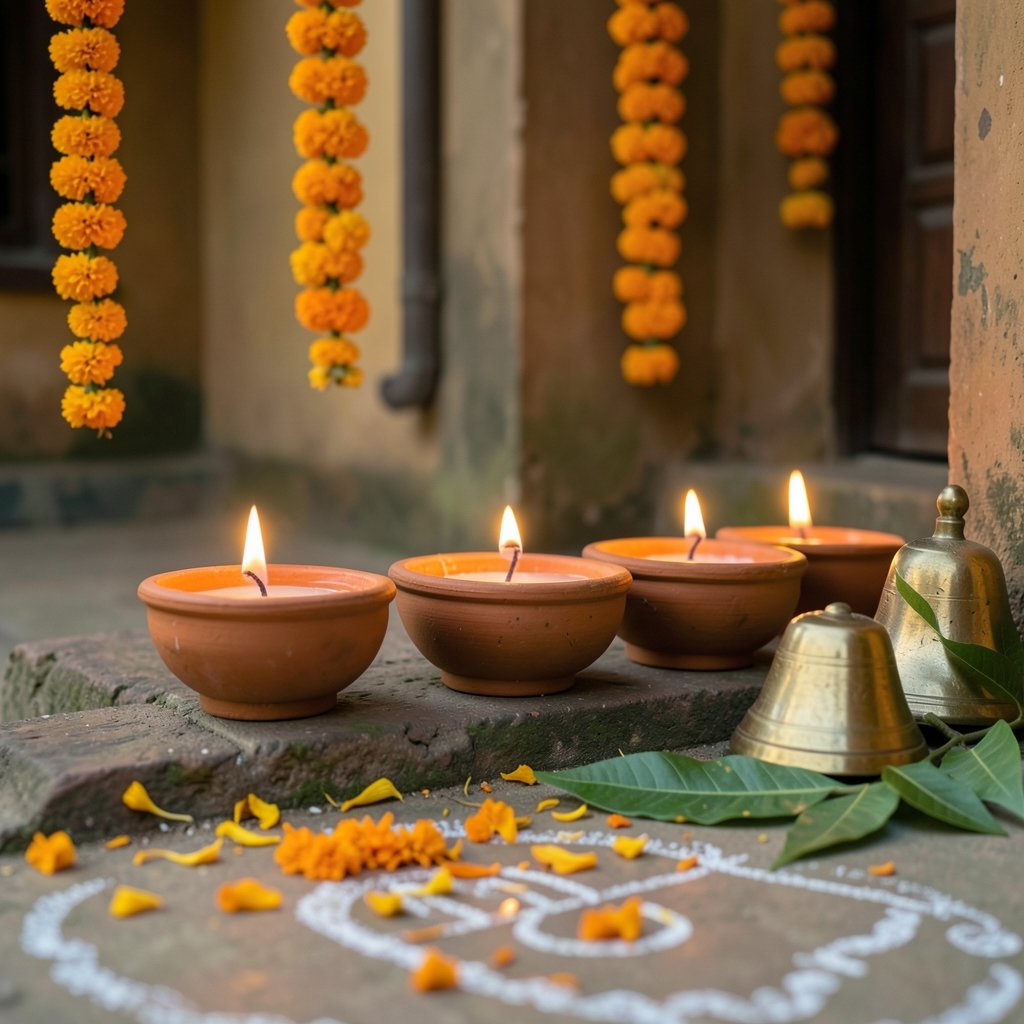
What if the biggest festival on the Hindu calendar landed on a different date every year, and nobody could tell you the exact day more than a few months ahead? That is the reality of Diwali. Its date is set by the moon, not by a fixed slot on the Gregorian calendar, so anyone planning travel, a wedding-adjacent party, a retail campaign, or a school assembly for Diwali 2027 needs to understand how the date is calculated before booking anything.
This guide walks through the expected 2027 dates, the five-day structure of the festival, the regional differences that trip people up, and the practical planning details that matter for families, businesses, and anyone celebrating outside South Asia.
When Is Diwali 2027?
The short answer: expect the main Diwali day, Lakshmi Puja, to fall around late October 2027, with the five-day festival period running roughly from 26 October to 30 October. The most commonly cited estimate places the main day around 29 October 2027.
The honest longer answer is that this needs checking against a panchang, the traditional Hindu almanac, before anyone treats it as final. Diwali is dated by the lunisolar Hindu calendar, specifically the lunar month of Kartika. Because lunar months are shorter than solar months, the festival drifts backward through the Gregorian year by roughly eleven days most years, then jumps forward when a leap month is inserted. That is why Diwali can land anywhere from mid-October to mid-November.
A useful comparison shows how much the date moves:
| Year | Approximate main Diwali day |
|---|---|
| 2024 | Early November |
| 2025 | Late October |
| 2026 | Early November |
| 2027 | Late October (expected) |
| 2028 | Mid-October (expected) |
The pattern is not random, but it is not simple arithmetic either. Leap-month insertion in the Hindu calendar follows rules that vary between regional systems, which is the root of the next problem.
Why the Date Can Differ by a Day

Different panchangs and regional traditions sometimes assign the main Diwali day differently. A family in one part of India may light lamps on a date that a family in another region treats as Choti Diwali. Neither is “wrong” in any meaningful sense; they are following different authoritative almanacs with different rules for which lunar day prevails when a tithi (lunar day) spans two sunrises.
What this means in practice:
- Name your source. If you publish a Diwali date, say which calendar or tradition you are following. Presenting one date as universal invites corrections from readers who celebrate on a different day.
- Check twice, close to the date. Almanacs are recalculated, and the further out you look, the more likely you are reading an estimate rather than a confirmed entry.
- Treat “expected” as the honest word. Any 2027 date published before the relevant panchang is finalized should be labeled as expected or subject to confirmation.
This is not pedantry. Schools schedule holidays, retailers schedule promotions, and families book flights based on these dates. Getting the day wrong by 24 hours is a real inconvenience.
The Five Days of Diwali, Explained
Diwali is not a single day. It is a five-day festival, and each day has its own character, rituals, and commercial significance. For 2027, the sequence would run roughly as follows, subject to the same verification caveat.
- Dhanteras (expected around 26 October 2027). The first day, traditionally associated with buying gold, silver, and metalware. It is one of the biggest retail days of the Indian year.
- Naraka Chaturdashi, also called Choti Diwali (expected around 27 October). Marked by early-morning oil baths and, in many regions, the main round of firecracker use.
- Lakshmi Puja, the main Diwali day (expected around 29 October). Homes are cleaned, lamps are lit, and families gather for prayers and sweets. This is the day most people mean when they say “Diwali.”
- Govardhan Puja (expected around 30 October). A day of thanksgiving, particularly significant in northern and western India.
- Bhai Dooj (expected around 31 October). A celebration of the brother-sister bond, similar in spirit to Raksha Bandhan.
Notice that the sequence above leaves a gap around 28 October. That is deliberate on my part as a caution: the exact alignment of tithis in 2027 is precisely the kind of detail that only a proper panchang resolves, and the spacing between Choti Diwali and the main day varies year to year. Do not assume a neat one-day-per-festival ladder.
What Each Day Means for Different Audiences
For families, the practical anchors are the cleaning and preparation window before Lakshmi Puja, the sweets and gifting exchanges, and Bhai Dooj if siblings live apart. For businesses, Dhanteras is the commercial center of gravity, followed by the main day. For schools and community groups, the main day is usually the one that matters for scheduling.
Diwali Is Not Only a Hindu Festival
One of the most common errors in coverage of Diwali is describing it as exclusively Hindu. It is not.
- Jains mark Diwali as the day of Mahavira’s nirvana, a moment of liberation rather than celebration in the festive sense.
- Sikhs observe Bandi Chhor Divas around the same time, commemorating the release of Guru Hargobind from imprisonment.
- In Hindu tradition, the day is associated with Rama’s return to Ayodhya after exile, which is why lamps are lit.
A good article, a good school assembly script, or a good workplace note acknowledges this plurality. It costs nothing and avoids alienating readers who celebrate the same days for entirely different reasons.
Where Diwali 2027 Will Be a Public Holiday
Diwali is a gazetted public holiday in India, and it is observed as a public holiday in Nepal as part of Tihar, the Nepali equivalent festival. It is also widely marked in Sri Lanka, Singapore, Malaysia, and Trinidad and Tobago, though the legal status varies by country.
For 2027, the exact gazetted dates should be confirmed against each government’s official holiday list rather than assumed from this article. Government holiday lists are published closer to the year in question and can vary by state within India.
Outside South Asia, large observances take place in Britain, the United States, Canada, and the Gulf states. Some cities host public events, and some institutions grant informal recognition. If you are planning a 2027 event in the diaspora, the practical move is to check with your local council or community organization in the autumn of 2027 rather than relying on a date you saw in a general article.
Planning Around Diwali 2027: Practical Tips
Here is where first-hand planning experience matters more than calendar theory. A few things consistently go wrong.
Booking travel too late. Diwali is one of the busiest travel periods in India. Domestic flights and trains around the main day sell out weeks in advance, and prices climb steeply. If your plans depend on being in a specific city for Lakshmi Puja, book as soon as the date is confirmed by a panchang, not before.
Assuming the whole country shuts down for five days. It does not. The main day and Dhanteras are the significant closures. Banks, government offices, and many businesses close on the main day; retail and hospitality often stay open and are busiest. Plan your errands accordingly.
Underestimating the cleaning and preparation lead time. Homes are typically cleaned thoroughly in the days before Lakshmi Puja. If you are hosting, the preparation window is real, and it starts earlier than most first-time hosts expect.
Forgetting the air-quality issue. Around Diwali in northern India, firecracker use coincides with seasonal crop-burning and winter inversion conditions, producing a recurring public-health problem. Several states and courts have imposed restrictions on firecracker sales and use in past years. Whether restrictions apply in 2027 is unknown as of now, and rules are set by state and by court order rather than by a single national policy. Check official air-quality data and local notifications closer to the date, especially if you have children, elderly relatives, or respiratory conditions in the household.
Buying gold on the wrong day. Dhanteras is the traditional occasion for buying gold and metalware, and demand spikes. If you are buying, compare making charges and purity certification rather than assuming the festival price is a good one. For any monetary or gold-demand claim, official central bank data is the reliable source, not press estimates.
Diwali 2027 for Businesses and Marketers
The Diwali period is a peak retail season in India, and Dhanteras in particular drives purchases of gold, metalware, appliances, and vehicles. If you run an online store, the planning window for 2027 starts earlier than you think.
The tools that tend to earn their keep during this period are the unglamorous ones: abandoned-cart recovery, fast and accurate translation for regional-language shoppers, and clean product imagery. If you are evaluating options, a roundup of AI tools for e-commerce stores that boost conversion is a reasonable starting point, and a look at chatbots built to rescue abandoned carts covers the conversational side. Translation quality matters more than most teams expect during festival campaigns, so a comparison of AI translation tools is worth reading before you localize a single ad.
One caution that applies to every festival campaign: not every customer interaction needs automation. There are clear cases where a chatbot does more harm than good, and a candid breakdown of when not to use an AI chatbot is more useful than another list of features.
Common Mistakes People Make With Diwali Dates
A short list, drawn from the errors that show up again and again in published Diwali content.
- Presenting a single date as universal. Regional calendars differ. Say which one you are using.
- Treating Diwali as one day. It is five, and the sequence matters for anyone planning around it.
- Calling it exclusively Hindu. Jains and Sikhs observe the same period for their own reasons.
- Confusing Diwali with Tihar. They overlap in timing and share elements, but they are distinct observances.
- Publishing forecasts as facts. Specific 2027 economic figures should not be cited without a primary source. If you cannot verify a number, leave it out.
Conclusion
Diwali 2027 will most likely center on late October, with the main day expected around 29 October and the five-day festival running roughly from 26 to 30 October. Treat those as expected dates, not confirmed ones. The festival is fixed by the lunar month of Kartika, which is why it drifts through the Gregorian year and why different regional almanacs can disagree by a day.
The practical takeaway is simple. Confirm the date against a panchang before you book anything expensive. Plan for five days of activity rather than one. Acknowledge that Diwali belongs to Jains and Sikhs as well as Hindus. And if you are in northern India, check the firecracker rules and air-quality advisories closer to the time, because those change year to year and are set locally, not nationally.
Get those four things right, and the rest of the planning falls into place.
Frequently Asked Questions About Diwali 2027
What is the exact date of Diwali in 2027?
The main day, Lakshmi Puja, is expected to fall around 29 October 2027, with the five-day festival period running roughly from 26 to 30 October. This is an estimate based on the lunisolar Hindu calendar and should be confirmed against a panchang or official calendar closer to the date.
Why does the Diwali date change every year?
Diwali is dated by the Hindu lunisolar calendar, specifically the lunar month of Kartika. Lunar months are shorter than solar months, so the festival drifts backward through the Gregorian year by roughly eleven days most years, then jumps forward when a leap month is inserted. That is why it can land anywhere from mid-October to mid-November.
Can Diwali fall on different dates in different regions?
Yes. Different panchangs and regional traditions sometimes assign the main day differently, usually because of varying rules about which lunar day prevails when a tithi spans two sunrises. Any published date should name the calendar or tradition it follows rather than presenting one date as universal.
Is Diwali only a Hindu festival?
No. Jains mark Diwali as the day of Mahavira’s nirvana, and Sikhs observe Bandi Chhor Divas around the same time. In Hindu tradition, the day is associated with Rama’s return to Ayodhya. The festival period is religiously plural, and coverage that treats it as exclusively Hindu is inaccurate.
Is Diwali a public holiday in 2027?
Diwali is a gazetted public holiday in India and is observed as a public holiday in Nepal as part of Tihar. It is also widely marked in Sri Lanka, Singapore, Malaysia, and Trinidad and Tobago, though legal status varies. Confirm exact 2027 dates against each government’s official holiday list.
Will firecracker restrictions apply during Diwali 2027?
That is unknown as of now. Firecracker rules in India are set by state governments and by court orders rather than by a single national policy, and enforcement has varied. Past Supreme Court orders regulated sales and timing. Check state notifications and official air-quality data closer to the festival, especially if anyone in your household has respiratory concerns.



