
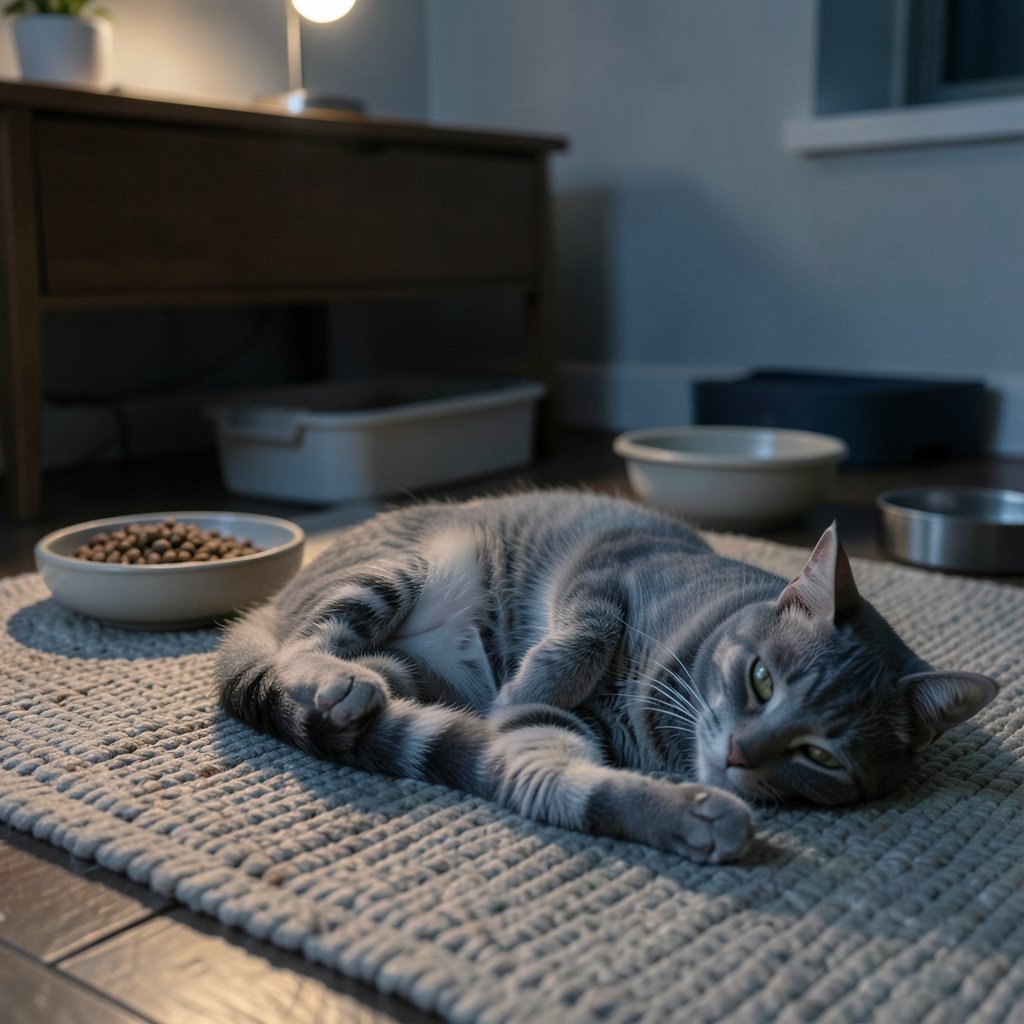
Quick Answer: Do cats break wind?
Yes. Cats do pass gas, and in small amounts it is a normal part of digestion. Most owners simply never notice it, because cats are discreet and much of the gas produced is odorless. You can act on this by watching how often it happens, how strong the smell is, and whether it shows up alongside other signs like soft stool or appetite changes.
The main distinction is between occasional gas after a meal or a diet change and frequent, foul-smelling flatulence that keeps coming back. The first is usually harmless; the second is worth a conversation with a veterinarian. (Flatulence)
Before you worry or change anything, check the basics: diet and recent food switches, how fast your cat eats, treat and table-food habits, litter box output, and any vomiting, weight loss, or diarrhea.
Why the “cats don’t fart” myth survives
Ask a room of cat owners whether their pet passes gas and you will get a split response. Half laugh and nod. The other half insist, with total confidence, that their cat simply does not do that. Both groups are describing real experiences, which is exactly why the myth hangs around. (Cloud security posture management challenges that break real)
Cats are quiet, private animals. A dog will announce intestinal gas with a look of surprise and a loud noise; a cat may slip under a sofa and handle it without a sound. Many episodes produce little or no odor, so there is nothing to notice. Add the fact that most cat flatulence happens at a low enough rate that an owner might catch it once or twice a month, and it becomes easy to conclude it never happens at all.
There is also a framing problem. Veterinary writing about flatulence leans heavily toward dogs, so cat owners read dog-focused advice, do not recognize their pet in it, and assume the issue does not apply. It does. It is just discussed less.
What actually causes gas in cats
Intestinal gas comes from two places: air your cat swallows and gas produced by bacteria fermenting food in the colon. Both routes are ordinary. The question is always what is tipping the balance.
Swallowed air
Eating too fast, gulping, and eating from a bowl that forces an awkward head position all increase swallowed air. So can vigorous play right after a meal. This type of gas tends to be mild and short-lived.
Diet and fermentable carbohydrates
Cats are obligate carnivores. Their digestive tract is built around meat, and their natural prey contains very little carbohydrate. Modern commercial foods, especially some dry formulas, carry more plant fiber and starch than a cat’s gut is designed to handle efficiently. Undigested carbohydrate ferments in the colon and produces gas. High-fiber weight-management foods and foods with a lot of legume content are common culprits. For a deeper look at how the feline digestive system works, the Cornell Feline Health Center’s health information library covers feline digestion and related disorders in detail.
Sudden food changes
Switching brands or flavors overnight is one of the most common triggers owners can actually control. The gut bacteria that break down food need time to adjust. A gradual transition over seven to ten days, mixing increasing amounts of the new food into the old, prevents most of the gas that follows an abrupt switch. (Amazon s3 production mistakes that quietly break your stack)
Food intolerance and lactose
Many adult cats have limited ability to digest lactose. A saucer of milk or a spoonful of ice cream can produce gas, loose stool, and stomach upset. Dairy is not a natural part of the feline diet, and the classic image of a cat lapping milk is a cultural habit rather than good nutrition.
Treats, table scraps, and rich food
Fatty scraps, deli meat, and a handful of new treats can all unsettle digestion. Owners often forget these extras when reviewing their cat’s diet, but they frequently explain intermittent gas.
Eating non-food items
Some cats chew on houseplants, string, or wool. Foreign material can cause irritation and gas, and in serious cases an obstruction. If gas appears alongside vomiting or a cat that stops eating, that is a different situation entirely.
When gas is a symptom, not merely a meal effect
Most flatulence is a nuisance, not a disease. But gas that is persistent, unusually foul, or paired with other signs can point to something that needs treatment.
| Sign | Usually harmless | Worth a vet visit |
|---|---|---|
| Frequency | Occasional, after meals | Daily or near-daily |
| Smell | Mild to moderate | Strong, lingering, hard to ignore |
| Stool | Normal, well-formed | Diarrhea, mucus, or very soft stool |
| Appetite | Unchanged | Dropping or refusing food |
| Weight | Stable | Losing weight |
| Other signs | None | Vomiting, bloating, lethargy, straining in the litter box |
Conditions that can produce excess gas include intestinal parasites, inflammatory bowel disease, malabsorption problems, and bacterial overgrowth in the gut. None of these can be diagnosed from smell alone, which is why a veterinary exam and a stool sample matter more than internet guesswork.
A useful rule of thumb: gas alone, with a happy cat eating and behaving normally, is rarely urgent. Gas plus any of the warning signs in the table is a reason to book an appointment.
How to reduce gas at home
Most of the practical fixes are dietary and behavioral, and they cost little to try.
- Change food gradually. Blend old and new food over seven to ten days, increasing the new proportion slowly.
- Review the whole diet. Include treats, dental chews, table scraps, and anything the cat steals. Write it down; owners routinely underestimate this.
- Slow down fast eaters. A puzzle feeder or a wider, shallower bowl reduces swallowed air.
- Cut dairy entirely. Replace milk with fresh water and skip cheese and cream as treats.
- Try a simpler protein source. If gas persists on a food with lots of legumes, fiber, or by-products, a different formula or a limited-ingredient diet is a reasonable next step, ideally chosen with a vet.
- Keep meals consistent. Frequent flavor changes keep the gut guessing.
- Consider a vet-formulated diet. For cats with confirmed sensitivities, a veterinarian can recommend a hydrolyzed or novel-protein food. The Tufts University veterinary nutrition program explains how therapeutic diets are formulated and why they are not do-it-yourself projects.
Do not reach for human anti-gas remedies or probiotics without veterinary guidance. Dosing in cats is not simply scaled down from human amounts, and some over-the-counter products contain ingredients that are not appropriate for felines.
The practical side: what actually works in real households
Owners who solve a flatulence problem usually do it with observation, not products. The pattern that works looks like this: keep a simple log for two weeks, noting meals, treats, and gas episodes. Almost every case reveals a trigger, often a new treat or a food that was switched too quickly.
The second most effective habit is reading the ingredient panel rather than the front of the bag. Marketing language about “natural” or “premium” tells you nothing about fiber and carbohydrate content. The guaranteed analysis and ingredient list do.
Third, resist the urge to switch foods repeatedly. Each abrupt change restarts the adjustment period and can make the problem look worse than it is. Pick a sensible food, transition slowly, and give it three to four weeks before judging.
Finally, take the litter box seriously as a diagnostic tool. Stool consistency is the single best at-home signal of digestive health. If the box looks normal and the cat is bright and hungry, gas is almost certainly a minor issue.
Gas and the wider picture of cat health
Flatulence rarely travels alone. It is one data point in a system, and the same habits that reduce gas support general health: steady weight, good hydration, regular play, and routine veterinary checkups. Owners who manage a chronic condition such as kidney disease or diabetes often find that diet changes for the primary condition also change gas patterns, sometimes for the better.
For anyone running a larger operation, the same principle of catching small problems early applies well beyond pets. Teams that monitor their systems closely avoid the kind of quiet failures that pile up unnoticed, whether that means avoiding common object storage problems that quietly break production or steering clear of cloud load balancing mistakes that surface only under real traffic. The mindset is identical: watch the signal, not the assumption.
Conclusion
Cats break wind. They just do it quietly, sometimes odorlessly, and with none of the theatrical flair of a dog. Occasional gas after a meal is a normal byproduct of digestion and needs no treatment. The useful skill is telling ordinary gas apart from a signal that something in the gut needs attention.
Watch the frequency, the smell, and the company the gas keeps. If your cat is eating well, holding weight, and producing normal stool, you can relax and perhaps review the treat drawer. If gas is constant, foul, or paired with vomiting, diarrhea, or weight loss, let a veterinarian look at the whole picture. In most cases, a slow food transition and a simpler diet fix the problem entirely, and the only thing that changes is how often you notice it.
Frequently asked questions
Is it normal for a cat to fart every day?
Occasional daily gas can be normal, especially in cats eating a high-fiber or dry-food diet. What matters is the pattern. A cat that passes a little gas after meals while eating, playing, and using the litter box normally is fine. Gas that is constant, loud, and foul every single day deserves a veterinary check, since it may point to a diet that does not suit the cat or an underlying digestive issue.
Why does my cat’s gas smell so bad?
Smell comes from sulfur-containing compounds produced when bacteria ferment undigested protein and carbohydrate in the colon. Strong odor usually means more material is reaching the colon undigested than should be. Common reasons include a food that is too rich, a sudden diet change, food intolerance, or a gut that is not absorbing nutrients properly. If the smell is severe and persistent, a stool sample and vet visit are worthwhile.
Can kittens have gas?
Yes, and kittens are often gassier than adults. Their digestive systems are still developing, they eat frequently, and they may gulp food or transition between foods. Parasites are also more common in young kittens, so gas paired with a potbelly, loose stool, or poor weight gain should be checked by a veterinarian promptly.
Does milk really cause gas in cats?
For many adult cats, yes. Most cats lose much of their ability to digest lactose as they mature, so milk and dairy can cause gas, cramping, and diarrhea. Despite the popular image, cow’s milk is not a natural or necessary part of a cat’s diet. Fresh water is the better choice.
Can I give my cat human gas relief medicine?
No, not without veterinary advice. Products designed for people are not formulated or dosed for cats, and some ingredients are unsafe for them. If gas is frequent enough that you are considering medication, that is the point to involve a veterinarian, who can rule out parasites, food intolerance, or other conditions and recommend a feline-appropriate approach.
Do certain cat breeds fart more than others?
There is no reliable evidence that flatulence varies meaningfully by breed. Diet, eating speed, age, and individual digestive sensitivity explain far more variation than breed does. A cat of any breed can develop gas after a food change, and a cat of any breed can go months without a noticeable episode.



