

What scares people most about a manual car is not the gear lever. It is the third pedal. That small, innocent-looking clutch plate is the one thing that can make a car lurch, stall, or roll backward on a slope while the driver behind you waits with visible impatience. (Black friday car deals)
The good news is that driving a manual is a learnable mechanical skill, not a talent. It comes down to understanding what the clutch actually does, then building muscle memory through short, repeated practice sessions. This guide walks through the whole sequence: setting up, finding the bite point, moving off, shifting up and down, starting on hills, and avoiding the habits that quietly wear out a clutch.
What the Clutch Actually Does
Before touching the pedals, it helps to know what is happening under the floor. The clutch sits between the engine and the gearbox. It is a pair of plates that can be pressed together or pulled apart. When the plates are pressed together, engine power flows to the wheels. When they are separated, the engine spins freely while the gearbox does not.
That is why the clutch pedal has a bite point, also called the friction point. It is the moment during pedal release when the plates begin to touch and power starts to trickle through. Everything smooth about manual driving depends on feeling that point. A clutch that is fully down means no connection. A clutch that is fully up means a solid connection. The bite point is the grey zone in between, and it is where learners spend most of their early practice.
A useful way to picture the whole system, including how the gear lever selects different ratios through the H-pattern, is to read an explanation of how manual transmissions work before your first lesson. Understanding the layout makes the pedal movements feel less arbitrary.
Set Up the Car Before You Move
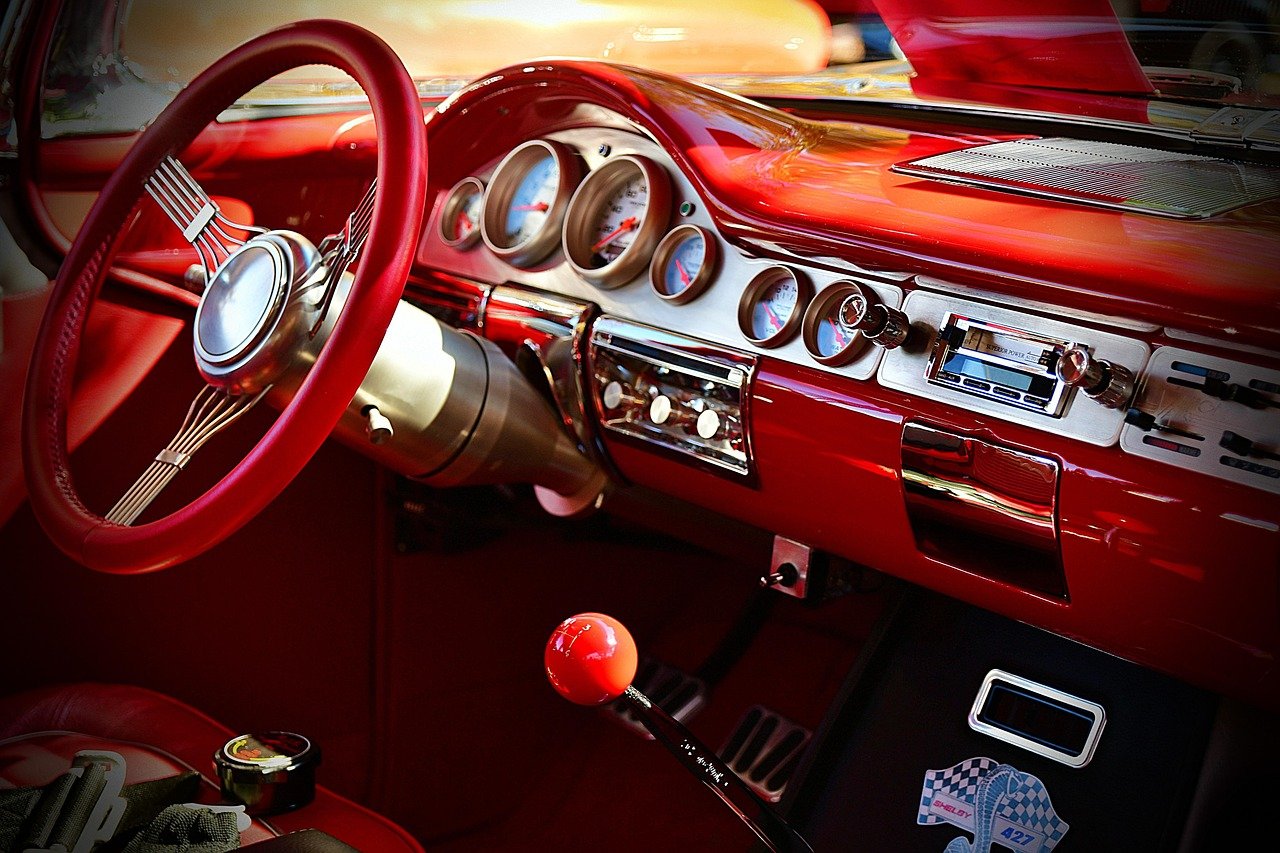
Most stalls in the first ten minutes come from a bad seating position, not bad technique. A driver who is too far from the pedals cannot press the clutch fully to the floor, and a clutch that is not fully disengaged will drag and fight every gear change.
- Press the clutch pedal to the floor with your left foot and check that your knee still has a slight bend.
- Adjust the seat back so your arms have a small bend when you hold the wheel at the top.
- Set the mirrors after the seat, never before.
- Check the gear lever is in neutral and the parking brake is on.
- Start the engine with the clutch pressed, a habit worth keeping.
In many modern cars the engine will only start with the clutch depressed, but older cars will happily start in gear and lurch forward. Pressing the clutch before turning the key removes that risk entirely.
Finding the Bite Point Without Stalling
The bite point is easier to learn on flat, quiet ground than in traffic. Find an empty car park or a quiet residential street. With the engine running, the parking brake on, and the gear lever in neutral, press the clutch down and release it very slowly.
Three things usually happen in sequence. First, the engine note drops slightly. Second, the car may shudder gently. Third, if you are in first gear with no throttle, the car will start to creep forward. That creeping moment is the bite point, and it is worth repeating ten or fifteen times until your left foot recognises it without you thinking.
A common beginner mistake is trying to find the bite point by watching the rev counter. It is far more reliable to listen to the engine and feel the car through the seat. Another common mistake is releasing the clutch in one smooth, fast motion, which is exactly how you stall. (Common google drive alternatives mistakes that cost teams)
Moving Off Smoothly in First Gear
Once the bite point feels familiar, the full pull-away becomes straightforward. The sequence below is the standard method taught in driving instruction and works in almost any manual car.
- Press the clutch fully down and select first gear.
- Bring the clutch up slowly until you feel the bite point.
- Add a small amount of throttle, roughly 1,000 to 1,500 rpm.
- Hold the clutch still at the bite point for a moment as the car begins to move.
- Release the clutch fully and add a little more throttle.
The pause at step four is the part learners skip. Holding the clutch briefly at the bite point lets the car and engine match speeds before the plates clamp together. Skip it and the car either stalls or jerks.
Practice this on a gentle slope if you can find one, because flat ground hides bad habits. A car that pulls away cleanly on a slight incline will feel easy everywhere else.
Shifting Up Through the Gears
Changing gear while moving is mechanically simple. The hard part is timing. In a standard H-pattern gearbox, the process is the same for every gear:
- Lift off the throttle.
- Press the clutch fully to the floor.
- Move the lever through neutral into the next gear.
- Release the clutch smoothly, without pausing at the bite point this time.
- Return to the throttle.
A rough guide for when to shift is around 2,000 to 2,500 rpm for normal driving, or higher if you need acceleration for a slip road or an overtake. Every car is different, so listen to the engine rather than chasing an exact number. If the engine sounds strained and high-pitched, shift up. If it sounds laboured and low, shift down.
Skipping gears is generally fine when you are accelerating gently, such as moving from third straight to fifth. It saves a shift and causes no harm as long as the engine is not lugging.
Downshifting and Engine Braking
Downshifting is where smooth drivers separate from jerky ones. When you change down, the engine speed needs to rise to match the road speed. If it does not, the car lurches forward as the clutch re-engages.
Two techniques help. The first is simply to release the clutch a little more slowly when changing down, giving the engine a moment to catch up. The second is rev matching: a brief blip of throttle while the clutch is down, raising the engine speed to roughly what it will need in the lower gear. Rev matching is a technique, not a legal requirement, but it makes downshifts noticeably smoother and reduces wear on the clutch.
Downshifting also gives you engine braking, the slowing effect of the engine resisting the wheels. It is useful on long descents and when approaching a junction, because it keeps the car stable and saves the brakes from overheating.
One habit to avoid is coasting, which means rolling with the clutch pressed down or the gear lever in neutral. Coasting removes engine braking and reduces your control of the car, and driving guidance generally discourages it. Stay in gear, with the clutch up, until you actually need to change.
Hill Starts With the Handbrake Method
Hill starts terrify learners, but the handbrake method turns them into a repeatable procedure. It is the approach taught for driving tests in the UK, and it works because the parking brake holds the car while your feet do the work.
- Stop on the hill with the footbrake and apply the handbrake.
- Press the clutch down and select first gear.
- Bring the clutch up to the bite point and hold it there.
- Add a little more throttle than you would on flat ground.
- Release the handbrake smoothly while keeping the clutch steady.
- Once the car is moving, release the clutch fully.
The skill is releasing the handbrake at the right moment. Too early and you roll back. Too late and the car strains against the brake. With practice, the handbrake release and the clutch hold become one coordinated movement.
Some drivers prefer the faster method of holding the car on the clutch bite point alone. It works, but it puts extra wear on the clutch and leaves less margin for error on a steep slope. For a learner, the handbrake method is safer and kinder to the car. (Musk fsd car attached really means drivers 2026)
What to Do When You Stall
Everyone stalls. The important thing is to restart calmly and quickly rather than panicking in the middle of a junction.
- Press the clutch fully down.
- Check the gear lever is in neutral, or keep it in first if you are ready to move.
- Turn the key or press the start button.
- Restart the pull-away sequence from the beginning.
Stalling happens when the clutch is released too quickly or too little throttle is applied, so the engine cannot overcome the load. If you stall repeatedly at the same spot, the fix is almost always more throttle and a slower clutch release, not a different technique.
Manual Versus Automatic: What Actually Changes
The table below sums up the practical differences a new driver will notice.
| Feature | Manual | Automatic |
|---|---|---|
| Pedals | Clutch, brake, accelerator | Brake, accelerator |
| Gear changes | Driver selects via lever | Car selects automatically |
| Hill starts | Requires clutch and handbrake coordination | Often assisted by the car |
| Stalling risk | Present, especially for learners | Essentially none |
| Driver engagement | High, more control over engine speed | Lower, simpler in traffic |
| Learning curve | Steeper, takes several sessions | Gentle, driveable almost immediately |
The trade-off is real. A manual gives more control, particularly on descents and in low-grip conditions, but it demands attention in stop-start traffic. An automatic is easier to live with in a city commute. Neither is objectively better; it depends on where and how you drive.
Licensing Rules Worth Knowing
Rules differ sharply between countries, and getting them wrong can affect what you are legally allowed to drive.
In the UK, passing a driving test in an automatic car restricts you to automatics. Passing in a manual gives you a full category B licence covering both. That single detail is why many UK learners insist on learning manual even if they plan to buy an automatic. The official driving guidance used by instructors covers clutch control, hill starts and gear use in detail, and it is worth reading alongside practical lessons.
In the United States, most states issue a standard driver’s licence that permits driving a manual car without a separate test. There is no federal manual-transmission endorsement, though state rules vary and change, so check your own state’s licensing authority before assuming. (Manual transmission)
Common Mistakes That Wear Out a Clutch
A clutch is a wear item, and a few habits shorten its life dramatically. The most expensive is riding the clutch, which means resting your left foot on the pedal while driving. Even light pressure keeps the plates partly separated, causing slip and heat.
The second is holding the car on a hill using the clutch instead of the handbrake. It feels convenient for a few seconds at a time, but it burns friction material. The third is resting your hand on the gear lever while driving, which puts pressure on the selector forks inside the gearbox. The fourth is dumping the clutch, releasing it instantly rather than smoothly, which shocks the whole drivetrain.
None of these mistakes cause instant damage. They simply add up, and a clutch replacement is not cheap. Treat the left foot as a pedal-only tool: press it, use it, then move it to the footrest.
Building Confidence Through Short Practice Sessions
Long driving lessons are not always the fastest route to competence. Twenty focused minutes of clutch practice beats two hours of nervous motorway driving for a beginner. Short sessions also reduce fatigue, which is when bad habits creep in.
A sensible progression looks like this: start with pull-aways on flat ground, then add gear changes on quiet roads, then hill starts, then busier traffic. Each stage builds on the last. Rushing to traffic before the bite point is automatic is the most common reason learners feel stuck. (National Highway Traffic Safety Administration)
It also helps to keep the mechanical side in perspective. A manual car is a machine with a few moving parts doing predictable things. Once the clutch, the gear lever and the throttle start working together, the whole process becomes background noise. Drivers who have done it for years do not think about gear changes at all, and that is exactly where practice leads.
Conclusion
Driving a manual car comes down to one skill above all others: feeling the bite point and holding it briefly while the car starts to move. Everything else, from shifting up through the gears to starting on a hill, builds on that single sensation. Set the seat up properly, keep your left foot off the pedal when you are not using it, use the handbrake on slopes, and practise in short, calm sessions rather than long stressful ones.
Stalling in the first few weeks is normal and harmless. What matters is restarting quickly, learning from each stall, and not letting a bad junction shake your confidence. With a handful of practice sessions, the clutch stops being a mystery and becomes an ordinary tool, and the car does what you ask without argument.
Frequently Asked Questions
How long does it take to learn to drive a manual car?
Most learners need somewhere between five and fifteen hours of focused practice to drive a manual confidently on normal roads. The bite point usually clicks within the first two or three sessions. Smooth downshifts and hill starts take longer because they need coordination rather than understanding.
Why does my car keep stalling when I pull away?
Almost always because the clutch is released too quickly or too little throttle is applied. Try holding the clutch still at the bite point for a beat longer, and add slightly more throttle before releasing it. Practise on flat, quiet ground until the sequence feels automatic.
Is it bad to hold the car on a hill with the clutch?
Yes, over time. Holding the car on the bite point keeps the clutch plates slipping against each other, which generates heat and wears the friction material. Use the handbrake for hill starts instead, and keep your left foot off the pedal once you are moving.
Can I skip gears when changing up?
Skipping gears is generally acceptable when you are accelerating gently, such as going from third straight to fifth. It saves a shift and does no harm as long as the engine is not labouring. Avoid skipping when you need power quickly, such as joining a fast road.
What is rev matching and do I need it?
Rev matching is a brief throttle blip during a downshift that raises engine speed to match the lower gear. It makes downshifts smoother and reduces clutch wear. It is a technique rather than a requirement, and many drivers manage perfectly well without it.
Do I need a special licence to drive a manual car?
It depends where you live. In the UK, passing your test in an automatic restricts you to automatics, while passing in a manual gives you a full licence covering both. In most US states, a standard driver’s licence covers manual cars with no separate test, though rules vary by state.



