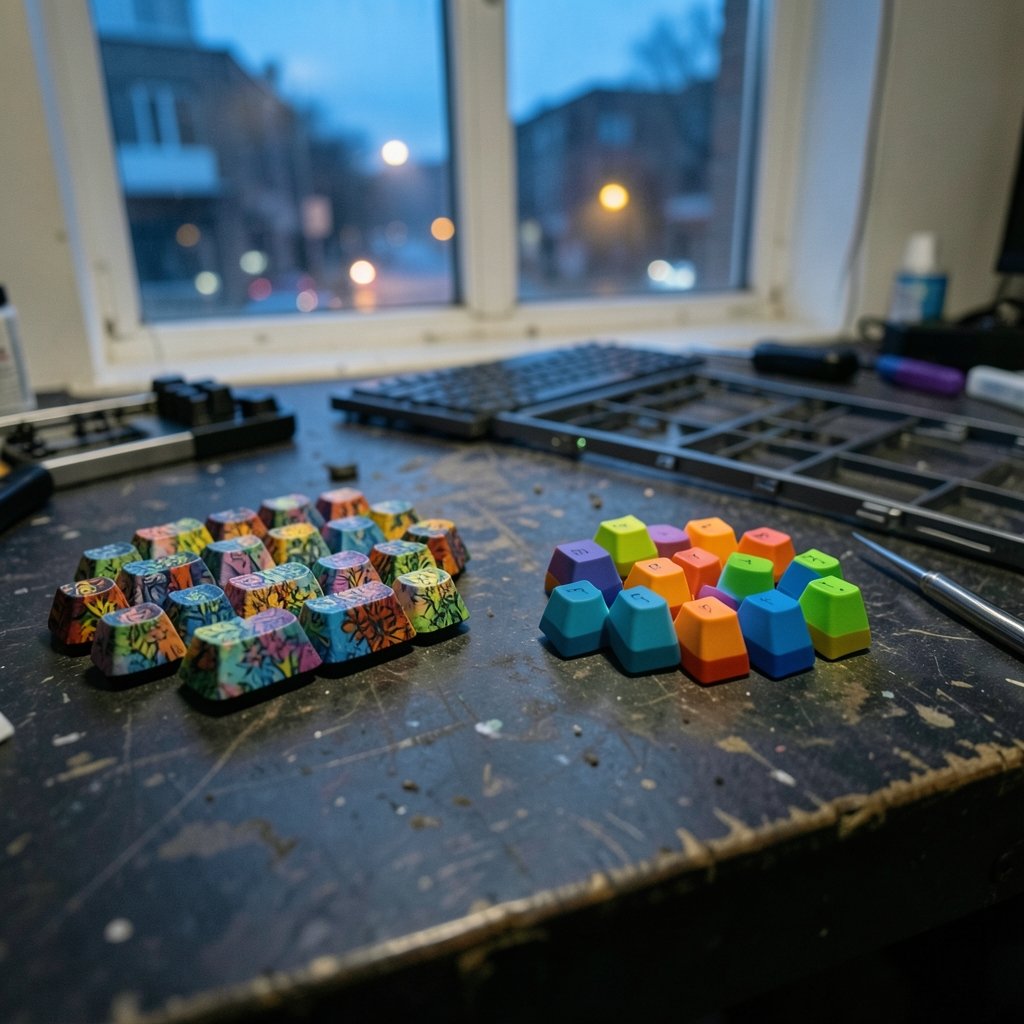
What happens to the letters on your keyboard after three years of daily typing, gaming nights, and the occasional coffee spill? If you have ever watched the legends on a cheap keyboard fade into gray smudges, you already know why the manufacturing method behind those little characters matters so much. Two names dominate the conversation among keyboard enthusiasts: dye-sublimation (dye-sub) and double-shot. Both are considered premium options, both cost more than pad-printed caps, and both promise legends that survive heavy use. But they are made in completely different ways, and that difference shapes everything from durability to backlighting to how much you will pay.
This guide breaks down the real-world differences, the myths that refuse to die, and the practical questions you should ask before spending money on a new keycap set. (Keycap)
What Double-Shot Keycaps Actually Are
Double-shot manufacturing is a molding process, not a printing process. Two separate shots of plastic are used. First, the legend plastic is molded into the shape of the letters. Then the cap body is molded around it. The legend material runs through the full thickness of the keycap, which means there is no surface layer to wear away. The letters are not on the cap. They are the cap, at least in the areas where the legend sits.
This is why double-shot legends are often described as permanent. Scratches, oils, and friction from thousands of keystrokes do not remove a legend that goes all the way through the plastic. The main trade-off is tooling. Each legend set needs its own mold, and molds are expensive. That cost structure tends to favor double-shot for large-volume standard layouts, where the tooling cost gets spread across many units.
Double-shot works with both ABS and PBT plastics. It also allows backlit legends when the legend plastic is translucent and the body plastic is opaque, which is why many RGB keyboards ship with double-shot caps.
What Dye-Sublimation Keycaps Actually Are

Dye-sub is a printing process that pushes dye into the plastic rather than sitting on top of it. Heat and pressure drive the dye below the surface, so the legend lives inside the material. That makes it far more resistant to wear than pad printing, where ink simply sits on the surface and rubs off over time.
The method works best on PBT, which is the plastic most dye-sub sets use. Dye-sub on ABS exists but is rare and generally less durable. Because dye-sub is essentially printing, it can produce more colors and finer detail per cap than double-shot, which is limited by the number of plastic shots used, usually two and occasionally three. That flexibility makes dye-sub popular for small runs, complex artwork, and multi-language legends where mold costs would be prohibitive.
The catch is backlighting. Dye-sub legends are typically opaque and do not transmit light well, so compatibility with backlit keyboards is limited. It is not impossible, since some vendors offer translucent dye-sub, but it is uncommon.
Dye-Sub vs Double-Shot: Side-by-Side Comparison
| Feature | Dye-Sublimation | Double-Shot |
|---|---|---|
| How legends are made | Dye printed into the plastic surface | Legend plastic molded through the cap |
| Best plastic | PBT (ABS rare, less durable) | ABS and PBT |
| Legend durability | Very high, embedded in material | Very high, runs through full thickness |
| Color and detail range | Wide, printing allows fine detail | Limited by number of plastic shots |
| Backlight compatibility | Limited, legends usually opaque | Good, translucent legends possible |
| Tooling cost | Lower, no legend molds needed | Higher, one mold per legend set |
| Best for | Small runs, complex or multi-language legends | Large-volume standard layouts |
The table makes one thing clear: neither method wins across the board. The right choice depends on what you value.
Durability: The Question Everyone Asks First
Legend durability is the headline topic, and the honest answer is that both methods sit at the top of the heap. Community consensus on forums like r/MechanicalKeyboards and Geekhack generally ranks double-shot and dye-sub above laser-etched and pad-printed caps. If your previous keyboard had letters that faded, you were probably using one of those cheaper methods.
Where the comparison gets murky is the claim that one is meaningfully more durable than the other. Much of what circulates online comes from vendor marketing rather than independent abrasion testing, and there is no well-known public study that directly compares dye-sub and double-shot legend wear under identical conditions. In practice, both survive years of typing. The bigger variable is often the plastic itself.
PBT versus ABS matters as much as the legend method. PBT is generally more resistant to shine and wear, while ABS is softer and tends to develop a glossy shine with use. A dye-sub PBT set and a double-shot PBT set will both hold up well. A double-shot ABS set may show shine on the key surfaces long before the legends give out. Legend method and plastic type are separate variables, and treating them as one is the most common mistake buyers make.
Backlighting: Where Double-Shot Pulls Ahead
If you run an RGB keyboard and want the legends to glow, double-shot has a structural advantage. Translucent legend plastic surrounded by opaque body plastic lets light pass through the characters cleanly. Dye-sub legends are typically opaque, so light either does not pass through or produces a muted, uneven effect.
That said, backlight compatibility depends on the specific product, not the category as a whole. Some vendors do offer translucent dye-sub caps, and some double-shot sets use opaque legends that block light just as effectively. Check the product listing rather than assuming the method guarantees the result. If backlighting is a priority, this is the one area where the manufacturing method genuinely narrows your options.
Cost, Tooling, and Why Small Runs Favor Dye-Sub
Double-shot tooling costs are higher because each legend set needs its own mold. That economics pushes double-shot toward large-volume standard layouts, where the mold cost is amortized across thousands of units. It also explains why unusual layouts, niche language sets, and custom artwork often arrive as dye-sub: no legend molds are required, so small runs stay affordable.
For buyers, this shows up as pricing and availability. Standard ANSI double-shot sets are widely stocked and competitively priced. Exotic layouts in double-shot are rarer and more expensive. Dye-sub fills that gap, which is why it dominates group buys for complex designs.
Colors, Detail, and the Limits of Two Shots
Because dye-sub is a printing process, it supports more colors and finer detail per cap. Gradients, fine line art, and multi-color sublegends are all achievable. Double-shot is limited by the number of plastic shots, usually two and sometimes three. A two-shot cap can show two colors in the legend area, and that is it.
For most people typing on a standard layout, this hardly matters. For anyone chasing a specific aesthetic, a themed set, or a language layout with complex characters, dye-sub opens doors that double-shot cannot. The trade-off is the backlighting limitation described above, plus the fact that dye-sub quality varies more between manufacturers. A poorly executed dye-sub set can look blurry or uneven, while double-shot legends are crisp by nature of the molding process.
Practical Tips and Common Mistakes
Buying keycaps is where enthusiasm meets fine print. A few habits separate a good purchase from a regret.
- Check the plastic before the legend method. A well-made PBT set of either type will outlast a cheap ABS set. The material drives feel, sound, and shine resistance.
- Do not assume dye-sub means PBT. It usually does, but ABS dye-sub exists. Confirm the material in the specs.
- Verify backlight compatibility per product. The method is a hint, not a guarantee. Look for explicit statements about light transmission.
- Match the layout carefully. Standard ANSI sets are easy to find in both methods. Unusual layouts narrow your options fast.
- Expect dye-sub quality to vary. Double-shot legends are consistently crisp because they are molded. Dye-sub depends on the printer, so read reviews with photos.
- Consider the whole build, including the board. A wobbly board undermines good keycaps. If you are setting up a workstation, the best keyboard stand for stage performance guide covers stability for players who perform live, and knowing your Windows keyboard shortcuts makes any layout more productive.
One more mistake worth naming: chasing legend durability while ignoring how you type. Heavy typists generate more friction and oil, and any cap will show wear eventually. Cleaning your keyboard regularly does more for longevity than agonizing over manufacturing methods.
Who Should Choose Which
Choose double-shot if you want backlit legends, a standard layout, crisp lettering straight out of the box, and the reassurance of a legend that runs through the full cap thickness. It is the safer default for most buyers, especially anyone with an RGB board.
Choose dye-sub if you want a specific colorway, a complex or multi-language legend set, a niche layout, or a small-run design that would never justify double-shot tooling. Pair it with PBT and you get a durable, great-feeling set with more visual freedom.
Neither choice is a mistake. The mistake is buying on the method alone without checking plastic, layout, and backlight needs. If you are building out a desk setup for family game nights as well as work, the same logic applies to the rest of your table: the best board games for families and the best board games 2025 roundups follow the same principle of matching the product to the actual use case.
Conclusion
Dye-sub and double-shot are both premium legend methods, and both leave pad printing and laser etching far behind. Double-shot molds the legend through the cap, which makes it permanent, backlight-friendly, and consistently crisp, at the cost of higher tooling and less color flexibility. Dye-sub prints dye into the plastic, which delivers excellent wear resistance plus more colors, finer detail, and affordable small runs, with limited backlight support and more variation between manufacturers.
The deciding factors are rarely about durability alone. Check the plastic first, confirm backlight compatibility for your specific product, match the layout, and pick the method that fits your aesthetic. Do that, and your legends will outlast the keyboard they sit on.
FAQ
Is dye-sub better than double-shot?
Neither is universally better. Dye-sub offers more colors, finer detail, and cheaper small runs. Double-shot offers backlight-compatible legends and consistent crispness. The right pick depends on your layout, lighting, and design goals.
Do dye-sub legends fade over time?
Dye-sub legends are driven into the plastic rather than printed on top, so they resist wear far better than pad-printed legends. Under normal use they hold up for years. Heavy friction and oils will eventually affect any cap, but fading is not the typical failure mode.
Can double-shot keycaps be backlit?
Yes, when the legend plastic is translucent and the body plastic is opaque. That combination lets light pass through the characters. Not every double-shot set is built this way, so check the product specs before buying.
Is dye-sub always made of PBT?
No. Dye-sub works best on PBT and most dye-sub sets use it, but ABS dye-sub exists. It is less common and generally less durable. Always confirm the plastic in the product listing rather than assuming.
Why are double-shot keycaps more expensive?
Each legend set requires its own mold, and molds are costly. That tooling expense is spread across large production runs, which is why double-shot is common for standard layouts and rare for niche ones. Dye-sub avoids legend molds entirely, keeping small runs affordable.
Which keycaps last longer, PBT or ABS?
PBT is generally more resistant to shine and wear, while ABS is softer and tends to develop a glossy shine with use. The plastic type often matters more for long-term feel than the legend method, so prioritize PBT if longevity is your main concern.