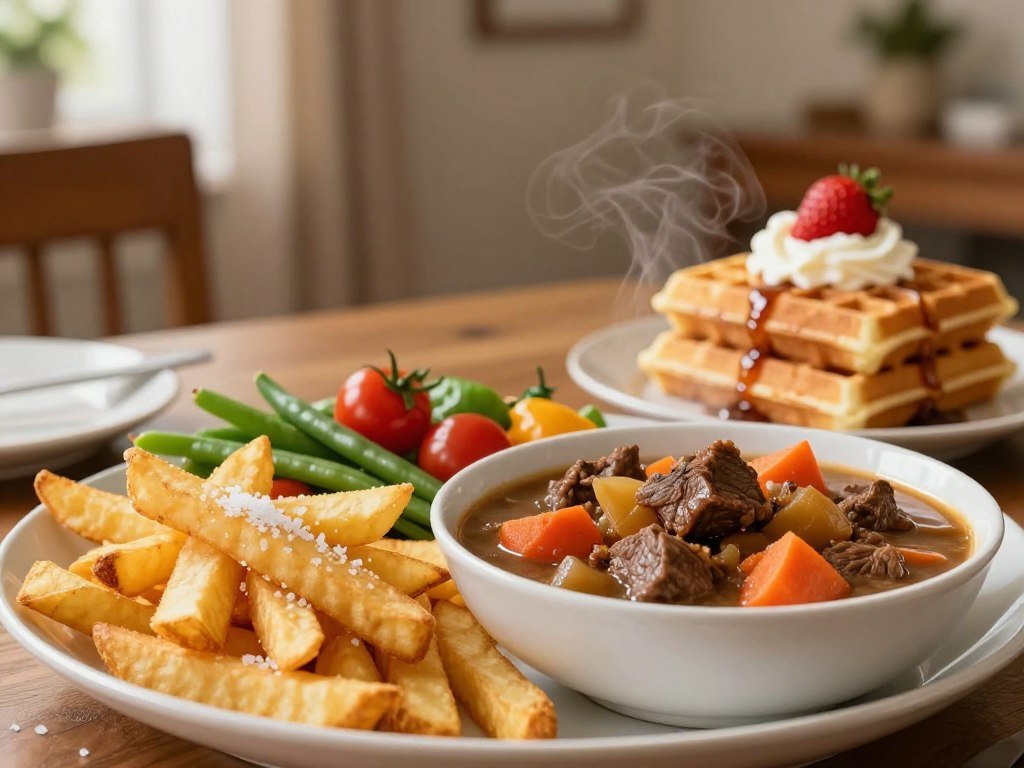
Belgian cooking brings together hearty stews, crisp fries, vegetable-rich comfort food, seafood and waffles, and many of its classics suit a home kitchen. You can make an inviting meal without special gear or advanced skills. Double-frying means cooking cut potatoes twice, first to soften them and then to brown and crisp them. The ten dishes here range from slow-cooked beef stew to quick vegetable sides and sweet waffles. Some need time at the stove, while others rely on simple steps and familiar ingredients. That makes them useful for a quiet dinner or a table shared with other people. You can start with one recipe and build confidence as you learn how each dish should look and taste. Choose a dish to match the time you have, since a slow stew and a quick vegetable side ask for different kinds of planning.
Key Takeaways
- Flemish beef stew needs slow, gentle cooking.
- Stoemp makes a flexible vegetarian main with potatoes and vegetables.
- Belgian frites get crisp through two frying stages.
- Brussels and Liège waffles have different textures and batters.
- Choose recipes by your time, ingredients, and diners’ needs.
Easy Belgian Recipes at Home: Ten Classic Belgian Mains
Three satisfying Belgian mains to start with are dark-beer beef stew, Ghent’s creamy waterzooi and sauced meatballs. These classic dishes make a filling meal, though each asks for a different pace. Belgian food includes many regional favorites, so the ten dishes here are classic home-cooking choices, not a measured national ranking.
Stoofvlees, also called Flemish beef stew, combines beef, dark beer, onions, herbs and spices. Bread often thickens the sauce as it cooks. Long, gentle cooking builds tender beef and deeper flavor, so this is not a quick dinner.
Treat these ten dishes as classic home-cooking choices, not a measured ranking of Belgium’s most popular foods.
For an easy shopping list, gather these five core ingredients before you start:
- Beef
- Dark beer
- Onions
- Bread
- Thyme
Some cooks marinate the beef before slow cooking, which gives the meat time to take on the beer and herbs. Add bay leaves and thyme for a familiar savory note. Serve the stew with frites, boiled potatoes, noodles, salad or vegetables.
Flemish Beef Stew With Dark Beer
Cut the beef into large pieces and brown it in a heavy pot. Soften the onions, then add the beer, herbs and bread. Cover the pot and keep the stew at a low simmer until the beef turns tender.
The sauce should taste rich and savory, with the dark beer adding depth rather than sharpness. If you enjoy comparing slow-cooked dishes, lamb caldereta offers another stew tradition with a different mix of meat, wine and herbs.
Gentse Waterzooi From Ghent
Gentse waterzooi began as a fish dish in Ghent. Traditional versions used fish such as carp, pike, eel and bass, while chicken is now more common in home cooking.
Cook carrots, leeks and potatoes in broth with the chicken or fish. Eggs, cream and butter thicken the broth into a soft, rich sauce. Keep the mixture warm as you stir, so the eggs blend smoothly instead of forming firm pieces.
This recipe suits a one-pot meal, since the vegetables cook with the main ingredient. Serve it in a deep bowl with bread to catch the creamy broth. A little chopped parsley adds a fresh finish.
Belgian Boulets With Tomato or Liège Sauce
Boulets are Belgian meatballs, often made with beef or a beef-and-pork mixture. Flemish versions may come with tomato sauce or a Belgian cherry sauce, which gives the dish a sweet, tart note.
Liège boulets use a different sauce made with beef stock, spices and sirop de Liège. This thick fruit syrup comes from apples and pears. Shape and brown the meatballs, then let them finish cooking in their chosen sauce.
Serve the meatballs with potatoes or a simple salad, depending on the sauce and the rest of the meal. The table compares the three mains by their main ingredients and cooking style.
| Dish | Main ingredients | Cooking approach | Usual accompaniment |
|---|---|---|---|
| Stoofvlees | Beef, dark beer, onions | Slow simmer | Frites or potatoes |
| Gentse waterzooi | Chicken or fish, vegetables, cream | Gentle one-pot cooking | Bread or potatoes |
| Boulets | Beef meatballs, tomato or fruit sauce | Brown, then simmer in sauce | Potatoes or salad |
Keep the stew at a gentle simmer, because rushing its long cooking works against tender beef.
Which Belgian Vegetable Dishes Are Easiest to Make?
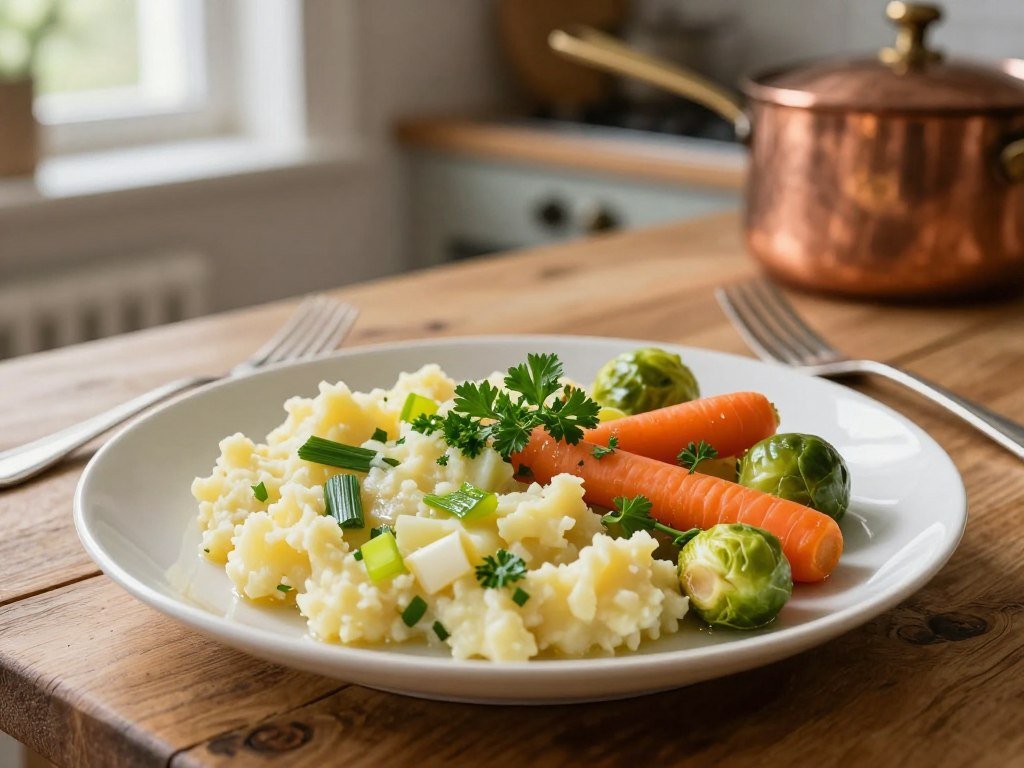
Stoemp is the clearest vegetarian main in this group, while chicons au gratin brings ham, endive and cheese together as comfort food. Stoemp means mashed potatoes mixed with mashed vegetables, and you can vary the vegetables to suit what you have. The ham in chicons au gratin means that dish is not vegetarian as written.
For four to six servings, plan about 1 hour and 5 minutes for stoemp. The recipe uses 2 pounds of potatoes, 1 large carrot, 1 leek, 1 small savoy cabbage, 1 large onion, 2 garlic cloves, 1/2 cup milk or cream, and 4 tablespoons butter.
Choose five familiar vegetables for a flexible batch:
- Carrots
- Leeks
- Kale
- Brussels sprouts
- Spinach
Peel and chop the potatoes and carrot, then boil them until tender for about 15-20 minutes. In a second pan, sauté the remaining vegetables until soft, about 10-15 minutes. Drain the potatoes and carrot, then mash them with the cooked vegetables.
Stir in the milk or cream and butter until the mixture feels soft but still has some texture. You can leave stoemp as a vegetarian main or serve it with Belgian sausage or meatloaf. A German knockwurst is a separate sausage style, not a Belgian dish, but it can also accompany a potato-and-vegetable plate.
If you want to compare sausage types before choosing a side, see this guide to knockwurst options and cooking. The choice of sausage does not change the basic stoemp method.
Stoemp With Leeks and Other Vegetables
Leeks, cabbage and onion bring a mild savory taste, while carrots add a little sweetness. Kale, Brussels sprouts or spinach can replace the cabbage. Cook each vegetable until soft before mixing it with the potatoes.
Keep a few lumps if you like a rustic mashed potato dish. For a smoother result, mash the vegetables more fully and add the milk or cream a little at a time. The mixture should hold together without turning soupy.
Chicons au Gratin With Ham and Cheese
Chicons au gratin is endive wrapped or combined with boiled ham and cheese, then baked until hot and tender. In Belgium, endive is called chicons. A regional cheese gives the baked dish a savory top and a rich finish.
Mashed potatoes are the traditional side. The ham and cheese make the dish hearty, so you can keep the rest of the plate simple. If you enjoy other ham-and-cheese foods, a ham and cheese empanada has a different pastry shell and filling style.
For a meat-free plate, serve the stoemp on its own and check that the milk, cream and butter suit your diet.
How Do You Cook Belgian Fish at Home?
Sole meunière is a manageable first fish dish because its method is a seasoned flour coating and a quick butter pan-fry. Its short ingredient list lets you focus on the fish instead of a complex sauce. Finish it with lemon juice and chopped parsley, then serve it with potatoes.
Sole meunière means “miller’s wife.” Season flour, coat the fish lightly, then pan-fry it in butter until cooked through and golden. Spoon the warm butter from the pan over the fish, then add lemon juice and parsley.
Serve the sole with boiled or mashed potatoes and a simple salad. The mild fish and lemon butter sauce work well with plain sides. Use a wide pan so the fillets lie flat and brown evenly.
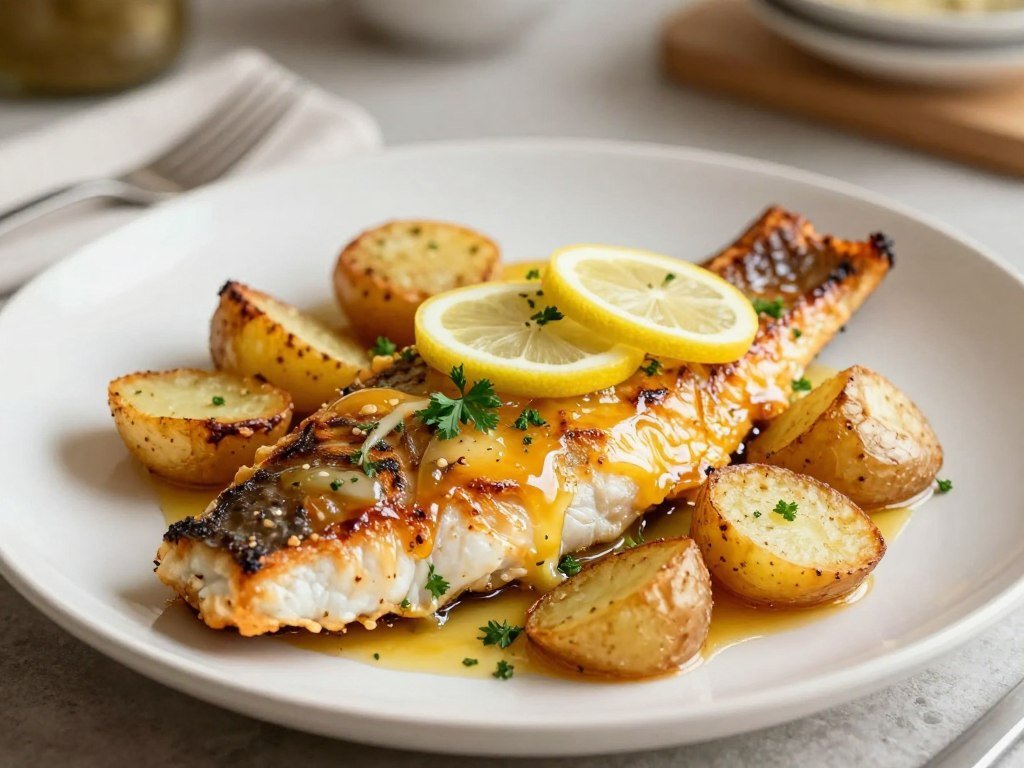
Sole Meunière With Brown Butter
Dry the fish before coating it, so the flour sticks in a thin layer. Shake off extra flour before placing each fillet in the pan. The coating should turn lightly golden without becoming thick or doughy.
Let the butter melt and foam before adding the fish. Cook the fillets with care, since thin fish can break if you turn it too often. Lemon and parsley cut through the butter’s richness.
The name may sound formal, but the steps are direct. Keep the side dishes simple while you learn how the fish feels when done. A flexible fish spatula can help lift each fillet intact.
Eel in the Green Sauce
Eel in green sauce uses a vivid mix of fresh herbs. Common choices include chervil, sorrel, parsley, mint, watercress, basil and thyme. The exact blend can change, but several herbs create the sauce’s fresh, grassy character.
Cook the eel in the sauce base, then stir in the chopped herbs at the end. Heat can dull their color, so adding them at the last minute keeps the sauce greener. Serve the eel with potatoes or bread to catch the sauce.
The traditional eel-fishing area along the Scheldt lies between Dendermonde and Antwerp. That riverbank tradition helps explain the dish’s regional history, but it is not a requirement for cooking eel at home.
Fresh herbs give the sauce its color and flavor, so chop them close to serving time. Avoid simmering the finished sauce for long after they go in. Add the green-sauce herbs at the end so they keep their fresh color.
What Makes Belgian Fries and Moules Frites Different?
Belgian frites get their crisp outside from two separate frying stages, while moules frites pairs them with mussels. The two-step method starts with softening the potato and ends with browning its surface. Do not brown the fries during the first fry.
Use 2 pounds of floury potatoes, cut into thicker sticks than typical French fries. Beef tallow gives the fries a traditional flavor, while vegetable oil works as a vegetarian substitute. Dry the cut potatoes well before lowering them into hot fat.
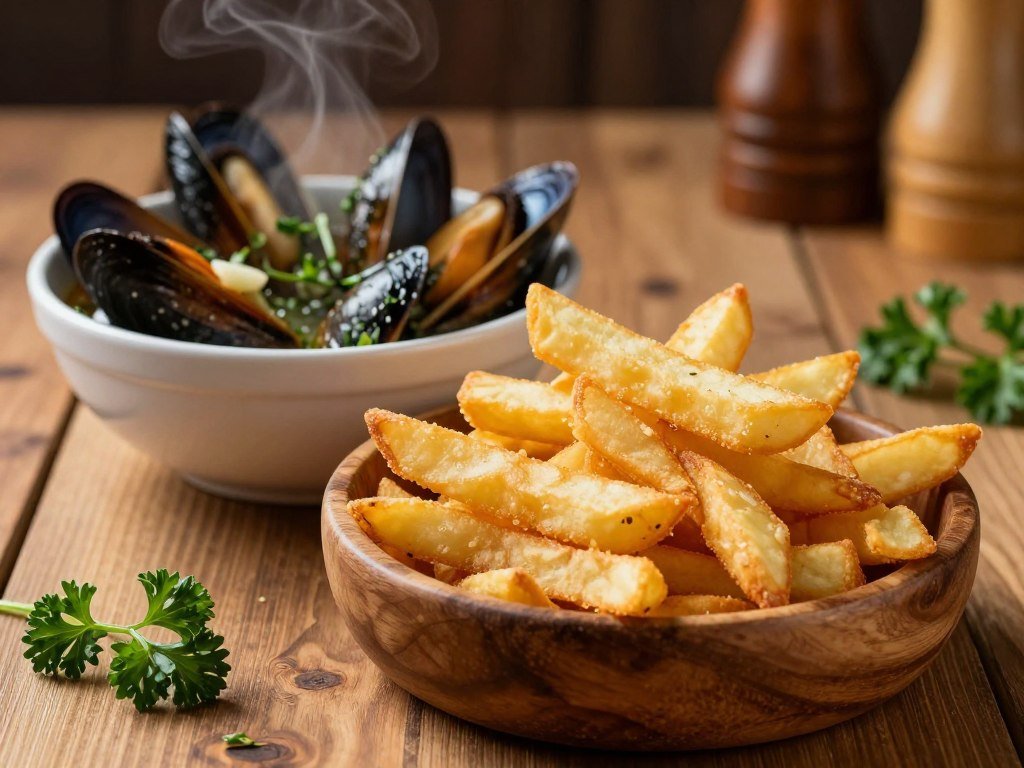
Double-Fried Belgian Frites
For the first fry, heat the fat to 285 degrees Fahrenheit. Fry the potatoes for about 5 minutes, until they soften but do not brown. Lift them out and let them rest before the second stage.
Heat oil to 356 degrees Fahrenheit for the second fry. Cook the potatoes for a few minutes, until they turn golden and crisp. A crowded pan can lower the heat, so fry in batches when needed.
One common mistake is leaving the potatoes in the first fry until they look golden. That stage should soften the center, not brown the outside. Belgian fries are usually served with mayonnaise and coarse sea salt.
At a mobile frietkot, or fry stand, frites often come in a paper cone. It is an easy street-food meal to eat on the go. For the best texture at home, serve the fries soon after the second fry.
Moules Marinière With Fries
Moules marinière cooks mussels with white wine, shallots, parsley and butter. Steam the mussels in the seasoned liquid until their shells open, then serve them with frites. The broth at the bottom of the pot carries the wine and shallot flavor.
Belgian beer can replace the white wine, while cream or vegetable stock can change the broth. Choose a liquid that suits the flavor you want. A parsley finish keeps the pot bright and ties it to the fries.
Moules frites makes mussels fries more than a side dish: the frites share the meal with the shellfish and cooking broth. Use a wide pot, so the mussels have room to heat evenly. Discard mussels that remain closed after cooking.
If cooking the fries for vegetarians, use vegetable oil instead of beef tallow.
Can You Make Belgian Starters Without Meat?
A meat-free toast cannibale can use blended kidney beans and vegan condiments in place of raw minced beef. The spread keeps the familiar savory style without the meat. Belgian filet Américain is seasoned raw minced beef, so it is not the vegan version.
Traditional filet Américain can be served on crackers as a starter or spread on bread for toast cannibale or a Martino sandwich. It may also come with frites and pickles. Keep that raw beef preparation separate from the kidney-bean spread when serving guests.
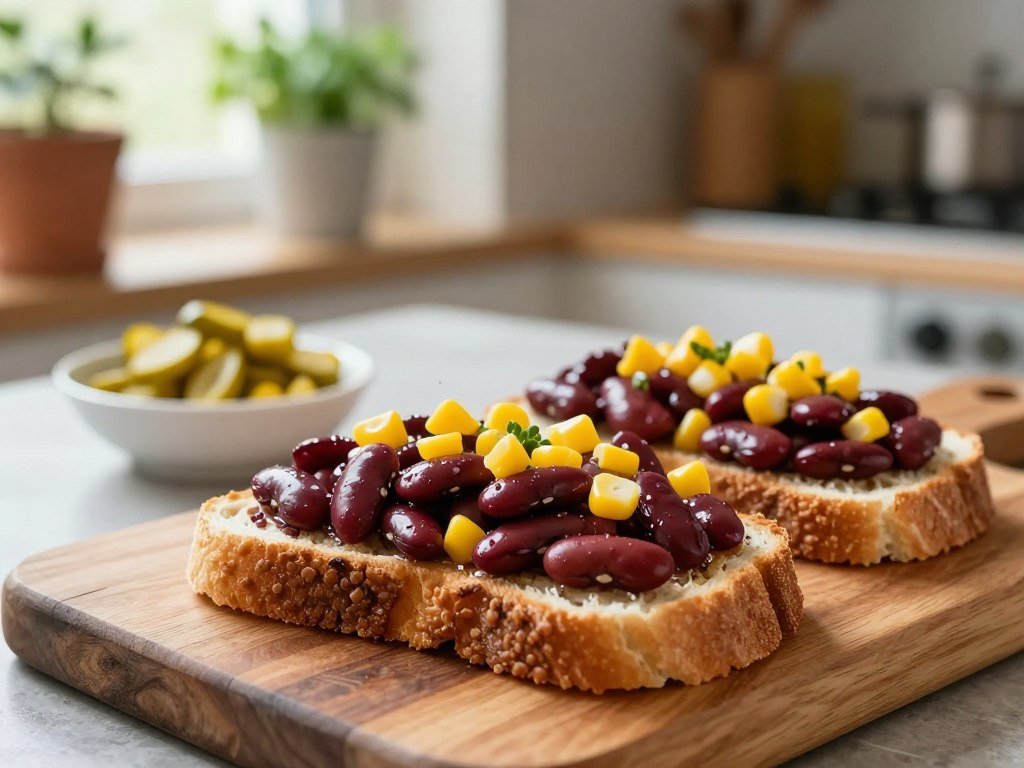
Vegan Toast Cannibale
For four toasts, use 1 can of red kidney beans, 1 tablespoon capers, 5 cornichons or gherkins, 1 tablespoon minced red onion, and 1 tablespoon minced parsley. Add 1 tablespoon Dijon mustard, 3 tablespoons vegan mayonnaise and 1 teaspoon vegan Worcestershire sauce.
Drain the beans, then blend them with the vegan mayonnaise and Worcestershire sauce. Chop the capers, cornichons, onion and parsley, then mix them in with the mustard. The spread should be thick enough to sit on toast without running.
Adjust the texture by blending the beans more or less, depending on whether you want a smooth spread or a coarse one. Spoon it onto four pieces of toast. A little chopped parsley on top makes the ingredients easy to spot.
The vegan recipe draws on the same kind of seasoned, spreadable bite, but its base is beans rather than beef. Check the labels on the condiments if the dish must stay vegan. Regular Worcestershire sauce may contain fish, so choose a vegan version.
Gray Shrimp as a Belgian Starter
North Sea gray shrimp is another familiar Belgian starter. It appears as tomate crevette, with shrimp served in a tomato, or as shrimp croquettes. Small bowls of shrimp can also make a snack alongside beer.
Oostduinkerke is known for horseback shrimp fishing, a tradition recognized by UNESCO. The practice gives the coastal shrimp dishes a strong local link. At home, serve gray shrimp chilled in a tomato or warm inside crisp croquettes.
Tomate crevette makes a neat first course, while croquettes offer a crisp outside and soft center. Either choice provides a contrast to the bean spread. Gray shrimp has a distinct North Sea taste, so keep added seasoning simple.
Keep the traditional filet Américain and its kidney-bean vegan version clearly labeled when serving a mixed group.
Which Belgian Waffle Style Should You Choose?
Choose Brussels for a lighter, crisp waffle with deep pockets, or Liège for a richer, chewy waffle with caramelized pearl sugar. The batter sets the difference before the waffles reach the iron. Pearl sugar melts and caramelizes in Liège waffles as they cook.
Brussels waffles use a yeast-leavened batter. They are rectangular, light and crisp, with defined edges and deep pockets. They are usually served warm with confectioner’s sugar.
Liège waffles use a thicker batter that feels more like bread dough. Pearl sugar gives them a chewy center and a caramelized outside. Waffles in Belgium are often dessert or a midday snack, not mainly a breakfast food.
Brussels Waffles
For a basic home batter, mix flour with a leavener, milk, melted butter, egg and vanilla. Whisk until the batter looks smooth, then let it rest briefly while the waffle maker heats. This quick method is different from a yeast-leavened Brussels batter.
Pour the batter into a preheated waffle maker and cook until the outside turns golden. A basic batter gives you a simple crisp waffle, though it does not copy the yeast flavor of the Belgian style. Add confectioner’s sugar when serving.
Brussels waffles work well when you want a lighter texture and pockets that hold a topping. Their rectangular shape also makes them easy to split and share. Let the iron heat fully before adding batter for even browning.
Liège Waffles
For Liège waffles, use a thick, bread-dough-like mixture and fold pearl sugar through it. The sugar pieces soften and caramelize against the hot iron. The finished waffle is thicker and chewier than a Brussels waffle.
A standard thin batter will not give the same result. Pearl sugar keeps its shape long enough to create small sweet pockets and crisp edges. Serve the waffle warm as a snack or dessert.
| Feature | Brussels waffle | Liège waffle |
|---|---|---|
| Batter | Yeast-leavened batter | Thick, bread-like dough |
| Shape | Rectangular, defined edges | Thick, rounded shape |
| Texture | Light and crisp | Chewy and rich |
| Sweetener | Confectioner’s sugar topping | Pearl sugar in the dough |
| Typical serving | Warm dessert or snack | Warm snack or dessert |
For the most recognizable Liège texture, use pearl sugar rather than treating it as an optional garnish.
Which Belgian Sauces Go With Fries and Sandwiches?
Andalouse brings a creamy, mildly spicy option, while pickles add a sharper contrast to fries and sandwiches. The difference is texture and taste: andalouse is a sauce, while pickles are a sharp condiment. Pickles can balance a rich sandwich better than another creamy topping.
Andalouse works with fries and sandwiches when you want a soft, gently spicy flavor. It adds richness without the plain taste of a mild cream sauce. Use a small amount first, then add more if you want its flavor to stand out.
Pickles bring a sharp, acidic bite rather than a smooth sauce texture. They suit sandwiches and fries, especially when the rest of the plate feels rich. Tartar sauce offers a creamy, herb-forward choice that pairs well with fish and fries.
| Condiment | Character | Pairing |
|---|---|---|
| Andalouse | Creamy and mildly spicy | Fries and sandwiches |
| Pickles | Sharp and acidic | Sandwiches and fries |
| Tartar sauce | Creamy and herb-forward | Fish and fries |
Think about the other flavors on the plate before choosing a topping. Creamy sauce adds richness, while pickles cut through it. For a sandwich with a rich filling, the crisp, sour bite can feel more balanced.
Use tartar sauce with fish when you want a cool, herby finish. It also works with fries, but its creamy texture makes it different from pickles. Andalouse brings mild heat without the sharp edge of vinegar.
Pair a rich sandwich with something sharp and acidic when you want contrast instead of another creamy condiment.
How Do You Build a Belgian-Style Meal?
A Belgian-style meal can be as simple as one substantial main, an appropriate side and a drink that suits the table. Start with what your diners enjoy, then choose a meat, seafood or vegetable-centered plate. Beer or wine commonly accompanies Belgian food, including dessert.
Flemish cooking has a strong Dutch influence, while Walloon cooking is more like French cuisine and often uses rich sauces. Those broad regional styles offer different ways to shape a meal. You do not need to follow a fixed menu to make the table feel Belgian.
For the best Belgian foods to serve, choose based on your guests’ preference for meat, seafood or vegetables rather than treating any list as a national ranking.
- For a hearty meal, serve Flemish beef stew with frites and a glass of beer.
- For a seafood meal, serve sole meunière with potatoes and wine.
- For a vegetarian-friendly meal, serve stoemp with vegetable-oil fries and a nonalcoholic drink.
Beer can match a savory main, while wine gives you another familiar choice. Dessert can also pair with either drink, depending on what you serve. A glass of water on the table gives everyone an easy option.
Keep the side dish simple when your main needs most of your time at the stove.
For a casual dinner, choose one main that fits your cooking time and let the side handle the rest. A stew can cook while you prepare a salad, while fries need attention near serving time. Before cooking for a group, check whether every side, sauce and drink fits the diners’ dietary needs.
Conclusion
Belgian cooking is approachable when you begin with one dish that fits your schedule and the ingredients you enjoy. You do not need to plan a full regional menu for your first meal. A simple recipe lets you focus on its texture, seasoning and cooking method.
Stoemp is a practical starting point if you want a savory dish with vegetables and potatoes. Waffles offer a sweet choice, and the two styles let you choose between a light crisp bite and a chewy one. Pick one recipe, check its ingredients before you shop, and make it your first Belgian meal at home.
FAQ
Can I plan a Belgian-style menu without meat?
Yes, you can build a Belgian-style menu without meat by serving stoemp as the main, vegetable-oil fries, and vegan toast cannibale. Stoemp can stand on its own as a vegetarian meal. Check each sauce and side for animal ingredients, since butter, cream, eggs or meat stock may appear in prepared foods. Label the vegan spread clearly at the table.
Can I use regular sugar instead of pearl sugar in Liège waffles?
Regular sugar will not create the same distinct caramelized texture as pearl sugar in Liège waffles. The larger sugar pieces soften and brown as the waffle cooks, giving it sweet pockets and crisp spots. Granulated sugar blends into the dough more easily. If you want the chewy Liège style, use pearl sugar rather than regular sugar.
Can I make Belgian recipes without beer or wine?
Yes, you can replace beer or wine with broth or water in savory recipes that call for them. Broth adds more savory flavor, while water keeps the taste lighter. Choose a nonalcoholic drink for the table if you are avoiding alcohol. The right swap depends on the dish, so add the liquid in the same role as the original.
What is a good Belgian seafood dish for someone new to cooking fish?
Sole meunière is a good first Belgian fish dish because it uses a seasoned flour coating and a quick butter pan-fry. Lemon juice and parsley finish the fish, and potatoes make a simple side. Mussels are another classic choice, but shellfish need their own cleaning and cooking steps. Start with sole if you want the simpler method.
How can I serve Belgian food to guests with different dietary needs?
Serve a meat dish beside a vegetarian main, then use vegetable oil for fries and label the vegan spread separately from raw beef. Keep serving spoons apart so guests can choose safely. Ask about allergies before you cook, especially when the menu includes cheese, eggs, shellfish or sauces. Check packaged ingredients, since recipes and prepared condiments can vary.
Are Belgian recipes suitable for a casual dinner party?
Yes, Belgian recipes suit a casual dinner party when you choose one main and a side that can be prepared ahead. A slow stew leaves you free to set the table, while a simple vegetable side needs little last-minute work. Cook fries or waffles close to serving so they keep their texture. Offer a clear choice of drinks with the meal.



