What happens to a country’s money when the government decides its own currency isn’t working? El Salvador answered that question twice in two decades, and the answers tell you almost everything you need to know about how money works in the country today. The first answer was the U.S. dollar. The second was bitcoin. One stuck. One got rewritten. Understanding El Salvador’s money means understanding both, plus the remittance economy that quietly holds the whole thing together. (Gift card scam works victims rarely get their money back)
From the Colón to the Dollar
For most of the twentieth century, El Salvador’s money was the colón, issued by the Banco Central de Reserva and carrying the ISO 4217 code SVC. If you’re curious how currency codes are assigned and maintained, the ISO 4217 standard list explains the system that gives every currency a three-letter identifier. The colón served as both unit of account and circulating cash, and Salvadorans used it for everything from bus fare to land deals. (Federal Reserve FAQ: Is U.S. currency used abroad?)
That changed at the turn of the millennium. In November 2000, the Legislative Assembly passed the Monetary Integration Law, and on 1 January 2001 the U.S. dollar became legal tender. The colón circulated alongside the dollar for a transition period before being withdrawn from everyday use. The fixed conversion rate was 8.75 colones to the dollar, a rate that had been stable for years before the switch.
Here’s the practical detail that surprises people: the law did not abolish the colón by name. It made the dollar legal tender and locked the exchange rate. The colón simply faded out of circulation. You’ll still see prices quoted in colones in some older contracts and informal contexts, and Salvadorans of a certain age still mentally convert. But you cannot spend a colón note anywhere.
What Dollarization Actually Means
Full dollarization is more than a currency swap. Because the U.S. dollar is legal tender, the Banco Central de Reserva cannot set an independent interest rate and cannot manage an exchange rate. There is no monetary policy lever to pull during a recession. The economics literature on full dollarization treats this as the central trade-off: you import the credibility and low inflation of the anchor currency, and you export your ability to respond to local shocks.
For El Salvador, the trade was deliberate. Before 2001, the country had a long history of currency instability and high inflation. Dollarization bought price stability and eliminated exchange-rate risk for investors and remittance senders. The cost is that when the economy slows, the central bank can’t cut rates or devalue to cushion the blow. Fiscal policy has to do all the work, and fiscal space is often thin.
Bitcoin Enters the Picture
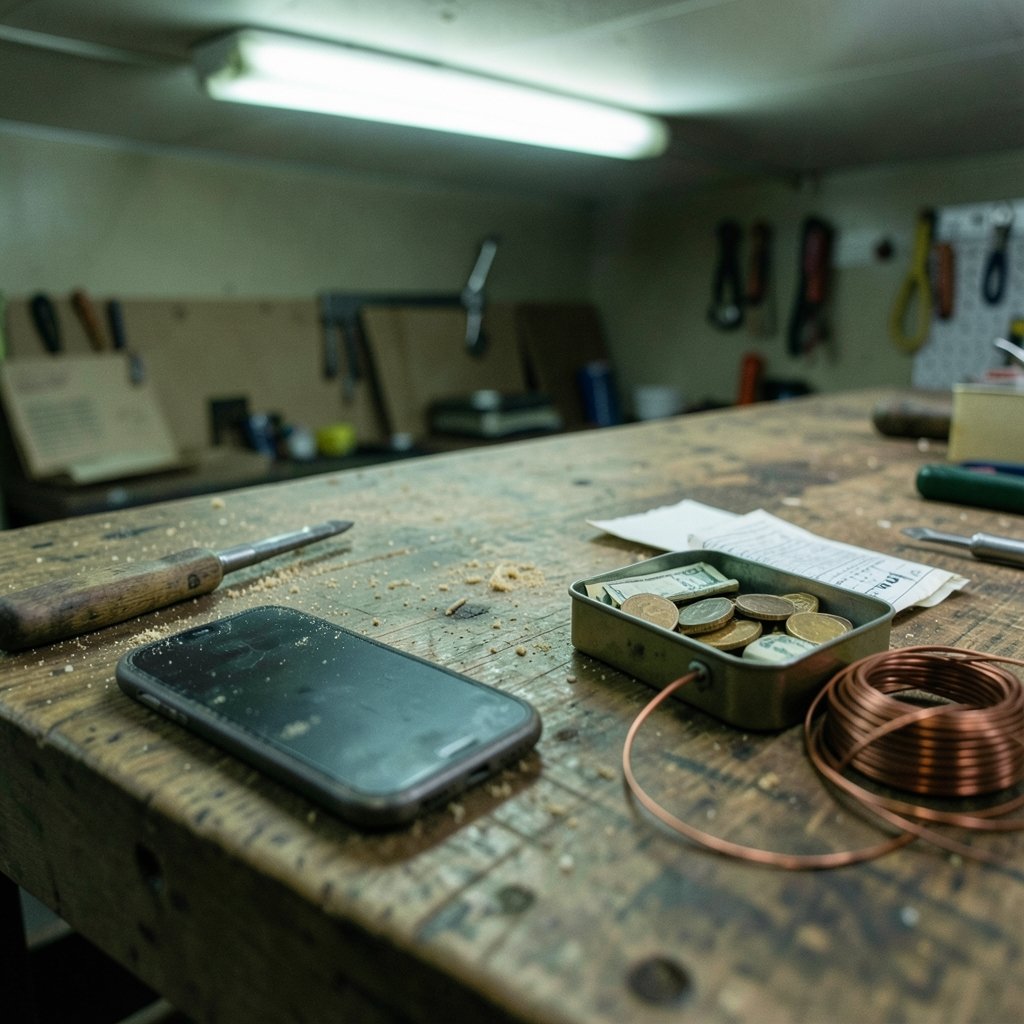
On 7 September 2021, El Salvador became the first country to make bitcoin legal tender, under the Bitcoin Law passed in June 2021. The law required merchants to accept bitcoin for goods and services when technically able, and the state launched the Chivo wallet, offering a $30 bitcoin incentive to users who signed up. (Bitcoin)
The rollout was contested from the start. The IMF and credit-rating agencies raised concerns about financial stability and anti-money-laundering compliance, and public protests broke out around the law’s passage. Adoption data told a mixed story: many Salvadorans downloaded Chivo to claim the incentive, then stopped using it. Bitcoin never came close to replacing cash or card payments in daily life.
The 2025 Rewrite
In January 2025, El Salvador amended the Bitcoin Law to remove bitcoin’s mandatory-acceptance status for private merchants. Acceptance became voluntary, reportedly as part of an arrangement with the IMF. Around the same time, the IMF approved a 40-month Extended Fund Facility for El Salvador, reported at roughly $1.4 billion, with bitcoin-related policy conditions attached.
That sequence matters for anyone trying to understand the country’s money today. Bitcoin remains legal tender in a formal sense, and the government still holds bitcoin on its public balance sheet, with holdings published through the National Bitcoin Office. But the everyday obligation on merchants is gone. In practice, bitcoin in El Salvador is now a voluntary payment option and a state reserve asset, not a currency people are expected to use.
If you want to understand the broader logic of government-issued digital money and how it differs from bitcoin, a plain-language explainer on CBDC digital currency and central bank money going digital covers the distinction well. El Salvador chose a decentralized asset; most other countries are exploring central-bank-issued alternatives. The two approaches solve very different problems.
What People Actually Use
Walk into a shop in San Salvador and pay. The realistic answer is U.S. dollars in cash, followed by cards and mobile banking apps that move dollars. Bitcoin sits far down the list. This gap between legal theory and daily practice is the single most important thing to understand about El Salvador’s money.
| Payment method | Legal status | Everyday use |
|---|---|---|
| U.S. dollar cash | Legal tender | Dominant, especially outside cities |
| Debit and credit cards | Standard | Common in urban retail |
| Dollar mobile wallets | Standard | Growing, tied to bank accounts |
| Bitcoin | Legal tender, voluntary acceptance | Niche, mostly among enthusiasts |
| Colón | Withdrawn | Not circulating |
A few practical notes for visitors and newcomers. First, carry small dollar bills. Breaking a $50 note at a small tienda can be genuinely difficult, and many vendors simply won’t have change. Second, ATMs dispense dollars, not local currency, because there is no local currency. Third, prices in tourist areas are often quoted in dollars with no conversion needed, which makes budgeting refreshingly simple compared to multi-currency countries.
A common mistake is assuming that because bitcoin is legal tender, you can pay with it anywhere. You can’t, and attempting to do so in a small shop will likely produce confusion rather than a transaction. The amendment made voluntary acceptance official, but the social reality was already voluntary.
Remittances: The Real Engine
No discussion of El Salvador’s money is complete without remittances. Family remittances from Salvadorans abroad, mostly in the United States, have historically equalled a large share of GDP, commonly cited in the range of a fifth to a quarter in recent years. The exact percentage varies by year, so any figure should be tied to a specific year and a specific dataset.
These transfers arrive overwhelmingly in dollars, which reinforces the dollarized system from the bottom up. Remittances fund household consumption, school fees, and small business capital. They also create a structural feature of the economy: a steady inflow of foreign currency that supports the current account and keeps domestic demand afloat.
This is also where crypto advocates made their strongest pitch. Sending remittances through bitcoin was supposed to cut transfer fees and speed up delivery. In practice, the Chivo experiment did not displace established remittance channels. The reasons are mundane: recipients want dollars they can spend, senders want certainty about the amount that arrives, and volatility plus conversion costs undermined the savings. Anyone thinking about how digital tools change household finances might find the practical breakdown of how to make money with AI a useful parallel case in how technology adoption actually unfolds, slowly and unevenly, rather than all at once.
The Cost Side of Money
Money has a cost structure, and El Salvador’s is unusual. Because the country uses someone else’s currency, it effectively pays for dollars through trade and remittances rather than printing them. That imposes discipline but also vulnerability: a shock to remittance flows transmits directly into domestic liquidity.
Crime and fraud add another layer. El Salvador has worked hard to reduce violent crime, but financial scams remain a real risk for households managing cash and digital wallets. Understanding how the gift card scam works and why victims rarely get their money back is worth ten minutes for anyone sending or receiving money in the country, because gift-card fraud is a global pattern that shows up wherever cash-based economies meet digital payment apps. Likewise, for businesses, the true cost of identity threat detection and where the money goes is a reminder that security spending is now part of the cost of handling money at all, not an optional extra.
For small businesses considering automation or digital tools to manage payments and inventory, the practical guide to using AI business automation without wasting money offers a grounded view of what pays off and what doesn’t. The lesson from El Salvador’s bitcoin experiment applies broadly: technology adopted for its own sake tends to underdeliver, while technology adopted to solve a specific, measured problem tends to stick.
What This Means for Visitors, Residents, and Investors
For travelers, El Salvador is one of the simplest countries in Latin America to budget for. Bring dollars, or withdraw them on arrival. No currency conversion, no exchange-rate math, no leftover foreign coins at the airport.
For residents, the dollarized system means inflation tracks U.S. monetary conditions rather than local ones. When the Federal Reserve tightens, Salvadoran borrowers feel it. Savings accounts pay modest interest rates set by local banks competing for dollar deposits, not by a central bank policy rate.
For investors, the picture is a trade-off between stability and flexibility. Dollarization removes currency risk from the equation, which simplifies long-term planning. It also means the government has limited tools to respond to downturns, making political and fiscal stability more important than usual. The country’s bitcoin holdings add a volatile line item to the public balance sheet that investors should track with dated sources rather than headlines.
One underrated practical tip for anyone doing business in El Salvador: get comfortable with the fact that contracts may reference colones, prices are quoted in dollars, and accounting is done in dollars. Reconciling historical documents with current practice is a small but real administrative task, and it catches out newcomers who assume the colón is a purely historical curiosity. It is historical, but it still appears in paperwork.
Conclusion
El Salvador’s money story is really a story about trade-offs made in public. The country gave up its own currency in 2001 to buy stability, and it gave up an independent monetary policy in the process. Two decades later it tried bitcoin as a second act, then quietly softened the experiment when the results didn’t match the pitch. Today the answer to “what is El Salvador’s money” is straightforward: it’s the U.S. dollar, moved around by remittances, cards, and mobile wallets, with bitcoin as a formal legal tender that most people never touch. The colón is gone, the dollar is everywhere, and the country is still working out what it gained and what it gave up.
Frequently Asked Questions
What currency does El Salvador use?
El Salvador uses the U.S. dollar as its main currency. The dollar became legal tender on 1 January 2001 under the Monetary Integration Law, replacing the colón at a fixed rate of 8.75 colones per dollar. Bitcoin is also legal tender, but merchant acceptance became voluntary after a January 2025 amendment, so in daily life you will almost always pay in dollars.
Can I still use colones in El Salvador?
No. The colón was withdrawn from circulation after dollarization and is no longer valid for purchases. You may still see colón amounts referenced in old contracts, historical documents, or informal conversation, and some Salvadorans mentally convert prices out of habit. But no shop, bank, or ATM will accept colón notes today.
Is bitcoin really accepted everywhere in El Salvador?
No, and this is a common misconception. Bitcoin is legal tender by law, but the original requirement that merchants accept it when technically able was removed in January 2025, making acceptance voluntary. A minority of businesses, mostly in tourist areas and among crypto-friendly owners, accept bitcoin. The overwhelming majority of transactions happen in dollars, in cash or by card.
Why did El Salvador adopt the U.S. dollar?
The government adopted the dollar to end a long history of currency instability and high inflation, and to remove exchange-rate risk for investors and remittance senders. The trade-off was significant: because the U.S. dollar is legal tender, the Banco Central de Reserva cannot set an independent interest rate or manage an exchange rate. Monetary policy is effectively imported from the United States.
How important are remittances to El Salvador’s economy?
Very important. Family remittances from Salvadorans abroad, mostly in the United States, have historically equalled a large share of GDP, commonly cited around a fifth to a quarter in recent years, with the exact figure varying by year. They arrive mostly in dollars, which reinforces the dollarized system and supports household consumption across the country.
Does El Salvador still hold bitcoin?
Yes. The government has kept bitcoin on its public balance sheet, with holdings published through the National Bitcoin Office. Reported figures change over time and depend on both purchases and market prices, so any specific number should be checked against a dated primary source rather than repeated from older news coverage.