

What if the tool that saves your hands the most wear and tear is also the one most likely to disappoint you if you pick wrong? That is the strange reality of electric pruning shears. Walk into any garden center or scroll through any marketplace, and you will see dozens of cordless pruners that all promise clean cuts, all-day battery life, and effortless one-handed operation. The specifications look almost identical. The real-world experience is not.
This comparison cuts through the noise. Instead of ranking models that will be replaced next season, it focuses on the handful of factors that genuinely separate a good electric pruner from an expensive frustration: cut capacity, battery behavior, blade design, ergonomics, and the safety and legal details most buyers never think about until something goes wrong. By the end, the reader should be able to look at any product listing and know exactly which numbers to trust, which to discount, and which questions to ask before spending money.
Why electric pruning shears are suddenly everywhere

Battery technology has quietly changed the economics of garden tools. Where petrol-powered loppers once dominated heavy pruning, lithium-ion packs now deliver enough torque to cut through woody growth without the noise, fumes, and pull-cord ritual. For home gardeners with fruit trees, hedges, or a small orchard, the appeal is obvious: squeeze a trigger, get a clean cut, keep moving.
The market splits into two broad categories that shoppers often confuse. Handheld electric pruners combine the motor, blade, and battery in one compact unit designed for one-handed use. Electric loppers and pole pruners trade portability for reach and leverage, letting the user cut higher branches without a ladder. Comparing a handheld pruner against a pole lopper is like comparing a scalpel to a pair of long-handled bolt cutters. They solve different problems. A fair comparison always starts by matching the tool to the job.
The terminology makes it worse. “Electric pruning shears,” “electric pruners,” “cordless secateurs,” and “battery loppers” get used interchangeably across listings and reviews, even when the tools cut branches of wildly different thicknesses. Anyone serious about comparing options should first pin down two numbers: the maximum cut diameter and the reach. Everything else follows from those.
Cut capacity: the number that gets stretched the most

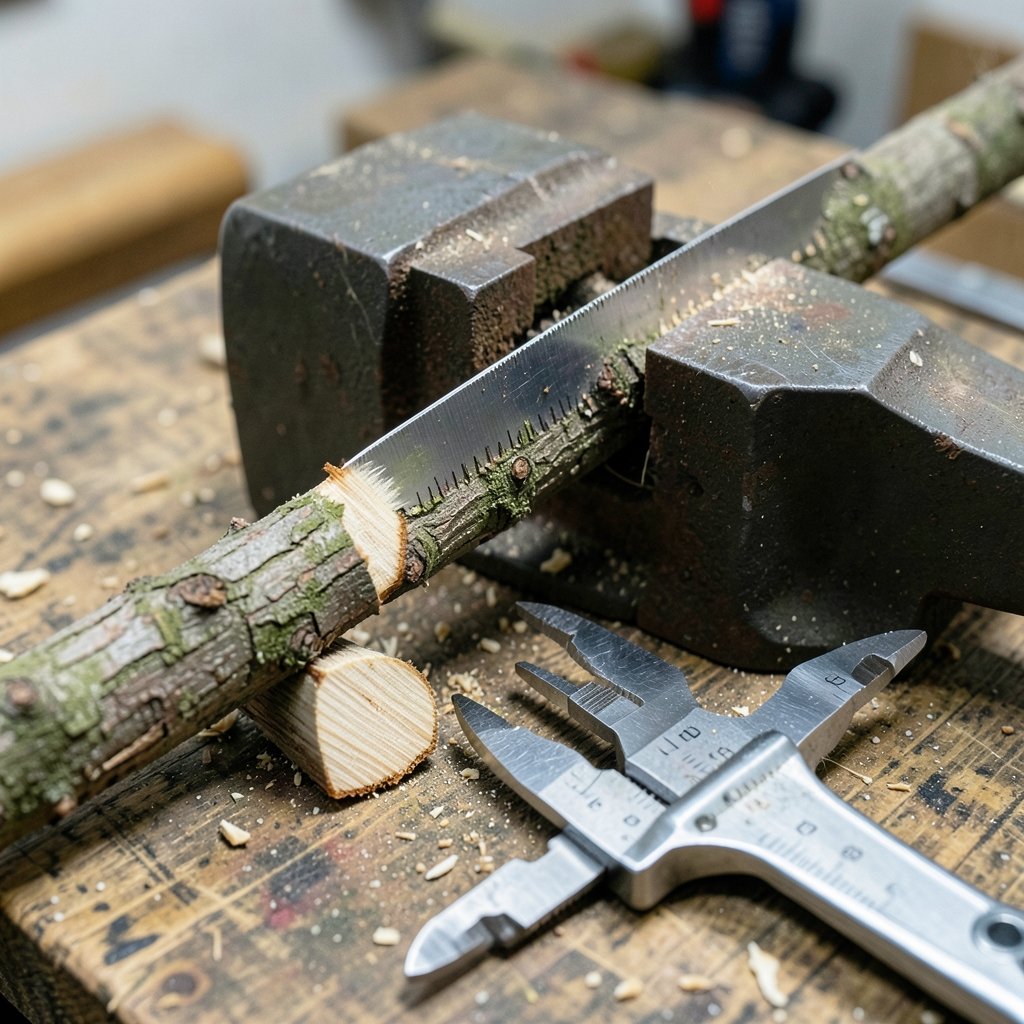
Maximum cut diameter is the headline spec on every box, and it is also the least standardized. Manufacturers state figures like 25 mm, 30 mm, or 40 mm, but there is no common test protocol forcing them to measure the same way. Some quote the diameter of fresh green wood; others quietly test on soft, seasoned branches. A pruner rated for 30 mm may struggle visibly on a 28 mm hardwood branch.
The practical rule experienced pruners follow is to treat the stated maximum as a ceiling, not a target. A tool rated for 30 mm will cut cleanly all day at 20 to 25 mm. Push it to its limit repeatedly, and blades dull faster, motors heat up, and battery drain accelerates. For most home orchards, a handheld unit in the 25 to 30 mm class covers the vast majority of real pruning tasks, with a lopper or a manual saw reserved for the occasional thick limb.
It also helps to understand blade geometry. Most electric pruners use bypass blades, which work like scissors and slice past each other for a clean cut on living wood. Anvil blades press down onto a flat surface, crushing the stem, and suit deadwood removal but heal poorly on live growth. For anyone pruning fruit trees or roses, bypass is almost always the right choice, and replacement blade availability should be part of the comparison.
Battery and runtime claims: read them skeptically
Almost every cordless pruner on the market runs on lithium-ion, typically in the 14.4 V to 36 V range, with professional models pushing higher. Voltage alone tells you very little about performance. A well-engineered 18 V tool can outperform a poorly geared 21 V one.
Runtime is where listings get creative. “Cuts per charge” is a manufacturer-stated figure with no cross-brand standard behind it. One brand counts cuts through pencil-thin twigs; another counts cuts through finger-thick branches. The numbers are not comparable, and treating them as if they are leads to disappointment. A more reliable approach is to look at battery capacity in amp-hours, check whether the pack is interchangeable with other tools in the same ecosystem, and consider how long a recharge takes. A pruner that dies mid-hedge and needs two hours to recharge is a different tool than one with swappable packs.
Battery safety deserves more attention than it usually gets. Lithium-ion cells are regulated for transport under UN Manual of Tests and Criteria Section 38.3, commonly called UN 38.3. Buyers ordering tools internationally, or shipping them, should confirm the battery has a UN 38.3 test summary. It is a boring detail until a parcel gets refused or, worse, a cheap uncertified cell fails. For anyone who also researches tech purchases carefully, the same skepticism about spec-sheet claims pays off elsewhere, as this comparison of AI model comparison gpt 6 1 sol vs sonnet 5 5 vs gemini 4 argon 2026 shows: the marketing numbers rarely tell the whole story.
Ergonomics: the spec sheet’s blind spot
Here is the factor that separates a pruner someone loves from one that ends up in a shed drawer: how it feels after 45 minutes of use. Weight, balance, trigger force, and grip shape matter more than raw cutting power for most home users.
Handheld electric pruners vary noticeably in weight, and a few hundred grams makes a real difference when the tool is held at arm’s length. Prolonged one-handed use of a heavier unit increases fatigue, and fatigue leads to sloppy cuts and, eventually, wrist strain. General ergonomics guidance from occupational health bodies applies neatly here: keep the wrist neutral, avoid repeated forceful gripping, and take breaks. A pruner with a comfortable, well-shaped handle and a light trigger encourages exactly that behavior. A heavy unit with a stiff trigger fights against it.
Balance is harder to judge from a listing. A tool that feels light in the hand but carries its battery at the far end of the handle will feel nose-heavy in use. Where possible, handle the tool before buying, or at least read reviews that specifically mention fatigue over longer sessions. This is the kind of practical, hands-on detail that generic reviews skip, much like the gap between advertised and actual performance in other product categories, such as the honest breakdown of choose best electric pressure washers real household work.
Safety, standards, and the fine print
Cordless garden tools sold in the EU fall under the Machinery Directive 2006/42/EC, with electrical and battery aspects covered by the Low Voltage and EMC directives. The relevant harmonized safety standards for battery-powered hand-held garden equipment sit in the EN 50636 family, while the broader EN 62841 series covers electric motor-operated hand-held tools. In the US, UL 62841-1 is the base standard. Buyers do not need to memorize these, but a product that clearly states compliance is a better bet than one that stays silent.
Noise and vibration figures are another trap. Electric pruners are generally quieter and lower-vibration than petrol equivalents, but declared dB(A) and vibration values are only comparable when measured under identical test conditions. Two brands can publish very different numbers for tools that feel almost the same in the hand. Treat these figures as rough guides, not ranking criteria.
Warranty terms are worth reading line by line. Battery and motor coverage varies widely between brands, and the battery is usually the first component to degrade. A generous tool warranty paired with a short battery warranty is a weaker offer than it first appears.
A practical comparison framework
Rather than crowning a single winner, it helps to compare tools along the axes that actually change the buying decision. The table below summarizes how the main categories and features stack up.
| Factor | What to look for | Why it matters |
|---|---|---|
| Cut capacity | 25–30 mm for home use; treat stated max as a ceiling | Oversized claims hide inconsistent testing |
| Blade type | Bypass for live wood; anvil for deadwood | Clean cuts heal; crushed cuts invite disease |
| Battery | Lithium-ion, swappable packs, known voltage ecosystem | Runtime claims are not standardized |
| Weight and balance | Light, well-balanced, low trigger force | Fatigue drives mistakes and strain |
| Safety compliance | Stated EN 50636 / EN 62841 or UL 62841-1 | Signals tested, certified design |
| Warranty | Clear motor and battery terms | Battery is the first part to wear out |
| Service | Replacement blades and parts available | Sharp blades cut better and last longer |
The same principle of matching claims to real-world needs applies across product categories. Anyone comparing subscription plans or service tiers quickly learns that headline numbers rarely capture the day-to-day experience, a pattern visible in this ChatGPT Go vs Plus vs Pro paid plan comparison workflow breakdown. Tools are no different.
Common mistakes buyers make
A few errors show up again and again when people compare electric pruners.
- Buying on cut diameter alone. A 40 mm rating sounds better than 30 mm, but a heavier, more expensive tool that exceeds the user’s actual needs is not an upgrade.
- Ignoring the battery ecosystem. A pruner whose packs only fit that one tool offers less long-term value than one sharing batteries with a hedge trimmer or leaf blower.
- Skipping the test drive. Trigger feel and balance cannot be judged from a photo. Handling the tool, even briefly, prevents most regrets.
- Forgetting maintenance. Dull blades strain the motor and battery. Budget for replacement blades or a sharpening routine from day one.
- Overlooking certification. Cheap, uncertified imports save money upfront and create risk later, especially around battery safety.
Conclusion
The best electric pruning shears are not the ones with the biggest numbers on the box. They are the ones that match the job at hand, feel comfortable after an hour of work, run on a battery system the owner can live with, and come from a manufacturer willing to state its safety compliance plainly. Cut capacity should be read as a ceiling rather than a promise. Runtime claims should be treated as marketing until proven otherwise. Ergonomics, blade design, and warranty terms deserve as much attention as voltage and price.
For most home gardeners, a well-balanced bypass pruner in the 25 to 30 mm class, backed by a swappable lithium-ion pack and clear certification, will outperform a heavier, flashier tool that promises more than it delivers. Compare deliberately, handle the tool if possible, and the right choice becomes far easier to spot.
Frequently asked questions
What is the difference between electric pruning shears and electric loppers?
Electric pruning shears are compact, handheld tools designed for one-handed cutting of smaller branches, typically up to around 25 to 40 mm depending on the model. Electric loppers and pole pruners are longer tools built for reach and leverage, letting users cut higher or thicker growth without a ladder. They solve different problems, so comparing them directly rarely makes sense.
Are manufacturer cut-diameter claims reliable?
They should be treated as a ceiling rather than a guarantee. There is no common test standard forcing brands to measure maximum cut diameter the same way, so a 30 mm rating from one maker may not equal a 30 mm rating from another. In practice, a pruner cuts cleanly and consistently well below its stated maximum, especially on dense hardwood.
How long does an electric pruner battery actually last?
It depends heavily on the wood being cut, the battery capacity, and the tool’s efficiency. “Cuts per charge” figures are manufacturer-stated and not standardized across brands, so they cannot be compared directly. Checking battery capacity in amp-hours, whether packs are swappable, and recharge time gives a far more useful picture than a headline runtime number.
Are electric pruning shears safe to use?
Yes, when the tool is certified and used sensibly. Cordless garden tools sold in the EU fall under the Machinery Directive 2006/42/EC and relevant EN 50636 standards, while UL 62841-1 applies in the US. Buyers should look for clear compliance statements, keep fingers clear of the blade path, and check that lithium batteries carry a UN 38.3 test summary if shipping is involved.
Do electric pruners work on thick branches?
Handheld models handle smaller branches well but are not designed for thick limbs. For anything beyond their rated capacity, a lopper or a manual pruning saw is the safer, faster choice. Forcing a pruner beyond its limit dulls blades, strains the motor, and drains the battery quickly.
What should I check first when comparing electric pruning shears?
Start with the job: the branch sizes to be cut and the reach required. Then compare blade type, weight and balance, battery ecosystem, safety certification, and warranty terms covering both motor and battery. Handling the tool before buying, or reading reviews that mention fatigue over longer sessions, catches problems that spec sheets hide.



