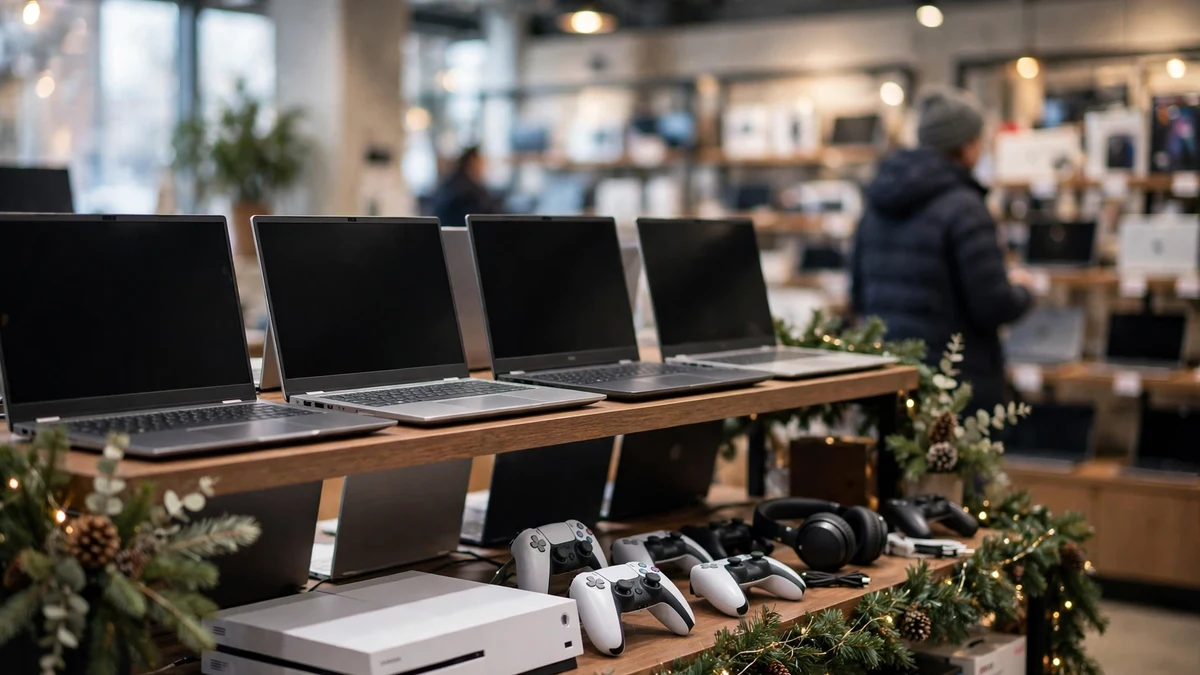
Electronics are really expensive this holiday season, and shoppers are feeling it in almost every aisle. Laptops cost hundreds of dollars more than a year ago, game consoles have gone up instead of down, and holiday discounts are thinner than shoppers remember. The cause is a deep shortage of memory chips, driven by the rapid build-out of artificial intelligence data centers.
The connection is straightforward. Modern AI systems need enormous amounts of memory, and the companies building data centers are buying it in huge quantities at prices consumer electronics makers cannot match. Chip makers have shifted production toward server memory, leaving less for laptops, phones and consoles, and manufacturers are passing the higher costs on to buyers.
Forbes reported the story on 28 November 2026. Research firm International Data Corporation estimated in October that memory costs had risen about 350 percent since the previous year and were still climbing. That single figure explains most of what shoppers are seeing this holiday season.
Key takeaways
- Memory chip costs have risen about 350 percent in a year, according to International Data Corporation, and they are still rising.
- AI data centers are absorbing huge amounts of memory, leaving electronics makers short of supply and paying far more for chips.
- The PlayStation 5 Pro now costs $899, up from $749 a year ago, while the standard console is $649, up from $550.
- The 14-inch MacBook Pro now starts at $1,999, about $400 more than its starting price at this time last year.
- United States spending on game consoles fell 9 percent in the first nine months of the year as higher prices pushed buyers away.
| Product | A year ago | Now | Change |
|---|---|---|---|
| PlayStation 5 Pro | $749 | $899 | Up about 20 percent |
| PlayStation 5 (standard) | $550 | $649 | Up about 18 percent |
| iPhone 17, 256 GB | $799 | $899 | Up $100 |
| 14-inch MacBook Pro (base) | About $1,599 | $1,999 | Up about $400 |
| Memory chip costs (IDC estimate) | Baseline | Up about 350 percent | Still rising |
The memory shortage at the heart of the price surge
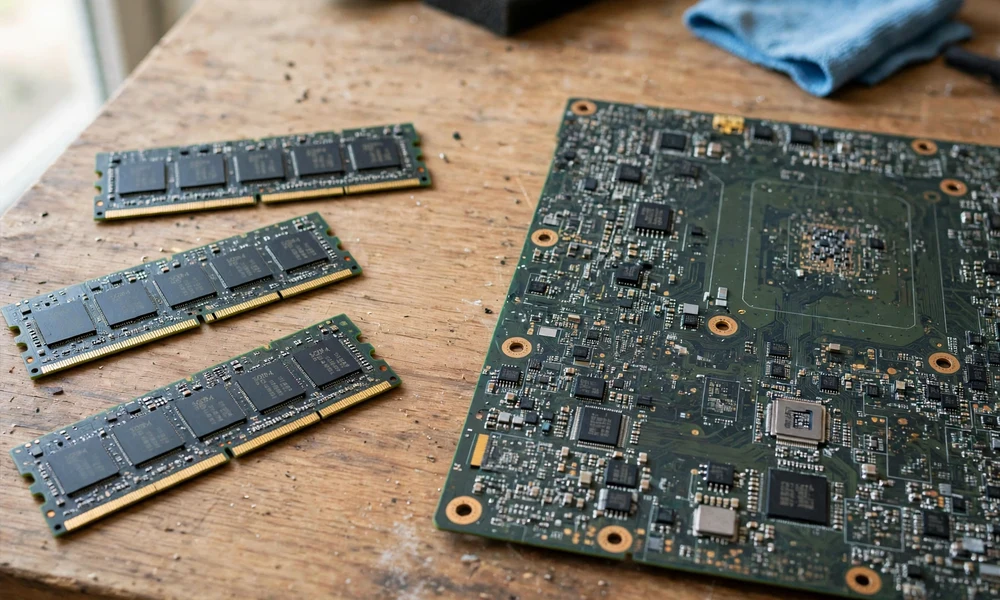
Every laptop, phone, tablet and game console contains memory chips, and those chips have become the most expensive part of the holiday shopping story. Memory is the short-term workspace a device uses to run apps and games, and there is no modern gadget without it. When memory was cheap, it was a small share of what a device cost to build. That balance has changed sharply in 2026.
Industry reporting puts the scale of the shift in plain terms. Three companies control more than 90 percent of the world memory market: Samsung, SK Hynix and Micron. Data centers now consume an estimated 70 percent of all dynamic random access memory output, the type of memory used in most computers. Memory that once accounted for about 15 percent of the cost of building a standard laptop now accounts for more than 30 percent, because AI companies pay top prices for server memory.
The shortage has roots that go back further than the AI boom. After demand surged during the pandemic, the memory market fell into a deep slump, and manufacturers cut production sharply to stop prices from collapsing. They shut down lines and froze investment in new factories, leaving the industry with limited capacity just as AI demand exploded. Sassine Ghazi, chief executive of semiconductor company Synopsys, told CNBC that a large share of memory chips is going directly to AI infrastructure and leaving other industries starved.
How much more expensive are the gadgets on your list?
The PlayStation 5 gives the clearest example of how much prices have moved. Sony’s online store now lists the PlayStation 5 Pro at $899 and the standard PlayStation 5 at $649. At this point last year, the same consoles cost $749 and $550, according to archived versions of the PlayStation store, an increase of roughly 20 percent for the Pro and about 18 percent for the standard model.
Apple products show the same pattern. An iPhone 17 with 256 GB of storage now sells for $899, while the equivalent model cost $799 a year ago, based on archived pricing. Laptop prices have risen even more steeply. The 14-inch MacBook Pro now starts at $1,999, about $400 more than its starting price at this point last year. Across its MacBook range, Apple has raised prices by $100 to $500 depending on the configuration, according to industry reporting.
The increases reach well beyond Apple and Sony. Microsoft raised the price of its Xbox console to $600, a jump of about a third from last year. Amazon increased its Echo Dot speaker by 60 percent to $80, while Meta added $50 to its Quest 3 headset. Nintendo has also raised prices. Even the discounts are thinner: Costco management told investors that higher memory costs forced smaller promotional budgets.
Why AI data centers get the chips first
The reason consumer gadgets are losing out is simple economics. AI data centers need high-bandwidth memory in enormous quantities, and the companies building them are willing to pay whatever it takes to secure supply. A single AI training system can use far more memory than thousands of laptops. When a chip maker can sell its output to a data center customer at a premium, there is little incentive to offer discounts to a laptop maker.
That pressure is visible in the order books. Samsung has already locked 60 to 70 percent of its planned memory output into multi-year customer contracts, according to industry reporting. SK Hynix chief executive Kwak Noh-jung has warned that 2027 could be the tightest supply year on record, and Micron leadership has projected shortages lasting through 2027 before new plants reach volume production in 2028.
There is a sharp irony here. Technology companies are racing to put AI features into personal devices, yet the same AI boom is starving the supply of memory those devices need. Running AI models on your own laptop is becoming more popular, but the hardware to do it is getting more expensive at the same time.
Shoppers are already buying less
Higher prices are already changing what people buy. Data from research firm Circana, previously shared with Forbes, shows that spending on game consoles in the United States from January through September totaled about $2.9 billion, down 9 percent compared with roughly $3.2 billion in the same period of 2025.
The wider computer market is also weakening. International Data Corporation reported that global PC shipments fell by more than 20 percent year over year in the third quarter of 2026. A drop of that size suggests that businesses and households alike are delaying purchases while prices stay high, and that the holiday season may not deliver the usual rebound in volume even if spending per device rises.
The New York Times product review publication Wirecutter has warned for months about what it calls the death of the cheap laptop. The low-cost laptops that once made good gifts or student machines are disappearing or rising into higher price bands, and the entry point to a decent laptop is moving further away for families shopping on a budget.
When will prices come back down?
The honest answer is that relief is not expected soon. Building fresh semiconductor capacity takes years, and chip factories typically require three to five years from groundbreaking to commercial production. The factories now being built will help eventually, but they will not change prices this holiday season or the next.
Memory makers have been clear about the timeline. Shortages are projected to last through 2027, with new plants only reaching volume production in 2028. Until new capacity arrives, prices will stay high as long as AI demand keeps growing.
What this means for holiday shoppers
This holiday season rewards shoppers who compare carefully and buy with a clear sense of what they actually need. The cheapest laptop on the shelf may no longer be a bargain, and the most expensive model may not be worth the premium. Storage and memory matter more than they used to, because those are the components whose prices have risen most. A machine with more memory bought now may age better than a cheaper one that already feels tight.
The comparison between phones is a good example of how to think about it. The iPhone 17 versus Pixel 10 comparison shows how two flagship phones differ in price, cameras and software, and those differences matter more when both phones cost more than they did a year ago. Investors are watching the same story from the other side: the AI boom and its effect on investors shows how quickly sentiment can swing when the costs of the AI build-out come into focus.
Holiday shopping checklist
- Set a firm budget before you shop, and expect last year’s prices to be out of date.
- Compare the same model across at least three sellers before you buy.
- Check how much memory and storage a device has, since those parts drove the rises.
- Consider the previous generation of a laptop or phone, which may offer better value now.
- Look at refurbished models from the manufacturer, which can soften the price jump.
- Buy earlier rather than waiting for a late discount that may not arrive this year.
Frequently asked questions
Why are electronics so expensive this holiday season?
Memory chip costs have risen about 350 percent in a year, according to International Data Corporation, because AI data centers are buying huge amounts of memory. Chip makers have shifted production toward server memory, and manufacturers are passing the higher costs on to shoppers.
Is AI really to blame for the price rises?
Yes. AI data centers are the main new source of demand for memory, consuming an estimated 70 percent of dynamic random access memory output and paying premium prices consumer electronics makers cannot match. AI demand turned a tight market into a severe one.
Which gadgets have gone up the most?
Laptops and game consoles have seen the biggest jumps. The PlayStation 5 Pro rose from $749 to $899, the standard PlayStation 5 from $550 to $649, and the base 14-inch MacBook Pro from about $1,599 to $1,999. Phones and headsets have also risen, though by smaller amounts.
Will electronics prices fall after the holidays?
Not soon, according to the memory makers themselves. Shortages are projected to last through 2027, and new chip factories are not expected to reach volume production until 2028.
Are there still good deals to be found?
Yes, but they are thinner than in past years. Previous-generation models, refurbished devices and bundle offers are the most likely places to find genuine value this season.
Should I wait to buy a laptop or console?
Waiting only helps if you can wait a long time. Industry guidance points to tight supply through 2027, so a short delay is unlikely to bring a big price drop. If you need a device now, compare models carefully and buy the memory and storage you will need for the next few years.
Bottom line
Electronics are expensive this holiday season because the AI boom has made the memory inside them far more costly, and there is no quick fix. Memory costs are up about 350 percent in a year, the biggest device makers have all raised prices, and the factories that could ease the shortage will not reach full production until 2028. Shoppers are already buying less, with console spending down 9 percent and PC shipments down more than a fifth.
The best approach this year is to shop with eyes open: set a budget based on today’s prices, compare the same model in several places, and put your money into the memory and storage that will keep a device useful for years. The real saving now comes from choosing well rather than waiting for a discount the market cannot afford to offer.