
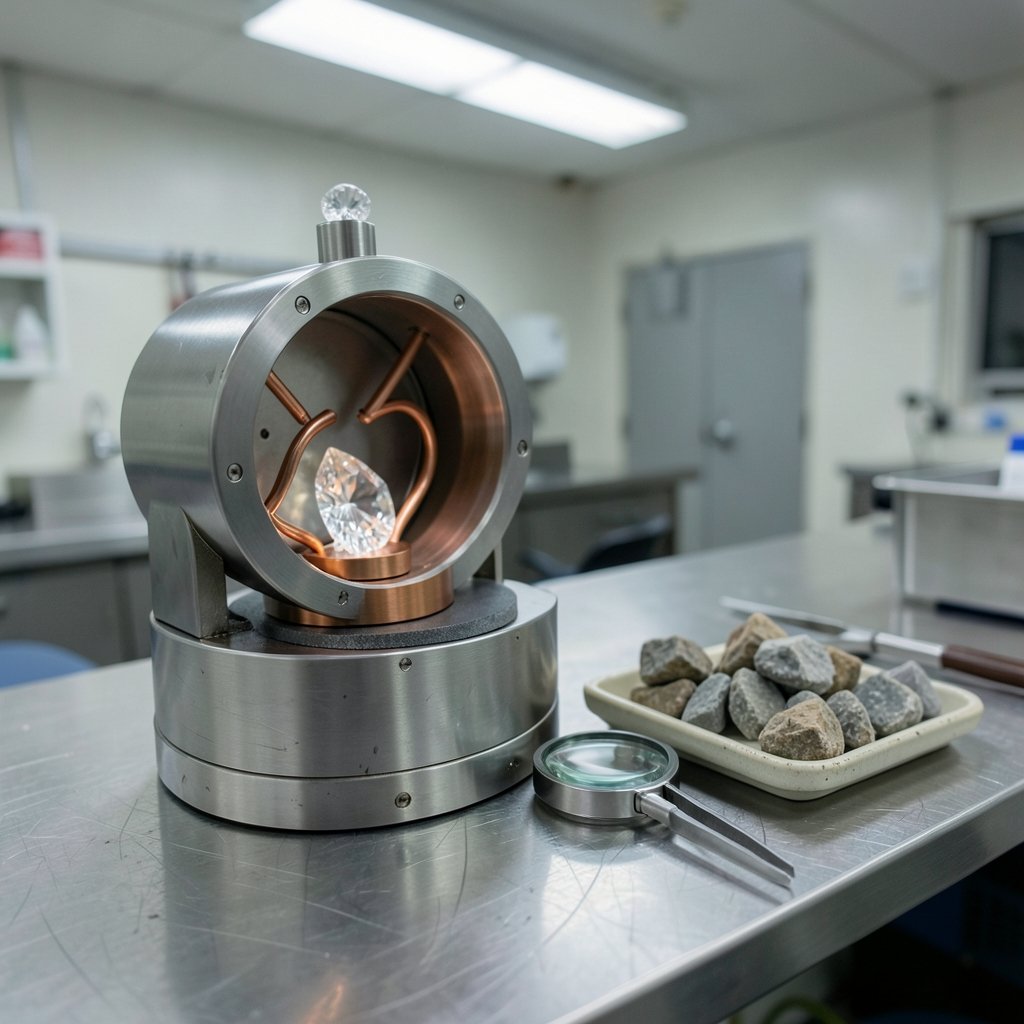
What do you picture when someone says “fab diamond”? A dazzling engagement ring? A lab-grown stone with a marketing spin? A brand name you’ve half-heard? The phrase gets thrown around online with almost no consistency, and that vagueness costs buyers real money. People search it expecting a product, a definition, or a price, and land instead on a mix of jewelry ads and forum guesses. This guide untangles the term, explains the science behind the stones it usually describes, and shows where the confusion actually comes from.
The Honest Starting Point: “Fab Diamond” Is Not an Official Term
Here’s the uncomfortable truth up front: “fab diamond” is not a recognized gemological classification. It does not appear in standard diamond terminology, and no grading laboratory issues a “fab diamond” grade. The word “fab” is casual shorthand, most often for “fabulous” or “fabricated,” and its meaning depends entirely on who typed it.
In practice, the phrase usually points to one of three things:
- Lab-grown diamonds marketed with upbeat adjectives (“fabulous,” “fab”) to stand out on social media
- Simulated or fabricated stones that look like diamonds but have different chemistry
- A brand or product label attached to a specific retailer’s line
Because the term is loose, the smart move is to ignore it as a category and instead ask what the seller actually means. A reputable jeweler will answer that question in one sentence. A vague answer is a warning sign.
Lab-Grown Diamonds: The Science Behind the Sparkle

Most searches for “fab diamond” land on lab-grown diamonds, also called synthetic, cultured, or man-made diamonds. These are real diamonds in the chemical sense. They are crystalline carbon with the same atomic structure as mined stones, which is why they pass basic diamond testers.
Two production methods dominate the market:
| Method | How It Works | Typical Traits |
|---|---|---|
| HPHT (high-pressure high-temperature) | Carbon is dissolved in molten metal and crystallized under extreme pressure and heat that mimic deep-earth conditions | Often produces stones with a slight blue nuance; used for both jewelry and industrial grit |
| CVD (chemical vapor deposition) | A carbon-rich gas is broken down in a vacuum chamber, and carbon atoms build up layer by layer on a diamond seed plate | Tends to produce colorless stones; growth can be slow and energy-intensive |
Both processes are established industrial technologies, not laboratory gimmicks. HPHT has been used for decades to make industrial diamonds and to improve the color of natural stones. CVD grew into a jewelry-scale method more recently.
The practical takeaway for shoppers: a lab-grown diamond is not a fake. It is a diamond with a different origin story. What it is not, however, is rare in the way mined stones are, and that difference drives the price gap.
Why Lab-Grown Prices Keep Falling
Production capacity has expanded quickly, and wholesale prices for lab-grown stones have dropped sharply over the past several years. That is simple supply and demand. More reactors, more output, lower prices. For buyers, this means lab-grown diamonds are a genuinely affordable route to a large, high-clarity stone. For anyone thinking of resale value, it means the opposite: lab-grown stones typically lose a much larger share of their purchase price than natural ones.
A common mistake is buying a lab-grown stone assuming it will hold value like a natural diamond. It usually won’t. Buy it because you love how it looks and the price works, not as an investment.
Diamond Terminology: Why the Words Matter
Terminology in the diamond trade is regulated in ways many shoppers never learn. The FTC Jewelry Guides in the United States set rules for how diamonds, including lab-grown ones, may be described in advertising. The guides exist to stop misleading claims, and regulators have acted against marketers who blur the line between natural and lab-grown stones or make unsupported environmental claims.
On the international side, ISO 18323 provides terminology for diamonds, including synthetic ones, so that industry players across countries use consistent language. The principle behind both frameworks is simple: the origin of a diamond must be disclosed clearly, and words like “diamond” should not be used to disguise a simulant.
This is where “fab diamond” gets risky. If a listing uses a catchy phrase but never states whether the stone is natural, lab-grown, or a simulant like cubic zirconia or moissanite, the buyer is being kept in the dark. Always look for the origin stated in plain words. “Lab-grown diamond” or “natural diamond” is clear. “Fab diamond” alone is not.
Natural, Lab-Grown, and Simulant: A Quick Comparison
| Feature | Natural Diamond | Lab-Grown Diamond | Simulant (CZ, moissanite) |
|---|---|---|---|
| Chemical composition | Carbon | Carbon | Different material entirely |
| Hardness | 10 on Mohs scale | 10 on Mohs scale | Lower (varies by material) |
| Origin disclosure required | Yes | Yes | Yes, and must not be called a diamond |
| Typical price for same size | Highest | Much lower | Lowest |
| Resale market | Established but limited | Weak | Essentially none |
The middle column is where most “fab diamond” interest sits. The right column is where scams live.
Grading Reports: What to Look For
Independent grading matters more than any marketing word. Major laboratories issue reports for lab-grown stones using terminology distinct from natural-diamond reports, so the origin is printed on the document itself. When you shop, ask three questions:
- Which laboratory graded the stone?
- Does the report state the growth method (HPHT or CVD)?
- Does the report describe any post-growth treatment?
A stone without a report is not automatically bad, but you are relying entirely on the seller’s word. For any purchase of significance, an independent report is cheap insurance.
One practical tip from the trade: compare report numbers against the lab’s own database rather than trusting a printed card. Report forgery exists, and a quick lookup catches most of it.
Where the Confusion Comes From
The “fab diamond” muddle has several roots, and understanding them helps you shop smarter.
Marketing language outrunning standards. Social media rewards catchy phrases. Sellers coin terms faster than standards bodies can address them. “Fab” is a mood, not a specification.
Mixing up certification schemes. The Kimberley Process certifies rough natural diamonds as conflict-free. It has nothing to do with lab-grown stones, yet the two get conflated constantly in online discussions. If someone tells you a lab-grown diamond is “Kimberley certified,” they are confused or hoping you are.
Environmental claims without evidence. Lab-grown stones avoid large-scale mining, but they are energy-intensive to produce. Blanket “eco-friendly” or “sustainable” labels deserve skepticism unless the seller can explain the energy source behind production. Regulators have taken notice of overstated green claims in this space.
Asset-store style listings. Interestingly, the same naming chaos shows up in digital marketplaces. Sellers of 3D assets and jewelry-design models often tag products with loose descriptors, and buyers have to read the fine print. Anyone comparing how different marketplaces label and license digital goods will recognize the pattern; the workflow differences between platforms are worth understanding if you source design assets, as covered in this breakdown of Unity asset store vs fab vs cgtrader workflow differences. The lesson transfers directly: the label on the listing is not the specification. Read the details.
What Actually Works When You Buy
Practical experience in jewelry retail points to a handful of habits that separate confident buyers from regretful ones.
Get the origin in writing. On the receipt or invoice, the stone should be described precisely: “lab-grown diamond, CVD, 1.02 ct” or “natural diamond.” Verbal assurances evaporate.
Compare like with like. A lab-grown stone and a natural stone of the same carat, cut, color, and clarity are not the same product. Price them side by side and decide what you value.
Check the return policy before you fall in love. Lab-grown prices move, and policies vary widely. A generous return window protects you if the stone looks different in daylight than on a screen.
Beware the too-good deal on a “natural” stone. If a supposedly natural diamond is priced near lab-grown levels, something is wrong. Either it is lab-grown, treated, or not a diamond at all.
Ask about treatments. Fracture filling, laser drilling, and color treatments exist in both markets. Disclosure is required, but you have to ask.
The most common mistake is buying the story instead of the stone. A clever name, a pretty box, and a persuasive sales pitch are not specifications. The report, the invoice, and the return policy are.
Reading a Listing Like a Pro
When a product page uses vague language, run this quick checklist:
- Does it name the material in standard terms?
- Does it state natural versus lab-grown?
- Does it cite a grading laboratory and report number?
- Does it disclose treatments?
- Does the price make sense for the category?
Two or more “no” answers mean walk away, regardless of how fabulous the photos look.
The Future of the Term
Language tends to settle over time. As lab-grown diamonds become ordinary rather than novel, marketers will likely drop cute shorthand and use standard terms, partly because regulators and grading labs keep pushing for clarity. “Fab diamond” will probably fade into the long tail of search queries, remembered mostly as a symptom of a confusing era in diamond retail.
Until then, treat the phrase as a prompt to ask questions rather than an answer. The stone behind the label is what matters, and that stone has a chemistry, an origin, a grade, and a price. All four are knowable. None of them are “fab.”
Conclusion
“Fab diamond” is a marketing phrase, not a gemological fact. It most often gestures at lab-grown diamonds, sometimes at simulants, and occasionally at a brand line, and the only reliable way to know which is to ask and verify. Lab-grown stones are real diamonds made by HPHT or CVD methods, priced far below natural stones and worth far less on resale. Terminology rules exist to keep origin disclosure honest, grading reports exist to keep quality claims checkable, and your own checklist exists to keep the decision yours. Buy the stone, the report, and the return policy. Skip the adjective.
Frequently Asked Questions
Is a fab diamond a real diamond?
Not as a category. “Fab diamond” is not an official term. If the seller means a lab-grown diamond, then yes, it is a real diamond chemically, made of crystalline carbon with the same structure as a mined stone. If the seller means a simulant like cubic zirconia or moissanite, it is not a diamond at all. Always ask for the origin in plain words.
Are lab-grown diamonds worth less than natural ones?
Yes, substantially. Lab-grown stones typically resell for a small fraction of their purchase price, and wholesale prices have fallen as production capacity has grown. Natural diamonds also have limited resale value, but the gap between the two is large. Buy lab-grown for appearance and price, not as an investment.
What is the difference between HPHT and CVD diamonds?
Both are growth methods. HPHT uses high pressure and high temperature to crystallize carbon from a molten metal solution, while CVD builds a diamond layer by layer from carbon-rich gas in a vacuum chamber. Both produce genuine diamonds. Grading reports usually state which method was used, and the choice matters mainly for color and cost.
Does the Kimberley Process cover lab-grown diamonds?
No. The Kimberley Process certifies rough natural diamonds as conflict-free. It has no role in lab-grown production. Anyone claiming a lab-grown stone is Kimberley certified is either misinformed or misleading you, and that alone is a reason to shop elsewhere.
How can I tell if a diamond is natural or lab-grown?
The reliable route is an independent grading report from a major laboratory, which states the origin and growth method. Basic diamond testers often cannot distinguish natural from lab-grown stones because both are diamond. If a seller cannot produce a report or a clear written description, treat the stone as unidentified.
What should I check before buying any diamond online?
Check five things: the material named in standard terms, the stated origin, a grading laboratory and report number you can verify, any disclosed treatments, and a clear return policy. If the listing leans on catchy phrases like “fab diamond” without those details, ask directly. A seller with nothing to hide answers in one sentence.



