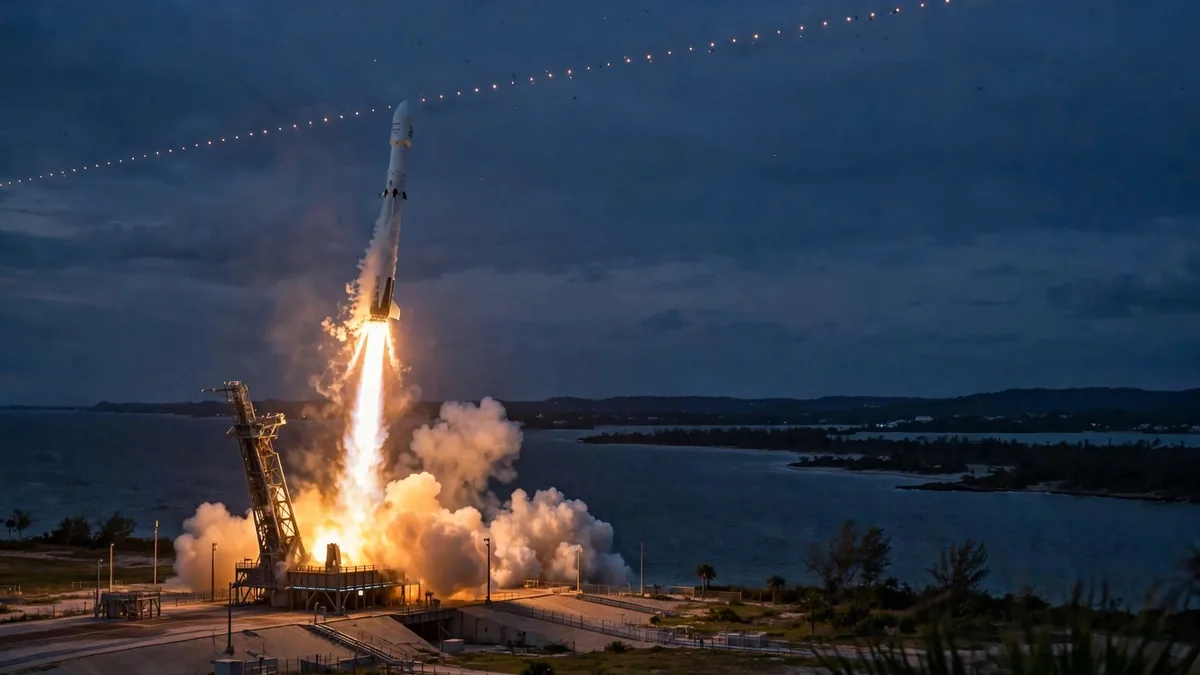
The Federal Communications Commission has given SpaceX conditional approval to build AI data centers in space, clearing the company to deploy up to one million satellites that would process artificial intelligence workloads in orbit and send the results back to Earth. The decision, announced on Wednesday, November 25, 2026, is the first authorization of its kind in United States history.
The network, called Starmind, would be solar-powered satellites fitted with AI chips, linked to one another by lasers and to the ground by radio. SpaceX describes it as capturing solar energy in space to power low-cost, high-performance AI computing for Earth, a pitch aimed at an industry struggling to find enough power, land, and cooling for the data centers it wants on the ground.
The approval does not mean orbital data centers are imminent. SpaceX has seven years to place its first operational satellite in orbit and fourteen years to deploy the full constellation, and it still faces steep technical and financial hurdles, from manufacturing and launch costs to keeping processors cool in space. The FCC also left a key question about disposing of dead satellites unresolved.
Key takeaways
- The FCC gave SpaceX conditional approval to deploy and operate up to one million Starmind satellites as orbital AI data centers.
- It is the first time a United States regulator has authorized a full constellation of space-based data centers.
- SpaceX must launch its first satellite by November 2033, reach 10 percent of the constellation by 2035, and finish the build-out by 2040.
- Amazon, Viasat, and the American Astronomical Society objected, citing orbital debris, radio interference, and harm to astronomy, but the FCC overruled most of their concerns.
- The agency did not approve SpaceX’s request to move retired satellites into graveyard orbits above 600 kilometers, saying the company had not provided enough information.
| Item | Detail |
|---|---|
| Decision | Conditional FCC authorization, announced November 25, 2026 |
| Constellation | Starmind, a network of orbital AI data centers |
| Satellites authorized | Up to 1,000,000 |
| Operating altitudes | 500 to 1,002 kilometers above Earth |
| First satellite deadline | November 2033 |
| 10 percent deployed | November 2035 (100,000 satellites) |
| 50 percent deployed | November 2038 |
| Full constellation deadline | November 2040 |
What the FCC Actually Approved
The FCC authorization allows SpaceX to deploy and operate as many as one million satellites, a scale that dwarfs anything in orbit today: only about 17,000 satellites currently circle the Earth, so a completed Starmind constellation would increase that number roughly fiftyfold.
The license also covers radiofrequency links that would let SpaceX stay in contact with the satellites and control them from Earth if their laser links fail. The Starmind satellites are designed to talk to one another mainly by laser, including links to Starlink satellites, with radio as the backup for telemetry, tracking, and command.
FCC Chair Brendan Carr called the decision a matter of national competitiveness, saying it opens a bold new frontier for the computing infrastructure needed to power America’s leadership and growth. Musk thanked Carr in a post on X, writing that the approval will be a great asset to America and the world.
What Starmind Is Supposed to Do
Starmind is not an extension of Starlink, although the two systems would share technology and communicate with each other. Starlink sells internet access to people on the ground. Starmind would sell computing power: satellites carrying AI chips would run processing jobs in orbit, powered by sunlight, and return the finished work to Earth.
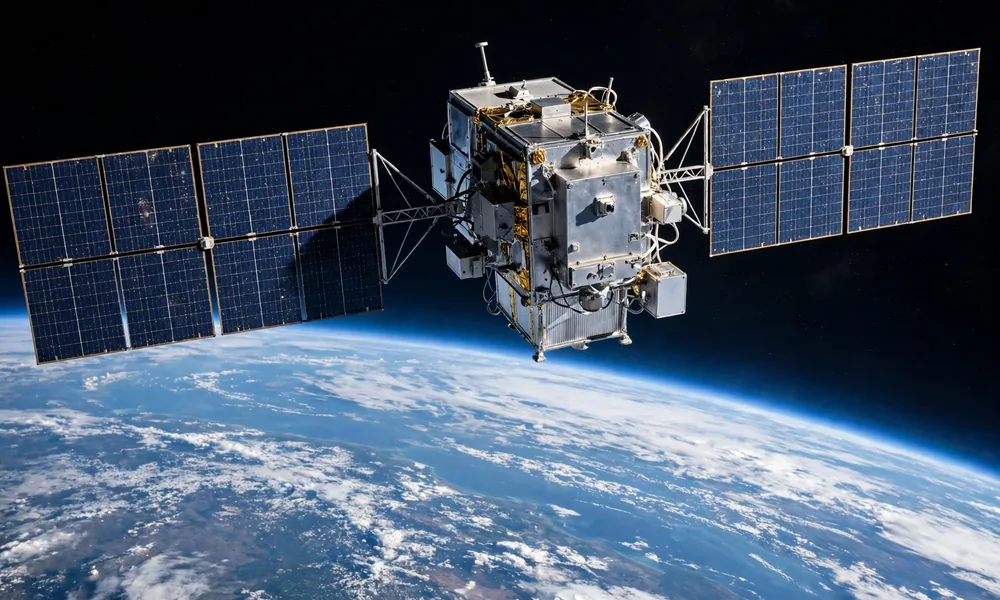
The idea rests on the economics of AI. Training and running advanced models consumes enormous amounts of electricity, and ground-based data centers need land, grid connections, water for cooling, and permits that can take years to secure. In orbit, sunlight is uninterrupted and abundant, and there is no land to buy or grid to wait on.
That last condition carries most of the weight. Getting a million satellites into orbit is a launch problem as much as a computing problem, and SpaceX has acknowledged the gap: ahead of its initial public offering in June, the company cautioned that launching data centers in space relied on unproven technologies and might not achieve commercial viability.
Why Put AI Data Centers in Space
The timing reflects how tight the market for AI computing has become. Demand for chips and power has outrun the supply of data center capacity, pushing up costs. AI compute could get scarce and costly as demand outruns data centers, and the industry is hunting for capacity that does not require years of construction and permitting.
Space offers three things that are hard to find on the ground: energy, cold, and speed. A satellite in low Earth orbit spends much of its time in direct sunlight, and satellites can be mass-produced and launched in batches rather than built one bespoke facility at a time. Cooling remains a hard problem, though, because in a vacuum there is no air to carry heat away from a chip.
SpaceX is not alone in seeing the opportunity. Google and Blue Origin are among the companies pursuing orbital data centers of their own, and the FCC has said it is continuing to review additional proposals. The SpaceX decision opens a new regulatory category, and the reasoning used here will shape how the next applications are judged.
The Objections, and Why the FCC Overruled Them
The approval came despite forceful objections. Amazon argued the application lacked basic details, calling it a lofty ambition rather than a real plan, and warned it risks real harm from debris, congestion, and radio interference. Viasat raised similar concerns, and the American Astronomical Society warned the constellation could interfere with ground-based astronomy.
The FCC dismissed some of the central objections, in part because it determined they fell outside its regulatory authority. The agency declined a comprehensive environmental assessment, a step several scientific and environmental organizations had urged, including the Secure World Foundation, which asked regulators to assess the cumulative risks to orbital sustainability.
What the FCC Did Not Approve
The authorization was not a blank check. SpaceX had asked the FCC to waive rules for satellites above 600 kilometers, seeking permission to move retired satellites into graveyard orbits instead of bringing them down to burn up within five years, as current rules require. The company has also raised moving some retired satellites into other orbits around Earth, or even around the sun.
The FCC said no, at least for now, concluding that SpaceX had not provided sufficient information about its proposed disposal process. It has not yet approved the company’s plans for handling debris for satellites above 600 kilometers, a significant loose end since Starmind would operate from 500 to 1,002 kilometers.
The Long Road Ahead: Starship, Cooling, and Cost
Even with the license in hand, SpaceX faces problems no regulator can solve. The first is launch capacity: deploying hundreds of thousands of satellites needs a launch cadence far beyond what conventional rockets can economically provide, which is why the plan leans so heavily on Starship, the company’s giant reusable rocket.
The second problem is manufacturing. A million satellites means building computing hardware at a scale closer to consumer electronics than aerospace, with each unit cheap enough that losing some to launch failures does not break the economics. The third is thermal engineering: processors generate heat, and in a vacuum there is no air or water to carry it away.
The fourth problem is money. SpaceX must secure financing for chips destined for orbit, a novel proposition for lenders used to data centers they can visit and insure. Chief financial officer Bret Johnsen said last week that SpaceX plans to launch its first data centers into space in 2027 while expanding through 2029, a faster tempo than the FCC’s deadlines require.
What It Means for the AI Race
The decision changes the shape of the competition for AI infrastructure. Until now the race has been fought on the ground: who can secure the most power, the most chips, and the most favorable permits. SpaceX is betting the next phase will be fought in orbit, where power is free and the scarce resource is launch capacity, which it already leads the world in.
For readers on the ground, the honest summary is that a door has opened, not that anyone has walked through it. The license gives SpaceX fourteen years to build something nobody has built, using a rocket still proving itself. The FCC has said yes. The physics, the financing, and the launch manifest will decide whether the idea survives contact with reality.
How to Follow the Starmind Story
- Watch for the first Starmind demonstration launch, which SpaceX has suggested could come as early as late 2027.
- Track Starship’s flight rate, since the whole deployment schedule depends on frequent, low-cost heavy launches.
- Look for the FCC’s ruling on the debris disposal plan for satellites above 600 kilometers, the part still unresolved.
- Follow what rival orbital data center applicants do next, now that the FCC has shown what an approval looks like.
- Check whether astronomers report measurable changes in sky brightness as early Starmind satellites reach orbit.
- Read SpaceX’s future regulatory filings for cost and financing details, since the company has warned the technology may not prove commercially viable.
Frequently Asked Questions
What did the FCC approve for SpaceX?
The FCC gave SpaceX conditional approval to deploy and operate up to one million Starmind satellites as orbital AI data centers, the first such authorization in United States history. The approval covers the satellites and the use of radio frequencies for backup communications and control.
What is Starmind?
Starmind is SpaceX’s planned network of solar-powered satellites carrying AI chips. The satellites would process artificial intelligence workloads in orbit, communicating mainly by laser, and send results back to Earth.
When will the first Starmind satellites launch?
SpaceX hopes to begin demonstrating the technology by late 2027, with broader deployment potentially from 2028. The FCC license requires the first operational satellite by November 2033, 10 percent of the constellation by 2035, and the full build-out by 2040.
Why did Amazon and astronomers object?
Amazon argued the application lacked basic detail, calling it a lofty ambition rather than a real plan, and warned it risks real harm. The American Astronomical Society warned of harm to ground-based astronomy. The FCC dismissed some concerns as outside its authority and declined a comprehensive environmental assessment.
What did the FCC refuse to approve?
The FCC did not approve SpaceX’s request to move retired satellites above 600 kilometers into graveyard orbits instead of bringing them down to burn up. The agency said SpaceX had not provided enough information about its disposal process.
How does Starmind relate to Starlink?
Starlink is SpaceX’s broadband network, with just over 11,000 satellites in orbit delivering internet service. Starmind would be a separate system focused on computing, although the two would share technology and communicate by laser. Improve Starlink WiFi speed with one app setting if you use the broadband service today, and NASA may get a $2 billion boost as the White House seeks to accelerate Artemis.
The Bottom Line
The FCC’s approval of Starmind is a genuine milestone: the first time any regulator has authorized a constellation of data centers in space, at a scale of up to a million satellites, with a fourteen-year runway to build it. It validates SpaceX’s argument that orbital computing belongs alongside ground-based data centers.
But a license is not a data center. SpaceX must prove Starship can fly often and cheaply enough, that a million computing satellites can be built and cooled at a viable cost, and that the debris problem can be solved. The FCC has opened the frontier. Whether anyone can afford to live there is the question the next decade will answer.