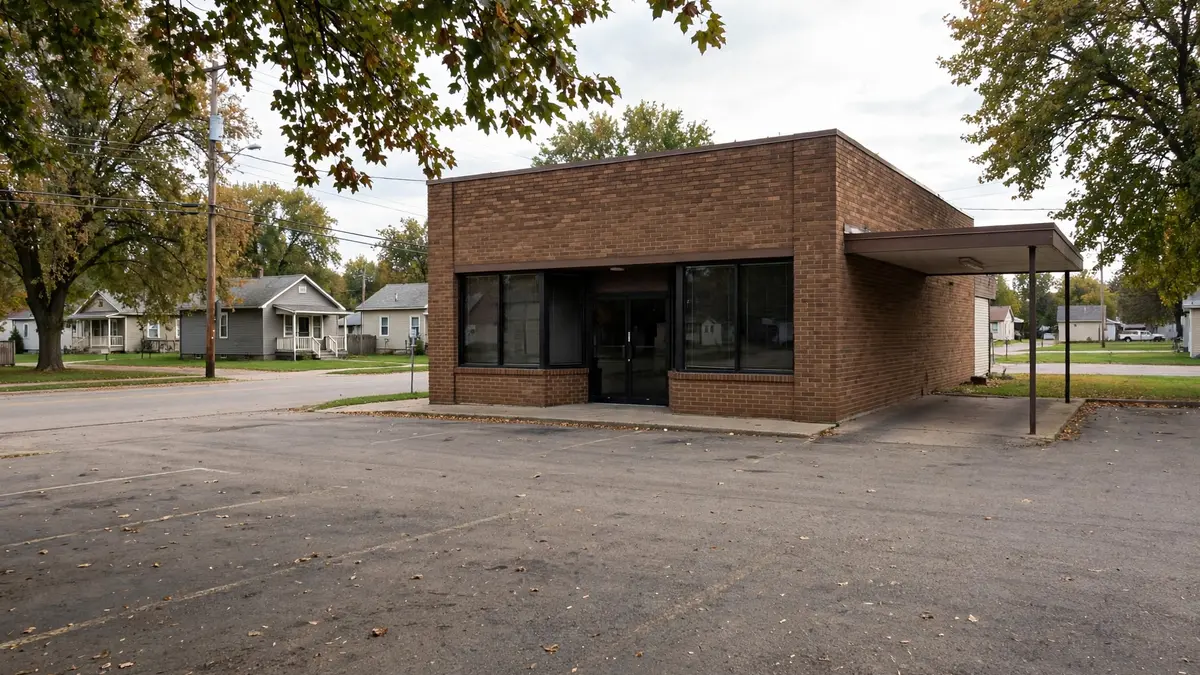
United Fidelity Bank was shut down by federal regulators on Friday, 27 November 2026, in the biggest collapse of an American bank in more than two years. The Evansville, Indiana-based lender, which held about $5.9 billion in assets, was closed by the Office of the Comptroller of the Currency after regulators found it was in an unsafe or unsound condition and likely unable to pay its obligations, and the Federal Deposit Insurance Corp. was appointed receiver.
The failure is the largest in the United States since Philadelphia-based Republic First Bank closed in April 2024 with about $6 billion in assets, and the second-largest since the regional banking crisis of 2023 that brought down Silicon Valley Bank and First Republic. First Citizens Bank, the North Carolina lender that also stepped in as a buyer in the Silicon Valley Bank failure, has agreed to take over United Fidelity’s deposits and most of its assets.
The cost of the collapse will fall heavily on the banking industry itself. The FDIC estimates the failure will cost its Deposit Insurance Fund $1.83 billion, an unusually high loss of about 31% of the bank’s total assets. For depositors, the message is reassuring: they will retain all of their funds and their deposit insurance coverage as customers of First Citizens.
Key takeaways
- United Fidelity Bank of Evansville, Indiana, was closed on Friday, 27 November 2026, by the Office of the Comptroller of the Currency; the FDIC was appointed receiver.
- It is the biggest US bank failure since Republic First Bank closed in April 2024, and the second-biggest since the 2023 regional banking crisis.
- The FDIC estimates the failure will cost the Deposit Insurance Fund $1.83 billion, about 31% of the bank’s $5.9 billion in assets as of 30 September 2026.
- First Citizens Bank agreed to assume about $4.5 billion of deposits and $3.1 billion of loans, at an asset discount of about $2.6 billion, with no deposit premium paid.
- United Fidelity’s 22 branches will reopen as First Citizens branches, and depositors automatically become First Citizens customers.
| Detail | What is known |
|---|---|
| Bank closed | United Fidelity Bank, FSB, Evansville, Indiana |
| Date closed | Friday, 27 November 2026 |
| Regulator | Office of the Comptroller of the Currency; FDIC appointed receiver |
| Total assets | About $5.9 billion as of 30 September 2026 |
| Total deposits | About $5.4 billion as of 30 September 2026 |
| Cost to the FDIC fund | Estimated $1.83 billion, about 31% of assets |
| Buyer | First-Citizens Bank & Trust Company, Raleigh, North Carolina |
| Deal | About $4.5 billion of deposits and $3.1 billion of loans assumed, at a $2.6 billion asset discount |
| Branches | 22, reopening as First Citizens branches from Saturday, 28 November 2026 |
What happened on Friday night
Federal regulators shut down Indiana-based United Fidelity on Friday night, marking the biggest US bank failure since April 2024. The Office of the Comptroller of the Currency said the bank was in an “unsafe or unsound condition” and likely unable to pay its obligations, and handed control to the Federal Deposit Insurance Corp. to wind it down. The FDIC announced that First Citizens has agreed to assume all of United Fidelity’s deposits and assets under a purchase-and-assumption agreement reached after a competitive bidding process.
Regulators close a bank on a Friday evening, after the close of business, and arrange for a buyer to take over before branches reopen. The FDIC said United Fidelity’s 22 branches across Indiana, Illinois, Florida, Colorado and the US Virgin Islands would reopen as First Citizens branches starting on Saturday, with locations that do not open at weekends following on Monday. Officials stressed that depositors could still access their funds over the weekend, including by writing checks, visiting ATMs and using debit cards.
The $1.83 billion cost, and why it is so high
The FDIC estimates the failure will wipe out $1.83 billion of the industry’s deposit insurance fund, an unusually high 31% loss on United Fidelity’s $5.9 billion in total assets as of the end of September. That ratio points to deep problems in the bank’s loan book rather than a short-term liquidity squeeze.

The deal terms tell the same story. First Citizens agreed to take on $3.1 billion of loans held by United Fidelity, but only at a steep discount of $2.6 billion, suggesting the lender is concerned the loans are troubled, and it paid no deposit premium. First Citizens also agreed to assume only about $4.5 billion of deposits, well short of the $5.4 billion the FDIC said United Fidelity held as of the end of September.
First Citizens steps in, again
North Carolina-based First Citizens, a wholly owned subsidiary of First Citizens BancShares, agreed to buy all of the failed lender’s loans and most of its deposits and assets, First Citizens and the FDIC said. The purchase covers assets of $5.9 billion, deposits of $4.5 billion and loans of $3.1 billion, based on United Fidelity’s balances as of 30 September.
“We believe this transaction is both financially and strategically compelling,” First Citizens chief executive Frank Holding Jr. said in a statement, “and we look forward to welcoming our new customers, earning their trust and positioning our company for continued success.” The deal also includes United Fidelity’s subsidiaries, including its real estate development and management unit, Pedcor Homes, and First Citizens acquires 20 branches in Indiana, Illinois, Colorado and Florida, and two in the US Virgin Islands, where United Fidelity operated as Bank of St. Croix.
How United Fidelity compares with the failures before it
United Fidelity is the biggest US bank to fail since Philadelphia’s Republic First Bank closed in April 2024 with about $6 billion in assets, and the second-largest failure since the 2023 regional banking crisis that took down Silicon Valley Bank and First Republic. Fearing other banks would go under next, US officials eventually stepped in with a rescue that helped prevent further failures.
It is also the seventh US bank failure of 2026, the most in a single year since 2017, according to industry reporting. The six earlier failures were far smaller: combined, they held roughly $1.43 billion in assets, less than a quarter of United Fidelity’s $5.9 billion. Both banks were mid-sized regional lenders with about $6 billion in assets, closed after regulators concluded they could not meet their obligations, and resolved through a sale to a healthier bank. The difference is the cost: the FDIC’s estimated loss of 31% of assets is unusually high. It is also worth remembering what money in the bank really promises a depositor: in a purchase-and-assumption deal, depositors typically keep access to all of their funds because the buyer takes the deposits on.
The warning signs that came before the closure
The closure did not come out of nowhere. The Office of the Comptroller of the Currency took enforcement action against United Fidelity in October 2023 over capital planning, risk management and contingency funding, while the Federal Reserve issued a cease-and-desist order against its parent companies in June 2024, according to later reporting on the failure. The bank operated under regulatory orders for more than three years before regulators finally pulled the plug.
That history raises the question every bank failure raises: whether regulators should have acted sooner. It cannot be answered from the outside, because the supervisory record is confidential and the decision to close a bank involves judgements about whether it can still recover. What is clear is that the eventual cost, $1.83 billion to the insurance fund, is the price of a failure that was allowed to grow large before it was resolved. For customers of other banks, the practical lesson is narrower: the system worked as designed here, and no depositor lost funds.
What it means for depositors, banks and the wider system
For United Fidelity’s depositors, the message is straightforward. They are now First Citizens customers, their funds and deposit insurance coverage are intact, and their branches reopen under the new name. They do not need to take action or move their money, and they can use checks, ATMs and debit cards as before. The one group with a genuine question is holders of brokered deposits, which were excluded from the transfer. For the banking industry, the failure is a reminder that the regional banking problems of 2023 did not vanish: smaller banks still carry concentrated loan books and thin capital buffers, and the $2.6 billion discount First Citizens demanded is a market verdict on the quality of United Fidelity’s loans. Anyone with a bank account holding a large balance should know how deposit protection works, because understanding the safety net is the best antidote to panic.
Checklist: what to do if your bank fails
- Do not panic or rush to withdraw cash: in a purchase-and-assumption deal, your deposits transfer to the buyer and remain accessible.
- Keep using your checks, ATM and debit cards: the FDIC said United Fidelity customers could access funds normally over the closure weekend.
- Watch for the new bank’s name on your branch and statements: your account moves automatically, with no new account needed.
- Check whether any of your deposits are brokered deposits, which may be treated differently.
- Confirm your deposit insurance coverage and keep records of your balances, especially above the insured limit.
- Be wary of scams: fraudsters use bank failure news to send fake messages, so trust only the FDIC or your new bank.
Frequently asked questions
What happened to United Fidelity Bank?
United Fidelity Bank, FSB, of Evansville, Indiana, was closed on Friday, 27 November 2026, by the Office of the Comptroller of the Currency, which found it was in an “unsafe or unsound condition” and likely unable to pay its obligations. The FDIC was appointed receiver.
Is United Fidelity the biggest US bank failure in two years?
Yes. It is the biggest since Philadelphia-based Republic First Bank closed in April 2024 with about $6 billion in assets, the second-biggest since the 2023 regional banking crisis, and the seventh US bank failure of 2026.
Will United Fidelity depositors lose their money?
No. The FDIC said depositors will retain all of their funds and deposit insurance coverage as First Citizens customers. They can still use checks, ATMs and debit cards, and need not change their banking relationship.
How much will the failure cost the FDIC?
The FDIC estimates $1.83 billion, about 31% of United Fidelity’s $5.9 billion in total assets as of 30 September 2026, reflecting troubled loans that First Citizens took on only at a $2.6 billion discount.
What did First Citizens agree to take over?
First Citizens agreed to assume about $4.5 billion of deposits and $3.1 billion of loans, based on balances as of 30 September 2026, and to buy substantially all of its assets. The bank held about $5.4 billion in deposits; certain brokered deposits were excluded. No deposit premium was paid.
What happens to United Fidelity’s branches?
All 22 branches across Indiana, Illinois, Florida, Colorado and the US Virgin Islands will reopen as First Citizens branches, starting Saturday, 28 November 2026, at locations with weekend hours and Monday elsewhere. In the US Virgin Islands it operated as Bank of St. Croix.
Bottom line
United Fidelity’s collapse is the largest American bank failure in more than two years, and the numbers are stark: $5.9 billion in assets, a $1.83 billion hit to the deposit insurance fund, a 31% loss ratio, and a buyer that needed a $2.6 billion discount before it would take the loans on.
For ordinary depositors, though, the story ends the way the system is designed to end it: branches reopen under a new name, accounts transfer automatically, and no one loses their money. Modern banking apps have changed how people manage their money, but the old safety net of deposit insurance and arranged takeovers is what mattered on Friday night, and it held.