

What happens when your refrigerator dies on a Sunday morning and the nearest big-box store is a forty-minute drive away? That question is exactly why so many people type “appliances close to me” into a search bar. They are not browsing for fun. They need a working machine, a trustworthy seller, and a delivery date that does not stretch into next month.
The good news is that the local appliance market is more varied than most shoppers realize. Independent dealers, regional chains, warehouse clubs, and manufacturer-authorized service centers all compete for the same household budget. The trick is knowing which option fits your situation, how to vet a seller quickly, and where the hidden costs tend to hide. This guide walks through that process step by step, with the practical details that matter when you are standing in a kitchen with a puddle on the floor.
Why Local Matters More Than You Might Think
Buying an appliance is not like ordering a phone case. These are heavy, awkward items that need delivery, installation, and often the removal of the old unit. Distance affects every one of those steps.
A seller twenty minutes away can usually offer same-week delivery. A seller two hours away may charge a long-haul fee, or worse, subcontract the delivery to a third party you have never heard of. When something goes wrong, such as a dented door or a missing hose, the resolution is far easier with a store you can physically visit.
There is also the service angle. Appliances break. When they do, warranty work usually goes through authorized technicians, and those technicians are dispatched from your region. Living close to a dealer that performs its own service means faster response times and a single point of contact instead of a call-center maze.
The Main Types of Local Appliance Sellers
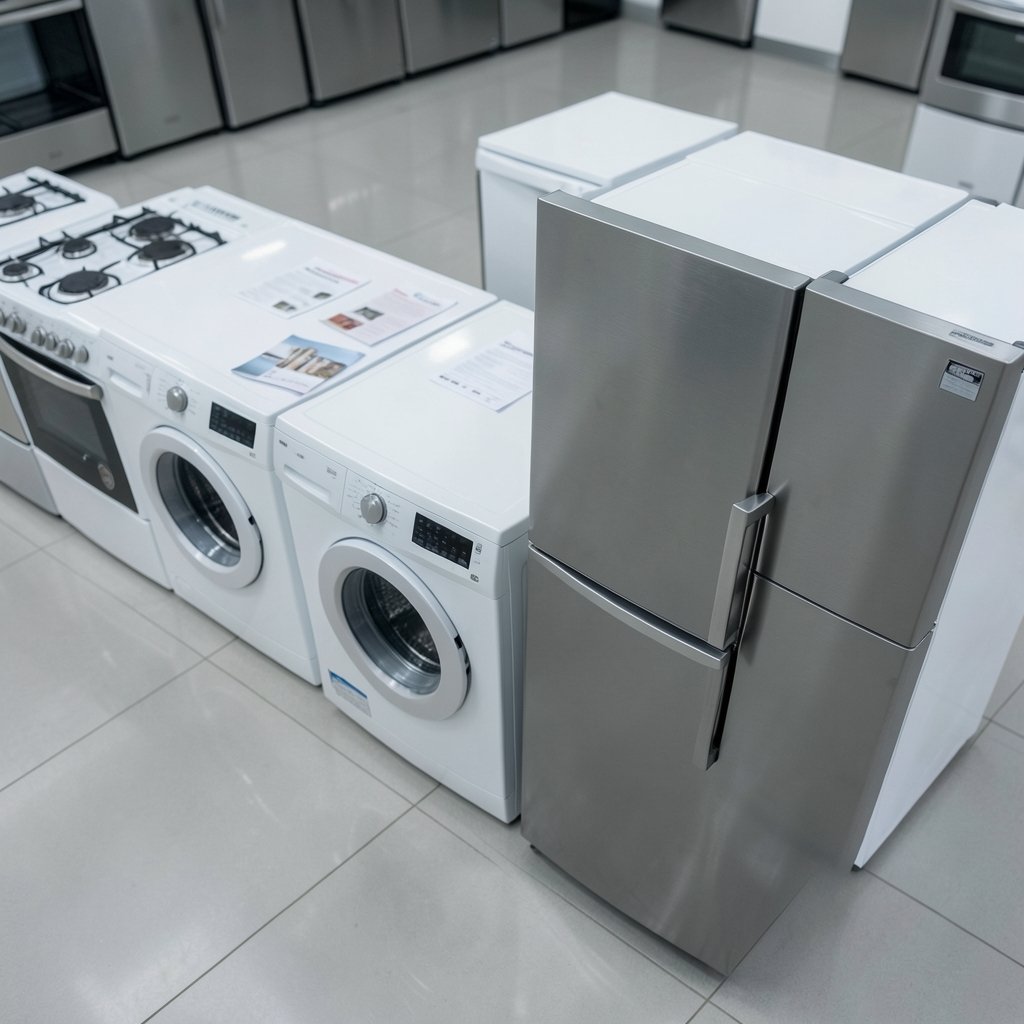
Shoppers searching for appliances nearby usually encounter four categories. Each has a distinct personality, and each is better suited to certain buyers.
| Seller type | Typical strengths | Typical weaknesses |
|---|---|---|
| Independent local dealer | Personal service, price negotiation, in-house repair | Smaller inventory, limited weekend hours |
| Big-box retailer | Huge selection, frequent promotions, easy returns | Delivery windows can be broad, installation is often outsourced |
| Warehouse club | Low prices on a narrow range, strong return policies | Very limited brands, membership required |
| Manufacturer-direct or brand store | Expert staff, guaranteed authorized service | Highest prices, few locations |
Independent dealers tend to shine for people who want advice. A good salesperson at a family-run shop will ask about your kitchen layout, your household size, and how often you cook before recommending anything. Big-box stores shine for comparison shopping, because you can see many brands side by side and check specifications on the spot.
A useful tactic is to use the big-box floor as a showroom and then price the same model at a local independent. Many independents will match or beat a competitor’s price to keep the sale, especially on floor models or discontinued finishes.
How to Search Effectively for Appliances Nearby
The search phrase itself matters less than the filters you apply afterward. A few habits make the process much faster.
- Search by category and distance instead of using a broad term such as “appliances.” Try “refrigerator dealer near me” or “washing machine repair near me” for more relevant results.
- Check the store’s delivery radius on its own website before driving over. Some list zip codes or mileage limits clearly.
- Call ahead and ask two questions: what is the current delivery lead time, and who performs the installation.
- Read recent reviews that mention delivery and service, rather than price alone.
- Confirm the store’s return window in writing, including whether opened appliances can be returned.
One common mistake is assuming that a listing on a map means the business is active and reputable. Listings go stale. A five-minute phone call confirms whether the store still stocks what you need and whether the phone is answered by a human.
Another mistake is ignoring the secondhand and scratch-and-dent market. Local outlets that sell cosmetically damaged units often knock thirty to fifty percent off the price for a dent on the side that faces a cabinet. If you are comfortable inspecting a unit carefully, this can be the best value in town.
Delivery, Installation, and Haul-Away: The Costs Nobody Mentions
The sticker price is rarely the final price. Before committing, ask for an itemized quote that includes delivery, installation, necessary parts, and removal of the old appliance.
Delivery fees vary widely. Some local dealers include delivery within a certain radius for free, while others charge by distance and floor. Stairs, tight doorways, and older buildings without elevators can add surcharges. Ask specifically about stair carries and doorway clearance, because a refrigerator that will not fit through the front door is a problem you want to discover before the truck arrives.
Installation is a separate line item at many retailers. A dishwasher installation involves plumbing connections; a gas range involves a gas line; an over-the-range microwave may involve cabinet work. Some stores include basic hookup but charge extra for parts like hoses, cords, or vent kits.
Haul-away is the third piece. Many municipalities restrict how refrigerators and other large appliances can be discarded because of refrigerants and other components. Retailers that offer haul-away usually handle this properly, which saves you a permit or a special pickup. Confirm whether the fee is bundled or added at checkout.
If you are managing a tight budget across several purchases, it helps to think about total cost of ownership rather than sticker price. The same discipline applies to other tech purchases where hidden costs lurk, such as when you weigh what you give up in a device trade-in, as explored in this look at trading an Xbox One for an Xbox One X and what you gain or lose. Appliances reward the same habit: compare the full package, not the headline number.
Warranty, Returns, and Service Credentials
Every appliance comes with a manufacturer warranty, but the retailer’s own policies matter just as much. Before buying, get clear answers to these questions:
- What is the return window, and does it change once the unit is installed?
- Who handles warranty claims: the store, the manufacturer, or a third-party administrator?
- Is there an extended protection plan, and what does it actually cover?
- Does the store have its own service technicians or contract them out?
Extended warranties deserve skepticism. They are profitable for retailers, and coverage often excludes the failures most likely to occur. Read the terms rather than accepting the pitch at the register. If the manufacturer already offers a solid multi-year warranty on major components, an extra plan may add little.
For repairs, verify credentials. In many regions, technicians who handle refrigerants or gas connections need specific licensing or certification. Ask for the technician’s certification and confirm the shop is authorized by the manufacturer for warranty work. A quick call to the manufacturer’s support line can confirm whether a given shop is on the authorized list.
There is a broader lesson here about verifying claims before you rely on them. The same instinct that protects you from a fake memory card, as covered in this guide on how to test fake SD card capacity before you lose your data, applies to appliance sellers: check the details that are easy to fake, like capacity claims and certification badges, before money changes hands.
Matching the Appliance to Your Actual Household
Local shopping gives you the chance to see appliances in person, and that is worth using. A few practical checks make the visit more productive.
Measure everything first. Write down the width, height, and depth of the opening, plus the width of every doorway between the front door and the kitchen. Bring the numbers with you. Sales staff can work with real measurements; they cannot work with “about standard size.”
Open the doors and drawers. Check shelf adjustability, drawer glide quality, and whether the interior layout suits how you actually store food. A refrigerator with a beautifully lit showroom interior may have shelves that do not fit a large pot.
Listen to the machine if it is running. Noise levels vary enormously between models. If the appliance will sit near a living area, this matters more than a few dollars of price difference.
Check the energy label. Efficiency ratings translate into real money over a decade of use. A slightly more expensive unit with better efficiency can pay back the difference, especially for refrigerators and dryers that run frequently.
Ask about parts availability. A local dealer who stocks common parts for the brands it sells can often repair a machine in days rather than weeks. That is a genuine advantage over an online-only seller with no local presence.
When Repair Beats Replacement
Not every breakdown requires a new appliance. Local repair shops are often the most economical option, and finding one nearby is straightforward.
A rough rule many technicians use is the fifty percent rule: if the repair costs more than half the price of a comparable new unit, and the machine is already past the middle of its expected lifespan, replacement usually makes more sense. For a ten-year-old refrigerator facing a compressor replacement, that math rarely favors repair. For a three-year-old dishwasher needing a pump, repair is usually the clear winner.
Ask the technician for a diagnosis in writing with parts and labor separated. Get a second opinion if the estimate is large. Local shops often charge a modest diagnostic fee that is waived if you proceed with the repair, so a second visit is not as expensive as it sounds.
Building a Shortlist of Trustworthy Local Sellers
Rather than starting from scratch each time an appliance fails, build a shortlist now. Note two or three local dealers with good service reputations, one authorized service center for each major brand in your home, and one repair shop. Keep the list somewhere you will find it.
This kind of preparation pays off in other areas of household tech management too. The same planning mindset that keeps a home network running smoothly, as described in this piece on cloud edge orchestration and the benefits of processing closer to users, applies to appliances: keep the critical pieces close, maintain them, and know who to call before something fails.
Conclusion
Finding appliances close to you is less about the search phrase and more about the questions you ask once you have a shortlist. Measure your space, call ahead about delivery and installation, get an itemized quote, and verify service credentials before you buy. Independent dealers often win on service and flexibility, big-box stores win on selection and promotions, and repair shops win on keeping a good machine alive a few more years. The households that fare best are the ones that treat the purchase as a small project with a checklist, not a rushed errand on a Sunday morning with a puddle spreading across the kitchen floor.
Frequently Asked Questions
How do I find a reputable appliance store near me?
Search by specific category, then check recent reviews that mention delivery and service rather than price alone. Call the store and ask about delivery lead times, who performs installation, and whether it has in-house technicians. Confirm the return policy in writing before paying.
Is it cheaper to buy appliances from a local dealer or a big-box store?
It depends on the model and the timing. Big-box stores frequently run promotions and may have the lowest sticker price, but local dealers often match competitor pricing and can bundle delivery, installation, and haul-away more flexibly. Always compare itemized totals rather than advertised prices.
Should I repair or replace a broken appliance?
A common guideline is the fifty percent rule: if the repair costs more than half the price of a comparable new unit and the appliance is past the middle of its expected lifespan, replacement usually makes more sense. Get a written diagnosis with parts and labor separated, and seek a second opinion for large estimates.
Does the retailer handle installation and removal of my old appliance?
Many do, but often as separate charges. Ask for an itemized quote covering delivery, installation, required parts, and haul-away. Confirm stair carries, doorway clearance, and whether gas or plumbing connections are included, since these are frequent add-on fees.
Are extended warranties on appliances worth buying?
Often not. Extended plans are profitable for retailers and frequently exclude the failures most likely to occur. Check what the manufacturer warranty already covers, read the plan’s exclusions carefully, and consider whether the cost would be better set aside for future repairs.
How can I verify that a repair technician is properly certified?
Ask for the technician’s certification and confirm the shop is authorized by your appliance’s manufacturer for warranty work. A call to the manufacturer’s support line can confirm whether a given shop is on its authorized service list. For gas and refrigerant work, ask about the specific licensing required in your area.



