
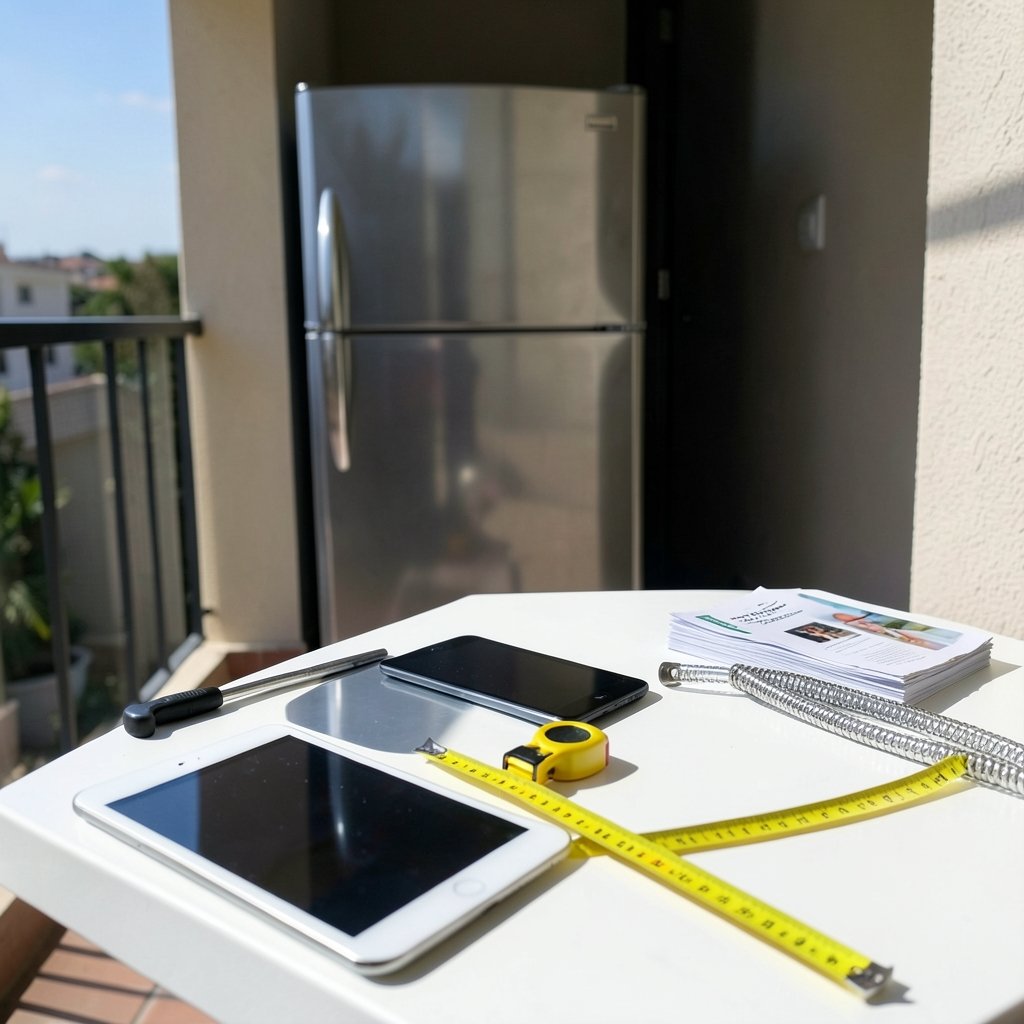
Why do so many people walk into a store to look at a fridge, then buy it online from their couch? The answer says a lot about what a good appliance website has to do. A refrigerator is not a pair of socks. It is heavy, expensive, needs a power supply, often needs a water line, and usually has to be carried through a doorway that may or may not be wide enough. Selling that experience on a screen takes more than a product photo and an “add to cart” button.
This article looks at what separates a website for home appliances that works from one that just lists products. It covers the legal disclosures retailers have to make, the delivery and installation problems that define the category, the data standards behind a clean catalogue, and the practical mistakes that trip up even experienced sellers.
The category is not ordinary e-commerce
Most online retail advice assumes small parcels. Appliance retail breaks nearly every one of those assumptions. A washing machine weighs 70 to 90 kilograms. A side-by-side fridge may not fit through a standard interior door. A built-in dishwasher needs a plumber or a competent DIYer, and a gas range needs a licensed fitter in most jurisdictions.
That reality shapes the whole site. The best appliance websites are built around delivery slots, installation services, and old-unit removal rather than a simple checkout flow. They ask about door widths and staircases. They show the depth of a fridge with the doors open. They tell you whether the appliance is plumbed or freestanding before you scroll to the price.
A useful test: can a shopper answer “will this fit in my kitchen and can I get it inside?” without leaving the product page? If not, the page is doing half its job.
Energy labels are not decoration

In the European Union, household appliances must carry an energy label, and the framework regulation behind it is Regulation (EU) 2017/1369. The EU re-scaled labels to classes A to G, dropping the old A+/A++/A+++ grades, and the new labels for most major product groups took effect from 1 March 2021. Retail sites are expected to show the label and the product information sheet, rather than only mentioning “energy efficient” in the copy.
In the United States, the comparable disclosure is the EnergyGuide label, which shows estimated yearly energy use and cost for appliances such as refrigerators, washers and water heaters. Sellers are expected to display it.
This matters for website design in a concrete way. Energy data is structured data. It should live in the product database as fields, not as a scanned JPEG pasted into the description. When the label is a proper field, you can filter by energy class, sort by annual running cost, and show a running-cost estimate next to the price. That is a genuinely useful feature that most appliance sites still get wrong.
Delivery, installation, and the rules that govern them
In the United States, online sales fall under the same consumer protection rules as in-store sales. The FTC’s Mail, Internet, or Telephone Order Merchandise Rule, often called the 30-day rule, requires sellers to ship within the stated time, or within 30 days if no time is stated, and to offer refunds if they cannot.
For appliances, that rule collides with reality. A custom-order range in a non-standard finish may take ten weeks. A site that says “ships in 2-3 days” on every product is inviting complaints. The honest approach is per-product lead times, clearly displayed, with the shipping promise stated in plain language at checkout.
Installation is the second half of the problem. A good appliance site answers these questions on the product page:
- Does the price include delivery to the room of choice, or just to the kerb?
- Is installation included, optional, or unavailable in my area?
- Will the delivery team disconnect the old appliance and take it away?
- Does installation require a licensed plumber or electrician, and who arranges it?
- What happens if the appliance does not fit through the door?
Sites that answer all five convert better because they remove the fear that makes people abandon a large purchase. Sites that hide the answers push customers to a phone call, and many never come back.
Product data is the backbone
Behind every good appliance catalogue is a data problem. Dimensions, energy class, noise level, capacity, colour, model number, warranty length, spare part availability, and compatibility with existing cabinetry all need to be consistent across thousands of SKUs.
Most retailers handle this with GS1 GTINs, the global product identifier standard, and exchange attributes through structured data synchronisation rather than retyping specifications from PDF brochures. When the data is clean, the same record can feed the product page, the comparison tool, the filter menu, and the printed delivery note.
When the data is dirty, everything downstream breaks. A fridge listed as 60 cm wide that is actually 60.4 cm will not fit a 60 cm gap, and the return costs more than the margin. Common mistakes worth avoiding:
- Copying manufacturer specs by hand instead of importing structured data
- Storing dimensions as free text (“approx. 60cm”) rather than numeric fields with units
- Forgetting to record door-swing direction and hinge side
- Omitting the depth with the door open, which is the number that actually matters in a narrow kitchen
- Failing to link accessories and consumables, such as filters and descaling products, to the appliance
If you are building out the technical side of a retail site, the same discipline applies to other categories. A guide to choosing the best espresso machine for home runs into exactly the same problem: pressure, portafilter size and dimensions need to be comparable fields, not marketing prose.
Warranty, returns, and repair rights
Warranty copy is where appliance sites most often drift into vague reassurance. In the EU, the Sale of Goods Directive (EU) 2019/771 sets a minimum two-year legal guarantee period, applicable from 1 January 2022. That is a legal minimum, separate from any commercial warranty the manufacturer offers, and the two are often confused on product pages.
Repair rights have also become a selling point. Under EU ecodesign rules for washing machines, dishwashers, refrigerators and televisions, spare parts must be available for set periods, ranging from several years for common parts to around a decade for some components. A site that lists spare part availability and expected availability years is giving shoppers information they now actively look for.
The practical takeaway: put the legal guarantee, the commercial warranty, and the spare parts commitment in three separate, clearly labelled blocks. Do not merge them into one paragraph of reassurance.
Accessibility is now a legal question, not a nice-to-have
For a long time, accessibility on retail sites was treated as optional. That is changing. The European Accessibility Act, Directive (EU) 2019/882, extends accessibility duties to e-commerce services, with member-state application from 28 June 2025. National transposition varies, so the exact obligations depend on where you sell.
Beyond compliance, accessible appliance sites are simply better at the job. Large touch targets help people comparing specs on a phone in a store. Proper form labels help anyone filling in a delivery address. Captions on installation videos help everyone. Alt text on a photo of a control panel is genuinely useful when the shopper is trying to work out whether the dials are physical or touch.
Smart appliances need a compatibility answer
More appliances now connect to a network. Washers that start remotely, ovens with app control, fridges with cameras inside. The website question is not “does it have an app” but “will it work with what I already have.”
That means a compatibility table on the product page, not buried in a manual. Which ecosystems does it support? Does it need a hub? What happens to the features if the internet goes down? Who holds the data, and for how long?
This is the same set of questions that decides which voice assistant belongs in a home. A comparison of HomeKit vs Google Home vs Alexa on compatibility, privacy and cost maps directly onto appliance buying decisions, because the appliance is now part of that ecosystem. If you are stocking smart speakers alongside appliances, the same logic applies to picking the best smart speakers for home automation as a bundle or upsell.
Content that earns its place
Appliance shoppers ask a small number of very specific questions, over and over. Good sites answer them directly rather than burying them in a blog.
Sizing and fit. A measuring guide with a printable template. The dimensions that matter, including depth with the door open and the required clearance for ventilation.
Running costs. Annual energy use converted into a local currency estimate, with the assumption stated.
Noise. Decibels in context. A dishwasher at 44 dB versus 48 dB sounds trivial on paper and is very noticeable in an open-plan kitchen.
Installation. Video walkthroughs of what the fitters actually do, including the parts they need.
Maintenance. Descaling schedules, filter part numbers, and where to buy them.
There is a temptation to pad this out with generic lifestyle content. It rarely helps. A page about how to stop a noisy appliance from rattling is useful; a page about “the joy of modern living” is not. If you want a model for practical, question-led content, a piece on how to stop snoring at night with home remedies works because it answers a specific problem directly. Appliance content should follow the same rule.
Building the site: a practical sequence
If you are planning an appliance website from scratch, the order of work matters more than the platform you pick.
- Define the product data model first, including energy fields, dimensions, and compatibility attributes.
- Choose an identifier scheme, normally GTIN-based, and import manufacturer data rather than retyping it.
- Build the product page template around fit, delivery, installation and running cost.
- Add filters that reflect how people actually shop: width, energy class, noise, fuel type, installation type.
- Write the delivery and returns policy before you write any marketing copy, because it constrains what you can promise.
- Test the whole flow on a phone, because a large share of appliance research happens on a mobile device in a kitchen.
- Add structured data markup so product details, availability and reviews are machine-readable.
Step seven is increasingly where small retailers fall behind. If you are extending the site with automated help, a walkthrough on how to add an AI chatbot to your website step by step is worth reading before you commit, because a chatbot that cannot answer “will this fit through a 76 cm door” does more harm than no chatbot at all.
Budget is the other constraint. Appliance retail runs on thin margins, and the site has to pay for itself. If you are funding the build, a comparison of a home equity loan vs a line of credit is the kind of decision that belongs in the business plan, not the marketing plan. On the creative side, promotional banners for seasonal sales can now be produced quickly with an AI banner generator for website banners, which frees budget for the data work that actually drives conversion.
Common mistakes that cost real money
A short list, drawn from what goes wrong most often.
Listing a delivery estimate the logistics team cannot meet. Promising free installation in areas where no fitter is contracted. Showing a product photo of a different finish. Hiding the energy label below the fold. Using a single generic “specifications” tab instead of structured, filterable fields. Failing to state who removes the old appliance. Leaving the returns window vague when the law requires clarity. And treating mobile as an afterthought when most appliance research starts on a phone.
None of these are glamorous. All of them affect whether a shopper trusts the site enough to spend four figures on a machine they cannot lift.
Conclusion
A website for home appliances succeeds when it behaves like a good salesperson in a physical store: it answers the fit question, the running-cost question, the delivery question and the repair question before the customer has to ask. The legal disclosures around energy labels, guarantees and accessibility are not paperwork to bolt on at the end. They are the same information shoppers need to make a confident decision.
Get the product data right, tell the truth about delivery, show the energy numbers as data rather than decoration, and answer the specific questions people actually type into search. Do that, and the site stops being a catalogue and starts being the reason someone buys.
Frequently asked questions
What should a home appliance website include beyond product listings?
At minimum: structured specifications with dimensions and clearances, energy label data, delivery and installation options by postcode, old-appliance removal policy, warranty and legal guarantee terms separately stated, spare parts availability, and a returns policy written in plain language. A sizing guide and running-cost estimates are the features shoppers use most.
Do appliance websites have to display energy labels?
In the EU, household appliances must carry an energy label under Regulation (EU) 2017/1369, and the label plus product information sheet is expected to appear with the product. In the US, the EnergyGuide label showing estimated yearly energy use and cost is the comparable requirement. Displaying the label as structured data rather than an image makes it filterable and far more useful.
How long does an online appliance retailer have to ship an order?
In the US, the FTC’s Mail, Internet, or Telephone Order Merchandise Rule requires shipping within the stated time, or within 30 days if no time is stated, with refunds offered if the seller cannot meet it. In practice, appliances with long lead times should show a per-product estimate rather than a site-wide promise.
What is the legal guarantee period for appliances bought online in the EU?
The Sale of Goods Directive (EU) 2019/771 sets a minimum two-year legal guarantee period, applicable from 1 January 2022. This is separate from any commercial warranty the manufacturer offers, and the two should be presented as distinct pieces of information on the product page.
Are appliance retail websites required to be accessible?
The European Accessibility Act, Directive (EU) 2019/882, extends accessibility duties to e-commerce services, with member-state application from 28 June 2025, though national transposition varies. Accessibility also has a direct commercial benefit, since clearer forms, larger touch targets and captions help every shopper.
Why do appliance sites need structured product data?
Because every useful feature depends on it. Filtering by width or energy class, comparing noise levels, calculating running costs, and checking whether a fridge fits a gap all require numeric fields with units, not prose. Standards such as GS1 GTINs let retailers import and exchange that data consistently across thousands of products.



