
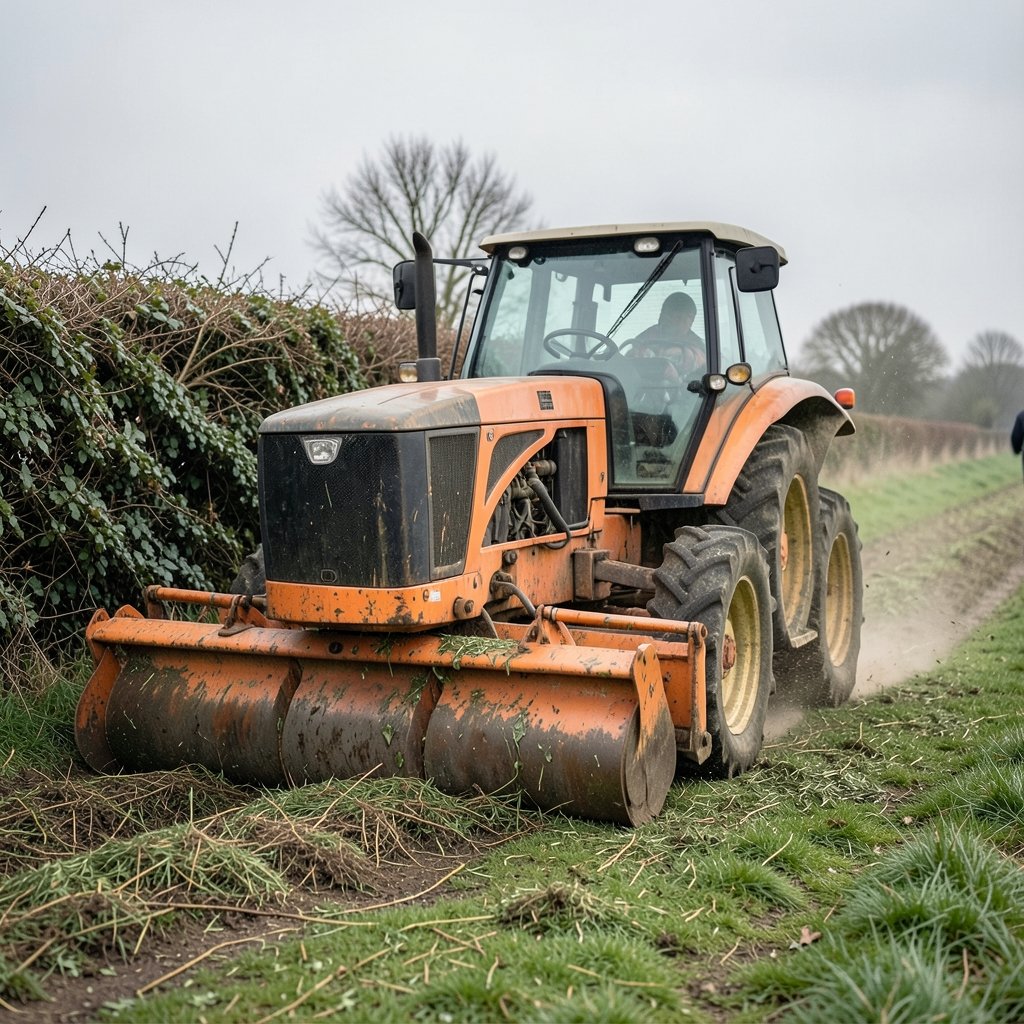
What if the secret to a cleaner field, roadside, or orchard floor is not a sharper blade but dozens of dull ones swinging on hinges? That is the odd but effective idea behind the flail mower, a machine that has quietly become the workhorse of verges, pastures, and vineyards. It does not slice like a lawn mower or whack like a rotary cutter. Instead, it hammers, mulches, and spreads. Understanding that difference tells you quickly whether a flail mower belongs on your trailer or whether you should walk away.
This guide covers how a flail mower works, how it compares with rotary and finish mowers, the safety standards that matter, and the maintenance habits that separate a ten-year machine from a two-season headache.
What Is a Flail Mower and How Does It Cut?
A flail mower cuts vegetation with many small pivoting blades, called flails, hinged on a horizontal rotor inside a steel hood. The rotor spins at high speed, and centrifugal force swings the flails outward. When a flail hits a stone, a fence post, or a thick stalk, it folds back instead of shattering. That single design choice explains most of the machine’s strengths and weaknesses.
The word “flail” comes from the old agricultural tool used for threshing grain, and the mower borrows the same swinging-hinge principle. The cutting action is closer to repeated impact than to clean scissoring. The result is a shredded, mulched finish rather than a manicured lawn stripe.
Two broad families exist:
- Rear-mounted or trailed flail mowers attach to a tractor’s three-point hitch or drawbar and run off the power take-off (PTO).
- Front-mounted and boom-mounted flail mowers reach over banks, ditches, and hedgerows, which is why highway crews love them.
There are also walk-behind and compact versions for orchards and smallholdings, though the tractor-mounted machine dominates professional use.
How a Flail Mower Works, Step by Step
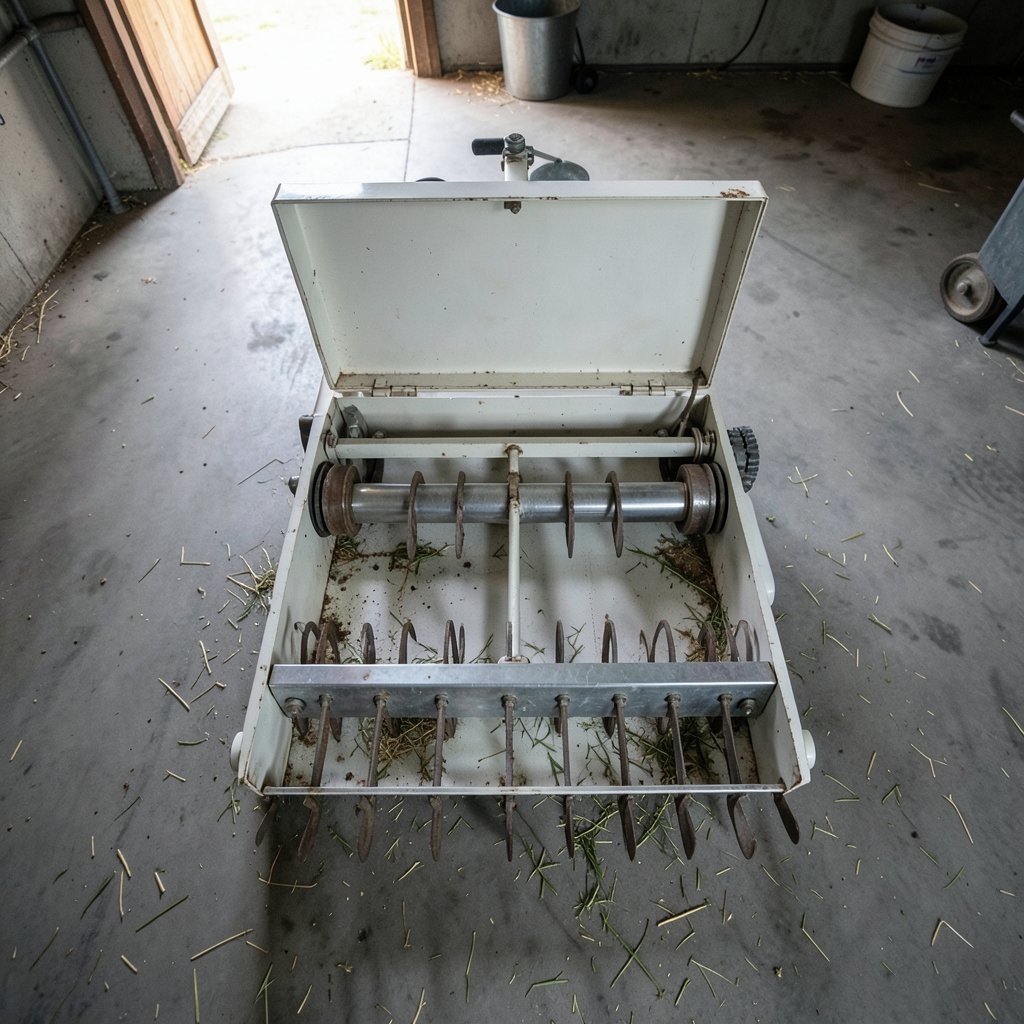
The sequence inside the hood is simple, but each step has practical consequences:
- The PTO or engine spins the rotor, typically through a belt or gearbox drive.
- Centrifugal force throws the hinged flails outward into a cutting arc.
- Vegetation enters the hood and is struck repeatedly by the passing flails.
- A rear roller or gauge wheels control cutting height and prevent scalping.
- The shredded material is thrown back onto the ground in a relatively even spread.
That rear roller matters more than beginners expect. It sets the height, smooths the pass, and protects the rotor from digging in on uneven ground. Machines without a roller or gauge wheels tend to scalp on humps and leave a ragged finish.
Flail Mower vs Rotary Mower vs Finish Mower
The most common buying question is whether to choose a flail or a rotary cutter. The honest answer depends on what you are cutting and how often.
| Feature | Flail mower | Rotary mower (brush cutter) | Finish mower |
|---|---|---|---|
| Cutting action | Many hinged flails, impact cut | One or few rigid swinging blades | Blades under a deck, scissor cut |
| Cut quality | Fine, even mulch | Coarse, uneven | Very fine, lawn-like |
| Best for | Verges, orchards, pasture topping, rough ground | Heavy brush, saplings, thick weeds | Lawns, sports turf, fine turf |
| Thrown-object risk | Lower, but not zero | Higher | Moderate |
| Power demand per width | Higher | Moderate | Lower |
| Speed in heavy growth | Slower | Faster | Fast in light grass |
| Spread of clippings | Even | Clumpy rows | Dispersed or bagged |
The trade-off is real. Flail mowers generally give a finer, more even mulch and spread clippings more evenly than a rotary mower, but they typically need more power per unit of width and are slower in heavy growth. A rotary cutter will bulldoze through saplings that would stall a flail. A flail will leave a roadside that looks cared for rather than attacked.
If you are weighing up whether to automate parts of your turf routine, the same logic about matching machine to task applies to robots; see this comparison of the best robot lawn mowers 2026 wire free navigation finally for how navigation choices change real-world results.
Where Flail Mowers Earn Their Keep
Flail mowers are common on roadside verges, in orchards and vineyards, for pasture topping, and on rough or uneven ground. The hinged flails retract on impact rather than shattering like rigid rotary blades, which makes the machine forgiving of hidden stones and low stumps.
Specific jobs where they shine:
- Verges and embankments. Boom-mounted flails reach slopes that would tip a tractor with a rotary mower.
- Orchards and vineyards. The mulched clippings break down quickly and return organic matter to the rows.
- Pasture topping. Topping stops weeds setting seed without leaving clumpy windrows that smother grass.
- Amenity and parkland. A flail leaves a tidy, uniform finish that a rotary cutter cannot match.
- Rough ground with debris. The retracting flails survive contact that would bend a rigid blade.
Where they struggle: very heavy brush, long wet grass that clogs the hood, and terrain so steep the tractor itself is the limiting factor.
Safety Standards and Guarding: What Actually Applies
Safety is where marketing claims and engineering reality often part ways. In the US, ANSI/OPEI B71.4 covers commercial turf-care equipment, and ANSI/OPEI B71.1 covers consumer and commercial walk-behind and ride-on mowers. Flail mowers sold as turf equipment are typically tested against these standards. Confirm which standard applies to a specific machine class before citing it, because the scope differs.
In the EU, mowers fall under the Machinery Directive 2006/42/EC, now largely superseded by the Machinery Regulation (EU) 2023/1230, which applies from 20 January 2027. Flail mowers are also covered by harmonised standards EN ISO 5395 for ride-on mowers and EN 745 for agricultural rotary mowers, including flail types. The exact scope and current edition of EN 745 should be checked before relying on it.
In US workplaces, OSHA’s agricultural operations standard (29 CFR 1928) and its machine-guarding requirements (29 CFR 1910.212) are the reference points for guarding mower rotors and discharge.
Here is the point most buyers miss: sources disagree on whether flail mowers are genuinely “safer” than rotary mowers. Flails reduce thrown-object risk because the hood and the retracting blades contain debris better. But the open underside and the rotating rotor still present entanglement and blade-ejection hazards. Treat it as a trade-off, not a settled claim.
Common Mistakes People Make With Flail Mowers
Practical experience, not marketing copy, is where most flail mower problems show up. These mistakes recur constantly.
Running too fast for the growth. A flail needs time to strike each stem. Racing through tall grass leaves a ragged, striped finish and overloads the rotor. Slow down and let the flails do the work.
Setting the roller too low. Trying to get a lawn-like cut from a flail usually ends in scalping and a dull, hammered finish. Accept the machine’s natural cut height.
Ignoring missing or cracked flails. A rotor with missing flails is out of balance, and imbalance destroys bearings. Inspect after every few jobs, especially after hitting stones.
Skipping the pre-use walkaround. Walk the area first. Wire, rope, and fencing wrap around a rotor fast and are genuinely dangerous to clear while anything is still spinning.
Buying too wide for the tractor. A flail needs power per unit width. An oversized mower on an undersized tractor means slow going, bogging down, and clutch wear.
Neglecting the PTO shaft and guards. Damaged shields and missing safety chains are common on secondhand machines and are a serious injury risk.
Maintenance: The Habits That Extend Machine Life
Flails and rotor bearings are wear items, and manufacturers specify periodic inspection for cracked or missing flails and for balance. Exact intervals vary by maker, so follow the manual rather than a generic schedule.
A workable routine in practice:
- Before each use: check flails for cracks, missing pieces, and loose hardware; confirm guards and chains are intact.
- Every few jobs: grease the rotor bearings and check belt tension or gearbox oil as specified.
- Seasonally: inspect the rotor for balance, check the rear roller bearings, and touch up paint on the hood to slow rust.
- After impacts: stop immediately, power down fully, and inspect before restarting.
Sharpening is different from a rotary blade. Flails are usually replaced rather than sharpened, and mixing new and worn flails on the same rotor creates imbalance. Replace them as a set or in balanced pairs.
Buying Checklist: What to Look For
Before committing, run through these questions:
- Power match. Does the tractor have enough PTO horsepower for the mower’s width and the growth you cut?
- Mounting type. Three-point hitch, trailed, front, or boom? Match it to your tractor and terrain.
- Roller and gauge wheels. Present and in good condition? They control height and finish.
- Hood condition. Dents and rust holes weaken containment and spread debris.
- Flail type. Hammer flails for rough work, scoop or boot flails for finer grass finishes.
- Parts availability. Can you buy flails and bearings locally? Obscure imports become scrap fast.
- Safety devices. Guards, chains, and PTO shields all present and undamaged?
Conclusion
The flail mower is not the fastest cutter, the cheapest per inch of width, or the simplest machine to maintain. What it offers is a specific kind of reliability: a fine, even mulch, forgiving behavior on rough ground, and containment that makes it a sensible choice near roads, orchards, and public spaces. Get the power match right, respect the rotor, and keep the flails balanced, and a flail mower will outlast several rotary cutters doing the same job. Get those things wrong, and it will punish you with vibration, bearing failures, and a ragged finish. The machine rewards attention, which is exactly why professionals keep coming back to it.
FAQ
What is a flail mower best used for?
A flail mower is best for verges, orchards, vineyards, pasture topping, and rough or uneven ground. Its hinged flails retract on impact rather than shattering, so it tolerates hidden stones and low stumps better than rigid-blade machines. It also spreads clippings more evenly, which suits amenity and roadside work.
Is a flail mower better than a rotary mower?
Neither is universally better. A flail gives a finer, more even mulch and contains debris well, but it needs more power per unit width and is slower in heavy growth. A rotary cutter handles saplings and thick brush that would stall a flail. Choose based on what you cut most often, not on a single headline claim.
How often should flails be replaced?
There is no single interval, because wear depends on ground conditions and hours worked. Inspect flails before each use for cracks, missing pieces, and loose hardware, and replace them as a set or in balanced pairs. Mixing new and worn flails on the same rotor creates imbalance that damages bearings.
Are flail mowers safer than rotary mowers?
Not in a settled way. Flails reduce thrown-object risk because the hood and retracting blades contain debris better, but the open underside and rotating rotor still present entanglement and blade-ejection hazards. Treat safety as a trade-off and rely on guards, shields, and safe operating habits rather than on the machine type alone.
What safety standards apply to flail mowers?
In the US, ANSI/OPEI B71.4 covers commercial turf-care equipment and B71.1 covers consumer and commercial walk-behind and ride-on mowers. In the EU, mowers fall under Machinery Directive 2006/42/EC, superseded by Machinery Regulation (EU) 2023/1230 from 20 January 2027, alongside EN ISO 5395 and EN 745. In US workplaces, OSHA standards 29 CFR 1928 and 29 CFR 1910.212 apply.
Can a flail mower cut tall grass and brush?
It can cut tall grass well if you slow down and let the flails strike each stem, but heavy brush and saplings are a rotary cutter’s job. Long, wet grass can also clog the hood. Match the pass speed and cutting height to the growth, and walk the area first to remove wire and rope.



