
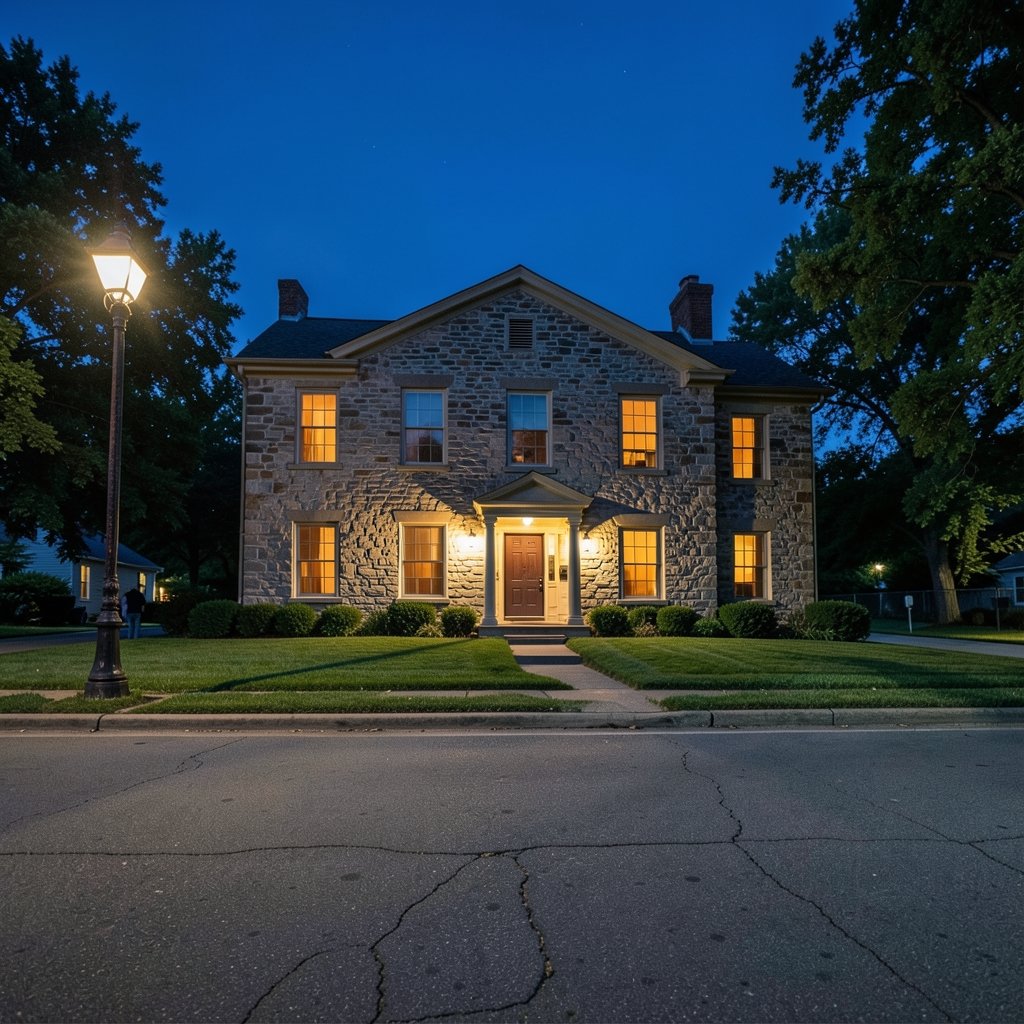
What if the suburb you’ve been picturing in your head doesn’t actually exist as a town at all? That’s the first surprise waiting for anyone who searches for Blue Bell, Pennsylvania. It has a Main Line-sounding name, a historic inn, leafy streets, and a reputation as one of the Philadelphia suburbs people aspire to live in. It also has no mayor, no borough hall, and no municipal government of its own. Blue Bell is an unincorporated community inside Whitpain Township, and understanding that single fact explains almost everything else about the place.
Where Blue Bell Actually Sits
Blue Bell spreads across Whitpain Township in Montgomery County, roughly twenty miles northwest of Center City Philadelphia. Its commercial heart clusters around the intersection of Skippack Pike, which is Route 73, and Bethlehem Pike. Those two roads are the arteries that connect residents to the Pennsylvania Turnpike, to Route 309, and eventually to Philadelphia or the Lehigh Valley.
Because Blue Bell is not its own municipality, there’s no city council to call and no separate police department wearing a Blue Bell badge. Governance runs through Whitpain Township’s board of supervisors, and county services come from Montgomery County. For newcomers, this is the most common early misunderstanding. Mail addressed to “Blue Bell, PA 19422” arrives fine, but the zip code and the town name are postal conveniences, not evidence of a separate government.
The practical upside is that services tend to feel seamless. Trash collection, zoning questions, parks, and road maintenance all funnel through one township office rather than being split across a patchwork of tiny boroughs, which is a real difference from some neighboring communities.
The Name, the Inn, and the History
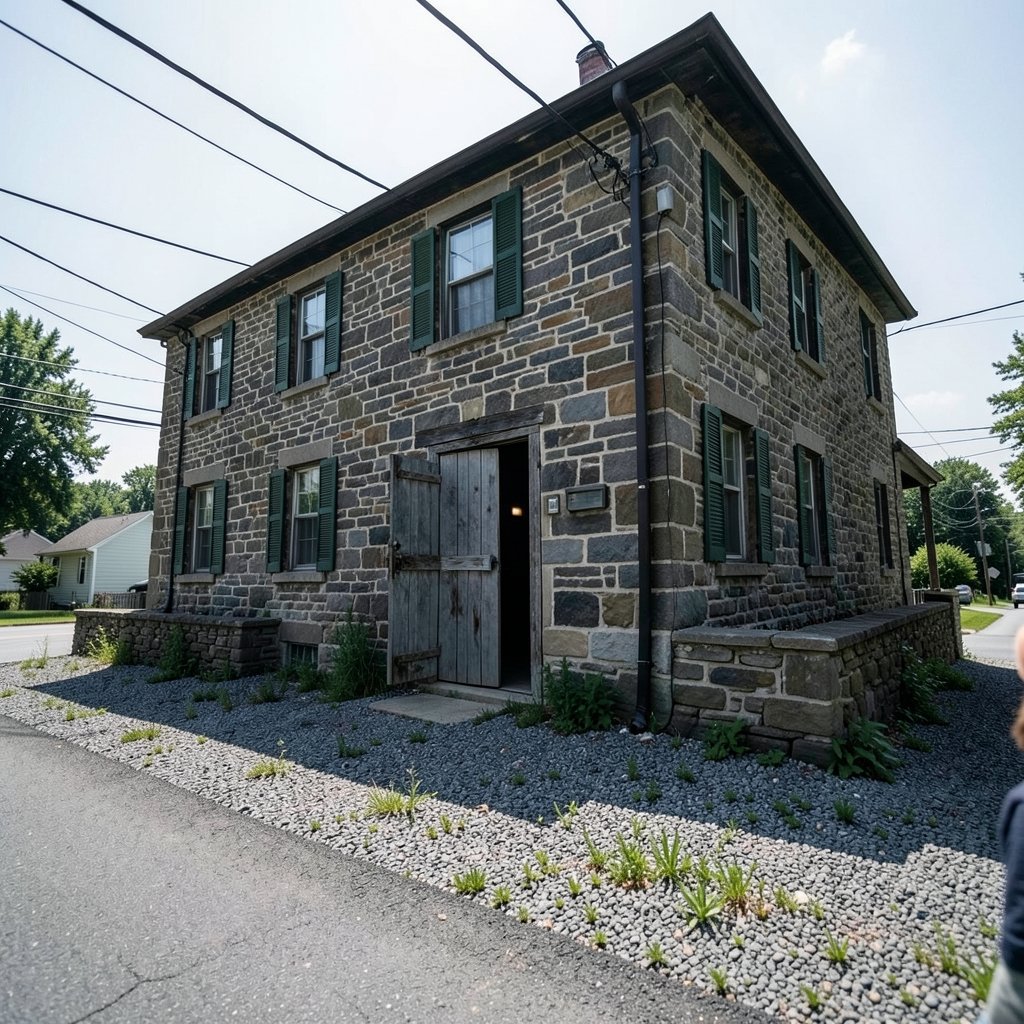
The story most often told is that Blue Bell takes its name from a colonial-era inn. The Blue Bell Inn still stands along Skippack Pike and is frequently described as dating to the 1740s, which would make it one of the older continuously operating tavern sites in the region. The exact founding date and the precise origin of the name are debated among local historians, so treat confident claims about either with a little skepticism.
What isn’t in doubt is the shape of the area’s growth. For most of its history, this was farmland and crossroads settlement. The twentieth century brought suburban development, and the last several decades transformed it into a prosperous residential and office corridor. Blue Bell now hosts corporate campuses and office parks alongside colonial-era stone houses, which is a strange but very Montgomery County mix.
That history matters practically. If a house was built in the 1950s, it may have septic concerns or an outdated electrical panel. If it’s a newer build from the 1990s or 2000s, expect modern systems but possibly a smaller lot. Knowing which era a neighborhood came from tells you more about a property than the listing photos ever will.
Schools and the Wissahickon Question
Families considering Blue Bell usually ask about schools first. The community is generally served by the Wissahickon School District, one of the stronger-performing districts in Montgomery County. Because school boundaries can shift and not every address in the 19422 zip code lands in the same attendance area, the only reliable move is to confirm the assignment for a specific address directly with the district before making an offer on a home.
This is where people make a costly mistake. They assume a zip code equals a school district. In a region full of unincorporated communities and township lines, that assumption can be wrong by a single street. Verify, then verify again.
What It Costs and What You Get
Blue Bell sits firmly in the upper-middle tier of Philadelphia suburbs. Housing stock skews toward single-family homes, with townhomes and some rental apartments filling in the gaps. Larger lots and mature trees are common, and the closer you get to the historic core, the more varied the architecture becomes.
| Factor | What to Expect |
|---|---|
| Housing type | Mostly single-family homes, some townhomes and rentals |
| Lot size | Generally generous, smaller in newer dense pockets |
| Commute to Philadelphia | Roughly 30 to 45 minutes by car depending on traffic |
| Transit | No rail station in Blue Bell itself; driving to regional rail is typical |
| Governance | Whitpain Township and Montgomery County |
| Walkability | Low outside the center; car-dependent overall |
The transit point deserves emphasis. Blue Bell does not have its own train station. Residents who commute into Philadelphia by rail typically drive to stations in nearby communities and ride from there. Anyone expecting a walkable downtown with a train platform will be disappointed. Anyone expecting space, quiet, and quick highway access will be pleased.
Getting Around Without Surprises
The car is not optional here. Skippack Pike and Bethlehem Pike carry most local traffic, and the turnpike interchange nearby makes regional trips easy. The tradeoff is peak-hour congestion at the main intersections, which long-time residents learn to route around with back roads.
For anyone moving from a denser city neighborhood, the adjustment is real. Errands require planning. A quick coffee run means a drive. On the other hand, parking is rarely a crisis, and the pace is noticeably calmer. If you’re comparing this lifestyle to other places where convenience is measured differently, it helps to see how other people read a familiar situation with fresh eyes — the same skill that lets a fan read the Yankees vs Blue Jays rivalry like a pro applies to reading a new town: know the terrain before you judge it.
Parks, Trails, and Everyday Life
Whitpain Township maintains a solid network of parks and open space, and the surrounding county park system adds trails and preserved land within a short drive. Youth sports, community events, and local clubs give the area a functional social fabric, even without a formal downtown to anchor it.
One thing that surprises newcomers: the area is quiet at night. There’s no bustling main street district. Dining and entertainment lean toward nearby hubs rather than the immediate neighborhood. People who love that calm thrive here. People who need constant stimulation tend to look elsewhere.
Practical Tips That Actually Help
Having watched how people navigate moves and daily logistics in communities like this, a few habits separate a smooth transition from a frustrating one.
- Confirm the school assignment for the exact address, not the zip code.
- Check whether a property is on public sewer or septic, especially in older pockets.
- Drive the commute at rush hour before committing, not on a Sunday afternoon.
- Ask the township about zoning and any pending development near the property line.
- Test your phone signal and internet options at the specific address, since coverage varies block to block.
The most common mistake is treating Blue Bell like an incorporated town with a central services hub. It isn’t. The second most common is underestimating how much driving daily life requires. Neither is a dealbreaker, but both are better known in advance.
Working and Living Here
Blue Bell’s office parks make it a genuine employment center rather than only a bedroom community. That means some residents commute minutes rather than miles, which changes the calculus on housing costs considerably. For remote workers, the appeal is space and quiet; a home office with a real door is easier to find here than in the city.
For households juggling careers and family logistics, the area’s family-oriented rhythm is a strong draw. Some families bring in support to manage the schedule, and the same reasoning that guides decisions about daily in-home care in Indian River County applies in any suburb: consistency and reliability matter more than the brochure promises. Practical setup beats good intentions every time.
Technology and Home Setup
Suburban living leans heavily on a reliable home network, and Blue Bell is no exception. Remote work, streaming, and smart home devices all depend on it. When something breaks, the fix is usually simpler than it feels — the same approach that helps you fix a blue screen of death on Windows 11 works here: isolate the problem, rule out the obvious causes, then act.
Home security is another common upgrade. Many residents rent and can’t drill into doorframes, which is why knowing whether a smart doorbell works in an apartment without wiring is genuinely useful information. For homeowners who dislike monthly fees, understanding video doorbell local storage without a subscription can save real money over a few years. And for anyone staring at screens all day, it’s worth asking whether blue light glasses actually work the way the evidence shows before spending on them.
Who Thrives Here and Who Doesn’t
Blue Bell suits households that value space, strong schools, quiet streets, and highway access, and that are comfortable driving for most errands. It suits people working at local corporate campuses or commuting by car.
It suits less well anyone who wants a walkable downtown, a train station at the end of the street, or a dense social scene within walking distance. Renters will find fewer options than buyers. And anyone who needs a formal municipal identity to feel settled should know up front that this community doesn’t have one.
The honest summary is that Blue Bell delivers a polished, well-kept suburban experience without the trappings of an incorporated town. That’s either exactly the point or a dealbreaker, depending entirely on what you’re looking for.
Conclusion
Blue Bell, Montgomery County PA is best understood as a place rather than a polity. It’s a prosperous, leafy community inside Whitpain Township, anchored by a historic inn at a colonial crossroads, served by a respected school district, and built around the automobile. Its name carries weight in the Philadelphia suburbs, but its government sits elsewhere, its history is older than its housing stock, and its daily rhythm rewards people who plan ahead.
If you’re considering a move, do the unglamorous work: verify the school assignment, check the utilities, drive the commute at the worst possible hour, and ask the township what’s being built nearby. Do that, and Blue Bell’s quiet competence will make sense. Skip it, and the area’s decentralized structure will feel like a riddle. The town won’t change to suit you, but it’s remarkably easy to understand once you know what it actually is.
What county is Blue Bell PA in?
Blue Bell is in Montgomery County, Pennsylvania, within Whitpain Township. It is an unincorporated community rather than a borough or city, so it has no municipal government of its own. Township and county offices handle local services, zoning, and public works.
Is Blue Bell its own town or part of a township?
It is part of Whitpain Township. The “Blue Bell, PA 19422” designation is a postal address, not a legal municipality. This matters for services, taxes, and zoning questions, all of which route through the township rather than a separate borough hall.
Which school district serves Blue Bell?
The community is generally served by the Wissahickon School District. Because attendance boundaries can vary by address and occasionally change, families should confirm the assignment for a specific property directly with the district before buying or renting.
Does Blue Bell have a train station?
No. Blue Bell does not have its own regional rail station. Most residents who commute to Philadelphia by train drive to stations in neighboring communities and ride from there. Car travel to Center City typically takes roughly 30 to 45 minutes depending on traffic.
How old is the Blue Bell Inn?
The Blue Bell Inn is widely described as dating to the 1740s, making it one of the older tavern sites in the region. The precise founding date and the exact origin of the community’s name are debated among local historians, so specific claims should be treated with caution.
Is Blue Bell a walkable community?
Largely no. Outside the commercial center at Skippack and Bethlehem Pikes, daily life depends on a car. There is no dense downtown district, and errands generally require driving. Residents who prioritize walkability usually look toward more centrally located suburbs or Philadelphia neighborhoods instead.



