
What happens when a tiny curl of cartilage near your face becomes the most talked-about spot in ear piercing? The forward helix sits right where the outer rim of your ear bends toward your cheek, just above the ear canal. It is small, it is fussy, and it has a reputation. Some people walk out of the studio with a perfect little stud that heals like a dream. Others spend a year fighting bumps, irritation, and jewelry that never quite sits right. The difference usually comes down to anatomy, placement, and aftercare habits.
This guide walks through what the forward helix actually is, how it differs from a standard helix piercing, how long healing really takes, and the mistakes that turn a quick appointment into a long ordeal.
What Is a Forward Helix Piercing?
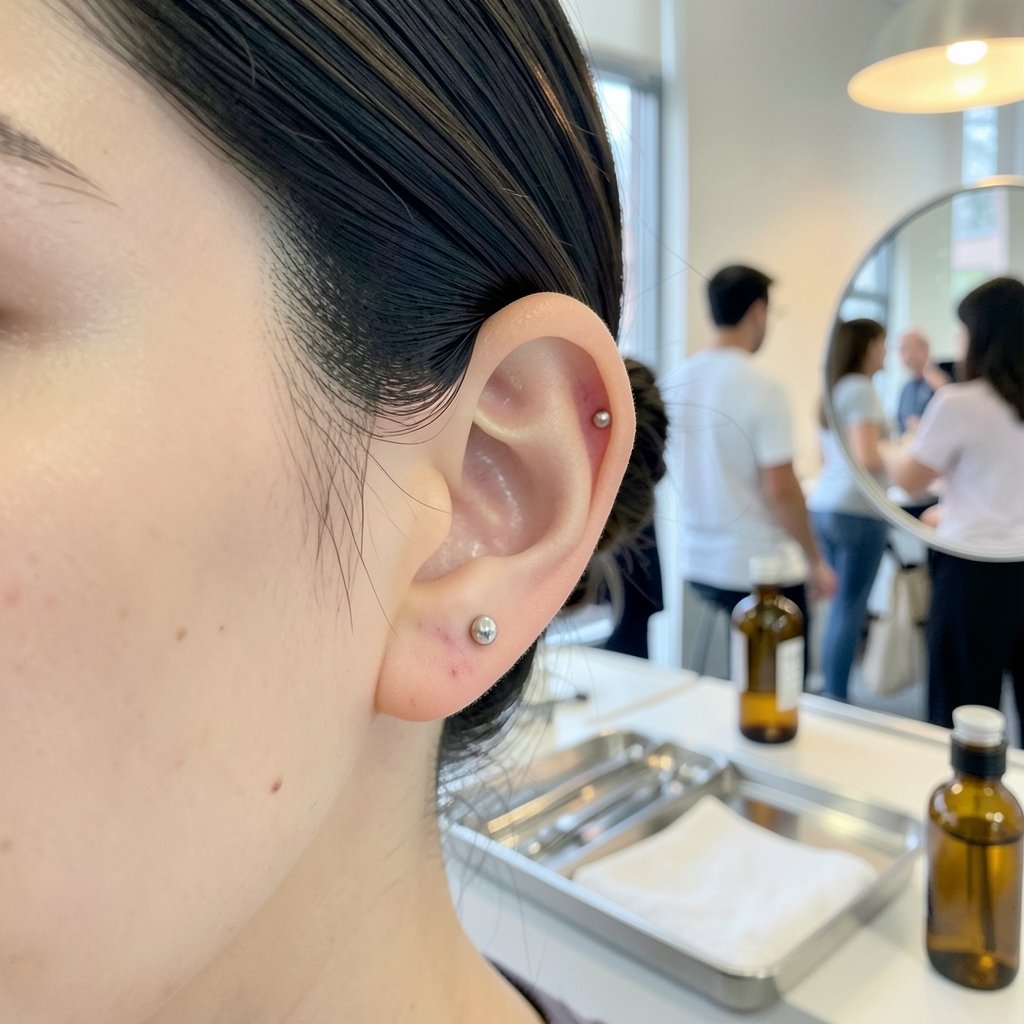
The helix is the outer rim of cartilage that runs around your ear. The forward helix is the front section of that rim, the part that curves inward toward your face. A piercing here passes through that thin strip of cartilage, usually with a small stud.
A few practical details matter more than most people expect:
- The tissue is thin and sharply curved, so jewelry has less room to sit flat.
- The spot is close to the face, which means hair, glasses, and phone calls all interact with it.
- Many people have room for one forward helix piercing. Fewer have room for two or three stacked together.
One honest caveat: “forward helix” is a piercing-industry term, not a formal anatomical one. Anatomy references describe the helix and the anterior portion of the ear but generally do not use the phrase. That is not a red flag, just useful context. When you talk to a piercer, pointing at the spot works better than naming it.
Forward Helix vs. Standard Helix vs. Other Ear Piercings
People often confuse the forward helix with nearby placements. Here is how they compare.
| Piercing | Location | Typical healing | Notes |
|---|---|---|---|
| Forward helix | Front rim of cartilage, near the face | 6 to 12 months | Tight space, prone to irritation from hair and glasses |
| Standard helix | Upper outer rim of cartilage | 6 to 12 months | More room for rings and studs |
| Tragus | Small flap of cartilage in front of the ear canal | 6 to 12 months | Affected by earbuds |
| Lobe | Soft tissue at the bottom of the ear | 6 to 8 weeks | Fastest to heal, lowest risk |
The healing ranges above come from practitioner guidance rather than controlled studies, so treat them as a realistic ballpark, not a guarantee. Cartilage simply heals more slowly than soft tissue because it has limited blood supply.
If you are weighing different body piercings or trying to understand how placement affects healing, the same principles apply across the board: thin tissue, movement, and pressure are the enemies.
Does Your Anatomy Work for a Forward Helix?
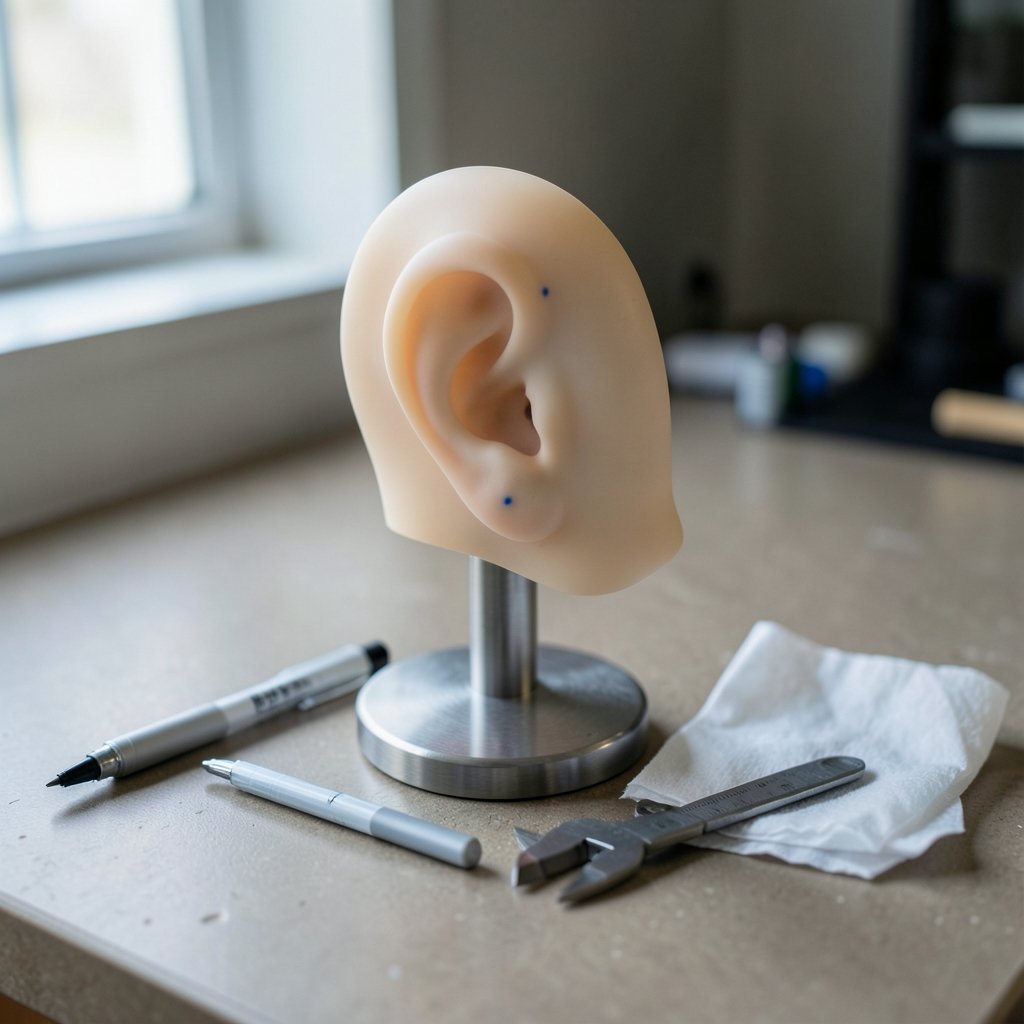
Not every ear can support this piercing, and that is the first thing a good piercer checks. The forward helix needs a defined ridge of cartilage with enough depth for jewelry to sit without pressing into the skin. (Forward gmail another email address without losing messages)
Signs your anatomy may be a good fit:
- A visible, raised ridge where the rim curves toward your face
- Enough space that a flat-back stud does not dig into the side of your head
- No history of keloids, especially if you scar easily
Signs it may not work:
- A very flat or shallow rim with no clear ridge
- Skin that folds over the spot when you smile or turn your head
- Previous cartilage piercings that migrated or rejected
A reputable piercer will look, feel, and sometimes mark the spot with a dot before committing. If someone is willing to pierce without assessing anatomy, that is your cue to leave.
How Long Does a Forward Helix Take to Heal?
Plan on 6 to 12 months for full healing, and do not be surprised if it takes longer. The forward helix is one of the slower cartilage placements because the tissue is thin, curved, and constantly disturbed by everyday movement.
Expect a healing timeline roughly like this:
- Weeks 1 to 2: Swelling, tenderness, and some redness. Keep hands off.
- Weeks 3 to 8: Swelling drops. Crusting is normal. Clean gently with sterile saline.
- Months 2 to 6: The piercing looks calm but is not healed. Bumps can appear if you sleep on it.
- Months 6 to 12: The fistula (the healed channel) matures. Jewelry changes become reasonable, but only with a piercer’s help.
The tricky part is that a forward helix can look completely fine while still being fragile inside. That is why so many people rush a jewelry change at month three and end up back at square one. If you want a broader sense of how long piercings take and how to avoid setbacks, the same patience rules apply to helix piercing healing timelines and trouble spots.
Aftercare That Actually Works
The industry standard is boring and effective: sterile saline and clean hands. That is it. No tea tree oil, no alcohol, no hydrogen peroxide, no homemade salt paste.
A workable daily routine:
- Wash your hands before touching anything near the piercing.
- Spray sterile saline on the front and back of the piercing once or twice a day.
- Pat dry with clean gauze or let it air dry. Do not rub with a towel.
- Leave crusties alone unless they soften in the shower. Picking them off tears the healing tissue.
- Do not rotate, twist, or “test” the jewelry.
Common mistakes that slow healing:
- Sleeping on the pierced side. This is the single biggest cause of irritation bumps. A travel pillow with your ear in the hole genuinely helps.
- Over-cleaning. More than twice a day dries out the tissue and causes more crusting, not less.
- Swapping jewelry too early. Let a professional do it, and let them do it late.
- Using harsh products. Anything that stings is doing damage, not cleaning.
- Touching it all day. Every unwashed finger is a risk.
If you wear glasses, check that the arm does not rest on the piercing. If you wear a headset or take a lot of calls, consider whether the microphone boom or earpiece presses on the spot. Small, constant pressure is more damaging than a single bump.
Jewelry: What to Get and What to Avoid
The right starter jewelry matters as much as the placement. Look for implant-grade metals: titanium is the safest default, with niobium and surgical steel as common alternatives. These materials reduce the risk of nickel allergy, which is one of the most frequent complications in body piercing.
For a fresh forward helix, most piercers use a flat-back labret stud with a small top. Reasons:
- A ring rotates and drags crust through the piercing channel.
- A ring puts uneven pressure on thin curved cartilage.
- A flat back sits comfortably against the skin behind the ear.
Save the ring for after full healing, and even then, keep it small and lightweight. Heavy jewelry on thin cartilage can cause migration over time.
What About Hoops and Chains?
Hoops and delicate chains look great in photos, but they are a poor choice for a healing forward helix. A hoop’s curve fights the natural angle of the piercing, and a chain adds constant micro-movement. Both invite irritation bumps. If you love the look, get it once the piercing is fully mature and stable, not before.
Risks, Red Flags, and When to Get Help
All piercings carry some risk. For cartilage, the main ones are:
- Local infection: increasing pain, spreading redness, warmth, and pus that smells or is thick and yellow-green.
- Allergic reaction: itching, rash, or swelling tied to jewelry metal, usually nickel.
- Hypertrophic scarring: raised, firm bumps at the piercing site, often from pressure or movement.
- Keloids: overgrown scar tissue, more common in people with a personal or family history.
- Migration or rejection: the jewelry shifts position or the body pushes it out.
Seek medical advice if you see spreading redness, fever, or pus. Do not remove the jewelry on your own during an active infection, because trapping infection under the skin can make things worse. Let a doctor and piercer coordinate.
Regulation is another practical point. In the United States, piercing rules are set largely by state and local health departments rather than a single federal standard. In the UK, local authorities run registration schemes. That means standards vary by location, so ask about studio licensing, autoclave use, and single-use needles before you book.
Choosing a Piercer: The Questions That Matter
A good piercer is not the cheapest one and not necessarily the one with the biggest Instagram following. Ask these questions directly:
- Are you licensed or registered with the local health authority?
- Do you use an autoclave, and can I see the spore test results?
- What jewelry do you recommend for a healing forward helix, and why?
- Will you assess my anatomy before piercing, and will you tell me if it will not work?
- What is your policy if I have a problem during healing?
If any answer feels evasive, walk. The cost of a good piercer is small compared with the cost of fixing a bad one.
It also helps to think about timing. Do not get a forward helix right before a beach holiday, a season of contact sports, or a stretch of long-haul flights. Sun, sweat, helmets, and airplane pillows are all unkind to fresh cartilage.
Practical Tips From Real-World Experience
Some habits make a real difference and rarely get mentioned in aftercare sheets:
- Change your pillowcase often. Clean fabric reduces bacteria near a healing piercing.
- Wear your hair up for the first few weeks if it is long enough to catch the jewelry.
- Adjust your phone habits. Use speakerphone or the other ear for a while.
- Do not sleep with wet hair on the pierced side.
- Photograph the piercing weekly. It is the easiest way to spot slow changes in bumps or redness that you would otherwise miss.
- Keep your hands busy elsewhere. Fidgeting with new jewelry is nearly universal and nearly always a setback.
If you are the type who likes to understand the mechanics behind everyday annoyances, the same logic of small, repeated pressure shows up in other technical fixes, like port forwarding and opening a path through your router. Small settings, big effects. The forward helix is no different: small habits decide the outcome.
Forward Helix Aftercare at a Glance
| Do | Do Not |
|---|---|
| Clean with sterile saline once or twice daily | Use alcohol, peroxide, or tea tree oil |
| Sleep with your ear in a travel pillow hole | Sleep directly on the pierced side |
| Keep hair and glasses off the jewelry | Let a headset rest on the piercing |
| See a piercer for jewelry changes | Swap jewelry yourself before healing |
| See a doctor for spreading redness or fever | Remove jewelry during an active infection |
Conclusion
The forward helix rewards patience more than almost any other ear piercing. It is small, visible, and satisfying once healed, but it sits in a spot where hair, glasses, phones, and pillows all conspire against it. Anatomy decides whether it is even possible. Placement and jewelry decide whether it heals cleanly. Daily habits decide whether you get through the long stretch without irritation bumps.
If you take one thing away, make it this: treat the first six months as a hands-off period. Saline, clean hands, no sleeping on it, and no early jewelry swaps. Do that, and the odds shift heavily in your favor. Skip it, and you will likely meet the irritation bump that gives this piercing its reputation.
FAQ
How painful is a forward helix piercing?
Most people describe it as a sharp pinch that lasts a second or two, followed by a dull ache for a few hours. Cartilage is firmer than a lobe, so it feels more intense than a standard lobe piercing but is generally manageable. The healing period is where discomfort lingers, especially if you roll onto that side while sleeping.
Can I wear earbuds with a forward helix piercing?
It depends on placement. The forward helix sits above and slightly forward of the ear canal, so many people can still use earbuds. However, if the jewelry or your ear shape causes pressure on the piercing, switch to over-ear headphones or use the other ear until healing is complete.
How many forward helix piercings can I get at once?
Some people have room for two or three stacked forward helix piercings, but it depends entirely on the ridge depth and curve of your ear. Stacking more than one puts extra stress on thin cartilage and slows healing. A piercer should assess whether your anatomy supports multiples before you commit.
Is a forward helix harder to heal than a standard helix?
Generally, yes. The forward helix sits in a tighter, more curved space with less room for jewelry to sit flat, and it is closer to hair, glasses, and phone contact. That combination makes irritation more likely. Both are cartilage piercings with similar healing ranges, but the forward helix demands more careful daily habits.
What should I do if I get a bump on my forward helix?
First, stop touching it and check your habits: sleeping position, hair contact, glasses pressure, and cleaning frequency. Most bumps are irritation, not infection, and settle once the cause is removed. If the bump grows, hurts more, or comes with spreading redness or pus, see a doctor. Do not remove the jewelry during an active infection without professional advice.
When can I change my forward helix jewelry?
Wait until a piercer confirms the piercing is fully healed, which usually means at least six to twelve months. Changing jewelry early can tear the healing channel and restart the clock. Even after healing, have a professional do the first swap so the new jewelry fits the angle of the piercing properly.



